Behind the Green Door: Sustainability as a Label and Paradox
Exhibition
Feb 7 - Jun 9, 2014
Behind the Green Door at DAC in 2014 presented 600 objects collected by the Belgian curator group Rotor to examine sustainability and green solutions with both an affectionate and a critical perspective.
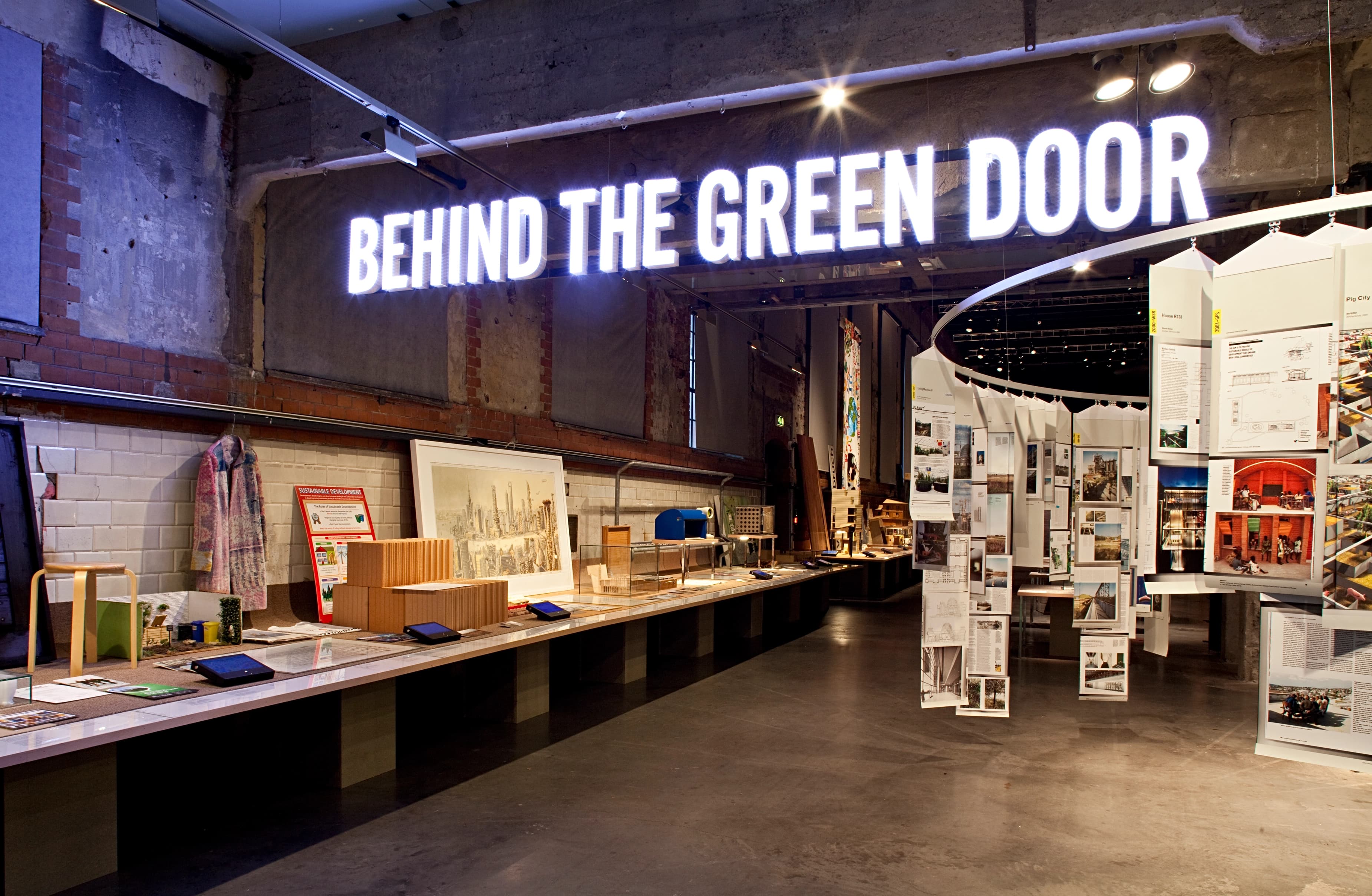
The exhibition was composed of 600 alleged sustainable objects from architectural offices, companies and environmental organisations from all over the world, which the Belgian curator group have collected over a period of several years. All these items claim to be sustainable, but in Rotor’s interpretation this is a temporary truth, and nothing is clear-cut.
Visitors encountered all sorts of objects: from the solar-powered lawn mower and energy-saving façades to sustainable work clothes and the table shaped according to the grain of the wood.
“The exhibition is open ended. Visitors are not offered a single narrative that ties everything together. There is no imposed sequence, not one overarching perspective from which to look at things, not one conclusion to be drawn. The exhibition doesn’t want to convince the visitor to live his or her life more sustainably, but instead wants to show how the concept of sustainability operates as a powerful agent of change in today’s world.” (Lionel Devlieger from Rotor)
Sustainability as a label
Visitors was introduced to the paradoxes, which crop up, as soon as you stick the “sustainability” label on something. The many objects were categorised partly by subject, and partly in a chronological order, starting 30 years ago, which winds its way through the exhibition rooms.
Exhibitions Today
See Our Current Exhibitions
What was Behind the Green Door?
Behind the Green Door at the Danish Architecture Center was curated by the Belgian group Rotor and offered a playful yet critical look at sustainability and “green” solutions in architecture.
When did Behind the Green Door take place?
The exhibition ran from 7 Feb to 9 Jun 2014.
How many objects were included, and who collected them?
The exhibition was built around 600 objects collected by Rotor from architecture practices, companies and environmental organisations worldwide.
What was the exhibition’s point about “sustainable” as a label?
It highlighted the paradoxes that arise when “sustainable” is used as a label, arguing that such claims can be temporary and not unambiguous.
What kinds of objects did visitors encounter?
The exhibition included items such as a solar-powered lawnmower, energy-saving façades, “sustainable” workwear, and a table shaped by the tree’s growth rings.
What should I know if I only read one thing?
Behind the Green Door (7 Feb–9 Jun 2014) used 600 objects to show why sustainability in architecture is often complex and full of paradoxes.