Hiroshi Sambuichi: Wind, water and light in sustainable architecture
Exhibition
Apr 28 - Jun 25, 2017
The Hiroshi Sambuichi exhibition at DAC in 2017 presented a low-tech, place-based approach to sustainable architecture driven by “moving materials”: wind, water and light.
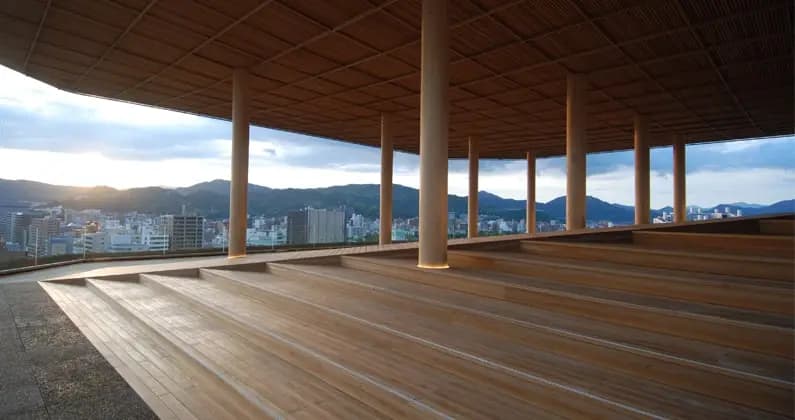
Sambuichi achieved international recognition early in his career and is today one of the foremost experimentalists in the field of sustainable architecture.
Hiroshi Sambuichi works with what he calls the moving materials of a site: the movements of wind, water and light.
Local movements in air, water and light are here utilised so that buildings, for example, do not need to be powered by anything other than what naturally occurs at the site. Style and expression therefore differ markedly from how they are seen in the Nordic region and the western part of the world, where architecture is generally highly dependent on modern technology such as electricity.
Sambuichi’s architecture zooms in on current issues regarding connection and disconnection in relation to e.g. urban growth and depopulation as well as issues of sustainability and the importance of local and regional identity in a globalised world.
The exhibition was part of the series of cultural initiatives taking place in connection with the official celebration in 2017 of the 150th anniversary of diplomatic relations between Denmark and Japan.
The Cisterns showed the total installation The Water of Hiroshi Sambuichi from 21 March 2017 – 2 February 2018, where his work with the site’s volatile materials – light, air and water – was demonstrated on a walk of an underground sea.
Exhibitions Today
See Our Current Exhibitions
What was the Hiroshi Sambuichi exhibition at DAC?
The Hiroshi Sambuichi exhibition at the Danish Architecture Center offered a close look at his working process and a low-tech, place-based approach to sustainable architecture.
When did the exhibition take place?
The exhibition ran from 28 Apr to 25 Jun 2017.
What did Sambuichi mean by a site’s “moving materials”?
He uses the term for the movements of wind, water and light, focusing on a place’s natural dynamics.
How did the exhibition connect sustainability to energy and place?
The exhibition describes using local movements of air, water and light so buildings do not need energy beyond what naturally occurs on site.
What characterises Sambuichi’s working process?
He studies a site’s geology and geography for years before designing, aiming for balance between architecture, people and surrounding nature.
What should I know if I only read one thing?
Hiroshi Sambuichi (28 Apr–25 Jun 2017) presented a low-tech, place-based architecture driven by wind, water and light.
This exhibition is developed by Hiroshi Sambuichi in association with the Danish Architecture Center
Supported by
Realdania