Pavilions in the World Capital of Architecture 2023: Sustainable Development Goals by BLOX
Exhibition
Mar 15 - Oct 15, 2023
Pavilions in the World Capital of Architecture 2023: Sustainable Development Goals by BLOX presented experimental installations across the city that each related to one or more of the UN’s 17 Sustainable Development Goals—both as public seating/urban spaces and as contributions to sustainability debate.
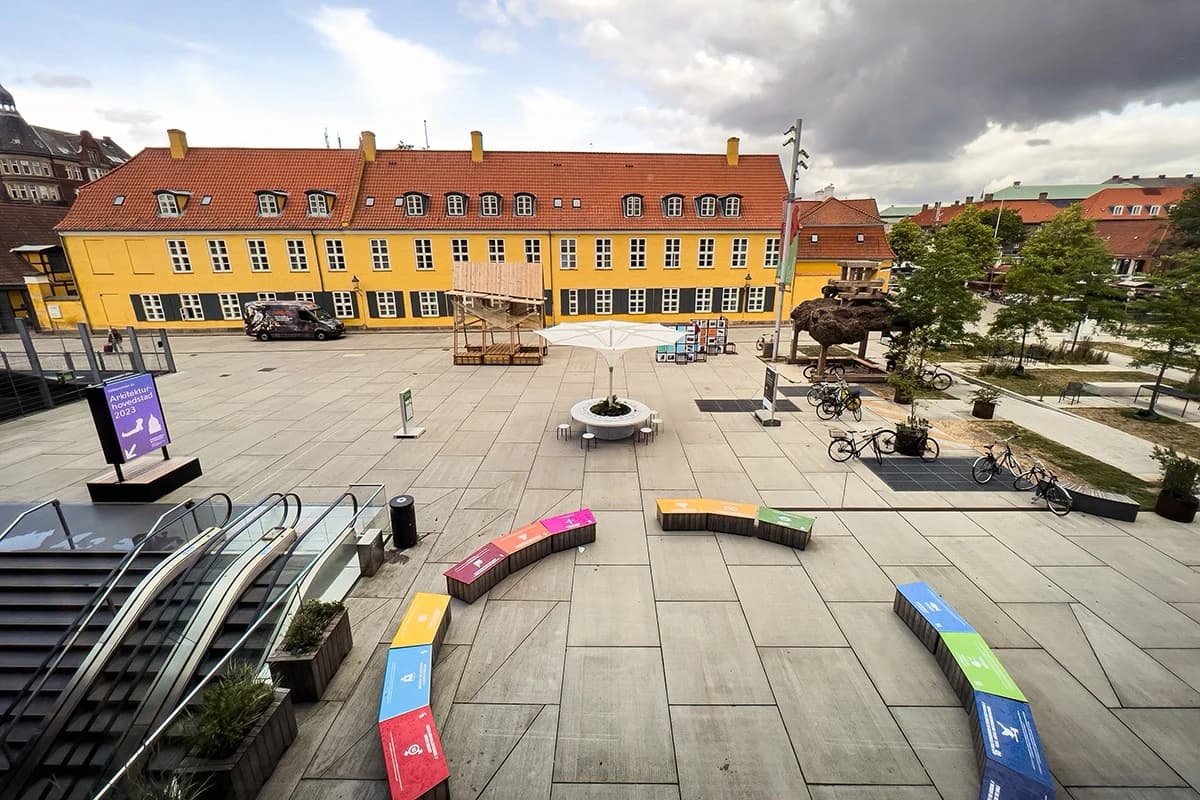
In select locations around the city, you could experience experimental pavilions, each of which related to one or more of the 17 UN Sustainable Development Goals. The Danish Architecture Center was neighbor to several of the pavilions, making it easy to combine a visit.
In addition to being a sculptural feature that created opportunities to stay in the city throughout the summer, the pavilions contributed their focus area to the debate on a sustainable future, which among other things involved food production, sanitary conditions, and the use of sustainable building materials.
Installations
On UIA’s website, you can get a full overview of the pavilions, as they looked in 2023.
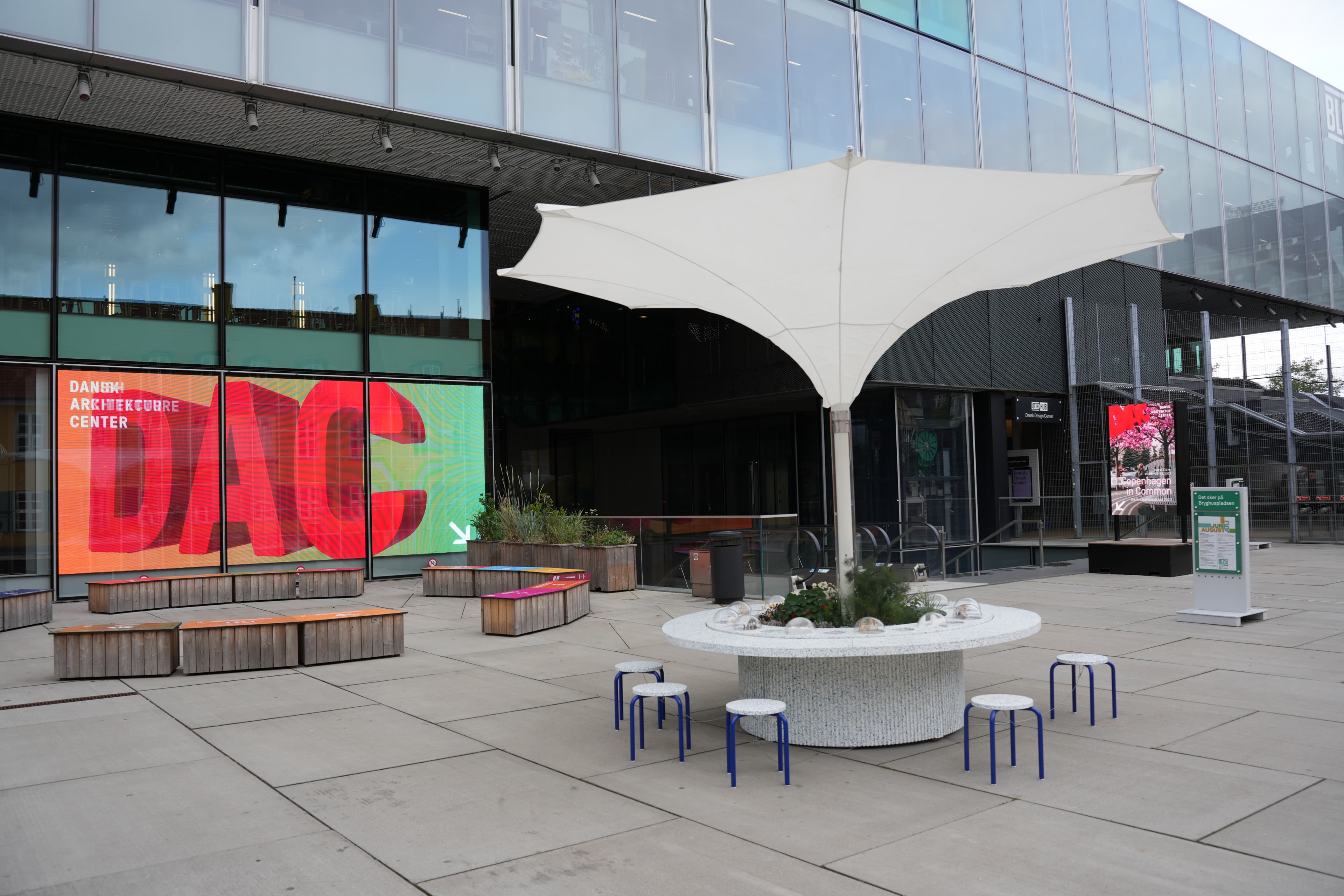
Photo: Dansk Arkitektur Center (DAC) Feed-Back
At Bryghuspladsen – right in front of the main entrance to Danish Architecture Center, you could experience the pavilion ‘Feed-Back’. A beautiful windblown parasol with a round table and stools, inviting curious visitors to explore how food systems affect our cities. It also showed techniques for food circularity, which could be used in urban environments and help combat loss of biodiversity, inequality, and climate change.
‘Feed-Back’ was designed by Schmidt Hammer Lassen Architects.
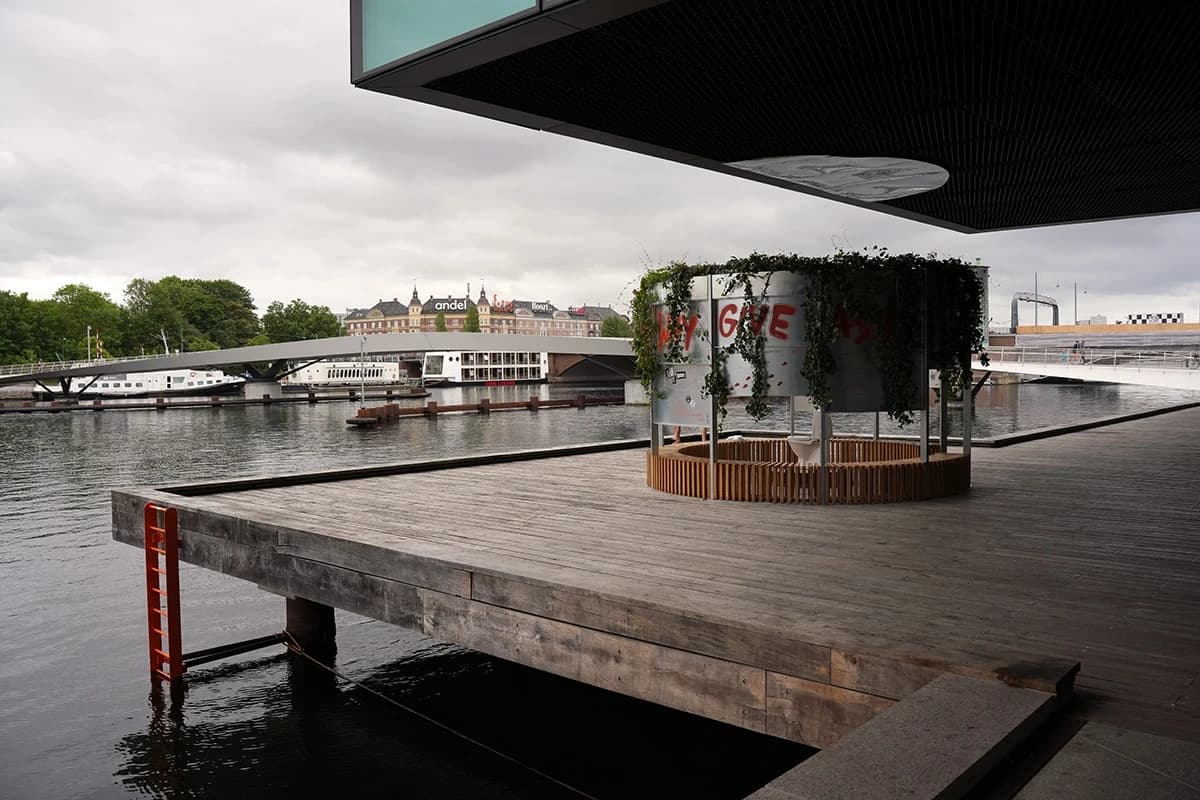
Photo: Dansk Arkitektur Center (DAC) Bio-Center
On the harbor side of BLOX, there is a wooden pier, where you could see a round and aesthetic pavilion with a strong message. Bio-Center was an interpretation of a development project, namely a bio-center in Uganda. The bio-center is a type of building that has sanitation (toilets) as a core service, and it provided a range of important services to densely populated slum areas – and creates a social meeting place.
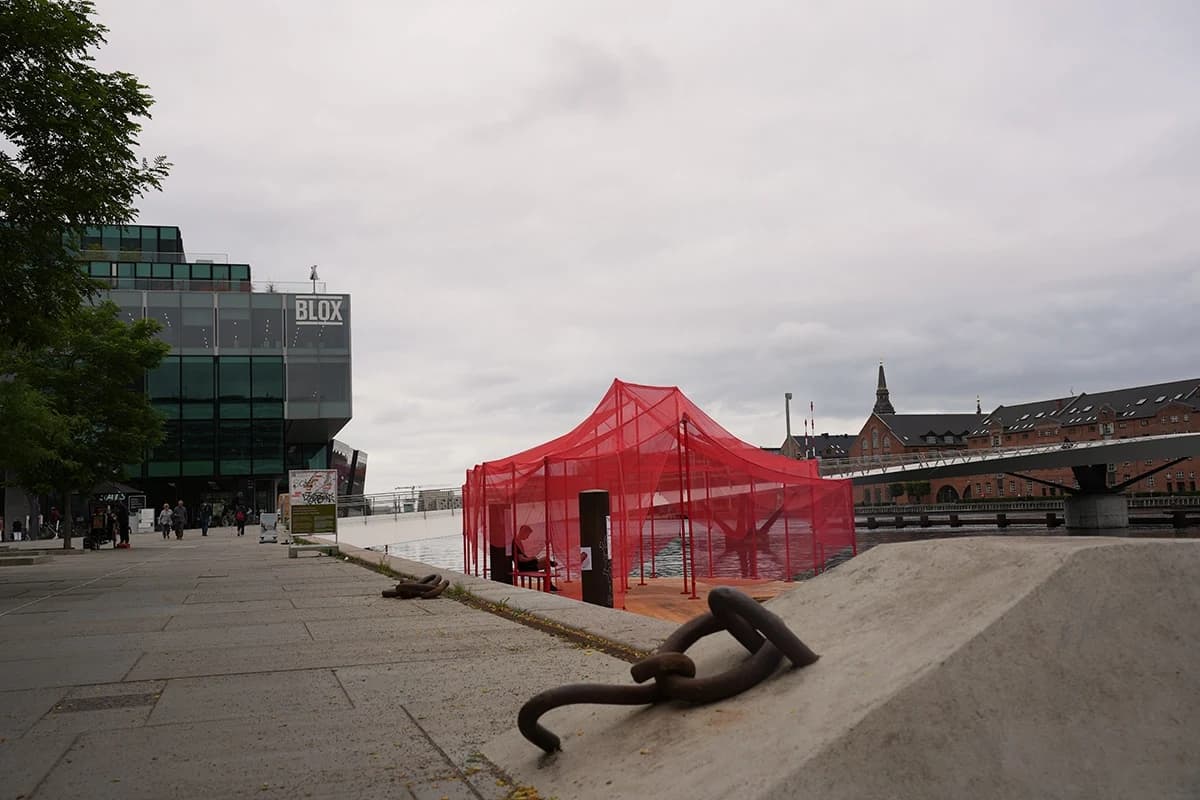
Photo: Dansk Arkitektur Center (DAC) The Raft
Just south of the wooden pier at BLOX – between Langebro and Lille Langebro – a red pavilion ‘The Raft’ was floating in the water. The pavilion was a sensory structure, offering visitors a direct and playful experience with the water. Inspired by sea creatures and working with geometries and techniques from ships, the structure was designed to capture the water’s movements in the colorful roof.
‘The Raft’ was created by Studio Coquille, Tan & Blixenkrone.
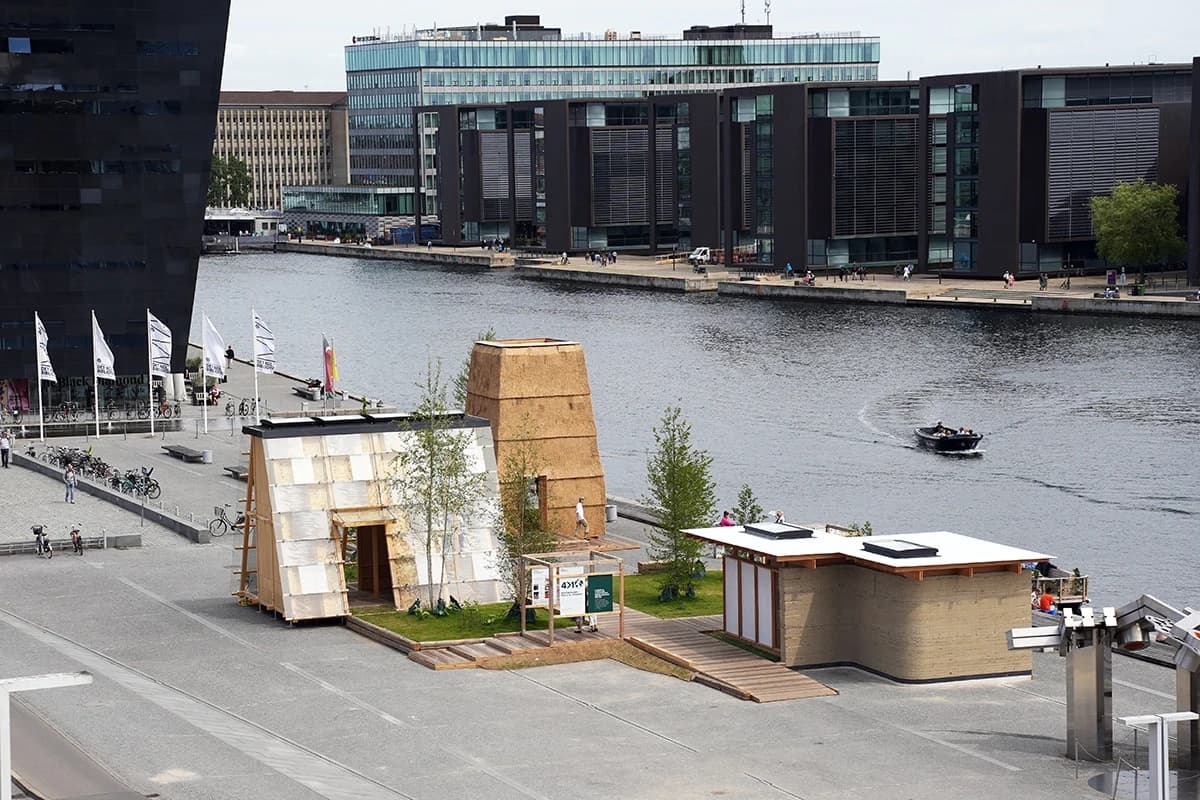
Photo: Dansk Arkitektur Center (DAC) From 4 to 1 Planet
At Søren Kierkegaards Plads between BLOX and The Black Diamond lied a fourth and more extensive construction – consisting of three pavilions: The association ‘From 4 to 1 Planet’ had identified three winning proposals with the competition ‘Next Generation Architecture’, which in pavilion form showcased housing construction with resource consumption that showed respect for the planet.
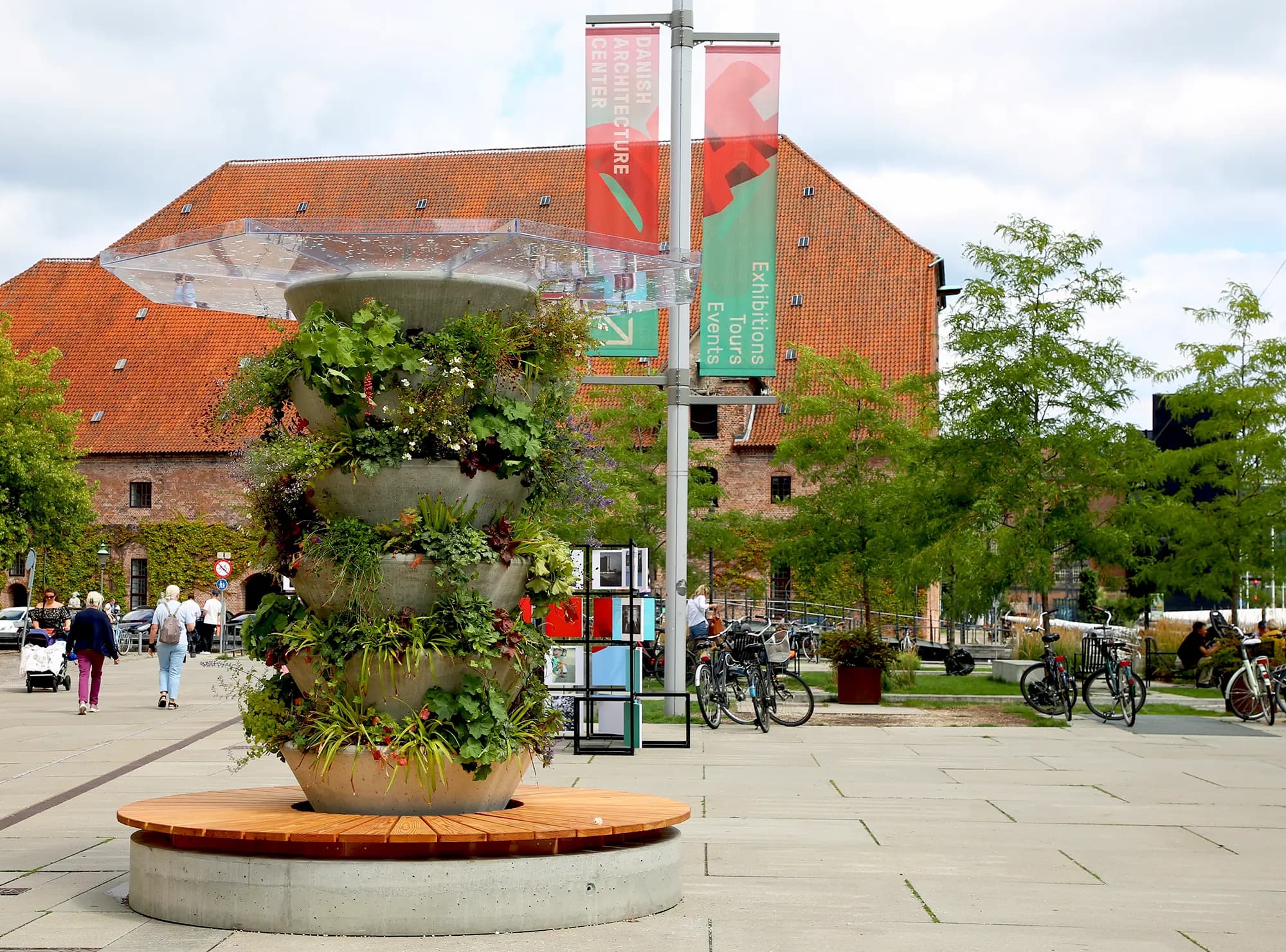
Photo: Dansk Arkitektur Center (DAC) The Urban Tree
On Bryghuspladsen, you could currently find the Urban Tree, a versatile piece of urban furniture that served as a water reservoir, supported biodiversity, and provided a solution for greening urban spaces.
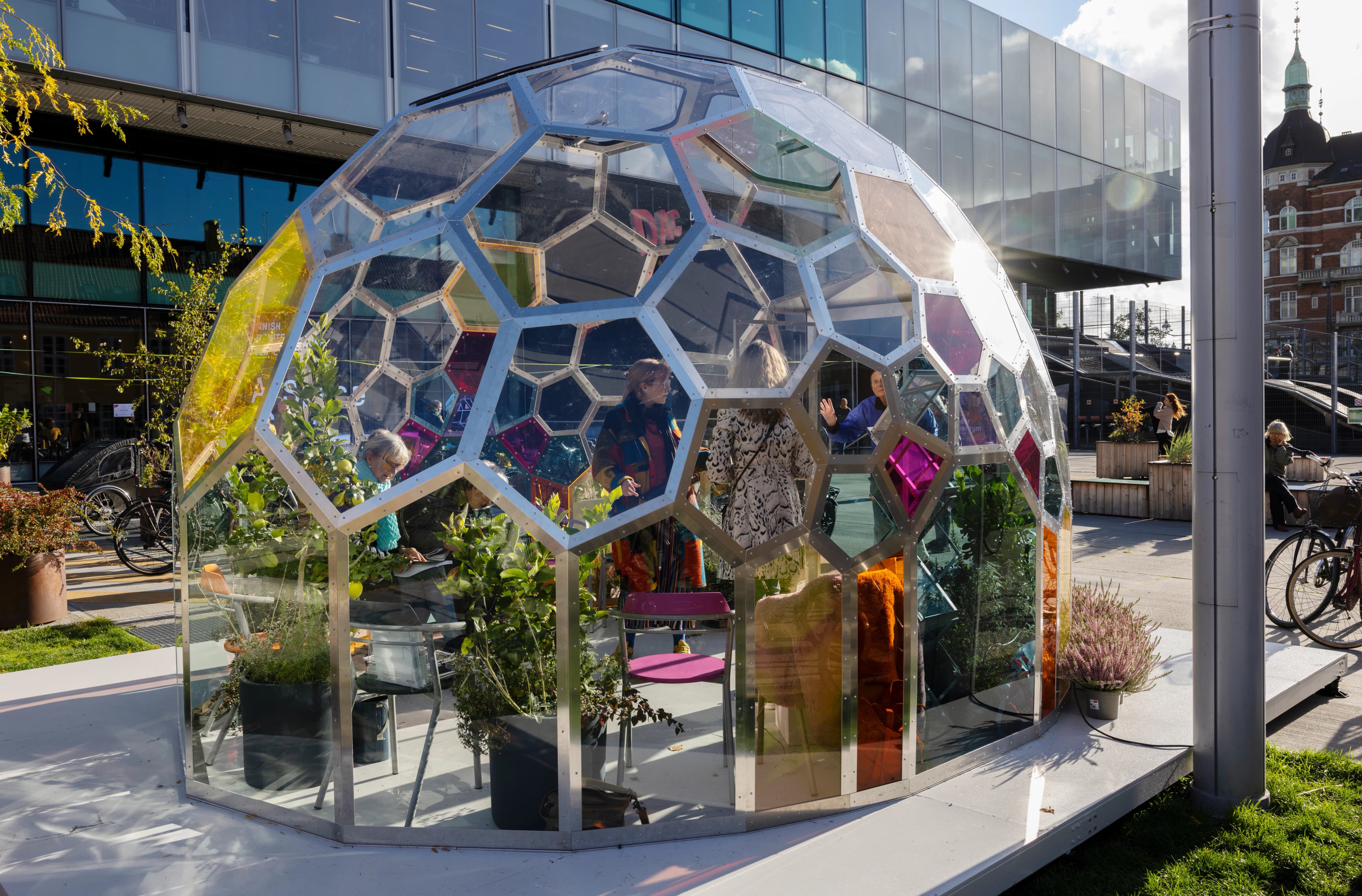
Photo: Julie Vöge Njord drivhuskuppel
Located on Bryghuspladsen you could experience the Njord Greenhouse Dome. At first glance, it was evident that the Njord Greenhouse Dome drew inspiration from nature. It was an architectural greenhouse featuring hexagonal windows that resembled a beehive and a piece of golden honey.
Exhibitions Today
See Our Current Exhibitions
What were the Pavilions in the World Capital of Architecture 2023?
They were a set of experimental pavilions across the city, each relating to one or more of the UN’s 17 Sustainable Development Goals.
When did the pavilion programme run?
The programme ran from 15 Mar to 15 Oct 2023.
How were the pavilions connected to DAC and BLOX?
BLOX was a neighbour to several of the SDG pavilions, making it easy to combine a pavilion visit with DAC.
What was the Feed-Back pavilion, and who designed it?
Feed-Back is described as a wind-blown parasol with a round table and stools exploring how food systems affect cities and food circularity; it was designed by Schmidt Hammer Lassen Architects.
What was Bio-Center, and who designed it?
Bio-Center is described as a round pavilion interpreting a biocentre project in Uganda with sanitation as a core service and a social meeting place; it was designed by Architects Without Borders.
What should I know if I only read one thing?
Pavilions in the World Capital of Architecture 2023 (15 Mar–15 Oct 2023) used temporary urban spaces to make the UN SDGs tangible in Copenhagen, with several located near BLOX/DAC.