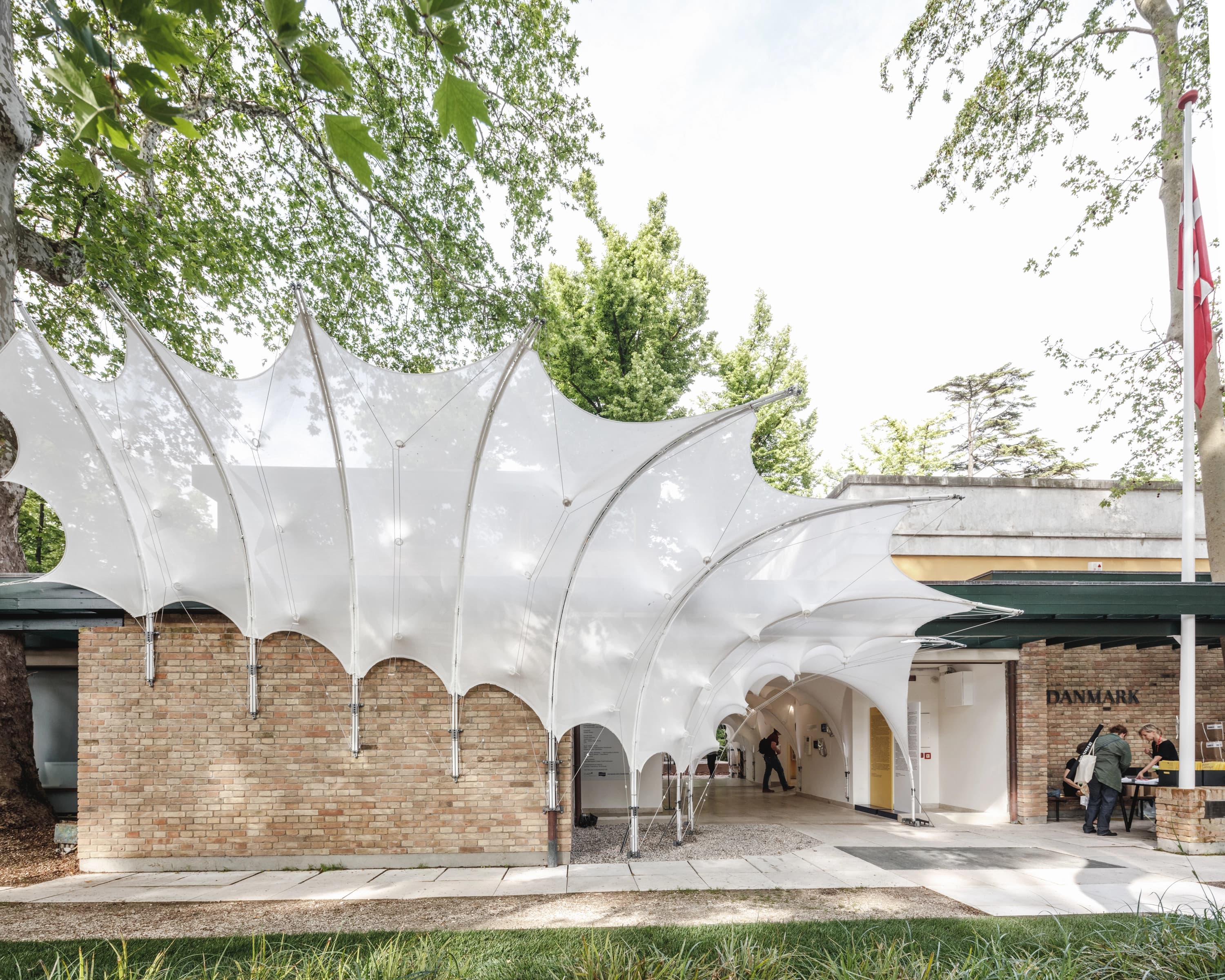
Possible Spaces: Denmark’s Venice Architecture Biennale 2018 contribution
Exhibition
May 25 - Nov 26, 2018
Possible Spaces was Denmark’s contribution to the Venice Architecture Biennale 2018, curated by Natalie Mossin, presenting four cases on sustainable development through cross-disciplinary collaboration, framed by BLOX as Denmark’s “Freespace”.
The challenges posed by the built environment call for new practices, and the selected projects propose four highly differentiated solutions to sustainable development. As a framework for the narrative of experience-exchange and collaboration as prerequisites of genuine innovation, the Danish program presented BLOX – Denmark’s new Freespace for architecture, design and sustainable development.
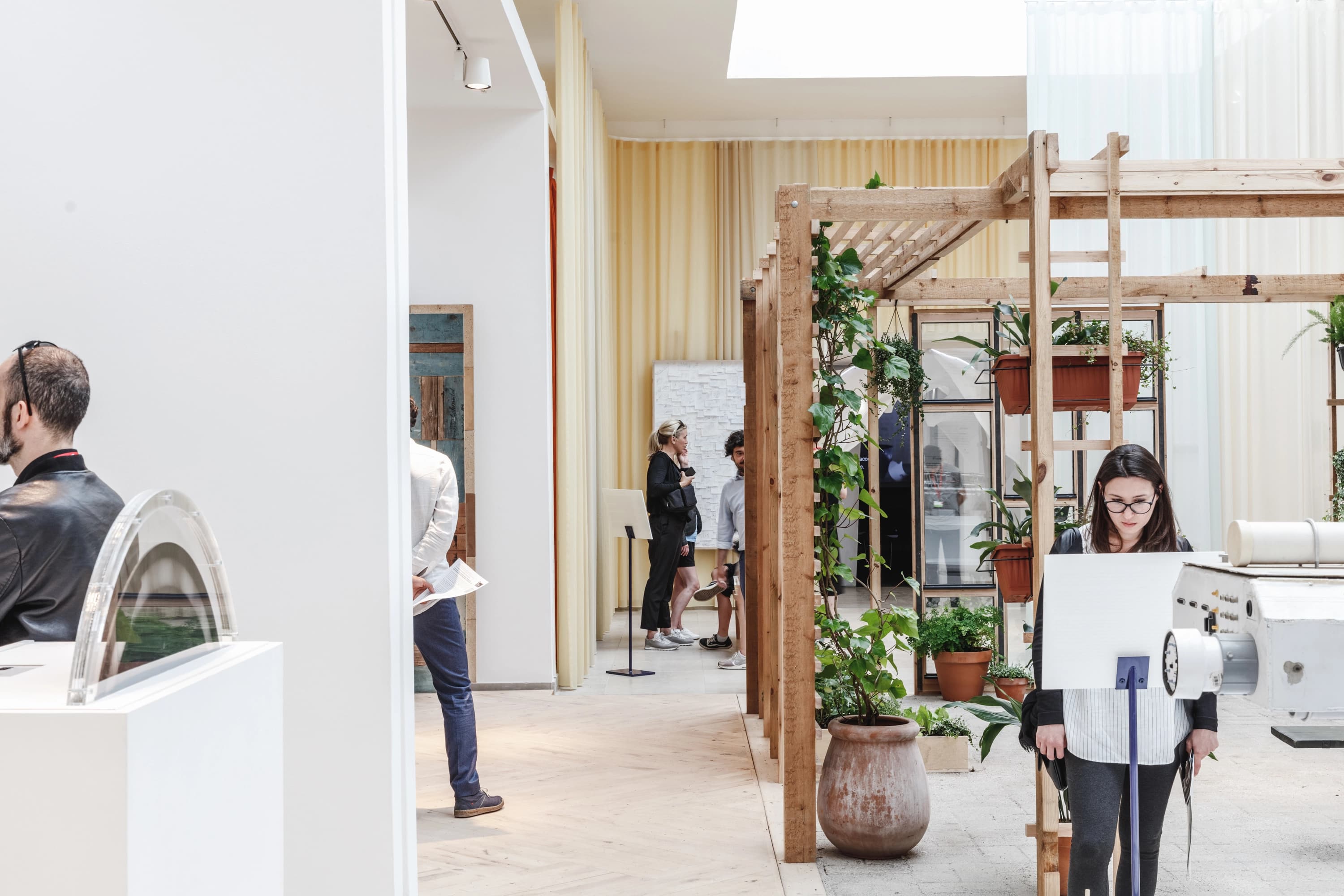
Every other year, architecture enthusiasts flock to Venice to see architects from all over the world present their challenging and inspiring ideas and projects at the legendary Biennale Architettura. The Ministry of Culture Denmark had appointed the Danish Architecture Center as commissioner of the Danish submission in 2018, and the submission was funded by the Ministry itself, the Realdania non-profit society and the Danish Arts Foundation Committee for Architecture.
Photo: Rasmus Hjortshøj
"The four Danish projects showcase some of the specific strengths of the Danish architectural tradition; of interdisciplinary collaboration, and a very keen focus on sustainability. I greatly look forward to attending the Biennale Architettura 2018 and to discovering the synergies of the Danish exhibits at the opening of the exhibition in the Pavilion of Denmark,"
The Danish exhibitors
Natalie Mossin’s four selected projects were: the new Svinkløv Badehotel seaside hotel by Praksis Arkitekter, Virgin Hyperloop One by BIG, Material Based Method K2 by CITA og Albertslund Syd by Vandkunsten.
Together with a video installation on the vision behind the newly opened BLOX, the four cases was championing innovation and collaboration from their individual perspectives, and with a focus on their respective development agendas:
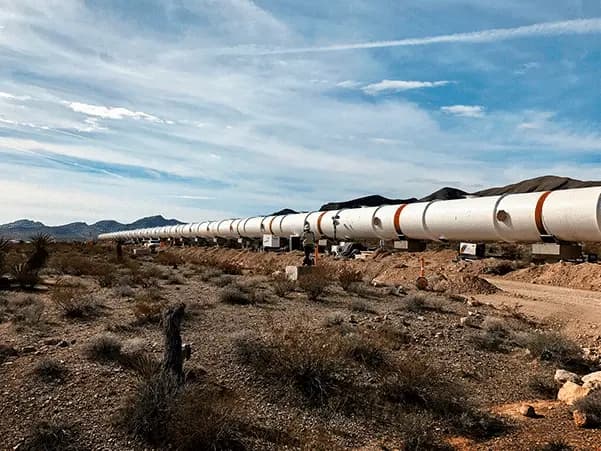
Mobilitet: Hyperloop One. How to change a world engaged in a new connectivity
How can infrastructure alter spatial relationships on a grand scale? The exhibition illustrated travel in tomorrow’s world through hyperloop, a visionary development project mounted in a collaboration between BIG and several international stakeholders, who are jointly rethinking mobility to demonstrate a radical new perception of space, landscape, time and distance.
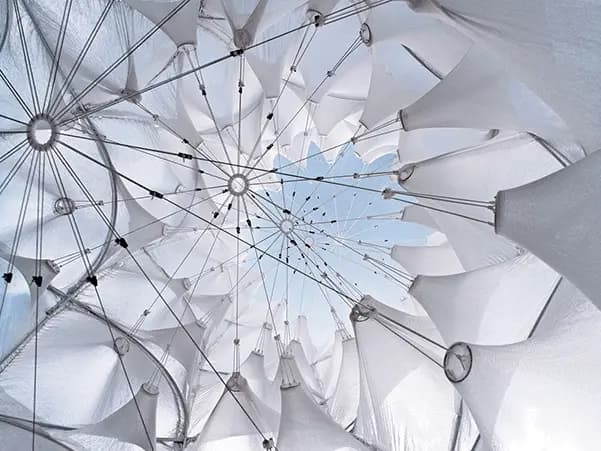
New tools: K2. What are the potentials when architectural resources become interdisciplinary?
The researchers behind CITA and their international partners will be exhibiting an impressive installation – in terms of both scale and execution – demonstrating the potentials of developing new digital interdisciplinary design and construction methods.
Cultural identity: Svinkløv Badehotel. How can architecture recreate a sense of identity and ownership?
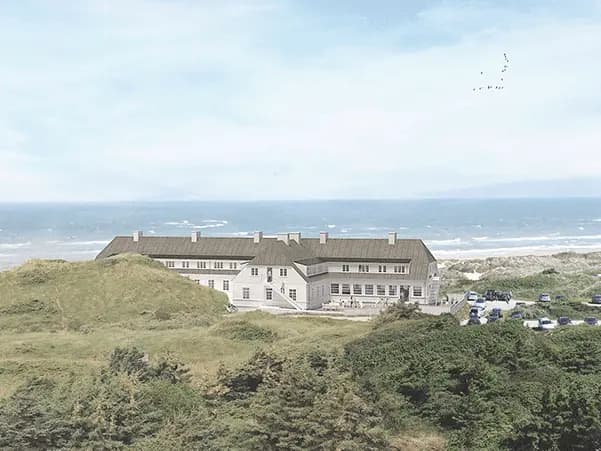
How do we use memory in architecture? In Denmark, everyone knows the story of Svinkløv Badehotel, the historic all-wood seaside hotel that was lost to a fire in 2016. The architectural firm of Praksis Arkitekter was spearheading the rebuilding of the hotel in close consultation with Realdania, hotel visitors and contractors. In the Danish pavilion, the public would be invited to step inside the architectural development process behind the new hotel.
Sustainable transformation: Albertslund South. How can we convert existing housing stock into contemporary, sustainable homes?
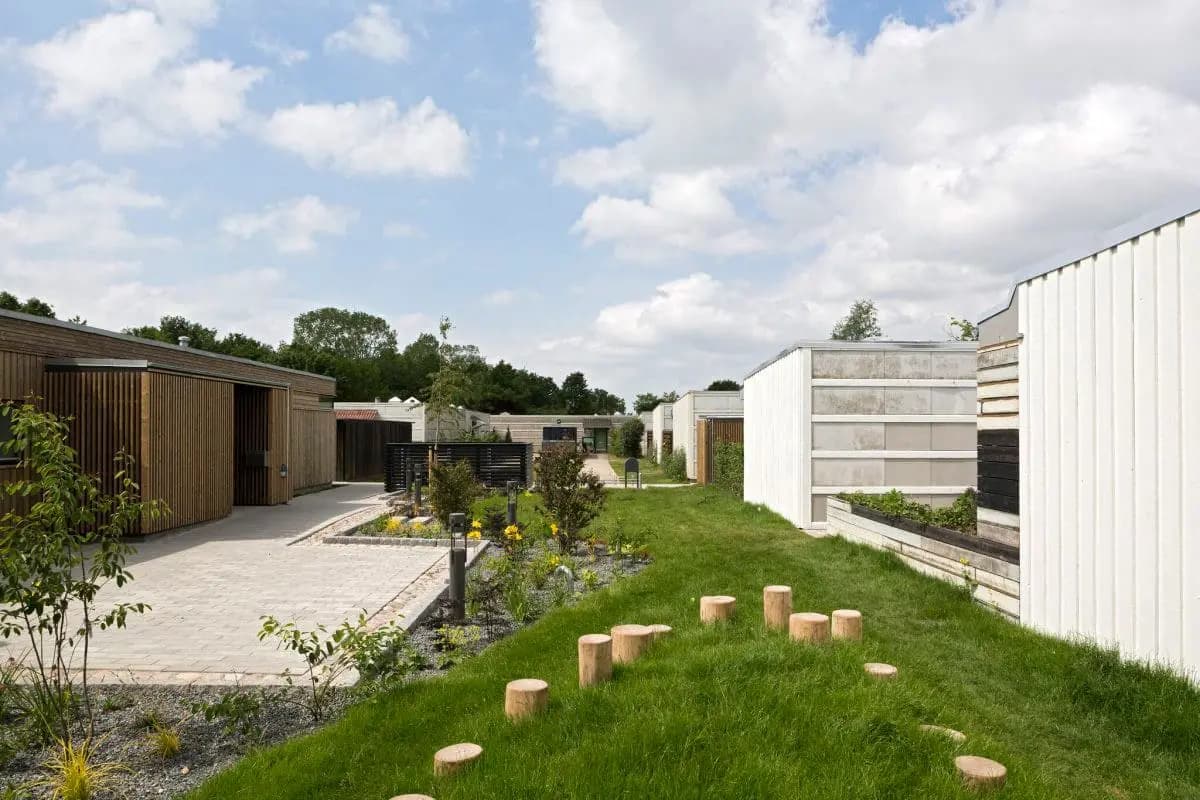
The home of the future has already been built. In Denmark, as elsewhere in Europe, existing suburbs are characterised by the large-scale suburban planning of the 1960s and 1970s, but the residential estates lack a human scale and are unsuited to today’s family types. With the Albertslund South renovation project Vandkunsten Architects demonstrated how architects in collaboration with housing societies, contractors, a local authority and residents can redevelop existing housing stock to modernise it and enhance its environmental performance.
A common feature of the four projects was that they all represented genuinely local solutions – while demonstrating their potential in relation to the global development agendas they address.
Exhibitions Today
See Our Current Exhibitions
What was Possible Spaces?
Possible Spaces was Denmark’s contribution to the Venice Architecture Biennale 2018, presenting a Danish approach to innovation through collaboration across disciplines and roles.
When did Possible Spaces take place?
The page states the period 25 May to 26 Nov 2018.
Who curated Denmark’s 2018 biennale contribution?
The exhibition was curated by Natalie Mossin.
Which four Danish projects were included?
The four cases were New Svinkløv Badehotel (Praksis Arkitekter), Virgin Hyperloop One (BIG), Material Based Method K2 (CITA) and Albertslund Syd (Vandkunsten).
What role did BLOX play in the exhibition?
BLOX was presented as the framing narrative about collaboration and exchange as a driver of innovation and described as Denmark’s new “Freespace” for architecture, design and sustainable development.
What should I know if I only read one thing?
Possible Spaces brought together four very different Danish cases to show how sustainable development can emerge through cross-disciplinary collaboration, curated by Natalie Mossin in 2018.
This exhibition is developed by Architect Natalie Mossin
Thanks to
Virgin Hyperloop One
Virgin Group
Squint/Opera
TOMORROW.
- Kangaroo / Daniel Piker
Department for Structural Design and Technology (KET)
- University of Arts Berlin
- Fosters + Partners
- Robert McNeel & Associates
- Technical University of Denmark (DTU)
- Format Engineers
- Mule Studio
- AFF – A. Ferreira & Filhos
SA
- Str.ucture
- DSM Dyneema B.V
- Alurays
- Top Glass S.p.A.
- SIKA
- Sofistik
- Danish Ministry of Higher Education and Science – Sapere Aude
- Fonden for Svinkløv Badehotel
Kenneth Toft-Hasen og Louise Toft-Hansen
- Kristine Jensens Tegnestue
- Henry Jensen A/S
- Hundsbæk og Henriksen A/S
- Martin Funch Rådgivende Ingeniørfirma ApS
Building Air Flow Technology
- Gade og Mortensen Akustik A/S
- Jammerbugt Kommune
- Naturstyrelsen
Christina Capetillo
Niels Henning Bystrup
Kvadrat
GK Kaysen
Rene Schütze
Boligforeningen AB Syd
Boligforeningen Vridsløselille Andelsboligforening, afdeling 4 Nord
Boligforeningen Vridsløselille Andelsboligforening, afdeling 4 Syd
- Bo-Vest
- Landsbyggefonden
- Wissenberg AS
- Ecosistema Urbano
- Transolar
- Imagine Envelope
LCA
Lise Gamst
Daniel Vedel
- Albertslund Kommune
- NCC AS
- Energistyrelsen
- EUDP
- Formas
- Nordic Built
- Genbyg AS
- Asplan Viak AS
- Hjellnes Consult AS
Malmö Tekniska
- KADK
- CINARK
Julie Hunæus Reuther
Asbjørn Lund
Hans Becker
Rasmus Gulløv
Søren Nielsen
Carl Hansen og Søn AS
Lokalhistorisk Samling Albertslund
Fabrikken for Kunst og Design