Reprogramming the City – Opportunities for Urban Infrastructure
Exhibition
Oct 1, 2014 - Jan 4, 2015
The big exhibition in The Danish Architecture Center in 2014, Reprogramming The City – Opportunities for Urban Infrastructure was curated by urban strategist and writer Scott Burnham, who explores a new paradigm of urban creativity and resourcefulness.
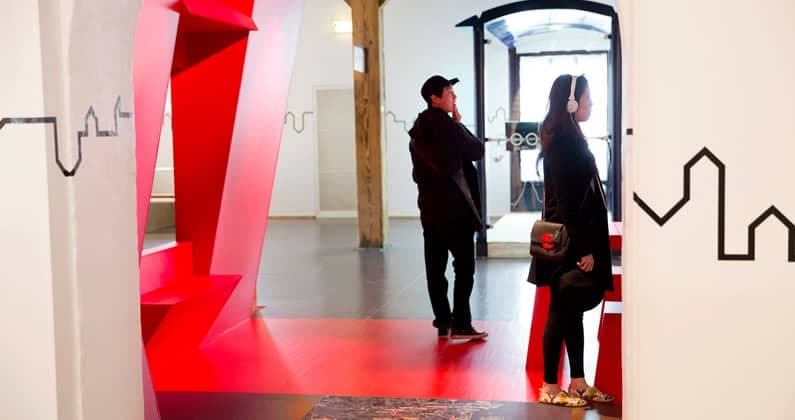
Curated by urban strategist and writer Scott Burnham, Reprogramming The City explored a new paradigm of urban creativity and resourcefulness.
Here, the hardware of the city was treated as a platform of opportunity, and infrastructure not as the end result of a previous creative process, but the beginning of a new one, creating better cities for people.
The city holds a vast amount of untapped ability. The structures, surfaces, objects and systems that underpin its daily operations have the potential to do more: to perform an alternate function, to encourage human interaction or assume an entirely new role in the mechanism of the city.
Reprogramming The City is an expanded version of the exhibition’s first appearance at the Boston Society of Architects BSA Space Gallery. The exhibition was shown at Danish Architecture Center from October 2014 to January 2015.
Exhibitions Today
See Our Current Exhibitions
What was Reprogramming the City?
Reprogramming the City – Opportunities for Urban Infrastructure was the Danish Architecture Center’s autumn exhibition, presenting projects from around the world that creatively rethink city spaces.
When did Reprogramming the City run at DAC?
The exhibition ran from 1 Oct 2014 to 4 Jan 2015.
What did “reprogramming” the city mean?
The exhibition argued that many urban spaces and objects are designed for a single function, but can be repurposed by using what already exists in new ways.
What concrete 1:1 examples are mentioned in the text?
The text mentions a bus stop offering light therapy instead of advertising, and a billboard that turns air humidity into drinking water.
What was ‘Byens Hegn’ in the exhibition?
‘Byens Hegn’ from Copenhagen’s metro construction was brought into DAC as an example of rethinking construction fencing as a positive city interface, such as display surfaces for art projects.
What should I know if I only read one thing?
Reprogramming the City (1 Oct 2014–4 Jan 2015) showed how existing urban spaces can gain new functions through concrete projects and 1:1 examples curated by Scott Burnham.
Supported by
Thanks to
- Metroselskabet
- AFA JCDecaux
Juliana