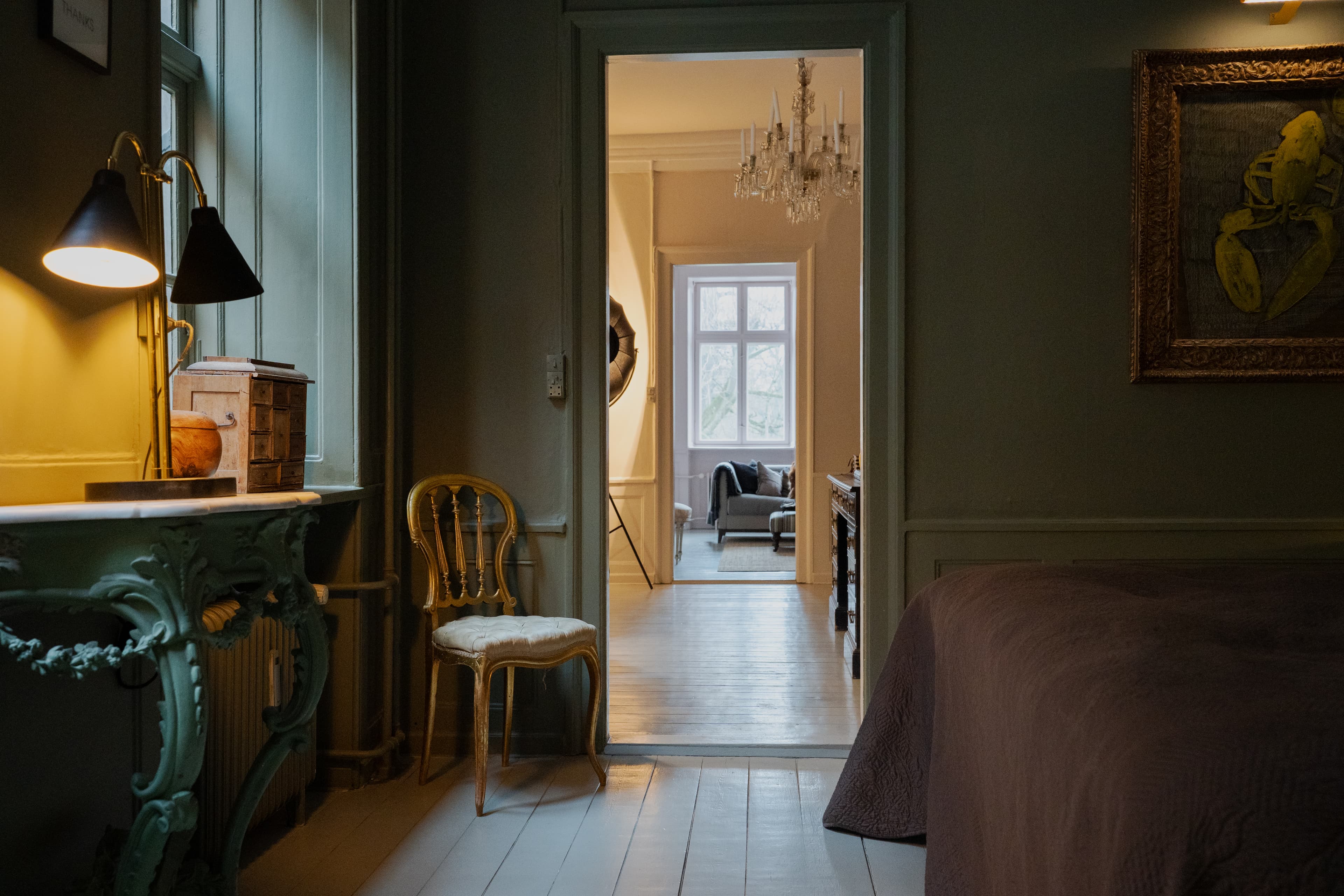
Artist Shane Brox on Living in Danish Cultural Heritage: »I’d Rather Have Squeaky Floors Than Laminate Click Flooring«
More than 7,000 buildings are listed in Denmark, and Shane Brox lives in one of them. It requires a compromise or two, but in return you get the opportunity to live right in the middle of Danish cultural heritage. Here, Shane invites us into his apartment from 1805, which holds more than 200 years of history.
By Anna Skovby Hansen
The clock strikes 11:27. On the dot, the unmistakable sounds of marching flutes and drums pour in through the large windows overlooking the King’s Garden. Outside, black bearskin hats and blue uniforms come into view, moving in perfect formation. The music slowly fades as the Royal Life Guards march down Gothersgade toward the changing of the guard at Amalienborg.
Right in the midst of it all lives artist Shane Brox, in his four-room apartment on Kronprinsessegade in central Copenhagen, built in 1805. Today, the apartment - along with the rest of the street’s buildings - is listed, all of them constructed after the great city fire of the 18th century.
»In a building like this, everything is crooked and full of flaws. There are old wires and pipes, and if you start looking closely, you might think: why wasn’t this fixed? But that’s exactly what helps tell a story and gives the place life. There’s soul in this apartment,« Shane says after we sit down on the sofa and in an armchair, respectively.
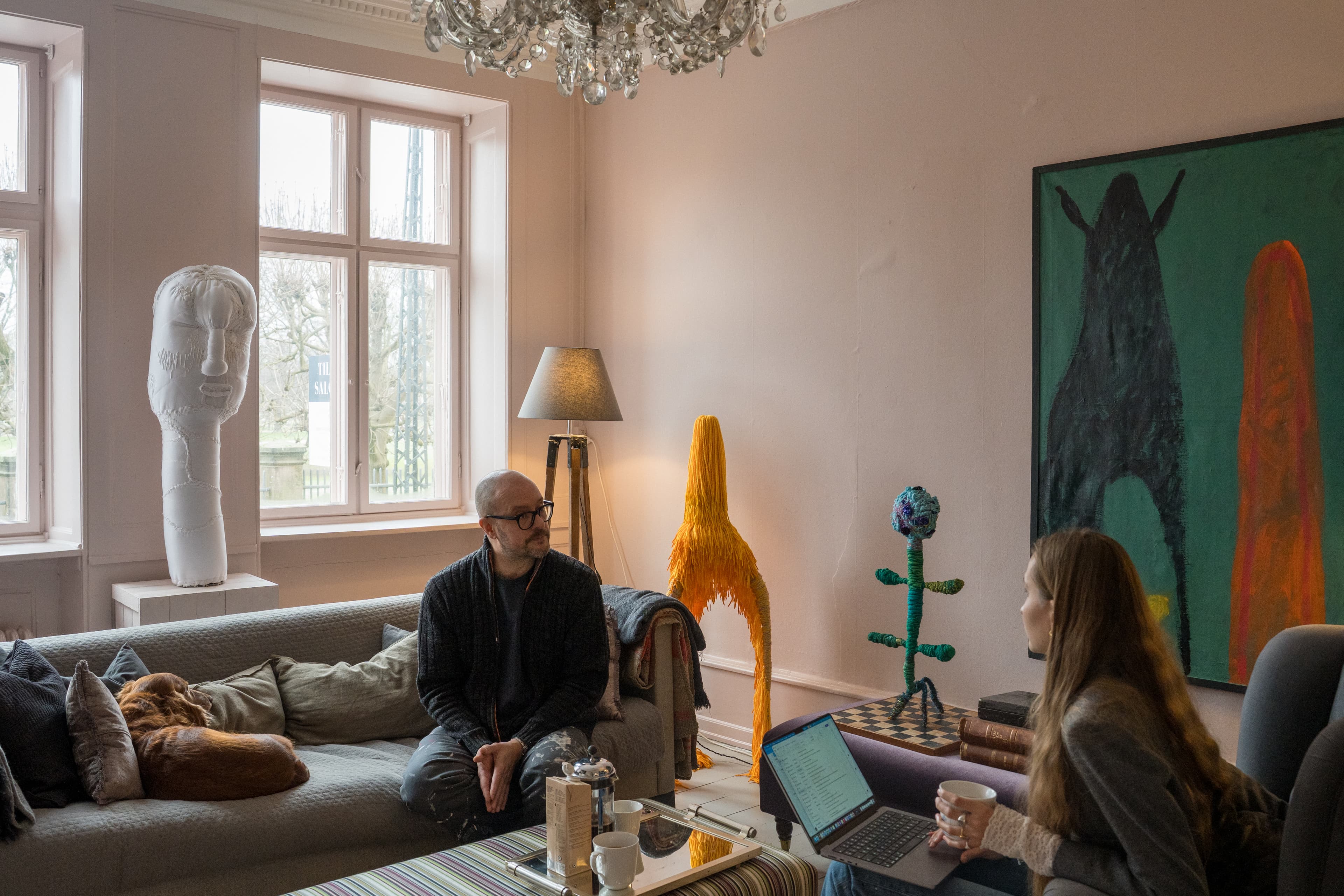
Photo: Sofie Bøgegren – Dansk Arkitektur Center (DAC) Shane Brox
Shane Brox (born 1968) was born in Canada, raised in Norway, and today lives and works in Copenhagen with art and design. He graduated from the Design School in Kolding in 1991 and has worked for many years in the fashion industry. He has published a number of children’s books and created the TV series Shane’s World for DR Ramasjang. In 2024, he exhibited his art at Nikolaj Kunsthal with the exhibition Beauty in the Beast. He has lived on Kronprinsessegade in central Copenhagen since 2003 and draws inspiration from reuse both privately and professionally.
Patina and Aesthetics Over Practicality
According to the Danish Agency for Culture and Palaces, around 7,100 buildings are listed in Denmark. These range from iconic landmarks like the Round Tower and Amalienborg to more anonymous - but equally significant - properties, such as Shane’s apartment in central Copenhagen, where he both lives and works on a daily basis. Living in a listed building also comes with a special responsibility: maintaining and preserving it for future generations. A task Shane is fully aware of.
»It’s incredibly important to pay attention to the details and not interfere with anything original,« he says.
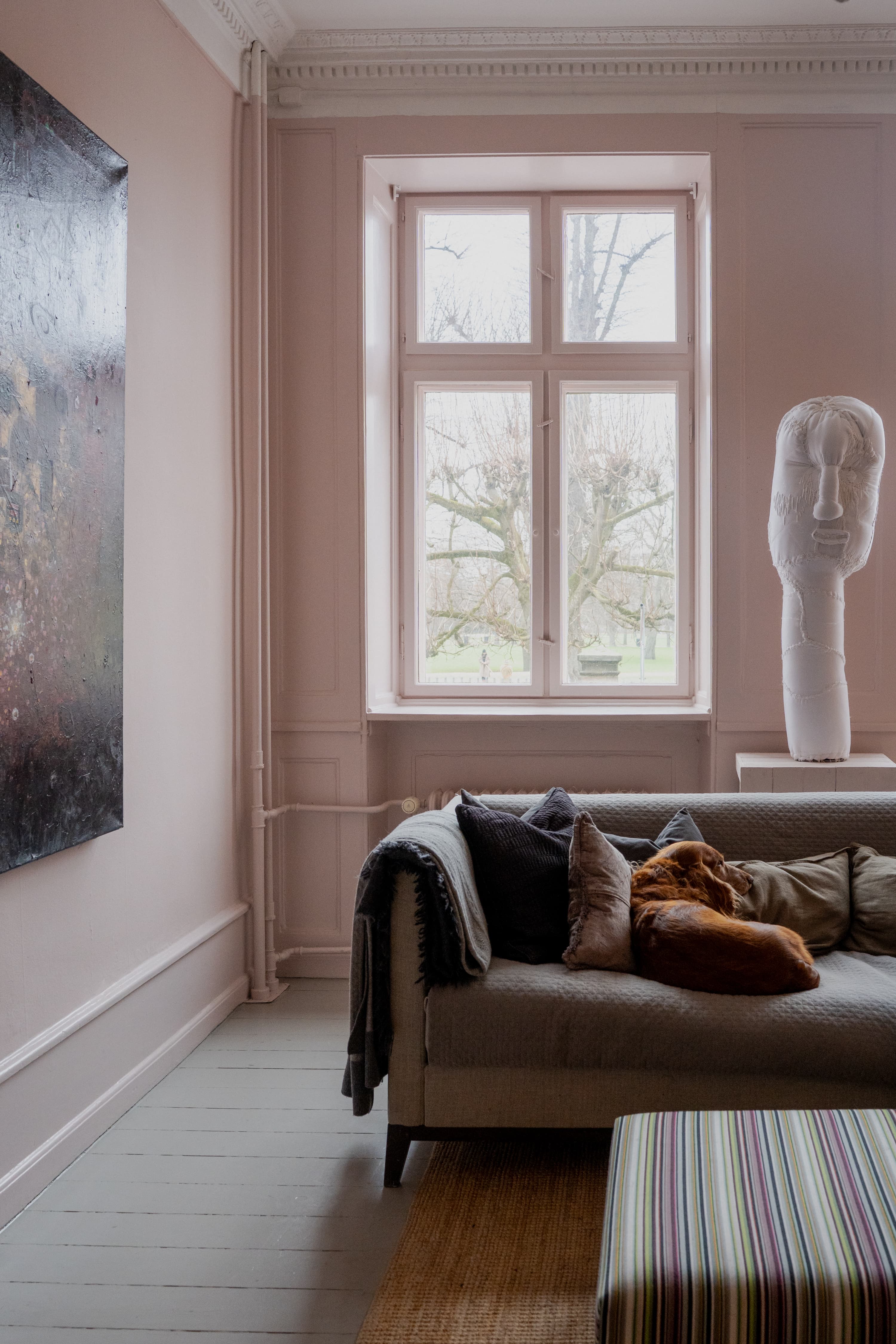
The trees from the King’s Garden seem almost to tumble into the apartment through the two large windows with original carved details, letting light stream deep into the space. The living room is painted in a soft blush pink, echoed on the walls, paneling, and window frames. The large windows frame the treetops like a living painting that changes with the seasons. Looking up, the original plasterwork has been preserved, beautifully framing the room.
According to the Danish Agency for Culture and Palaces, buildings are listed so that future generations can preserve and experience particularly special houses and structures. Together, the buildings and their surroundings tell the story of the development of Danish society - how we have built, lived, and shaped our lives.
Shane has lived in the listed building since 2003, when he moved into a second-floor apartment with his then partner. In 2015, fate had it that he moved down to the ground floor and also gained a workshop in the basement. For Shane, there is something truly special about living in a listed building.
»First and foremost, it’s about my personal taste and aesthetics. I simply prefer an old house to a new one,« he says.
That’s not to say Shane only appreciates older architecture or sees no beauty in modern design.
»Bauhaus, minimalism, or brutalism can also be beautiful. By ‘modern’ I mean a lot of what’s being built right now - for example in Ørestad and Sydhavn. There’s an extreme amount of construction going on, and excuse my language, but much of it is painfully boring and completely soulless. The choice of materials also means it doesn’t age well,« Shane says, as his dog Anders settles comfortably on the sofa to be scratched behind the ears.
"There’s an enormous amount of construction going on, and excuse my language, but much of it is painfully boring and completely soulless, and the choice of materials means it doesn’t age gracefully."
Striving to Balance Past and Present
In a listed building, you must apply for permission from the Danish Agency for Culture and Palaces if you want to change anything. That doesn’t bother Shane. However, it has meant that architects and professional craftsmen have been necessary to obtain the proper permits and ensure that the correct materials are used.
»I don’t think it’s difficult to live in a listed building. The big advantage is that we don’t pay property tax, but renovations are more expensive,« he explains.
For example, when windows need replacing or the façade needs painting, the work must be carried out by specialists using the appropriate materials.
»It’s more expensive, but I’ll always choose soul and aesthetics over modern practicality,« Shane says.
For him, it’s about finding a balance between contemporary needs and respect for architectural heritage.
»When you live in a listed building, you have to be respectful of the architecture and can’t just jump on housing trends like large open-plan kitchens - that’s simply not how these apartments are laid out. You have to accept that,« he says.
At the same time, he believes there should be more openness to adapting these homes to modern life. Specifically, he points out that the kitchen and bathroom are small compared to what is being built today.
Listed architecture
In Denmark, the Danish Agency for Culture and Palaces has designated approximately 7,100 buildings as listed. These buildings hold special architectural and cultural-historical significance and, each in their own way, help tell the story of Denmark’s history.
Once a building is listed, the owner must apply to the Danish Agency for Culture and Palaces for permission for any construction work beyond ordinary maintenance, both exterior and interior.
Shane Brox’s apartment on Kronprinsessegade in central Copenhagen was built in 1805. Today, the apartment - along with the rest of the buildings on the street - is listed; all were constructed after the great city fire of the 18th century.
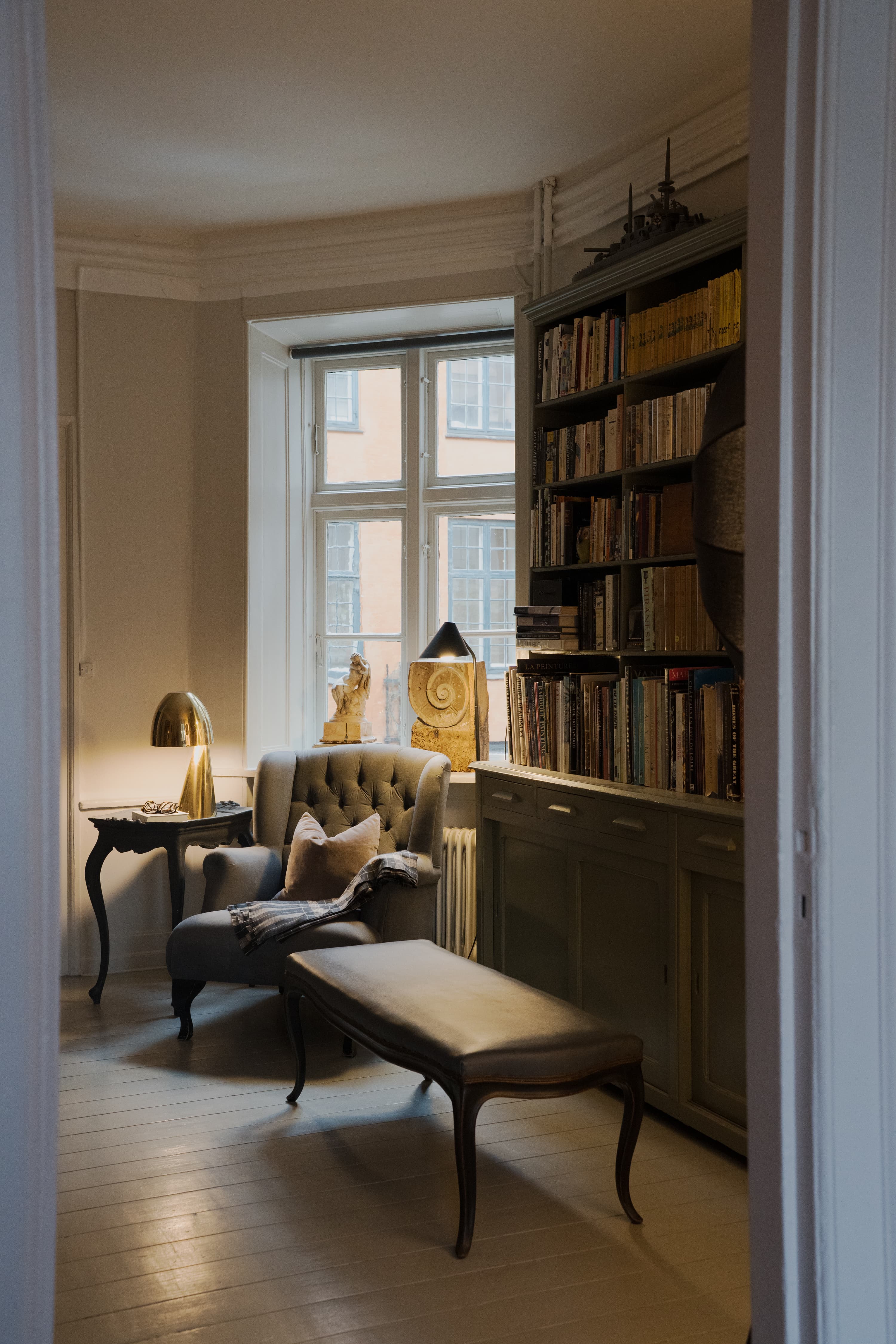
Shane Brox’s apartment is filled with quirky details, both in its interior design and its architecture.
From Maid’s Room to Storage Space
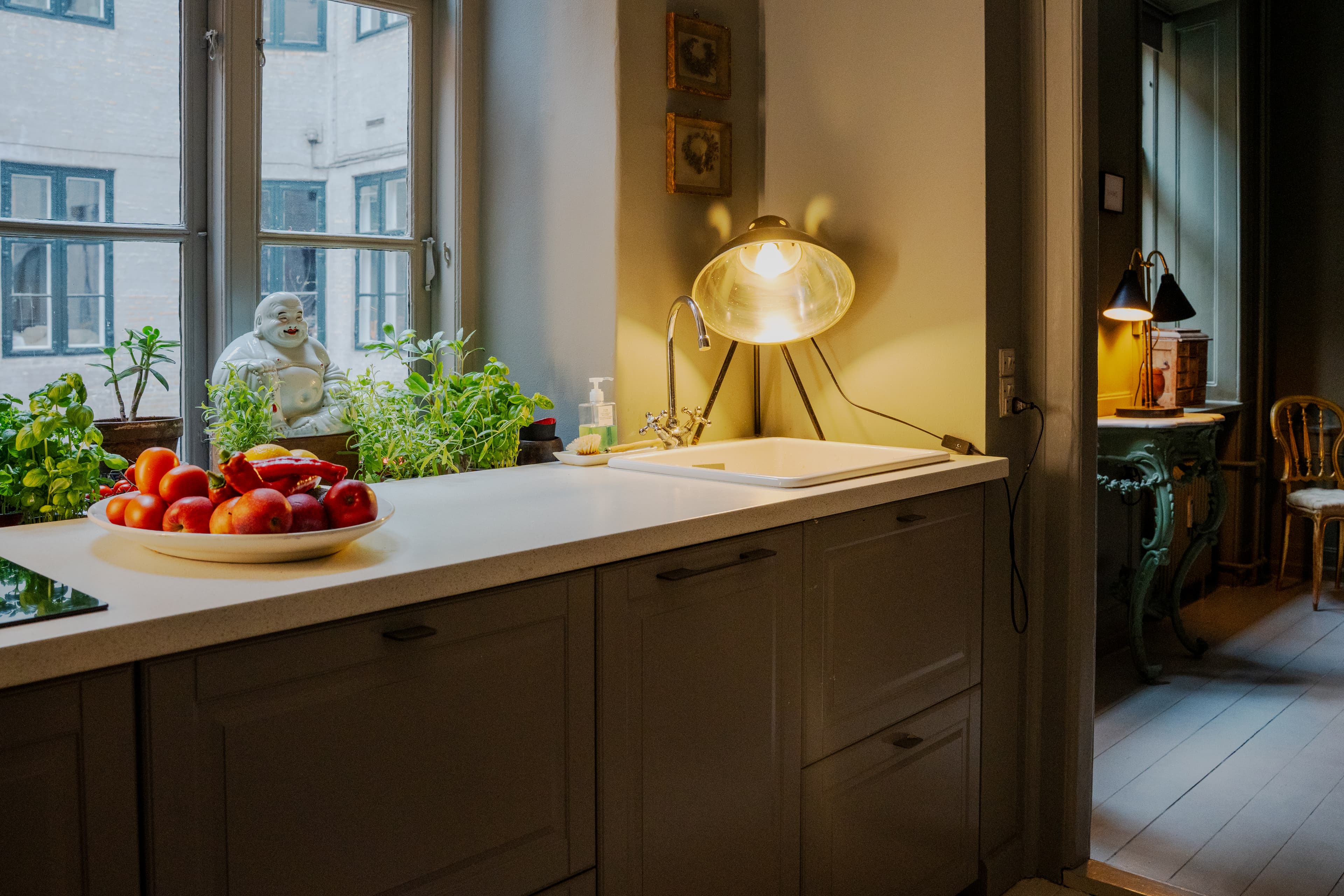
The floor creaks as Shane shows us around the apartment, which has a long, narrow layout. You naturally pass through all the rooms to reach the kitchen, which is located farthest from the street. Here, the original hearth room remains, with its listed iron arch preserved. Today, the old hearth is used for storing large pots and pans, as well as pantry items ranging from canned tomatoes to wheat flour.
The former maid’s room has also been preserved. Once home to a “live-in young woman,” it is now used for storing things Shane prefers to keep out of sight - an ironing board, vacuum cleaner, and various storage boxes.
»My home is definitely my den,« he says.
»In the basement, I make a mess, paint, and go wild. Up here, things are more orderly - this is where I relax. I feel best when there’s order around me. But living in a listed apartment also means giving certain things up,« Shane explains.
Reuse as a Top Priority
Anders lies watchfully on the sofa in front of the windows in the pink living room, where the paneling and plasterwork are beautifully preserved with their original details. The sofa is 30 years old and, apart from the bed, one of the only pieces of furniture Shane bought new. He prefers buying secondhand and restoring rather than replacing—and the sofa will soon be reupholstered.
»Everything in this apartment is either salvaged, inherited, or found at flea markets,« Shane says.
He has worked creatively and artistically with reuse for more than 25 years, and almost everything in the home is reused. Still, he wouldn’t describe himself as a hardcore recycling fanatic.
»It’s not that I’m obsessive about reuse. But we throw away so many perfectly good things.«
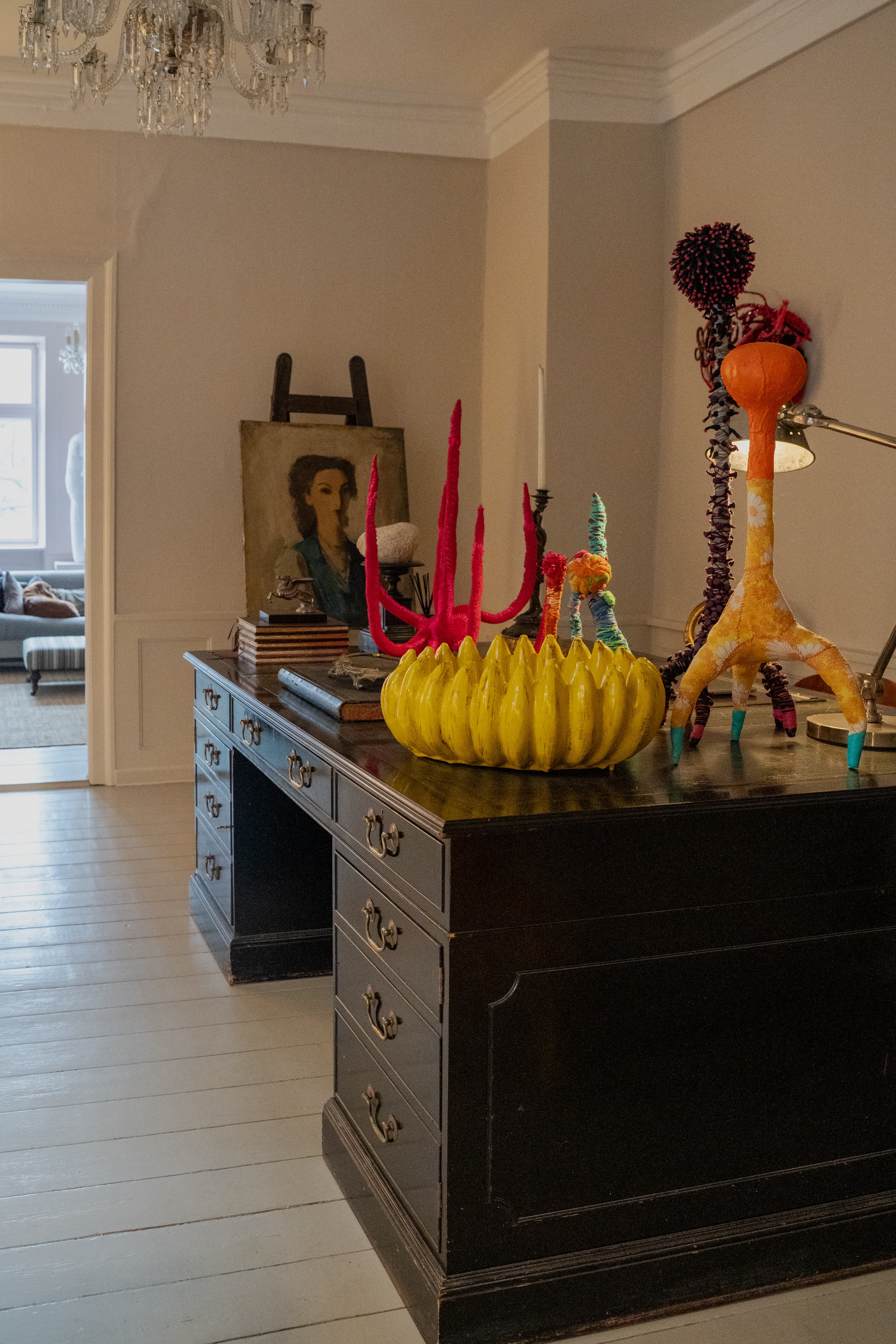
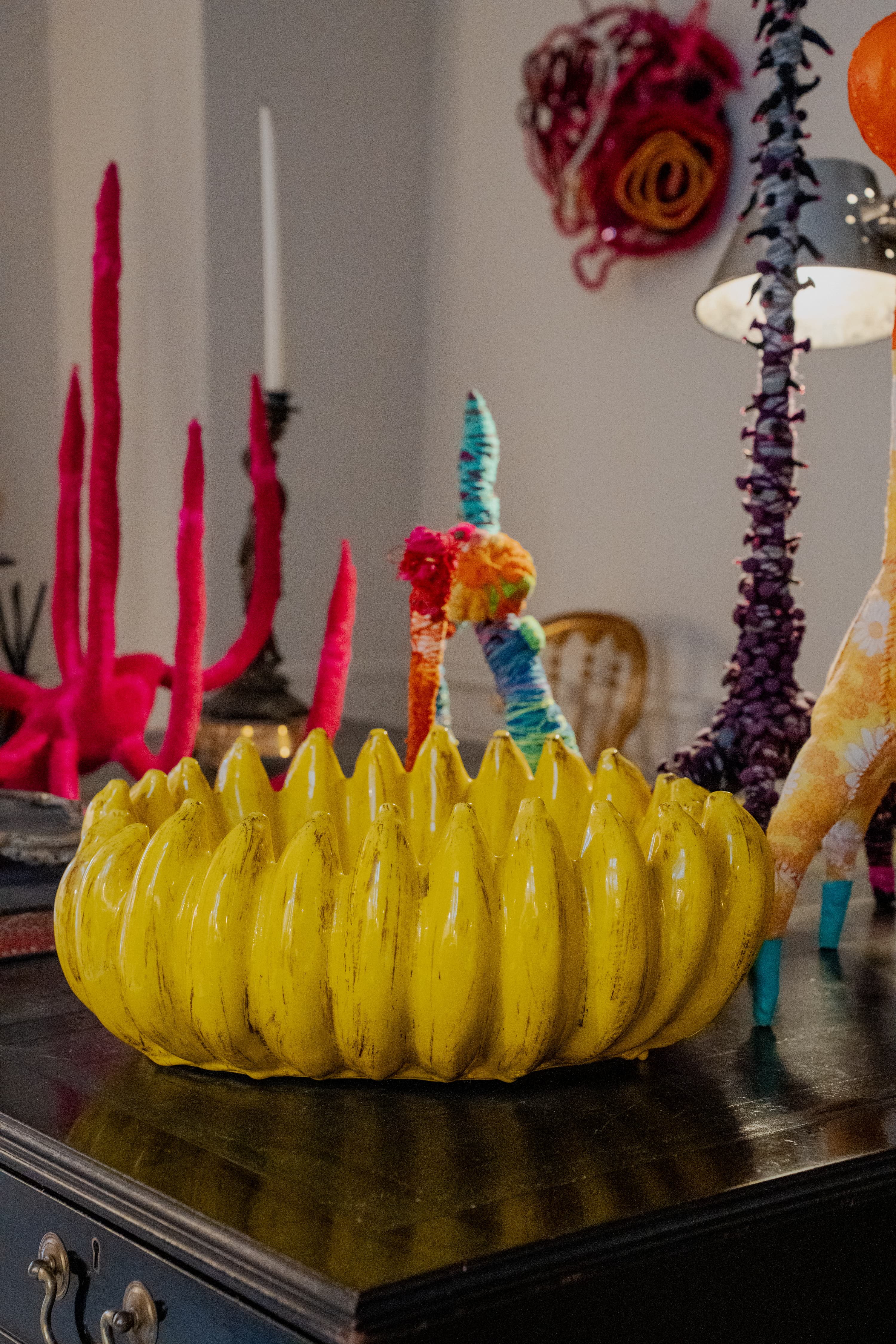
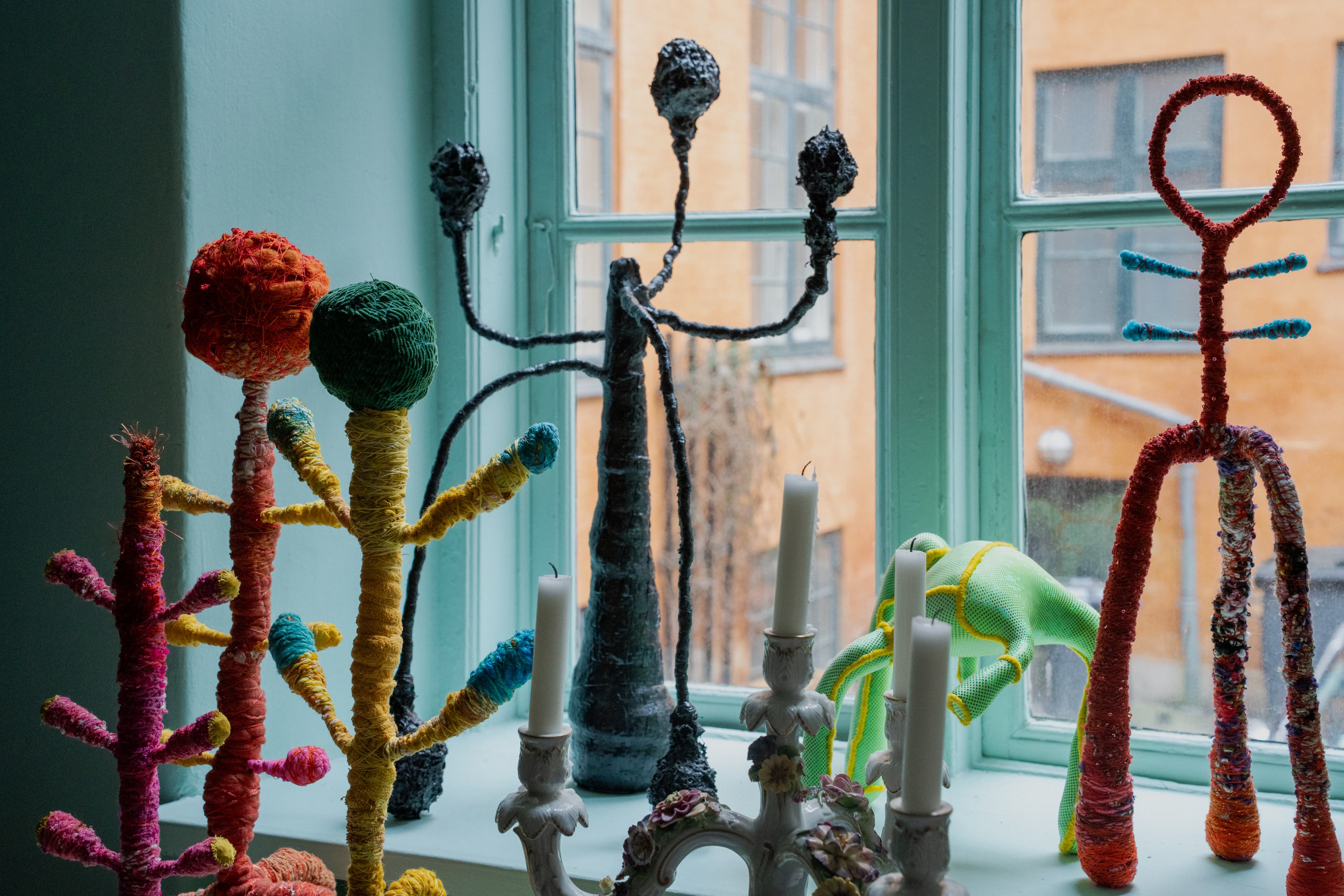
The apartment’s second living room is set up as an office. A large black vintage desk dominates the space, covered in colorful sculptures, leaving just enough room for a computer. The figures are made from recycled foam, acrylic paint, and reused fabric in an explosive color palette that nevertheless feels harmonious. The sculptures come from Shane’s first solo exhibition, Beauty in the Beast, shown at Nikolaj Kunsthal in 2024.
»I’m very quality-conscious, but I’m not the type to spend a fortune on a new sofa or an expensive designer table.«
Still, there are details in the listed apartment that can challenge a perfectionist and aesthete like Shane. The old tiled stove was removed long ago, but the trim and paneling around it have been preserved and may not be altered. As a result, the wall paneling in the living room has two different heights. To create visual calm, the walls, frames, and moldings are all painted in the same shade.
At the same time, you have to walk through the bedroom to reach the kitchen or bathroom. A compromise Shane has accepted - and one that ensures he always keeps a neatly made bed.
»When I eventually leave this apartment, I’ve actually done very little beyond painting. I’ve made some improvements to the kitchen and bathroom, but otherwise it’s been kept intact and true to its original expression,« Shane says.
He has considered selling several times, and now the time has come for the apartment to find new residents who appreciate all the small, quirky details as much as he does.
»That’s part of living in something unique - you fall in love with it, and it’s not something you find on every street corner. There’s something special about these houses that makes them hard to let go of, because you end up in a kind of symbiosis with them,« he concludes.