Skovshoved Petrol Station: Arne Jacobsen’s stark white modernist icon
Among Arne Jacobsen’s buildings is the Skovshoved petrol station, “The Toadstool,” which completes the loop around “the White City” at Bellevue – an early example of modernism in Denmark.
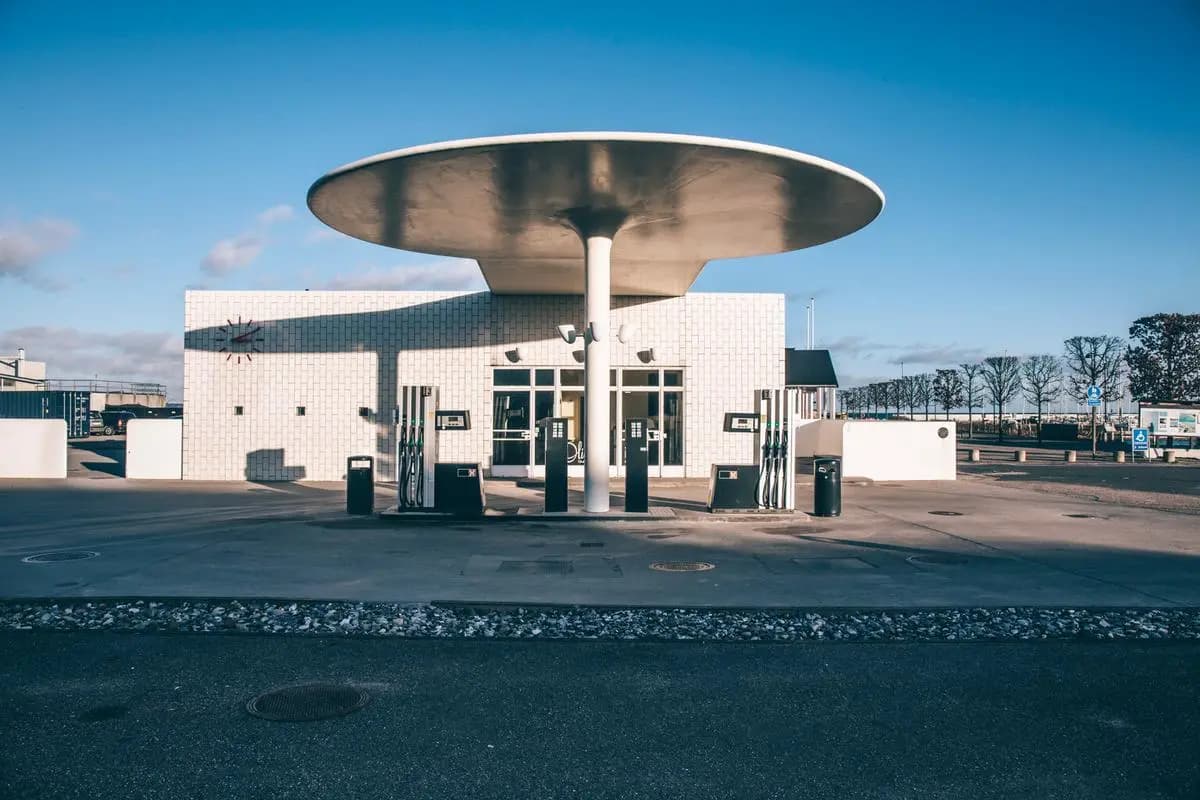
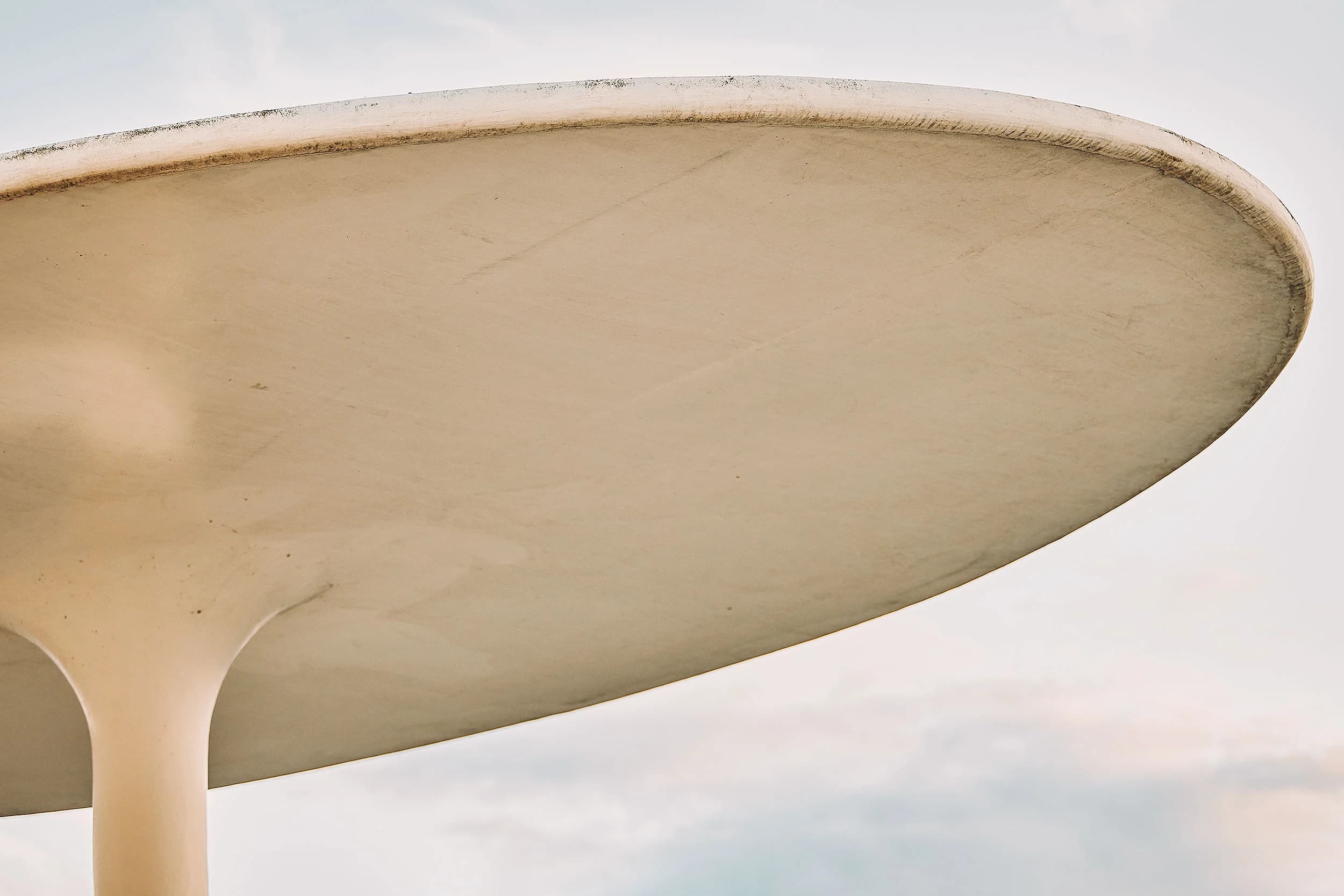
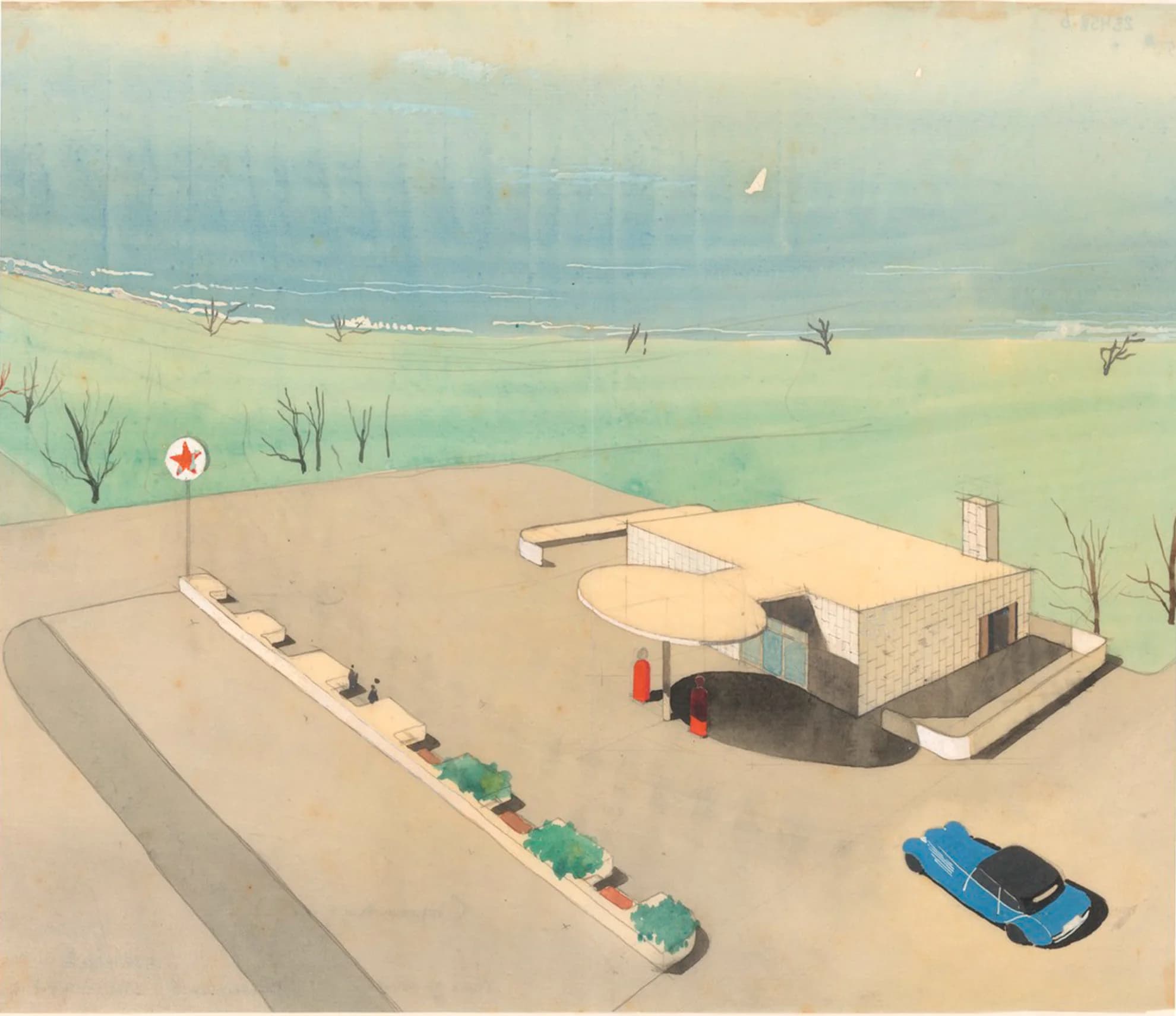
At Skovshoved, you encounter »The Toadstool« – Arne Jacobsen’s distinctive petrol station. With its sharp lines and contrasting, rounded roof, it points toward the modernist design language that would later come to define his architecture.
Nature-oriented architecture
In the early 1930s, people began flocking to Bellevue and the new beach park that emerged alongside the expansion and realignment of Strandvejen.
In 1932, Arne Jacobsen won the commission to design bathing facilities for the area, and several more buildings followed.
The development reflects a time when there was a desire to bring nature closer to city residents. Here, Jacobsen brought together leisure, outdoor life, and architecture in a series of functionalist buildings – including a seaside bath, a summer theater, housing – and this gas station.
From 1934, Copenhageners could take the S-train to the beach, while those with cars could, from 1937, fill up at the gas station just south of the beach park..
A Designer Beyond Compare
»The Toadstool«, as the petrol station is called because of its distinctive, rounded roof, is a precise example of Arne Jacobsen’s work as a designer.
The same rounded shape was later even used as inspiration for Jacobsen’s iconic Ant chair from 1952, which features a backrest in the same form.
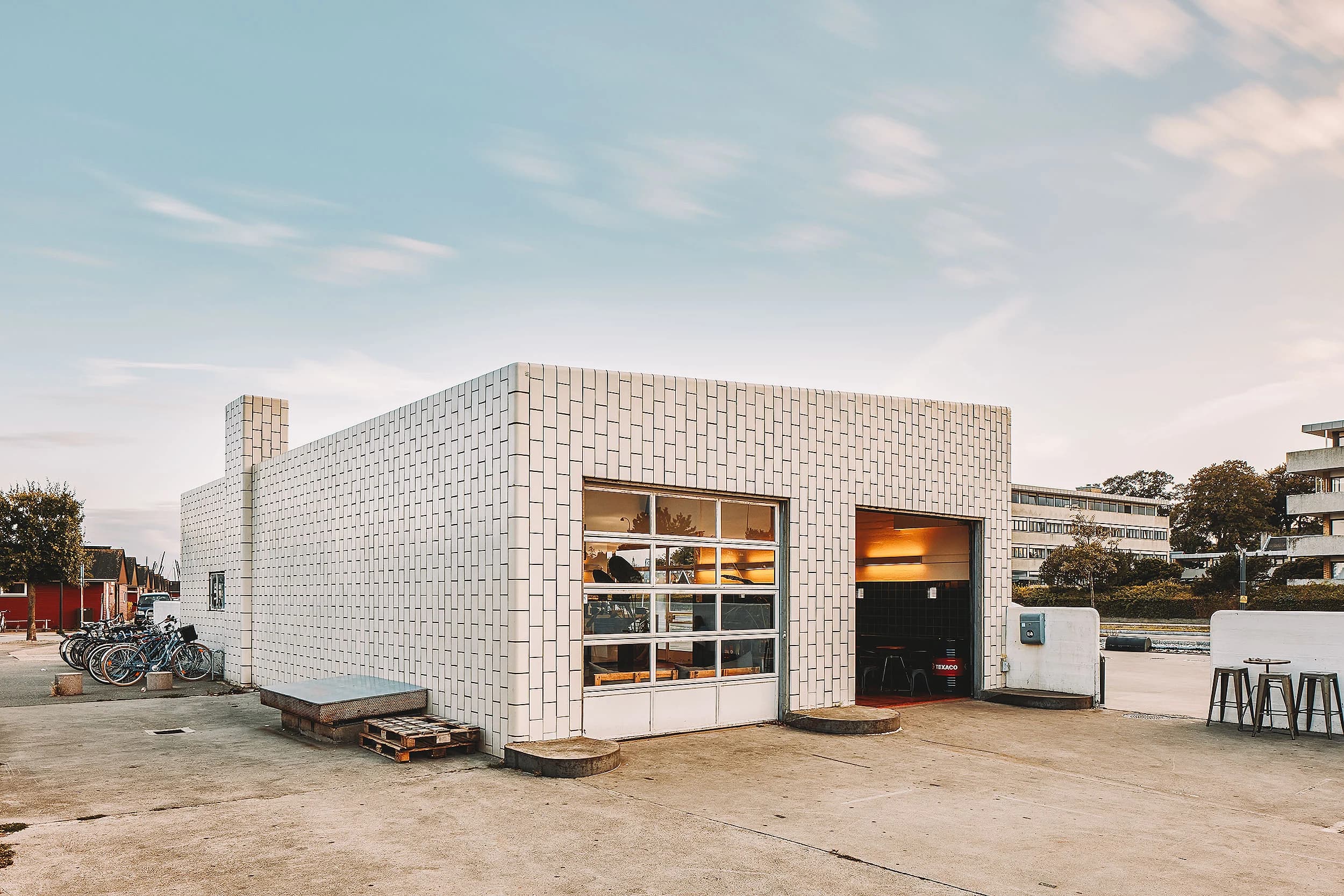
The square main building with its slanted roof originally housed a car wash, office, and storage, while the striking canopy shelters drivers at the pumps. In the evening, the canopy is illuminated by specially designed lamps, and its glossy underside reflects the light, making the roof appear as a single, unified light source.
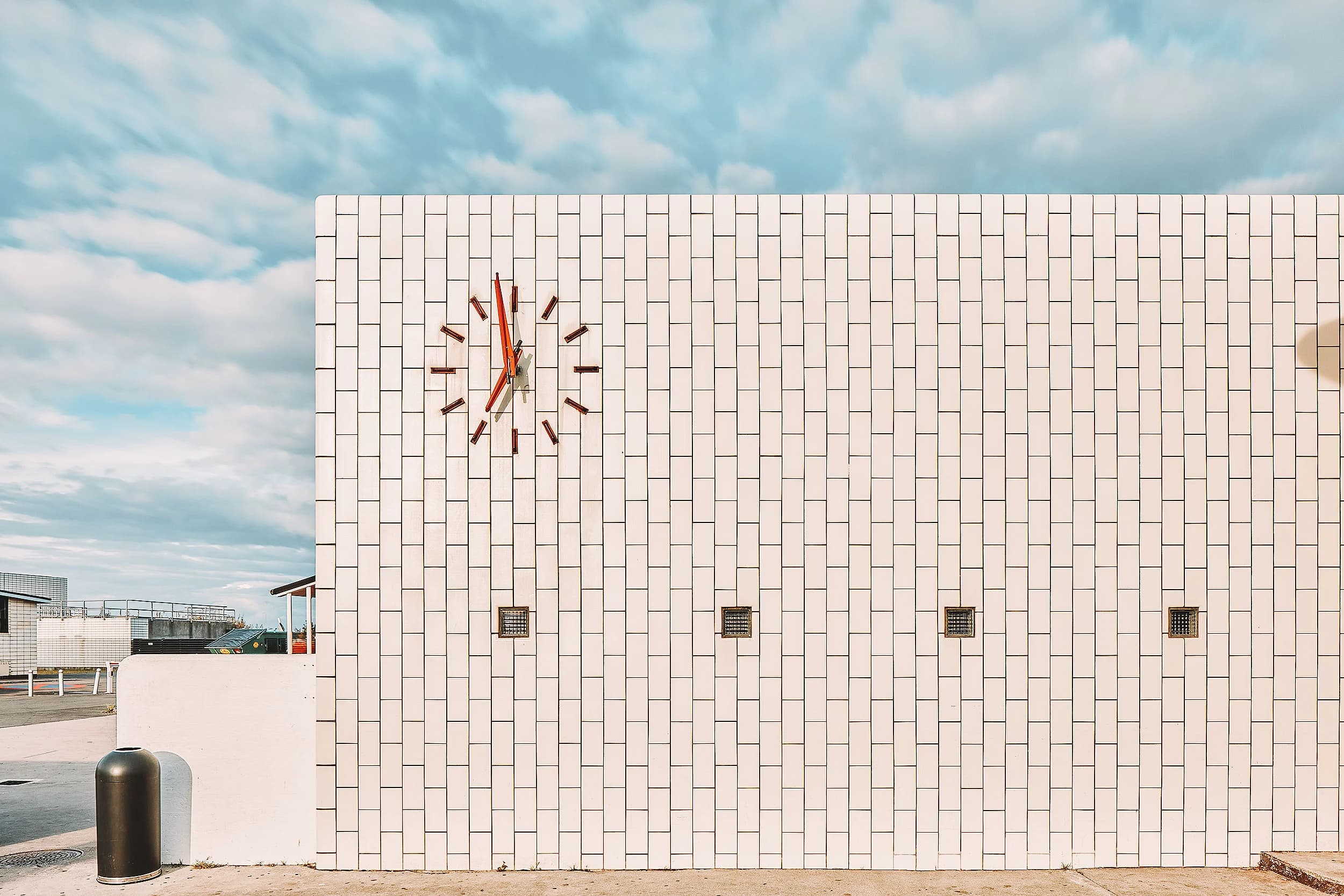
The main building is clad in white-gray Meissner tiles in a simple pattern. The gas station was built for Texaco, and where their logo once appeared on the facade, there is now a simple clock, also designed by Jacobsen. The building is now protected. If you pass by on a warm summer day, you can make a pit stop at the station, which now houses Oliver’s Garage, where burgers and ice cream are served over the counter.
The Functionalist Bellevue
Arne Jacobsen fully embraced functionalism when, throughout the 1930s, he left his mark on the Bellevue area north of Copenhagen.
Here, he designed and built, among other projects, Bellevue Beach Bath (1932), the Bellavista housing development (1934), Bellevue Theater (1936), and the gas station from 1937.
he buildings are characterized by white facades, functional layouts, and simple geometric forms, and they stand as strong examples of Danish modernism.
At the same time, they reflect international influences from movements such as the Bauhaus school in Germany and the French architect Le Corbusier, who helped develop »the white style« in architecture.
–
Source: Arne Jacobsen Design Archives
Overview
- Built 1937
Who
Architect
- Arne Jacobsen
What
Type
- Infrastructure
Style History
Where
Address
- Kystvejen 24, 2920 Charlottenlund