Raw Iron and Raw Strength at the Last Iron Foundry on Zealand
In the iron foundry in Borup, the city’s public spaces come alive as Klaus Hyrland casts everything from benches to lamps at 1,500 degrees Celsius. It takes both physical and mental endurance to bring designs by Henning Larsen and Nanna Ditzel to life.
By Anna Skovby Hansen
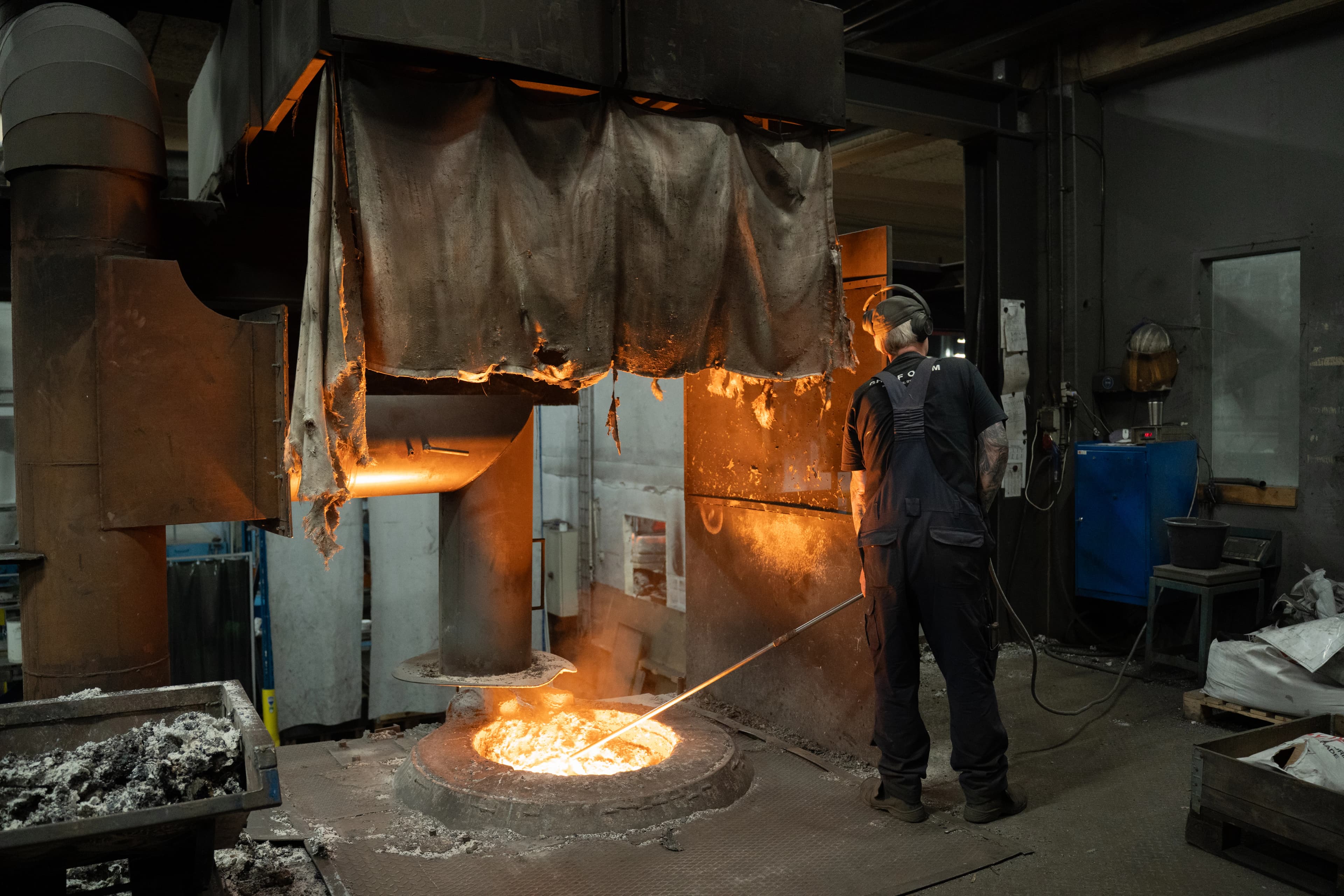
Smoke rises – along with the hairs on our arms – as the gates of the massive furnace slide open and four tons of molten iron bubble in front of our eyes. It feels like staring into a volcanic crater erupting inside the workshop hall in Borup, just outside Køge, where the iron foundry FerroFoss is located.
»Come take a look,« Klaus calls from the platform by the furnace.
The iron has transformed into something resembling molten magma, ready to be poured into the ladle dangling from a crane in front of the furnace.
»We usually cast three to four times a day, about three days a week,« says Klaus Hyrland, keeping a close eye on the temperature until the iron reaches its exact melting point.
It’s just past 9:30 a.m., and the heat continues to rise. Klaus and his colleagues have been here since 5 a.m., pulling on their work gear – a T-shirt and a pair of giant gloves that act as shields against the glowing metal.
"When I tell people I’m a mold maker, only a few actually know what that means. It’s a dying craft, because machines are slowly taking over"
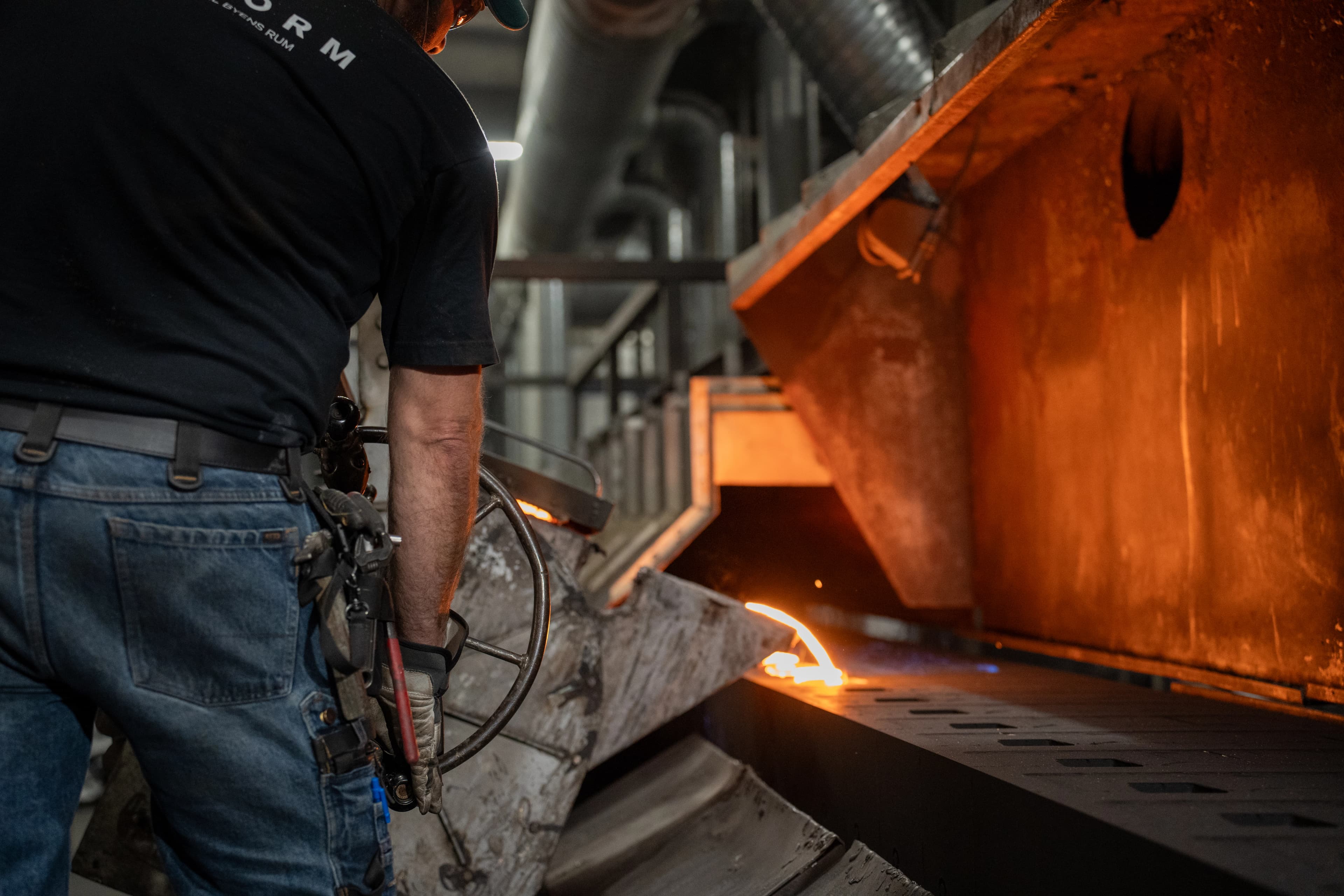
The furnace rotates 90 degrees, and the iron flows in a steady, heavy stream into the ladle. To an outsider, it looks like a scene straight out of Star Wars. Sparks shoot through the room like New Year’s fireworks, and you almost hear the dystopian tones of the Imperial March as the molten mass hits the ladle.
Klaus steps back for a moment’s breather. With his forearm, he wipes the sweat from his brow without removing the thick gloves.
He’s had hot iron splash into his eye once, he tells us, causing an injury. But it doesn’t seem to faze him now – physically or mentally.
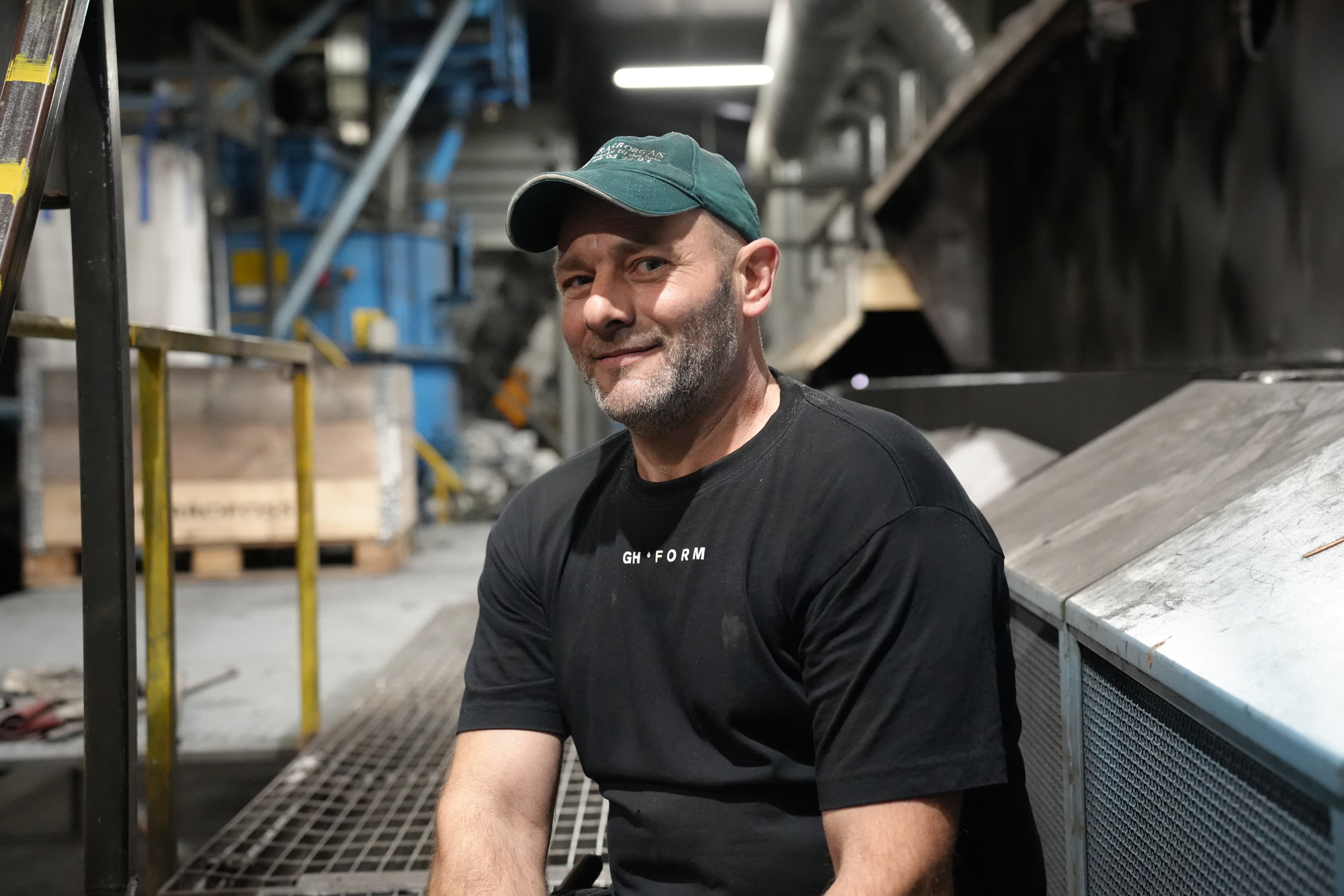
Photo: Anna Skovby Hansen – Dansk Arkitektur Center (DAC) Klaus Hyrland (b. 1976) trained as a mold maker in 1997, a qualification that today corresponds to a casting technician. He completed his training at W. Knudsen’s metal foundry in Jægerspris, where he began in 1992. He has worked at the FerroFoss iron foundry since 2013.
It’s obvious Klaus has spent a decade at the foundry. He isn’t afraid of the material, and he enjoys the demanding physical work. Lifting several tons over the course of a workday is nothing unusual.
»At least I don’t have to go to the gym after work,« he says with a smile.
Klaus Hyrland is a trained mold maker and has worked for over ten years at the company, which supplies cast-iron furnishings for urban spaces. As a mold maker, he specializes in producing and assembling molds for metal casting.
»Not many people know what I actually do. If I say I’m a mold maker, only a few understand what it means. It’s a dying craft because machines are slowly taking over,« he explains.
Although machines can 3D-scan products and create perfect copies for molds, Klaus has a special feel for the material – especially when crafting custom, nonstandard solutions.
Casting History
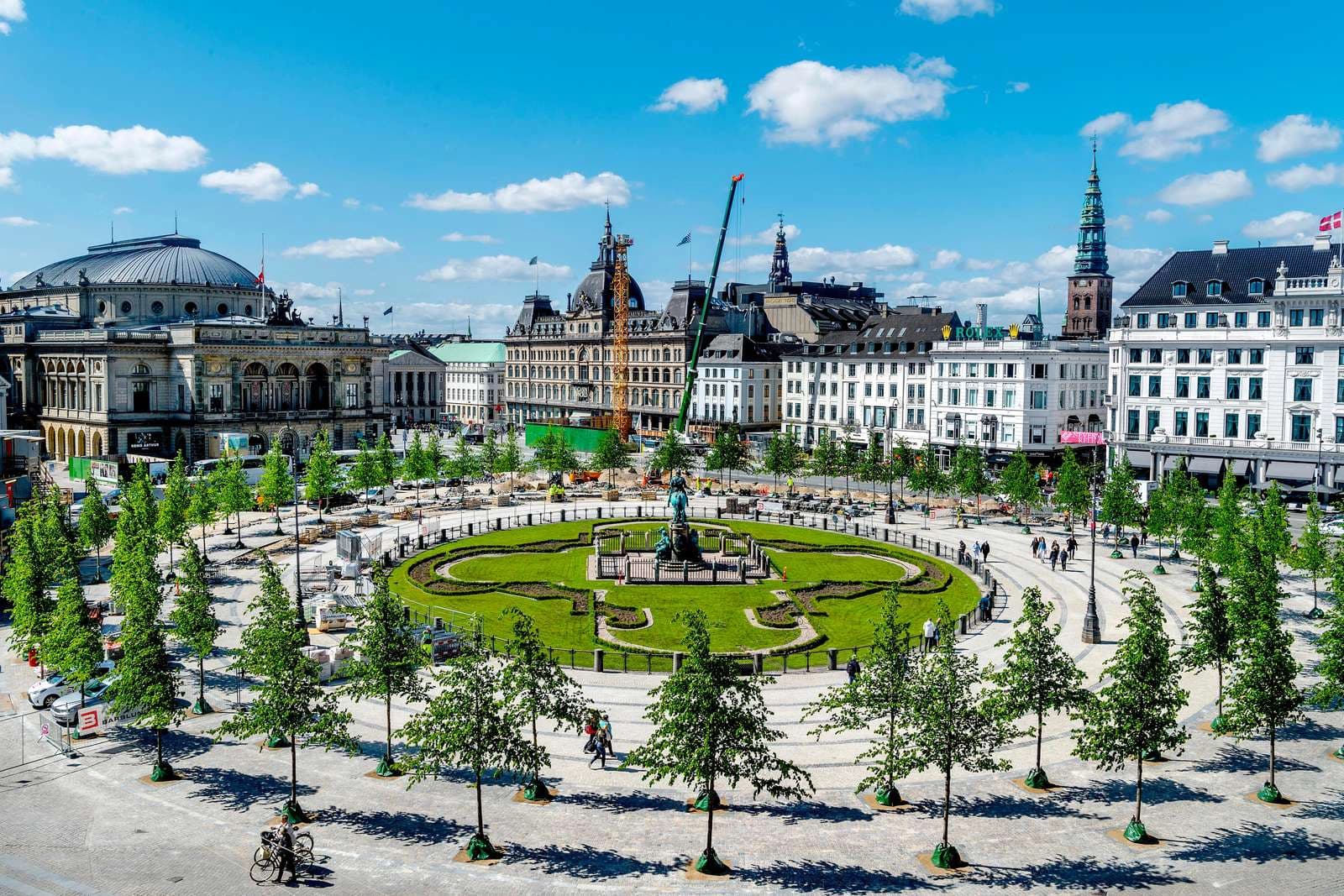
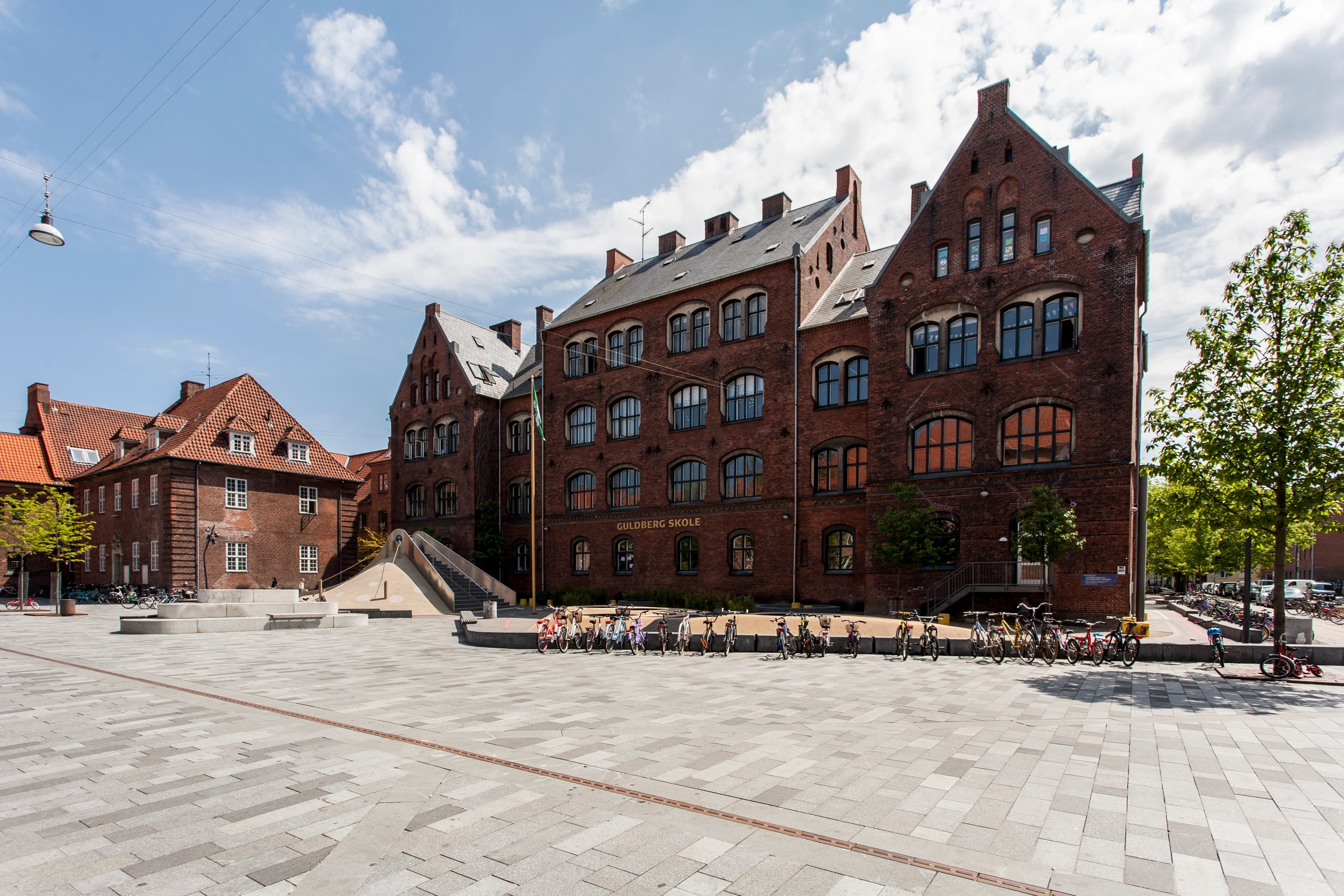
Whether you stroll through Opera Park in Copenhagen, sit on the benches at Kongens Nytorv, walk down the pedestrian street in Horsens, or follow the path along the Wave in Vejle, chances are you’ve encountered projects Klaus has helped cast. Benches, drainage grates, lighting fixtures, and planters in cast iron—they’re everywhere in Danish public spaces.
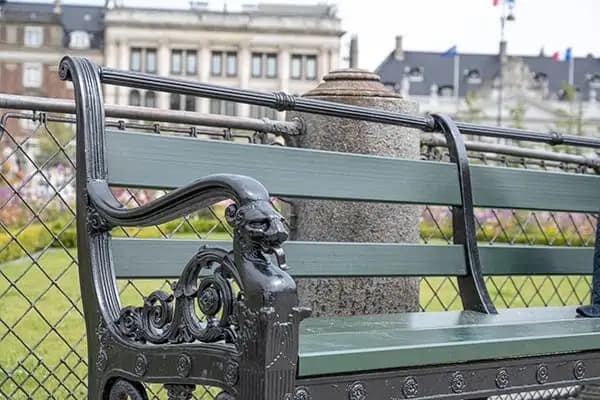
In 2019, Klaus Hyrland was tasked with renovating the historic benches that form a circle around Kongens Nytorv in Copenhagen. It was a particularly meaningful job for him, as it allowed him to use his craft expertise in full.
»I took the old benches back to the workshop and got to create two new ones. It was great fun because they were so old – there was no existing model. The benches have lots of contours, which makes them more challenging to mold,« Klaus says.
The benches carry a special history and unique details that Klaus was entrusted to preserve. In doing so, he helped maintain a piece of Danish heritage dating back to 1670, when Kongens Nytorv was laid out by King Christian V.
»A lot of what we’ve made is out there in cities across Denmark, so it can be annoying for people when I keep saying: ‘Look, I helped make that too,’« Klaus laughs – and admits he still hasn’t visited Kongens Nytorv to see the restored benches in their new glory.
A Master of Precision
When the molten iron has filled the ladle, it’s lifted over to a production line where the molds are lined up. Klaus stands on a platform and controls the angle of the ladle. With his thumb, he switches between the up and down buttons, eyes locked on the molds below. The red-hot mass flows into them one by one.
It’s precision work of the highest degree: too much, and it spills over; too little, and the mold won’t fill.
»You have to be extremely focused while casting. You’re working with a very hot material that needs to be poured precisely. You have to keep the pace up. It’s molten iron, so you can’t drift off – otherwise you’ll pour it everywhere,« Klaus Hyrland says.
Working with heavy metals demands both physical and mental strength.
»It can get a bit monotonous casting for four or five hours straight, so I like the variation between casting, mold work, and sanding,« he explains.
Casting is the art of repetition without losing focus. Whether it’s mold number one or mold number five hundred, Klaus must stay sharp. And it’s tough physical labor. Earlier in his career, much more of the work was done by hand. His first job after training was at a foundry where he made molds for artists’ sculptures – a process that involves filling a box with sand and compacting it.
»I like that my job is physically demanding. I want a combination where I’m both physically challenged and professionally challenged so I can keep improving,« Klaus Hyrland says.
Behind the Foundry
Christian Wolff Petersen is the owner of GH Form, a company that designs furniture for urban spaces, and FerroFoss, the iron foundry responsible for casting the products GH Form designs and sells.
The history of the foundry dates back to 1859, when it produced stoves and hand threshers for the agricultural sector.
In 1986, Christian Wolff Petersen’s father took over what was then called Holbæk Iron Foundry. But the fall of the Berlin Wall in 1989 brought economically challenging years, and many iron foundries were forced to shut down as competition from Eastern Europe intensified.
In the early 1990s, Christian Wolff Petersen, together with his mother Jane Wolff Petersen, shifted the company’s focus to high-quality design products for public spaces – an initiative that became GH Form.
Close Collaboration with Designers and Architects
Collaboration with designers and architects has been crucial to the company’s success.
While the casting continues in the workshop, Christian Wolff Petersen – owner of GH Form and FerroFoss – gives a tour of the adjacent storage building, where rows of finished products stand: the classic Copenhagen bench, rainwater grates, and custom-designed solutions for brands like Tivoli, Carlsberg, and Danske Bank. He runs his hand over the raw, brown cast iron, which gets its characteristic finish when it comes into contact with water.
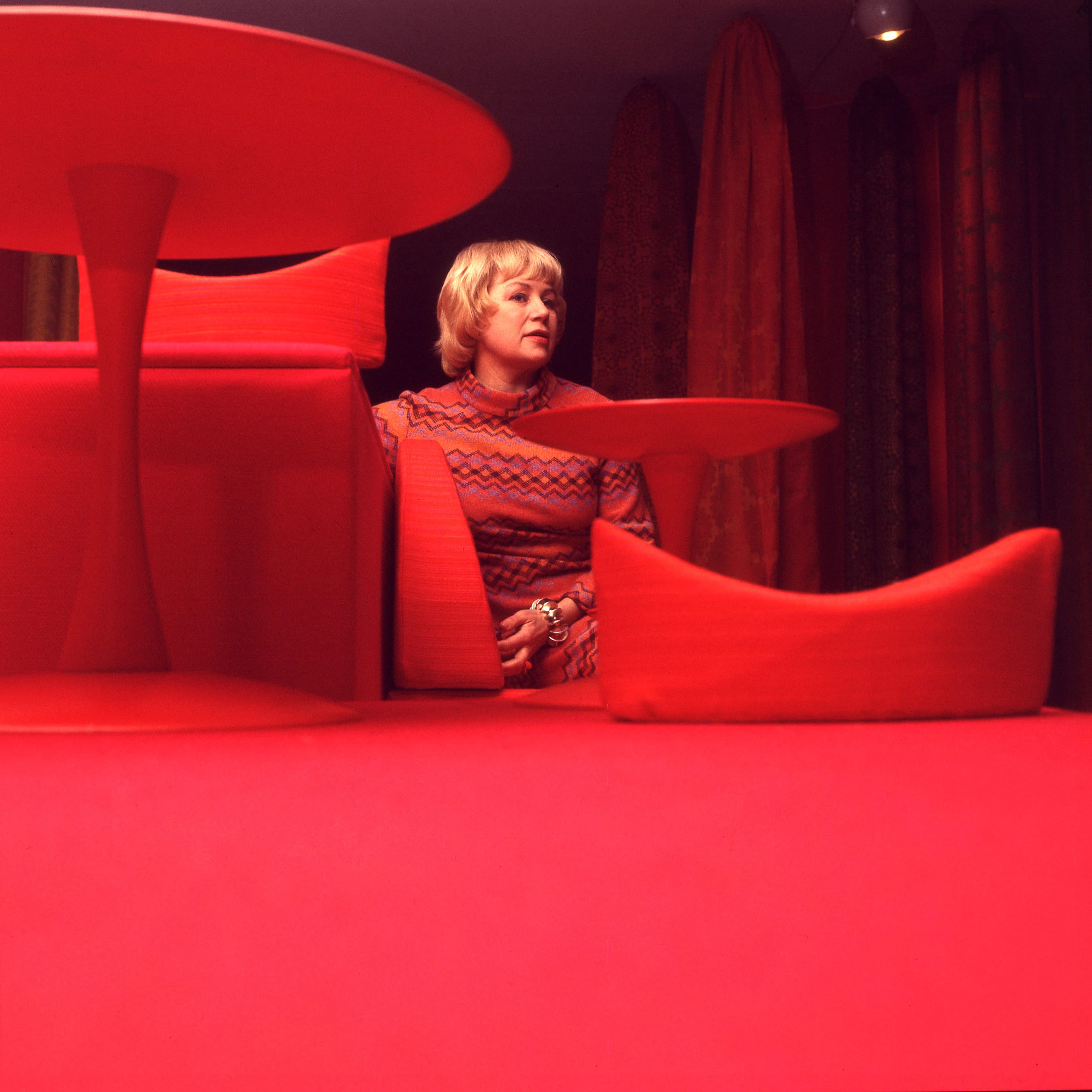
»I don’t have strong opinions about how the products should look – I leave that to the experts. Over the years, we’ve developed products together with Nanna Ditzel, and Knud Holcher, just to name a few. I don’t think you get far by only making cast-iron furnishings. You also need good design behind it,« Christian Wolff Petersen says.
Back in the workshop, large crates are filled with so-called lokbrikker – scrap pieces from perforated steel plates. They’re melted down and given new life. What once were leftovers become benches, lamps, trash bins, and planters familiar from public spaces across the country.
The short transport distance also offers a significant environmental benefit.
»If we deliver products for a project in Copenhagen, the raw material is just 40 km away – the scrap pieces from Ballerup. They travel 42 km to FerroFoss for casting, and then about 55 km back to Copenhagen as finished products,« Christian Wolff Petersen explains.
The last drops from the ladle are poured, and on the other side of the line, square tiles emerge with shiny silver guide strips – one step closer to becoming part of the public realm.
Projects
Nanna Ditzel - The City Bench
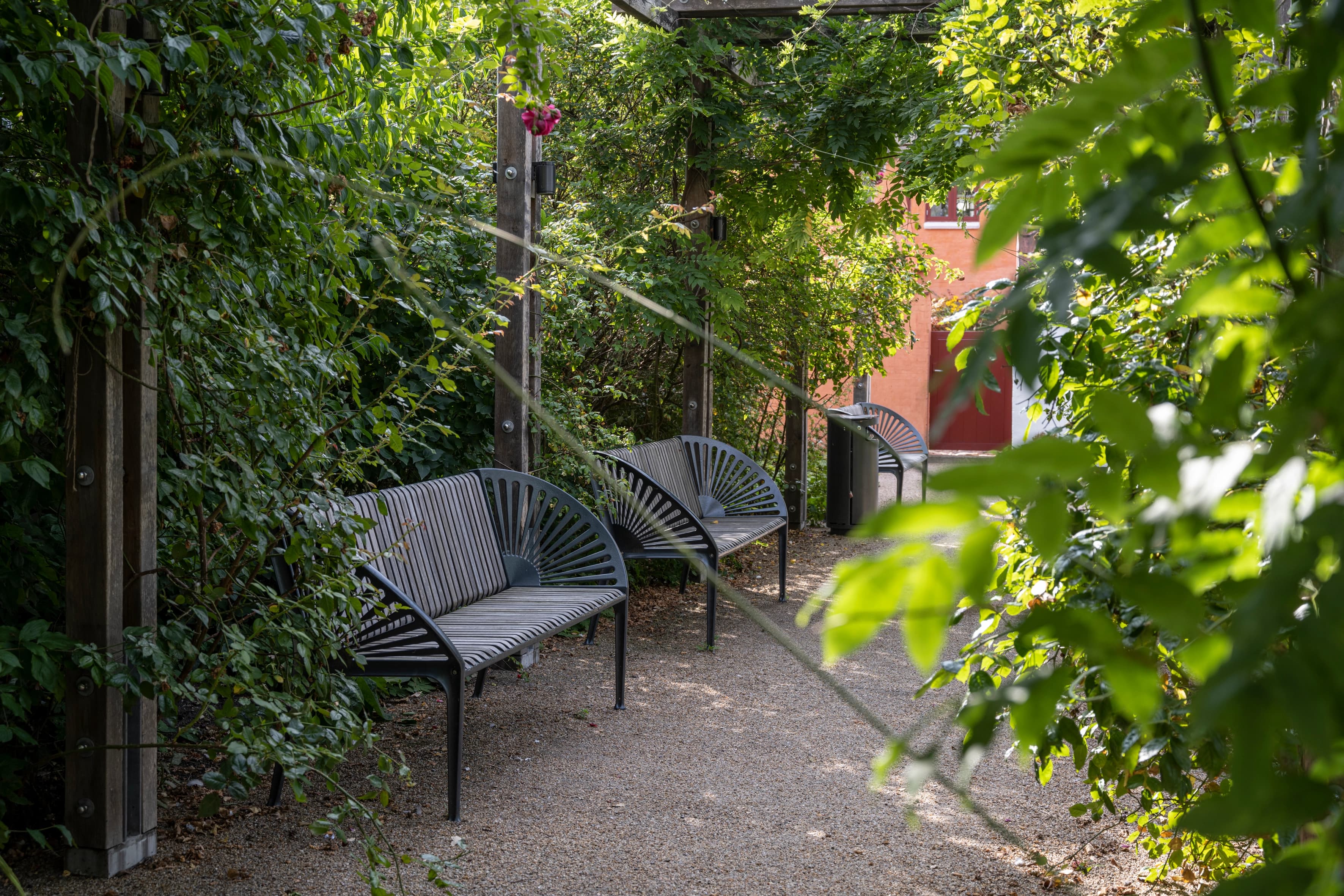
One of Nanna Ditzel’s contributions to urban furniture is the City Bench, which combines functionality with sculptural aesthetics. At the foundry, the bench is brought to life in cast iron.
Kongens Nytorv - The Benches
Klaus Hyrland was given a special assignment to restore the highly detailed benches at Copenhagen’s Kongens Nytorv. Here is the result of his casting work, which has recreated the benches’ original expression.
Knud Holscher - Tactile Guidance Strips
A familiar pattern in the urban landscape is Knud Holscher’s design for the Pictoform series – a tactile guidance system developed to assist blind and visually impaired pedestrians in public space. GH Form is responsible for casting this product.
Mere fra DAC Magazine