Get around the exhibitions
Get an overview of DACs exhibitions in BLOX – see where they are in the building and how to experience them.
Cities for People
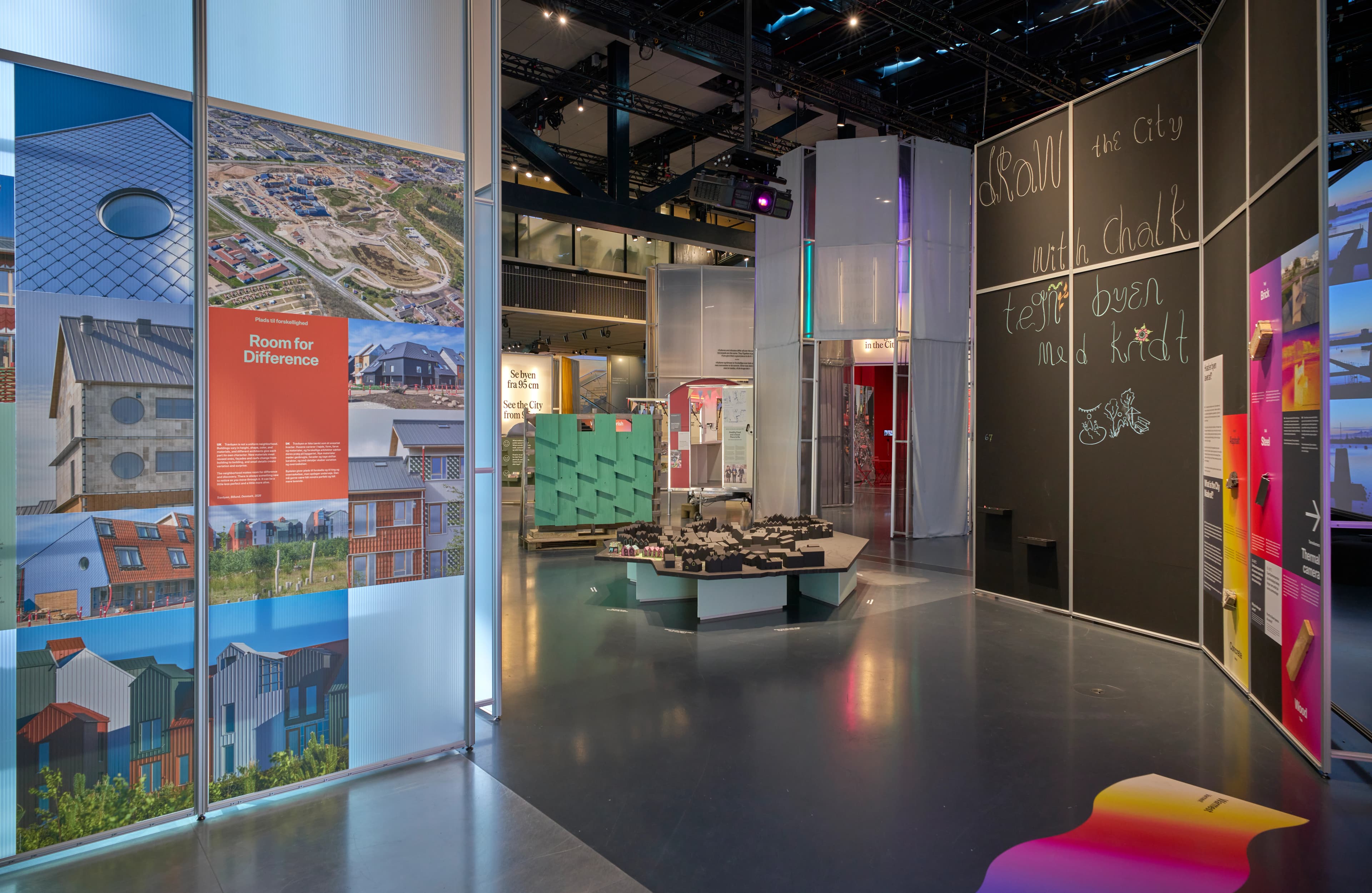
The Cities for People exhibition is located in Forum on level U2. The exhibition can be accessed by stairs, escalators or lift. Wheelchair users can take the lift from the DAC Design Shop or Guldgalleriet to Forum. There are no thresholds at the entrance to the exhibition, and the doors remain open.
The exhibition is generally open and spacious, with plenty of room for wheelchair users to move around. The passages between some installations are narrower, and when the exhibition is busy, some of the enclosed installations may feel crowded. Some parts of the exhibition are not accessible to wheelchair users. These include the food truck in Does What We Eat Shape the City?, which visitors can enter via steps, as well as the See the City from 95 cm installation, which has a low passage. The rest of the exhibition can be experienced without using these installations.
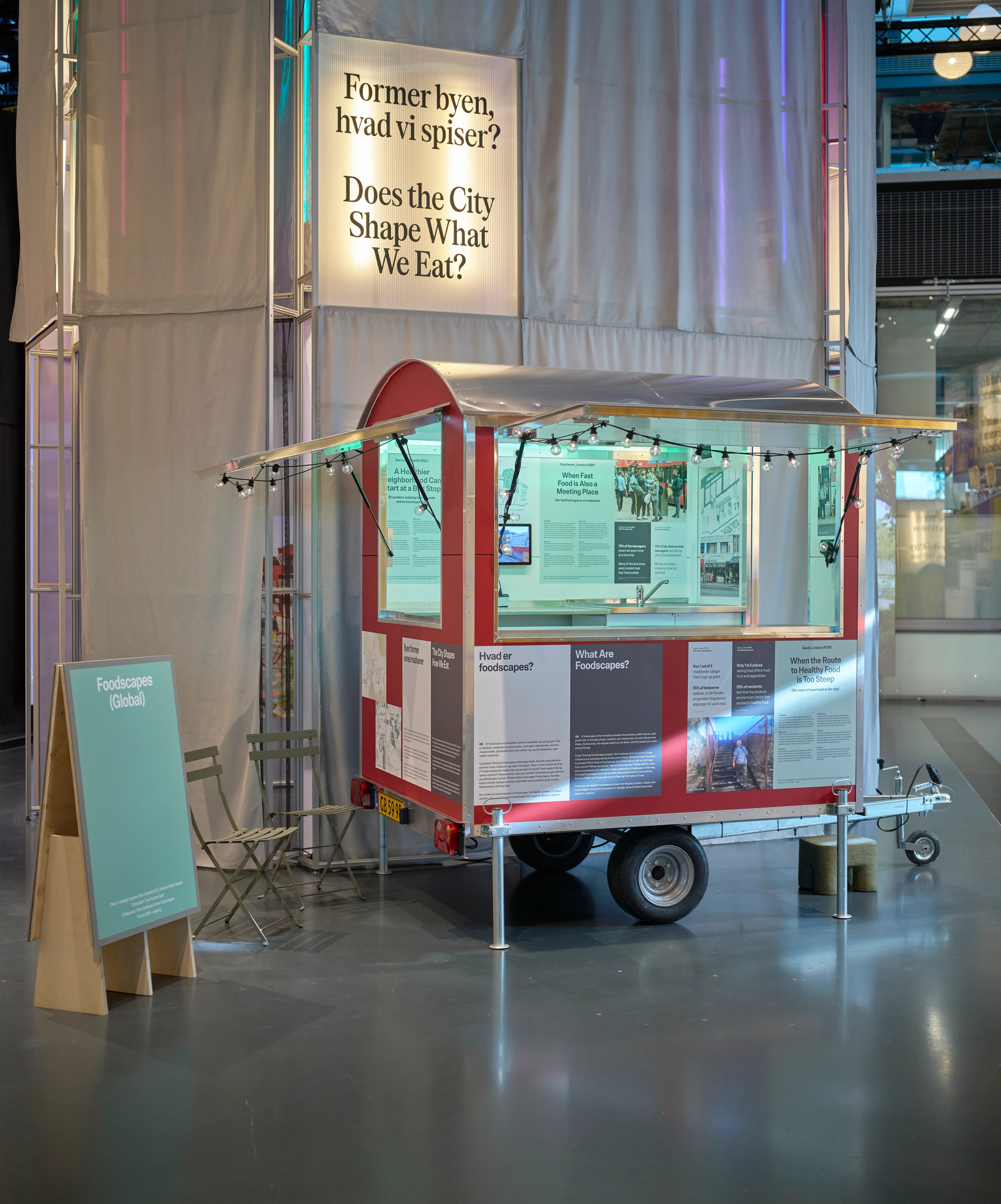
The exhibition has dark concrete floors and no tactile guidance paths. It contains a large amount of text, with many texts extending from floor level upwards. This may make some of the information more difficult to read for wheelchair users and visitors with visual impairments.
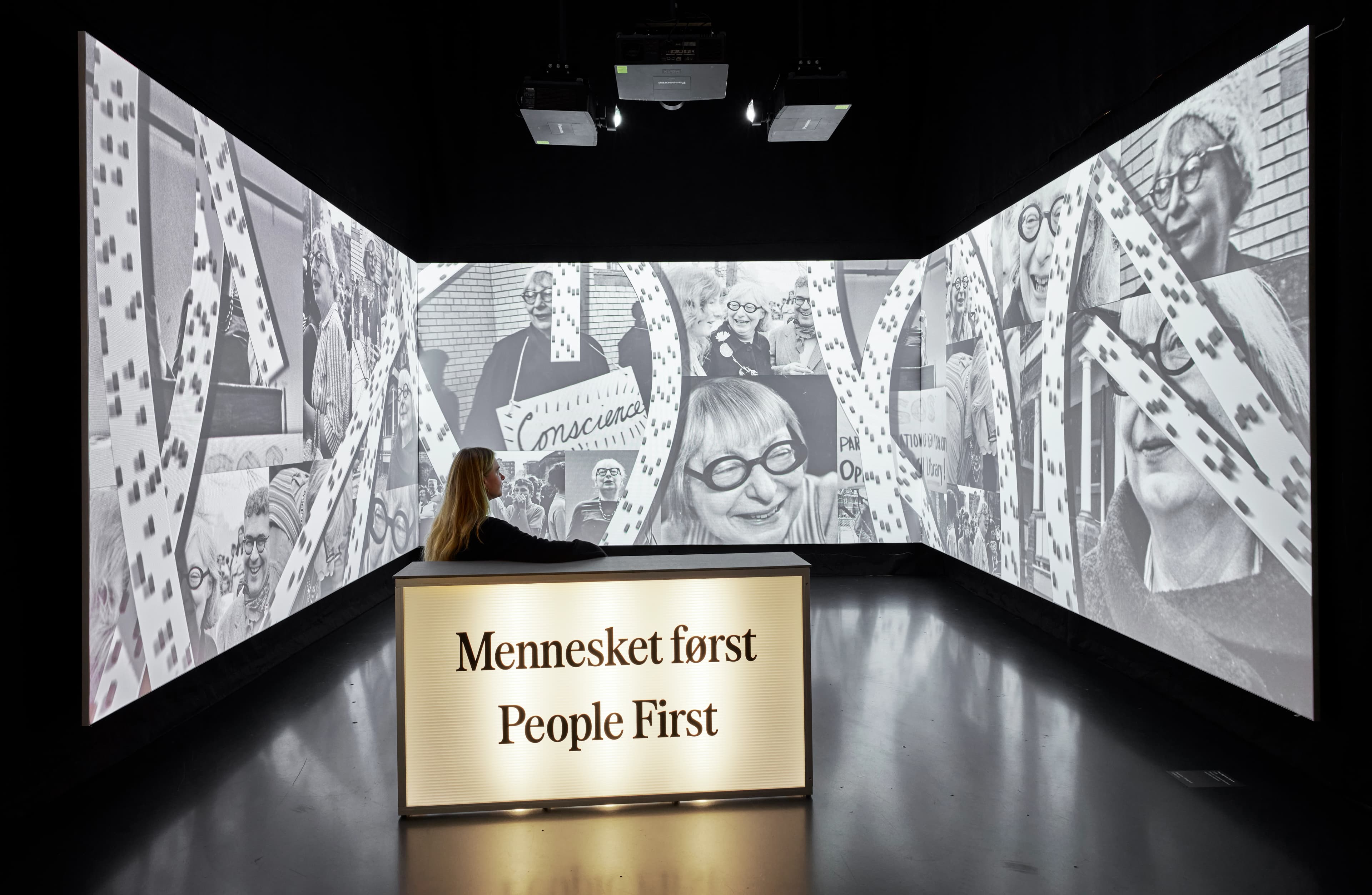
There are many large screens and moving images throughout the exhibition. Several of the screens extend from floor to ceiling, and there is generally a high level of movement and changing imagery. In the film installation The Right to Space, rapidly changing images are shown simultaneously on three large screens. The installation also has relatively loud sound. The many screens, lighting effects and sounds may therefore feel overstimulating for visitors who are sensitive to light or sound. Sound from several installations can be heard at the same time, and there is no designated quiet area within the exhibition. Some videos have no spoken dialogue and consist only of moving images or ambient sound. Some videos and audio experiences are in English without Danish subtitles. Work is underway to add subtitles to some of the content following the opening.
The exhibition includes several interactive experiences. Among other things, you can take a quiz, try the Count Like Gehl installation and create your own digital urban creature in What We Cherish. Several of the experiences are screen-based and therefore require visitors to be able to see the content on the screen. In What We Cherish, small rugs are placed on the floor.
There are several places to sit throughout the exhibition, including café chairs, benches and poufs. There is space for wheelchairs next to several of the seating areas. There is no separate or screened-off area within the exhibition where visitors can take a break from the sound and visual stimuli.
What the BLOX

The exhibition What the BLOX is a small exhibition located in the Stair Gallery, which spans five landings. The exhibition begins on the fourth landing, accessible via the escalator or the Rainbow Staircase from the Forum. We recommend starting your visit here, but the exhibition can also be accessed through the DAC Design Shop.
Three out of five landings are accessible by lift from the DAC Design Shop. However, please note that the lift only goes up to the third landing, meaning the top part of the exhibition, including the introduction text, is not accessible by wheelchair due to technical limitations. The lift measures 100 x 77 cm. If your wheelchair does not fit in the lift, DAC offers a wheelchair you can borrow, available to guests with reduced mobility as well. Please reserve it no later than 12:00 the day before your visit by writing to welcome@dac.dk. Please note that there is no elevator access to this exhibition.

All landings are covered with linoleum flooring, and there are no tactile guiding lines. Spot lighting is used throughout the exhibition and may be disturbing to light-sensitive visitors.
Some video content is also included, which may feel overstimulating. Videos are either silent or in Danish with English subtitles. On the first and fourth landings, reflected lighting on the floor may cause discomfort for some guests.
On the third landing, several sculptural elements are placed in the middle of the space, which may limit mobility for wheelchair users. On the first and second landings, however, there is more room to navigate.
The DAC Photo Booth is located on the first landing. This selfie station allows visitors to take a free photo and is illuminated with bright light to ensure high image quality.
So Danish!

The exhibition is in the Golden Gallery on Level U1. Use the stairs up from the DAC Design Shop or take the elevator.
The exhibition starts on the landing in front of the Golden Gallery. If you use the elevator, you should start your visit on the landing and read the introduction to the exhibition. You can also take an audio-guide from here. The audio-guide will guide you through all the exhibition in Danish or English. Start by selecting the language when you take the guide.
You activate the guide throughout the exhibition every time you go past a small transmitter marked on the wall. If you are partially sighted, it can be a little difficult to see the small transmitters.

The So Danish! exhibition is rather dense, with many exhibits. When there are many guests the room can feel very crowded, and it may also be difficult to move around the exhibition in a wheelchair. We recommend that you visit one of the other exhibitions and come back a little later.
The exhibition contains a lot of text and photos. All text is in both Danish and English.
Return the audio-guide when you leave the So Danish! exhibition. It is not part of the other exhibitions.
This Is Not a Forest
This is Not a Forest is a small exhibition that stretches from Bryghuspladsen to DAC’s Passage. The exhibition begins at Bryghuspladsen, which can be accessed via stairs or escalator. Tactile guiding lines are available at Bryghuspladsen. Please note that parts of the guiding lines are covered by logs that form part of the exhibition. We recommend starting your visit here, but the exhibition can also be experienced from Havnepassagen. DAC’s Passage can be accessed by guest elevator from both Bryghuspladsen and Christians Brygge. DAC offers wheelchairs for loan to wheelchair users and guests with reduced mobility. Wheelchairs must be reserved no later than 12 noon on the day before your visit by contacting Welcome at welcome@dac.dk.

To enter DAC’s Passage, visitors must pass through a revolving door. At DAC Welcome, the flooring is linoleum and there are no tactile guiding lines. This part of the exhibition includes spotlighting, which may be uncomfortable for visitors who are sensitive to light. Light patterns are also projected onto the floor and may be overstimulating for some visitors. The exhibition features changing sounds and scents, which some visitors may find distracting. Scents can be experienced through openings in the wooden installations. Please note that not all scent experiences are accessible to wheelchair users due to their placement. Several wooden pieces of furniture are placed throughout the exhibition, but there is generally sufficient space for wheelchair users to move around. One of the sound installations is experienced by lying down on a piece of furniture, which may be difficult or inaccessible for some visitors. In Havnepassagen, a film is shown without sound or subtitles.

Accessibility in DAC


Do you have a question or inquiry?
Send an email to info@dac.dk. We’ll make sure it reaches the right department and get back to you as soon as possible.