Design Classics at a Child’s Scale – Childhood Finds Its Place in Modern Interiors
Danish design classics are a hit in modern homes – and the children’s versions are just as popular. They’re small, charming, and look exactly like the originals. They also tell a story about how childhood has become an integral part of today’s interior design.
By Ida Elva Hagen
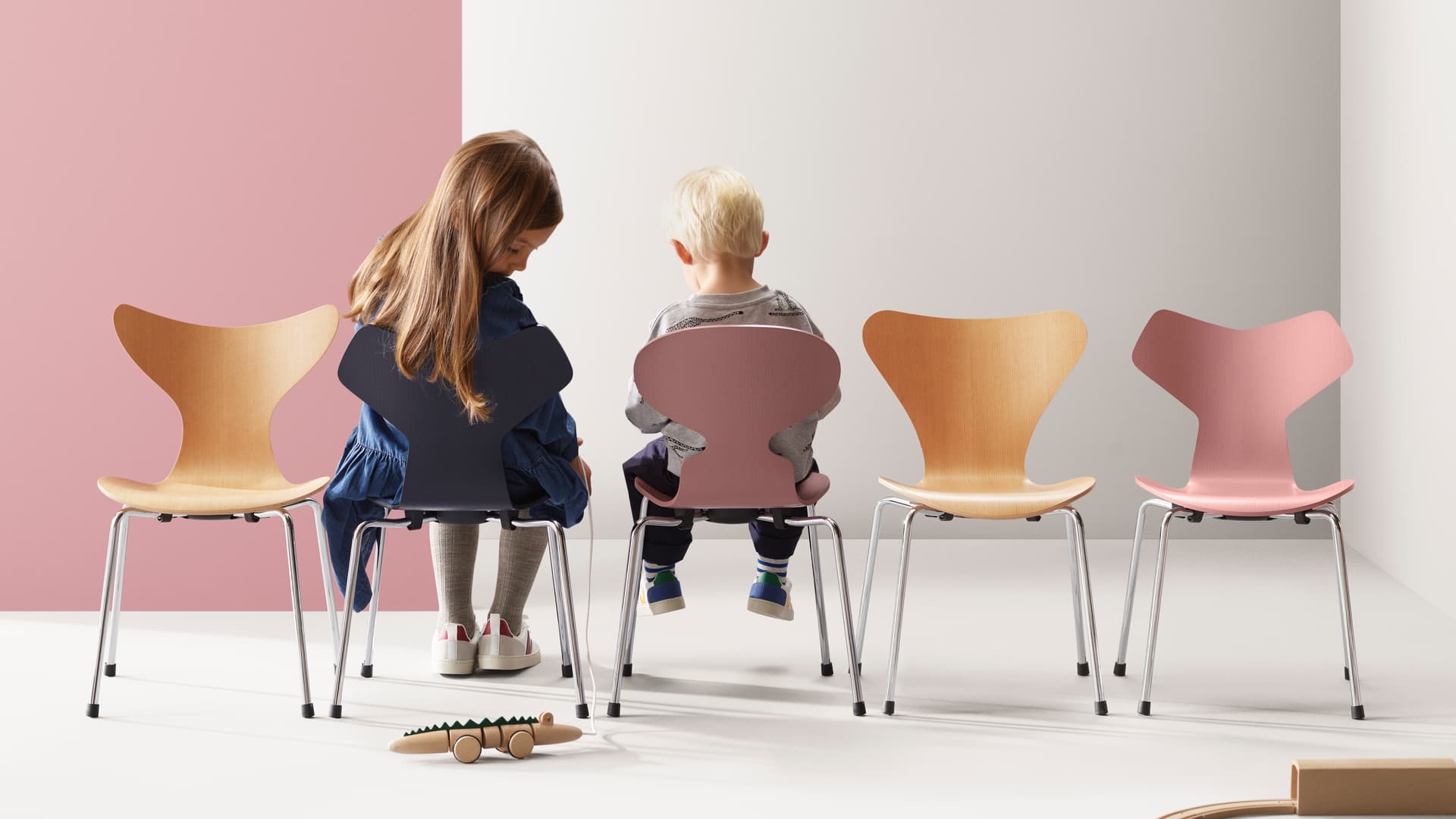
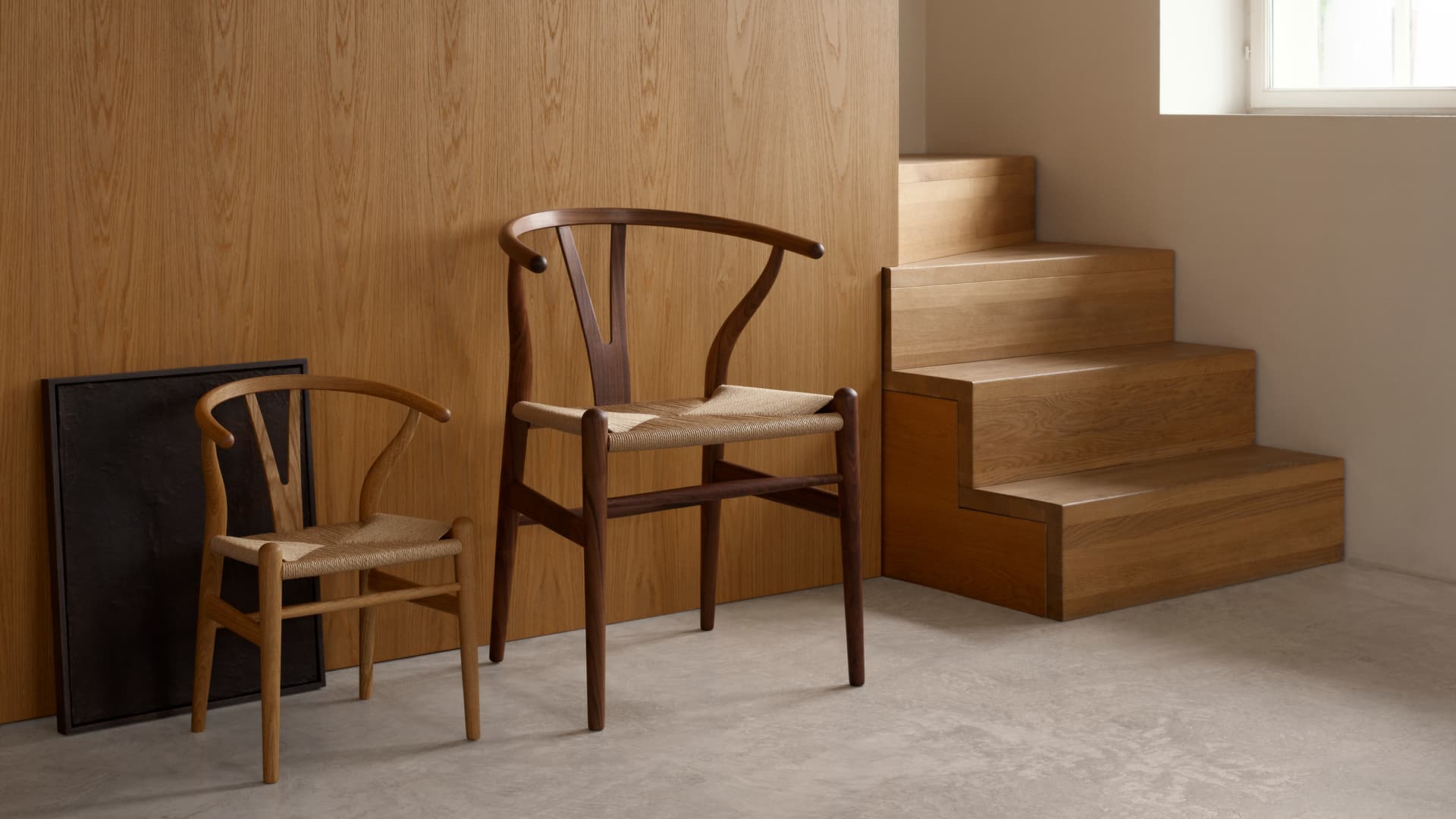
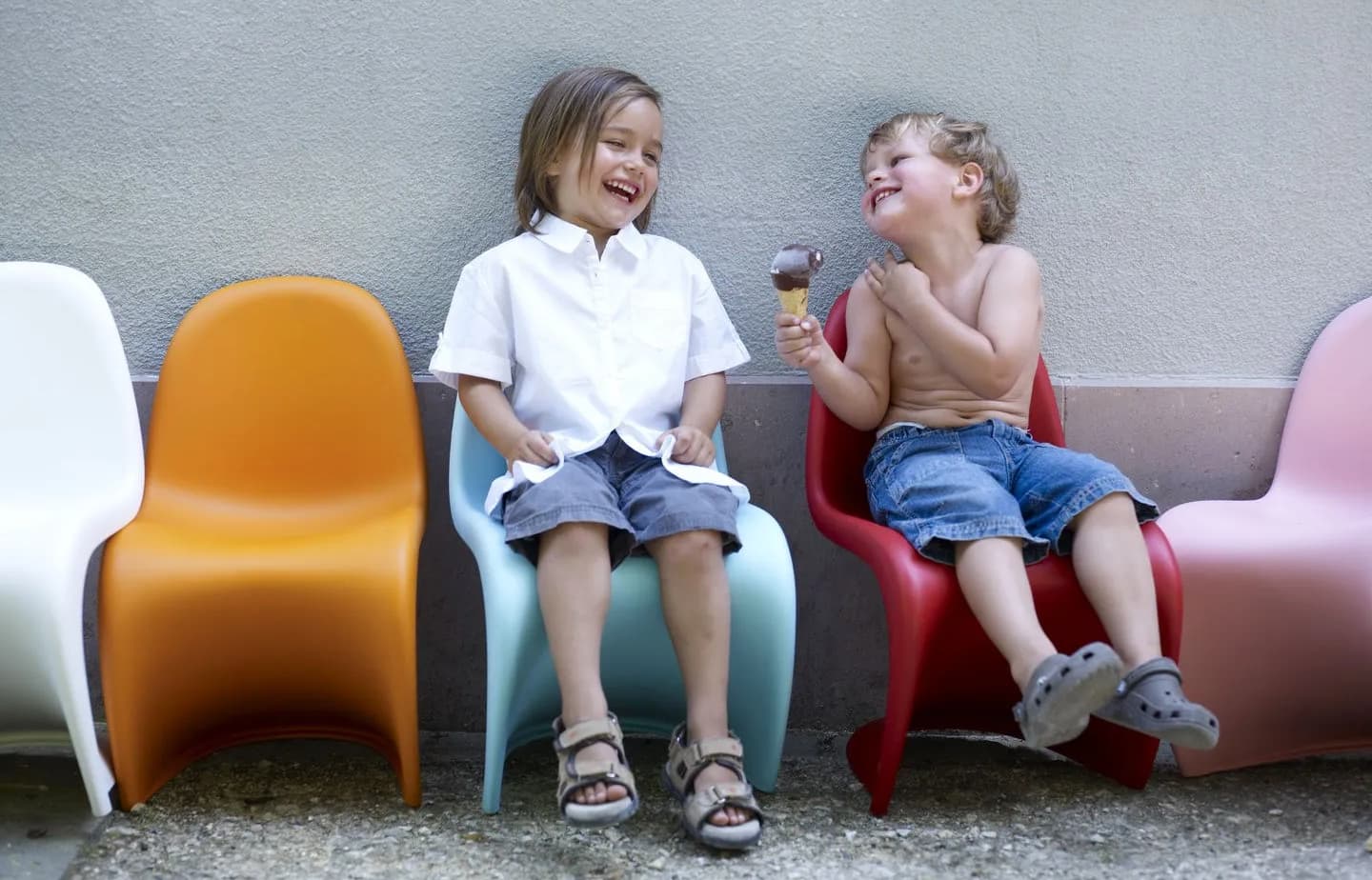
Design icons have held a special place in Danish homes for decades. They’re associated with exceptional craftsmanship, functionality, and timeless aesthetics. However, since the early 2000s, these classics have been joined by smaller versions designed for children. Today, kid-sized editions of the »Series 7«, the »Ant«, the »Panton Chair«, and the »Wishbone Chair« are widely available – and they’re nearly indistinguishable from the originals.
But they’re more than just scaled-down design chairs. They also raise questions about how we understand childhood, aesthetics, and the home as a whole today. What does it mean when design icons originally created for adult bodies and spaces move into children’s rooms? Does it signal that childhood has gained its own place in interior design – or that adult aesthetics are expanding their reach?
Designing for movement
Adult chairs are made for sitting. Children are in constant motion. So do children even benefit from sitting still in a chair? You can actually learn a lot about children simply by observing how they sit, says Kjeld Fredens, a neuroscientist and medical doctor. Children twist and turn, shift positions, kneel, perch on the edge of the seat, or half-climb onto the table – and according to him, that’s a sign of something healthy.
»A child’s nervous system is constantly seeking new sensory input from muscles, joints, and the sense of balance. The body continuously sends information to the brain about position, movement, and gravity. That’s why variation in movement is not a disturbance, but a biological necessity,« he explains.
In other words, movement isn’t a problem – it’s a prerequisite for learning and well-being. Especially in institutional settings, classrooms are often arranged in ways that favor stillness. Flexibility, therefore, is more important than perfect ergonomics, according to Kjeld Fredens. He adds:
»Furniture can either support or restrict a child’s natural urge to move. If a piece of furniture is designed based on the idea that a child should sit in one correct position, it quickly comes into conflict with the body’s need for variation.«
When children sit still for long periods, sensory stimulation from the body decreases, meaning the brain receives fewer signals from muscles, joints, and the balance system. This can negatively affect a child’s energy and attention, he explains. Seen in this light, the question isn’t whether children can sit still, but whether they should.
At the same time, children tend to imitate the adults around them at home. Knud Erik Hansen points out that children often want the same things as their parents – including design chairs.
»Children want to copy adults – that’s why they also drive around in little cars,« he says.
When the child’s chair becomes an extension of the adults’ interior design, it turns into more than just a piece of furniture – it becomes a way of mirroring the adult world.
Which really leaves the question: what actually makes a good chair for children?
"We want to signal that we value quality and are mindful that things should last longer."
Furniture with a long lifespan
Nicolai De Gier, architect and professor at the Royal Danish Academy, believes that a chair’s strength lies in its versatility – its ability to function in different contexts over time. It could, for example, be reused as a side chair – or perhaps as a bedside table. That way, it doesn’t lose its value just because the child has grown.
At the same time, he emphasizes the importance of understanding the specific needs of the user when designing furniture – including furniture for children. At a time when sustainability is high on the agenda, it becomes crucial to consider which products we bring into the world.
»Designers need to think carefully before creating new things. One of the major problems in the world is that we use too many resources,« he says.
He also points out that the iconic status of design classics – combined with their craftsmanship and timeless design – allows them to be passed down through generations. And when the youngest siblings can no longer use them, parents can take comfort in the fact that the furniture retains resale value. According to lifestyle expert Mads Arlien-Søborg, this aligns closely with the signaling value of making more conscious purchasing decisions.
»We want to signal that we value quality and are mindful that things should last longer,« he says.
Thinking sustainably and investing in quality is, in itself, a kind of luxury. As a result, interior design also becomes a way of expressing identity and achieving a certain level of social status. According to him, this is particularly evident in urban environments among well-educated, financially secure parents.
At the same time, a distinct aesthetic is associated with design chairs for children. Knud Erik Hansen explains that many families – including his own – keep the chair even after their children have outgrown it, simply »because it’s cute.« It remains in the home as part of its ongoing story.
The first piece of children’s furniture
Children’s furniture is not a new phenomenon. Kirsten Hegner, who has researched the history of children’s furniture and design, explains that we actually have to go all the way back to the Viking Age to find the first piece of children’s furniture – the stool. From the 1500s through the 1800s, it was widely believed that crawling was an animal-like form of movement. As a result, furniture was designed to force children onto their feet.
In the 19th century, furniture became part of a growing educational ideal in which childhood was seen as a distinct phase of life. These pieces of children’s furniture were especially found in middle- and upper-class homes. They were intended to shape, train, and entertain the child – while also preventing accidents. It wasn’t until the early 20th century, with the rise of industrialization and mass production, that they became accessible to a broader population.
In the 1930s, a more child-centered approach took hold in Denmark. Progressive education gained ground, and furniture was no longer meant solely to discipline, but to support play and movement.
»Some of the leading educators and philosophers began to recommend that children have furniture of their own, and it became part of the pedagogical approach that children should be able to play, build, and use furniture in different ways,« says Kirsten Hegner.
Later, several furniture designers began developing pieces based on children’s specific needs – including Nanna Ditzel with the »Trissen« and Hans J. Wegner with »Peter’s Chair«, which he designed as a christening gift for his colleague Børge Mogensen’s son, Peter. Both pieces are built on the idea that children should be able to interact with and experiment with them.
In the 2000s, the development took another turn. It was no longer just specially designed children’s furniture making its way into homes, but also established design classics in child-sized versions. This shift reflects how children have gained a certain status in society. Childhood is now regarded as a phase of life in its own right – whether expressed through design classics or other types of children’s furniture.
From institution to interior design
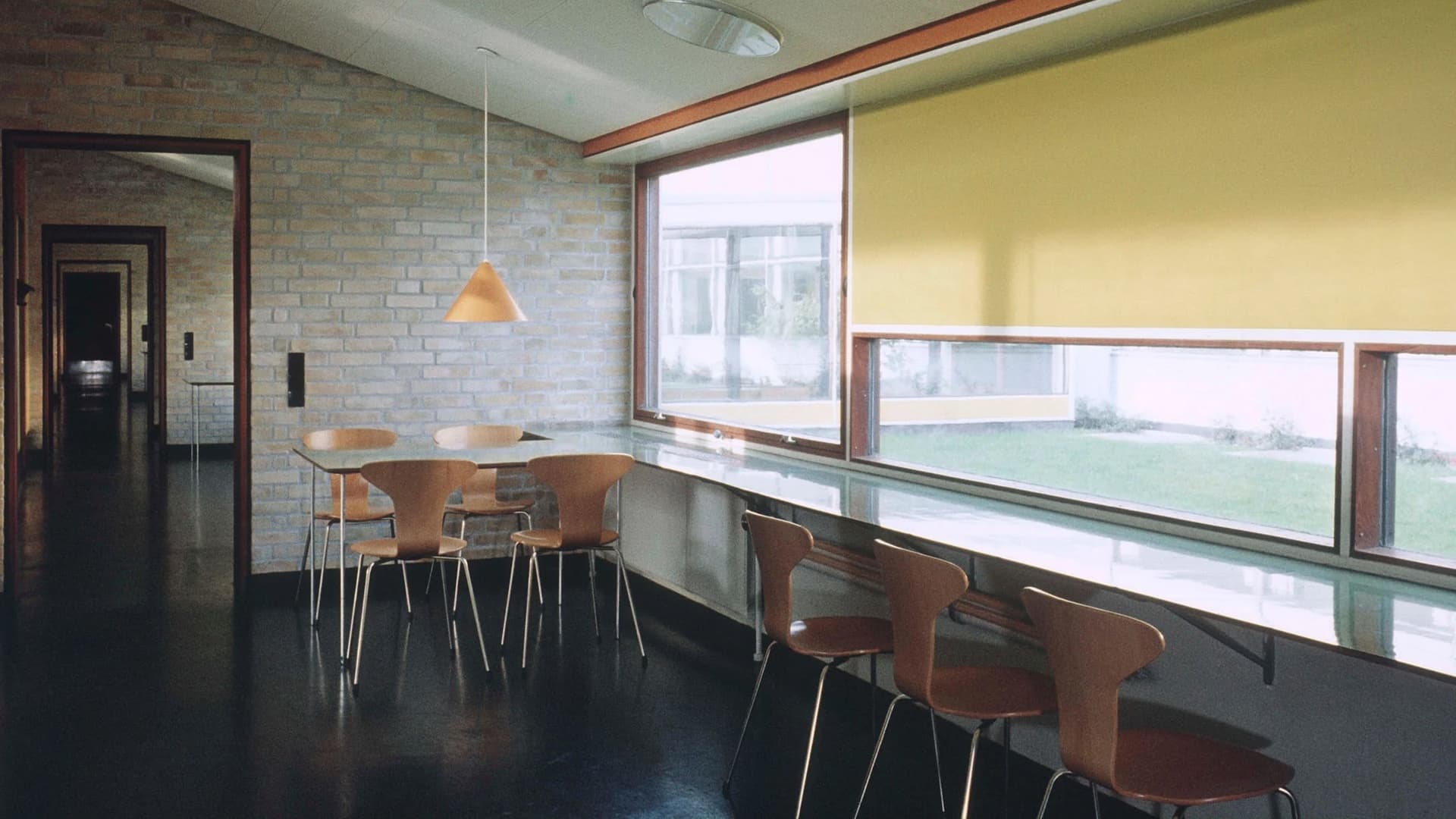
It is not entirely unheard of for Danish design icons to be scaled down to child size. As early as the 1950s, Arne Jacobsen developed chairs in several sizes for Munkegård School in Dyssegård, north of Copenhagen – including the »Munkegård Chair« and »The Tongue«, which were adapted to each individual grade level. The chairs were functional and durable, but they were also part of the school’s overall aesthetic. In fact, many of his designs for the school later became internationally known.
Today, they have moved into children’s rooms – and into open-plan kitchen and living spaces. They have become furniture for the child at home, rather than institutional furniture, as they were originally conceived in Arne Jacobsen’s studio. At the same time, we are seeing a clear shift in housing culture. More Danes place a high priority on interior design and are willing to invest more in it – including for their children. According to Mads Arlien-Søborg, the dominant trend today is personalized interior design.
»We make sure to include the entire home in the overall interior design plan we have for our living space. And that is where children’s rooms become part of it as well,« he explains.
There is also a purchasing rationale in the idea that children grow up with design heritage as an integrated part of everyday life when they are given their own design icons to sit on. Interior design thus becomes not only a matter of taste, but also of which references and values one wants to pass on. Kirsten Hegner challenges the trend of scaling down design classics by asking:
»Is a design that was originally intended for the adult body necessarily also a good design for children simply because it has been reduced in size? The question is whether we are really doing design heritage a service by producing these miniature versions of adult designs.«
No matter what, there will always be a certain familiarity embedded in the furniture we grew up with. It might be the chair one’s grandmother always sat in, or certain chairs that stood in the classroom. We will always associate our surroundings with something specific – whether it is furniture we ourselves used or pieces we connect with other people. So the question is whether a child even needs a design classic of their own in order to become familiar with it later in life.
Aesthetics take precedence in the home
When design classics move into the children’s room, it’s about more than just proportions. They become part of a housing culture where we want to signal awareness – of quality, durability, and timeless design that can be passed down.
At the same time, there are now many children’s furniture designs – such as the Tripp Trapp chair, which was developed based on movement, flexibility, and the specific needs of different age groups. Scaled-down design icons do not stem from that logic. They are, first and foremost, an extension of an existing Danish design heritage – yet they still target the same audience. If you already have a range of Arne Jacobsen furniture in your home, you are likely more inclined to buy it for your children as well.
This development suggests that adult aesthetics carry just as much weight in the children’s room as in the rest of the home. We are seeing a market where aesthetics, familiarity, and interior style play at least as significant a role as ergonomics and pedagogy. But as long as the demand is there, the classics will likely continue to be produced in smaller scale, says Kirsten Hegner.