Hans J. Wegner Never Stopped Pursuing the Perfect Chair
Hans J. Wegner designed his furniture around people, with wood as his closest ally. With his keen understanding of the material’s properties, a deep respect for craftsmanship, and a focus on the user’s needs, he earned a place in both Danish and international design history.
By Ida Elva Hagen
Hans J. Wegner is also known as "the master of the chair." Behind that nickname was a man who always kept the process in focus. From a single pencil stroke to a full-scale chair, he developed the idea step by step until form and function came together as a seamless whole. The result was high-quality design – true to the capabilities of the materials and the purpose of the furniture.
First and foremost, he was a cabinetmaker, and there was no doubt about that. Wood was his most important collaborator, and the material’s limitations became part of the solution. Today, you can find Wegner’s furniture in many places around the world, and for good reason. They are made to be used – and to last.
A Passion for Wood
»The love of wood is something all people share. No matter where people come from, they like to let their hand glide over a piece of wood, grasp it, smell it, experience the material,« Wegner once said.
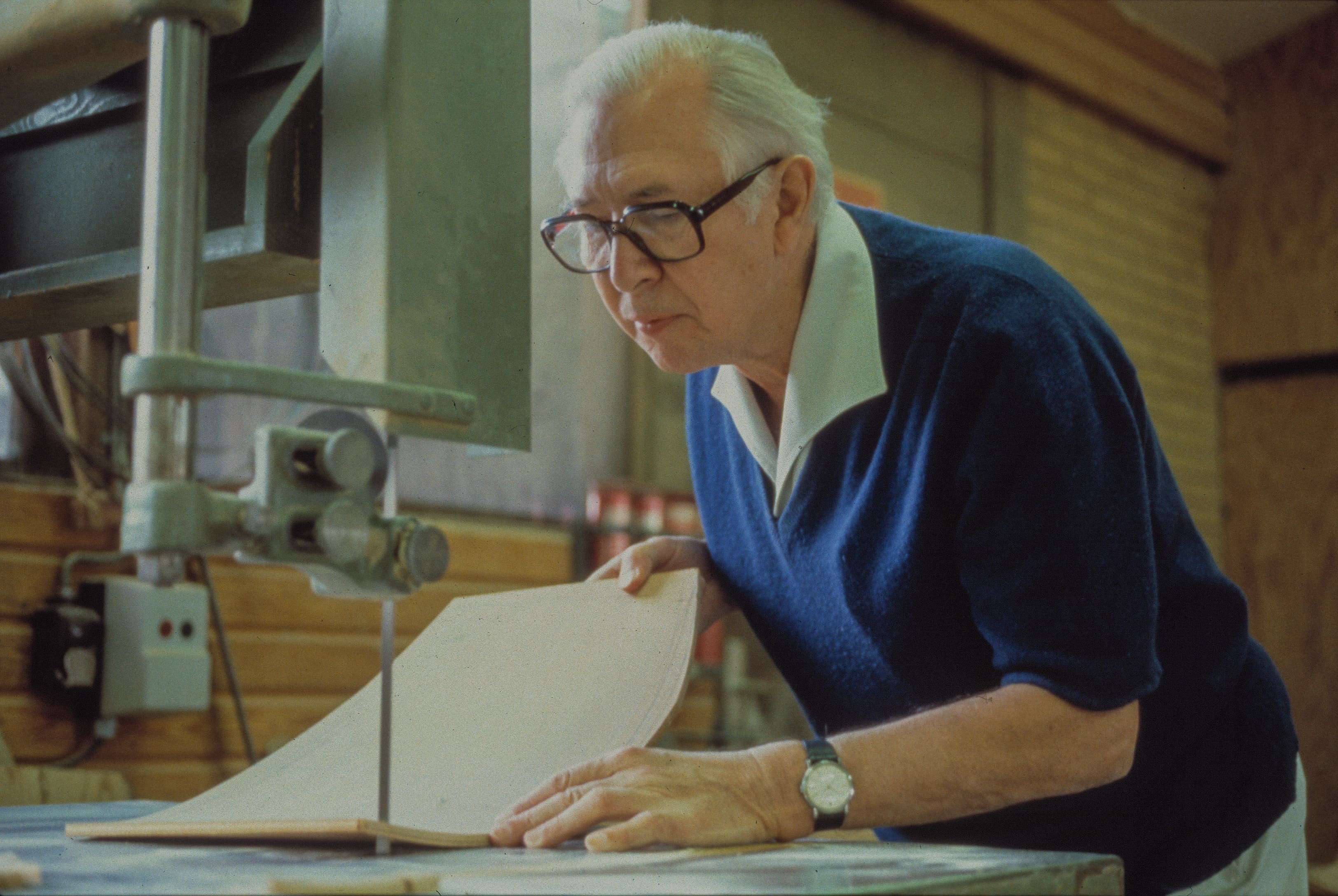
Wegner worked in many different materials – but wood, above all, he understood like no one else. Most importantly, he understood its possibilities and its limitations. That was why it mattered to choose the right type of wood for each specific task. At the same time, he saw an opportunity to make better use of resources – among other things by choosing the types of wood that were »right outside the door.«
»You have to grow up with wood to understand it. And you have to have a feel for it in order to use it properly,« he said.
That’s why he believed wood should only be used when necessary. You shouldn’t use wood just for the sake of using wood. In that connection, he also pointed out that »a construction must be beautiful, and it must be right.« That requires knowing why it looks the way it does. In other words, there must be meaning behind the choices you make.
Many of Wegner’s pieces also show a very clear distinction between what bears weight and what is being borne – in other words, the furniture that supports the person, and the person being supported. This is also a fundamental principle in most designs found in nature. Unlike plastic, which can merge the supporting and the supported into one, wood has certain limitations. Wegner was well aware of that.
»Precisely because you have that freedom in plastic, I don’t think it is such a logical material to work with,« he said.
A piece of furniture must never have a back side, either. At least not if you asked Wegner. A piece of furniture should be able to withstand being seen from every angle, and therefore it must not look as though its parts do not belong together. This became one of Wegner’s defining traits.
His goal was to express something in wood that is natural to wood – to find what is most true from a cabinetmaking standpoint. According to Wegner, that means establishing a theme. A theme rooted in and inspired by something in the wood – something that is logical in the wood. The theme lies first and foremost in the construction, but it can also lie in the detailing.
That said, there is still plenty of room for creative freedom:
»We should also be careful not to make everything so damn serious. We should play – but it has to be serious play,« he said.
"The chair is the object closest to humans."
More Than a Work of Art
Nothing about Wegner was accidental. It was not only his understanding of wood that made him exceptional – it was also his understanding of a piece of furniture’s functionality. As he once said, »The chair is probably the thing closest to man.«
That was why it was so important for the details to be right:
»I feel the details just as much as I see them,« he said.
People touch furniture, and they see with their hands. The points of contact are therefore a major part of the experience. And according to Wegner, that was something to be executed by hand, not merely seen.
Some might describe a design as a work of art. That was not in keeping with Wegner’s spirit. Unlike fine art, he believed that design’s highest task is to solve a problem – to make it a good tool for the user. And that successful interaction with the user was the common thread running through Wegner’s designs – and on that point, he would not compromise.
On this, he also said: »A chair is only finished when someone sits in it.«
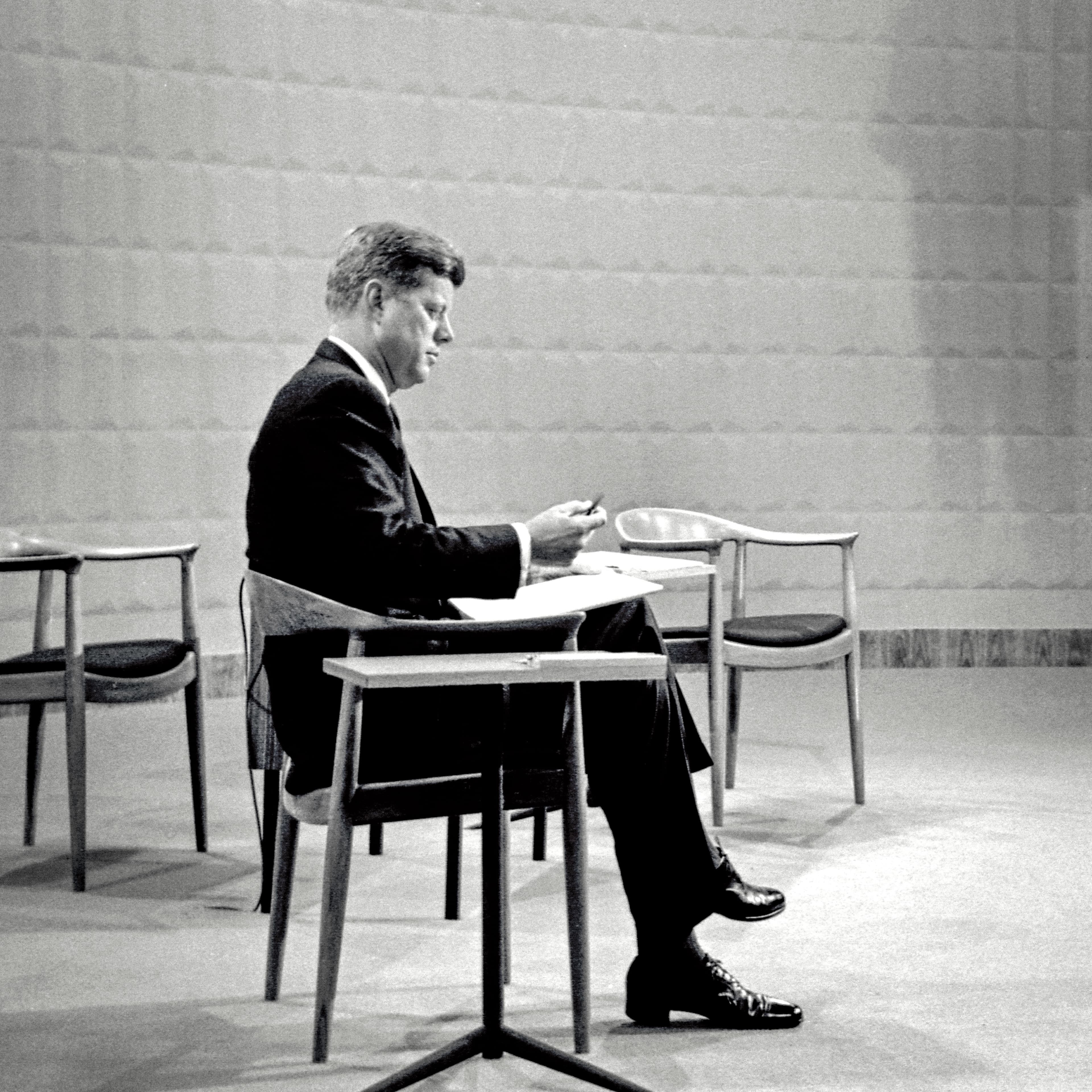
The result of this was seen, among other things, when the American presidential candidates John F. Kennedy and Richard M. Nixon debated while seated in »The Round Chair« – or »The Chair«, as it became known internationally – on television in 1960. It was a moment that truly gave Danish design momentum around the world.
Wegner’s user-oriented approach to design was also reflected in his pricing.
»I have always wanted to make things that ordinary people could afford to buy, but made in an ordinarily high quality,« he said.
And that had to be possible without compromising on quality.
»The price of wood means very little for the price of the finished product. But the quality of the wood has great significance for the quality of the product as a whole,« he said.
But even though Wegner had a clear functional vision for his furniture, his designs also radiated a distinct, well-defined personality. Anyone with even a slight interest in design, for example, would quickly be able to identify the Wishbone Chair as a Wegner design.
Dive into Wegner’s Work
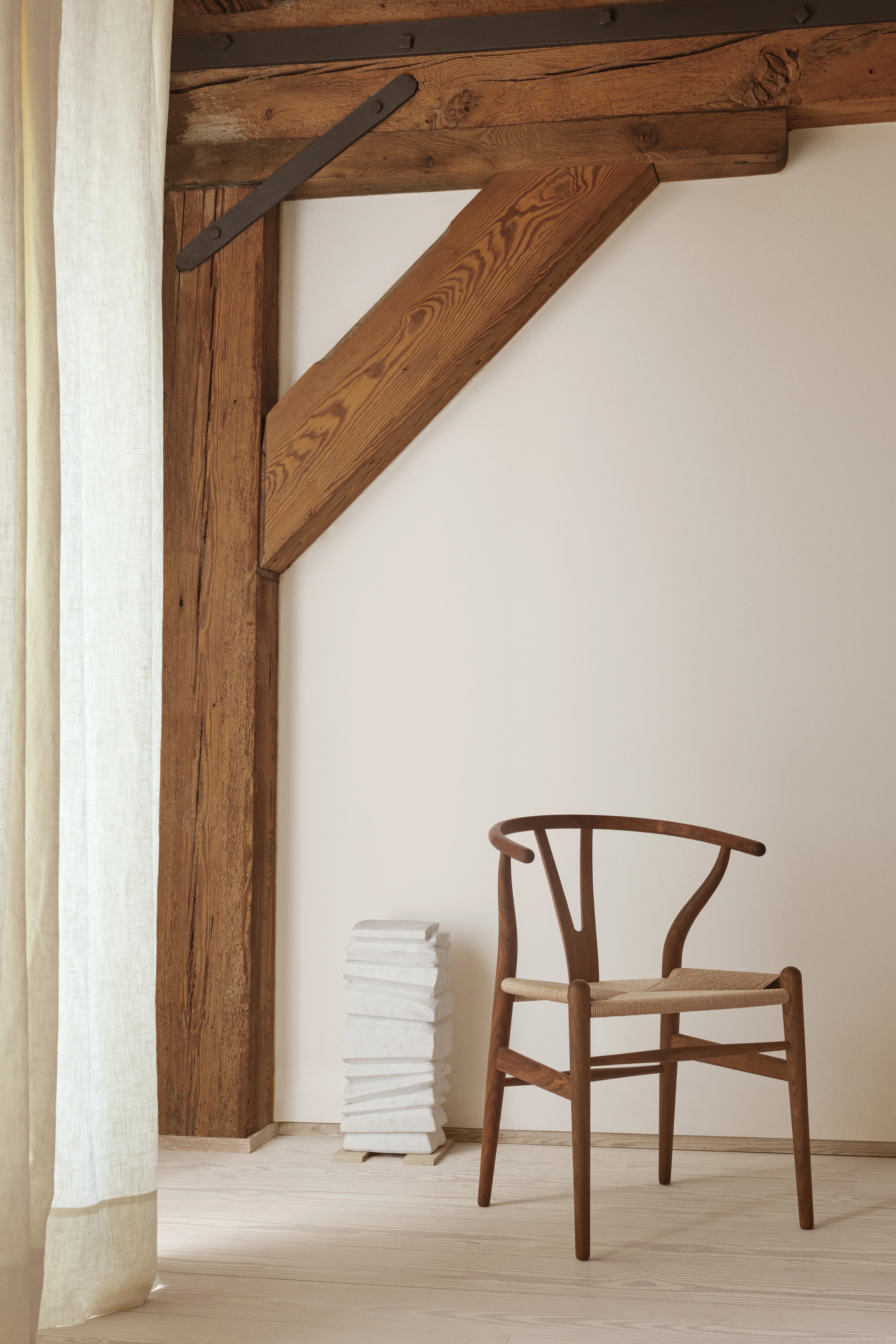
Wishbone Chair – CH24
Between 1943 and 1945, Hans J. Wegner designed a series of chairs inspired by Chinese imperial chairs. One of them was the Wishbone Chair, which took its name from its Y-shaped backrest.
In 1949, Hans J. Wegner actually moved in with Carl Hansen and his family to oversee the production of the Wishbone Chair. He lived there until its launch in 1950.
Today, the chair stands as a prime example of timeless, high-quality design. It reflects his deep understanding of wood as an organic material.
The Chair – PP503
The chair presented during the 1960 U.S. presidential debate was named »PP501« by the brand, and over time it acquired several nicknames, including »The Round Chair,« »The Kennedy Chair,« or simply »The Chair,« as fans called it.
The piece was conceived without outside inspiration or influence, emerging entirely from Wegner’s own imagination. It was the first Danish design to appear on the cover of Interiors magazine in the United States, helping spark a revolution. The dramatic rise of modern Danish furniture followed shortly afterward.
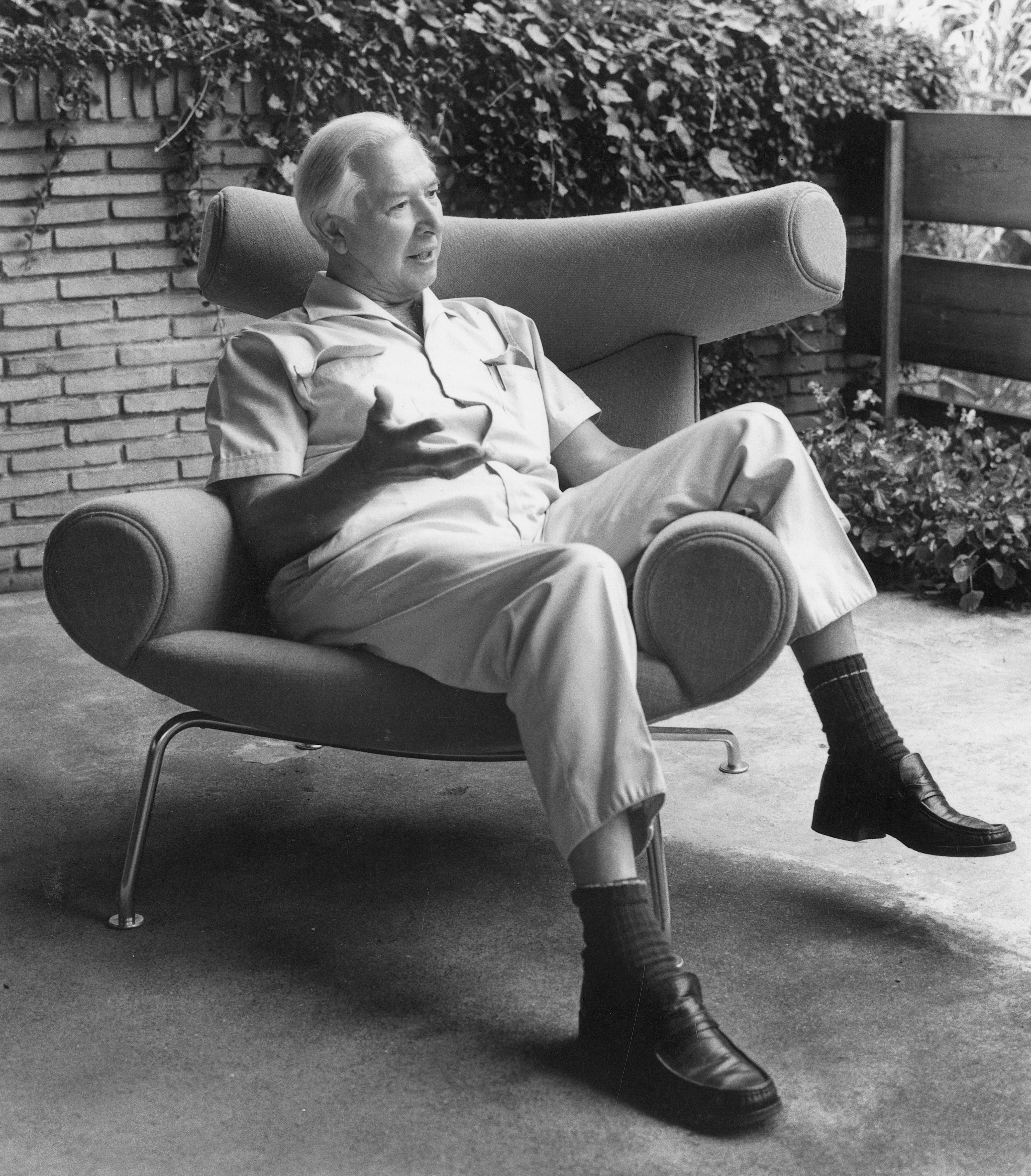
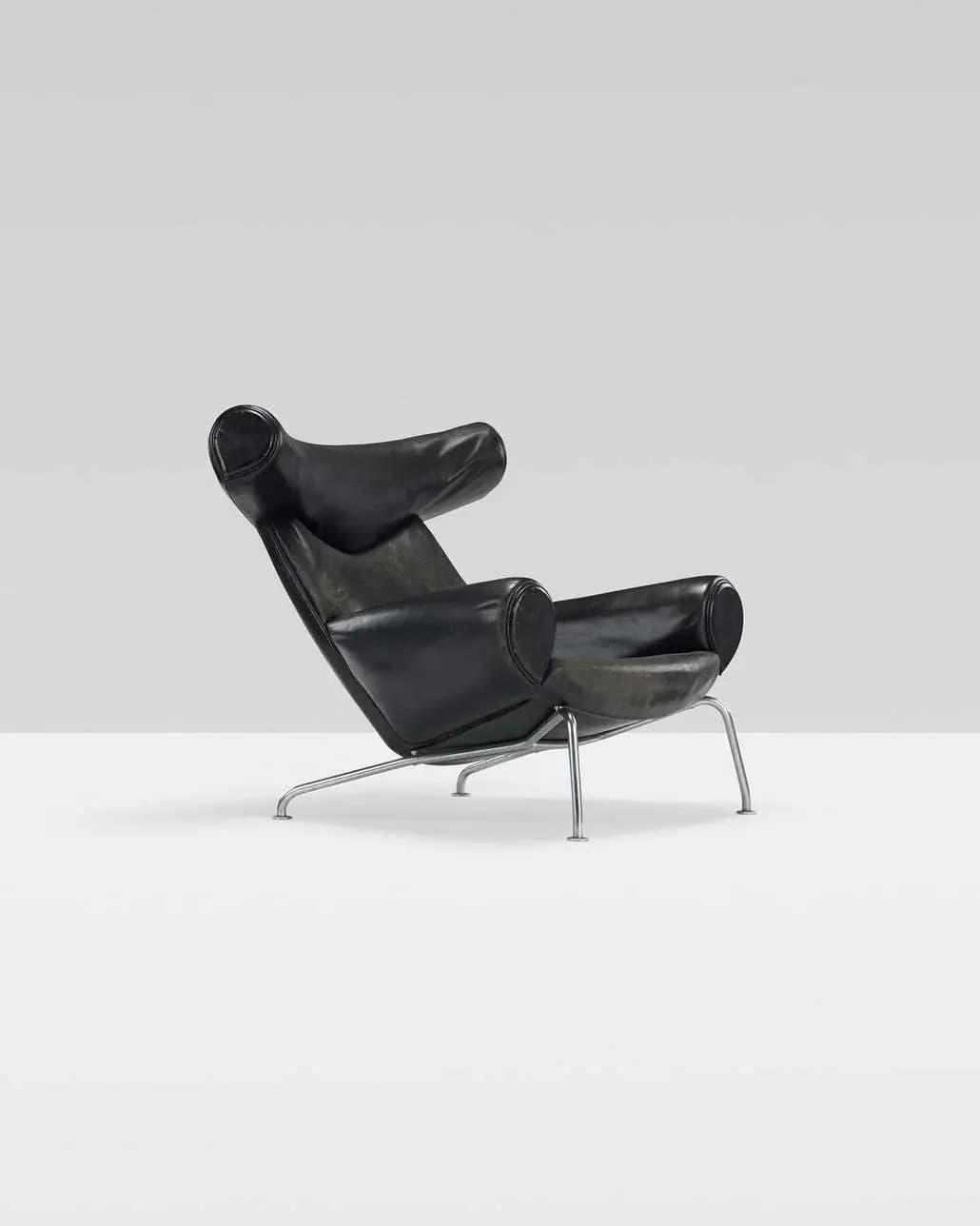
Ox Chair – EJ100
According to the furniture manufacturer Erik Jørgensen, the Ox Chair was Wegner’s favorite chair.
The chair was originally designed in 1960 and produced by A.P. Stolen, but its complex wool upholstery made it extremely difficult to manufacture. As a result, it remained in production for only two years.
The breakthrough came in 1988, when Wegner contacted Erik Jørgensen, who developed an innovative production method. The chair was then relaunched in 1989 and immediately achieved the status of a true design classic.
In many ways, the design was ahead of its time, challenging Danish aesthetics with its bold, sculptural form and its dramatic headrest, which resembled ox horns.
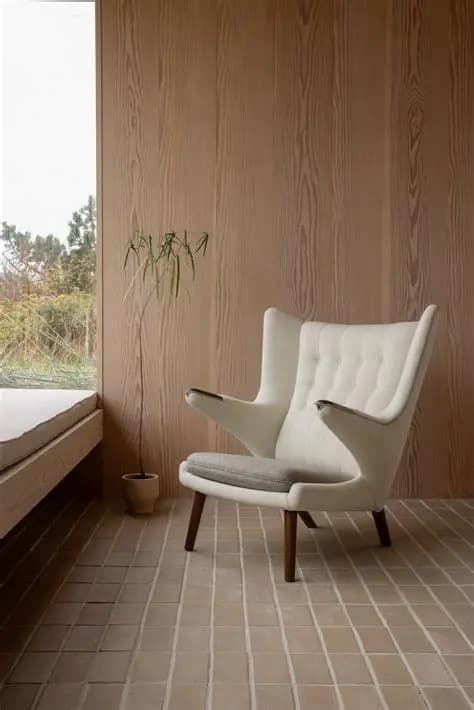
Papa Bear Chair – PP19
Like several of Wegner’s other chairs, the Teddy Bear Chair appears to reference the animal kingdom through its distinctive, playful, organic forms.
It got its name after a journalist, in a review of the chair, described its armrests as large teddy bear paws embracing you from behind.
Wegner designed the Teddy Bear Chair back in 1951. It was a freer, lighter, and more modern interpretation of earlier wingback chairs, which both he and others had designed.
It is a chair that accommodates many different sitting positions – something Wegner greatly valued. When sitting in the chair, it should be possible to change position without compromising comfort.
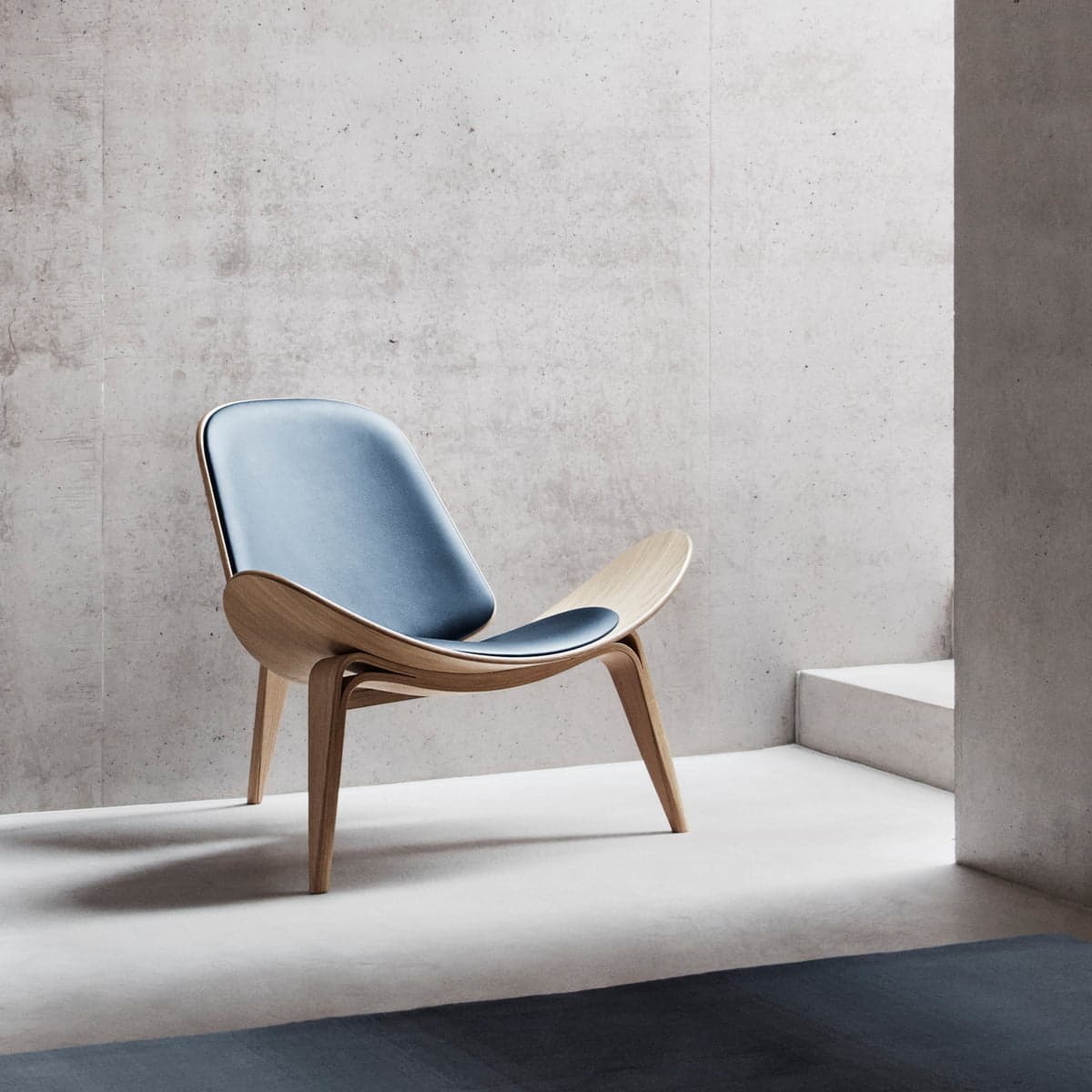
Shell Chair – CH07
The Shell Chair is a clear example of Hans J. Wegner’s mantra that a chair must always be comfortable to sit in – and that it should have no back side, but be admired from every angle.
Unlike traditional four-legged chairs, this one has a distinctive three-legged construction that gives it a floating appearance and exceptional stability.
Hans J. Wegner introduced the CH07 Shell Chair in 1963, but it was not until Carl Hansen & Søn relaunched it in 1998 that the chair undeniably achieved classic status.
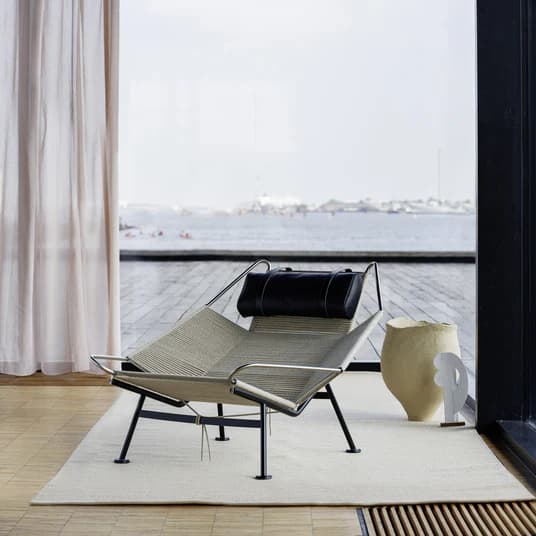
Flag Halyard Chair – PP225
Hans J. Wegner designed the Flag Halyard Chair in 1950 as a deliberate break from the traditional upholstered lounge chair.
Where most of his work from that period was primarily made of solid wood, here he chose a stainless steel frame and a seat constructed from handwoven flag line.
The chair was created with rest and physical relaxation in mind. Its low angle and suspended construction create an almost reclined position. Here, comfort arises through proper tension and proportion – not through thick upholstery.
In this piece, Wegner demonstrates his fundamental belief: that comfort can be engineered.
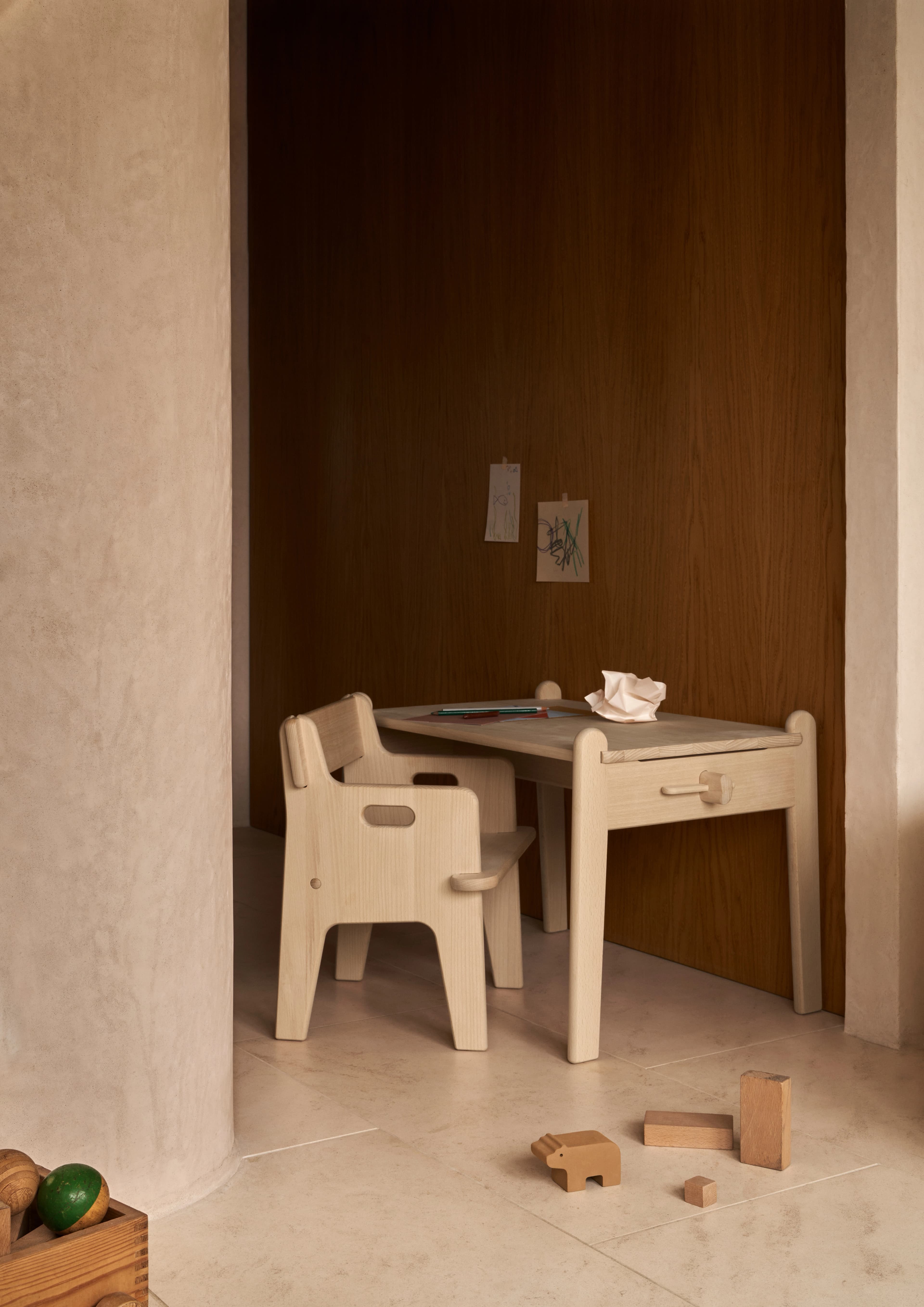
Peter's Chair – CH410
Peter’s Chair was designed by Hans J. Wegner during World War II. Quality goods were not easy to come by in wartime Europe, so when he could not find a suitable christening gift for Peter – the son of Hans J. Wegner’s friend and colleague Børge Mogensen – he took matters into his own hands and made the gift himself.
The chair was designed as a three-dimensional puzzle in unfinished beech, making it easy to take apart and assemble without the use of tools.
A true children’s classic – perfect for the little engineer at home.
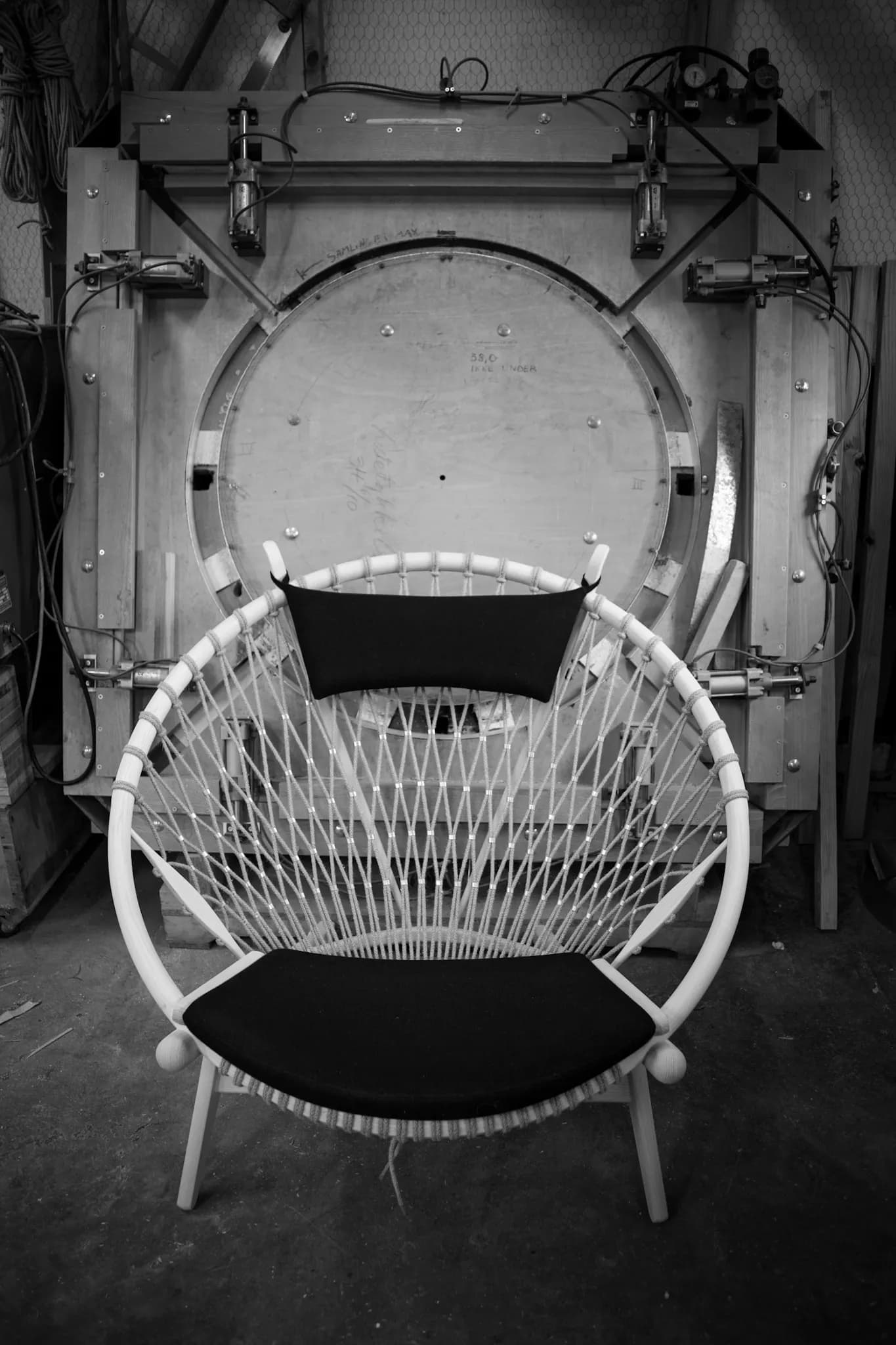
Circle Chair – PP130
In 1986, PP Møbler began producing the Circle Chair, which Wegner designed for the workshop. Like the Flag Halyard Chair, its design has no true historical precedent – either in furniture history or within Wegner’s own body of work.
The Circle Chair showed that even late in life, Wegner was still able to preserve his enthusiasm and drive for innovation despite an already long career.
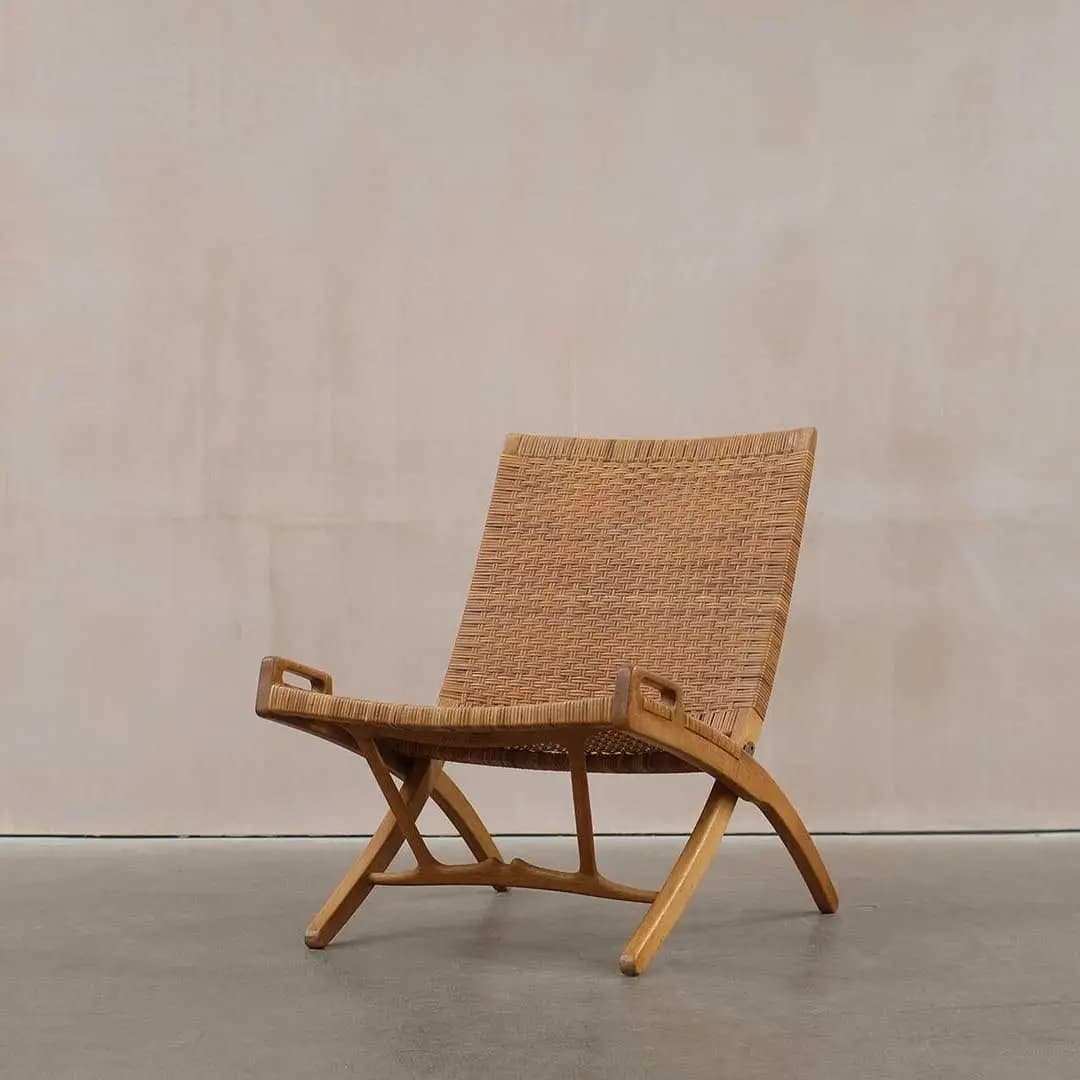
Folding Chair – PP512
Here, Wegner’s starting point was to construct an easy chair that could be put away when not in use.
He solved that problem by designing a chair that could be hung on the wall.
The Folding Chair was presented alongside »The Round Chair« at the legendary Cabinetmakers’ Guild Autumn Exhibition in 1949, which marked Wegner’s breakthrough.
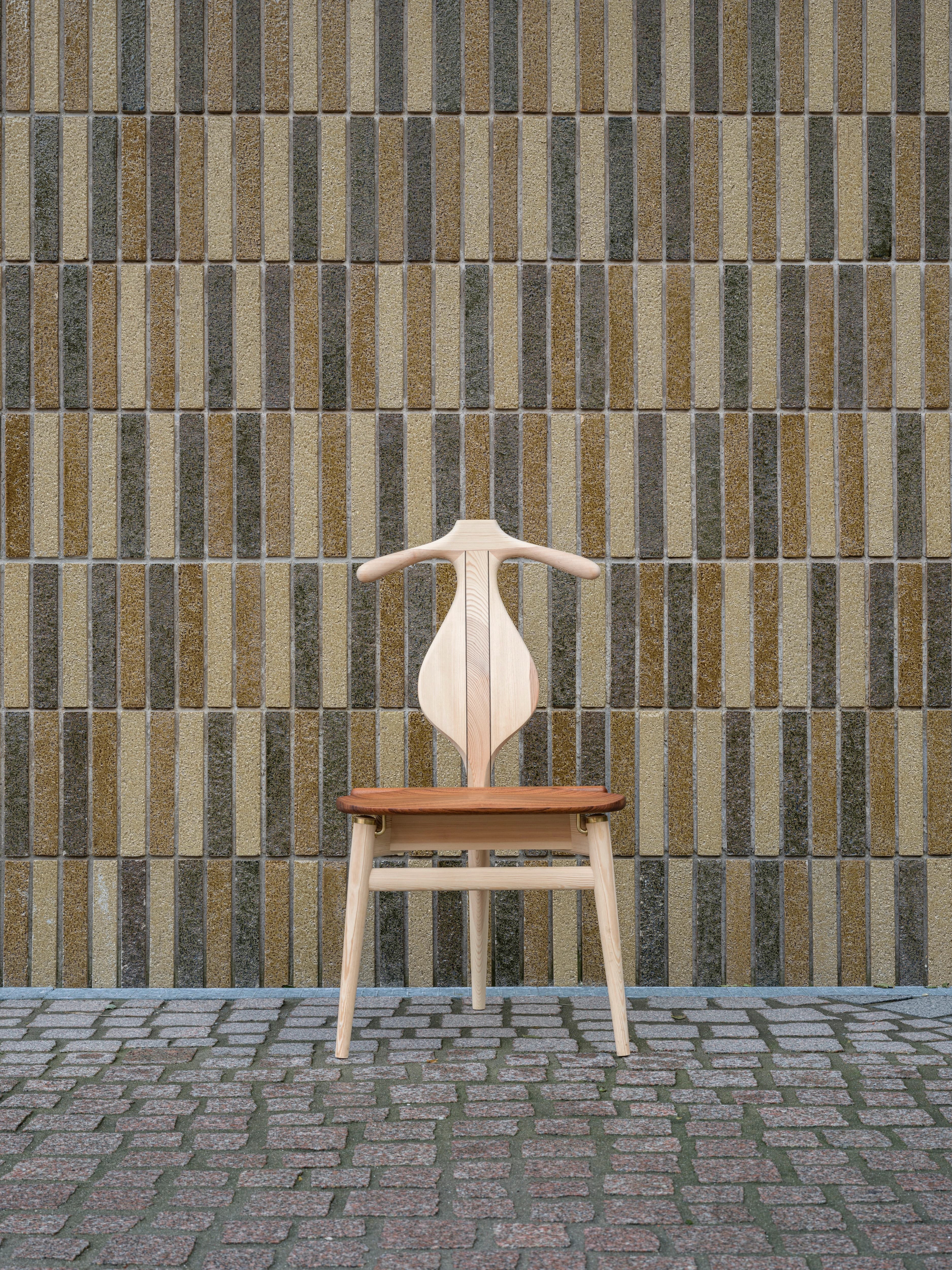
Valet Chair – PP250
The first version of the chair was created in 1951 and exhibited at a crafts fair in Copenhagen, where King Frederik IX saw it and immediately ordered one. This version had four legs, but Wegner did not believe the chair had yet found its proper form. The piece was not put into full production until it had been fully developed and tested.
It was not until 1953 that the king finally received his chair – now with three legs and a beautiful, teardrop-shaped back that extends into a clothes hanger.
It combines a chair with the functional object of a clothes hanger and stands as one of Wegner’s most organic, playful, and humorous designs.
A Well-Considered Design Process
Hans J. Wegner’s home in Gentofte also served as his workplace. It was cluttered with everything from planes and pencils to sketches and models. He was simply far too busy to tidy up. But the creative process itself was well under control.
»I never say to myself that now I want to create a work of art. I say to myself that now I want to make a good chair.«
Wegner’s first idea always took the form of a conceptual sketch – often a small, rough pencil line that sought to get to the heart of an idea.
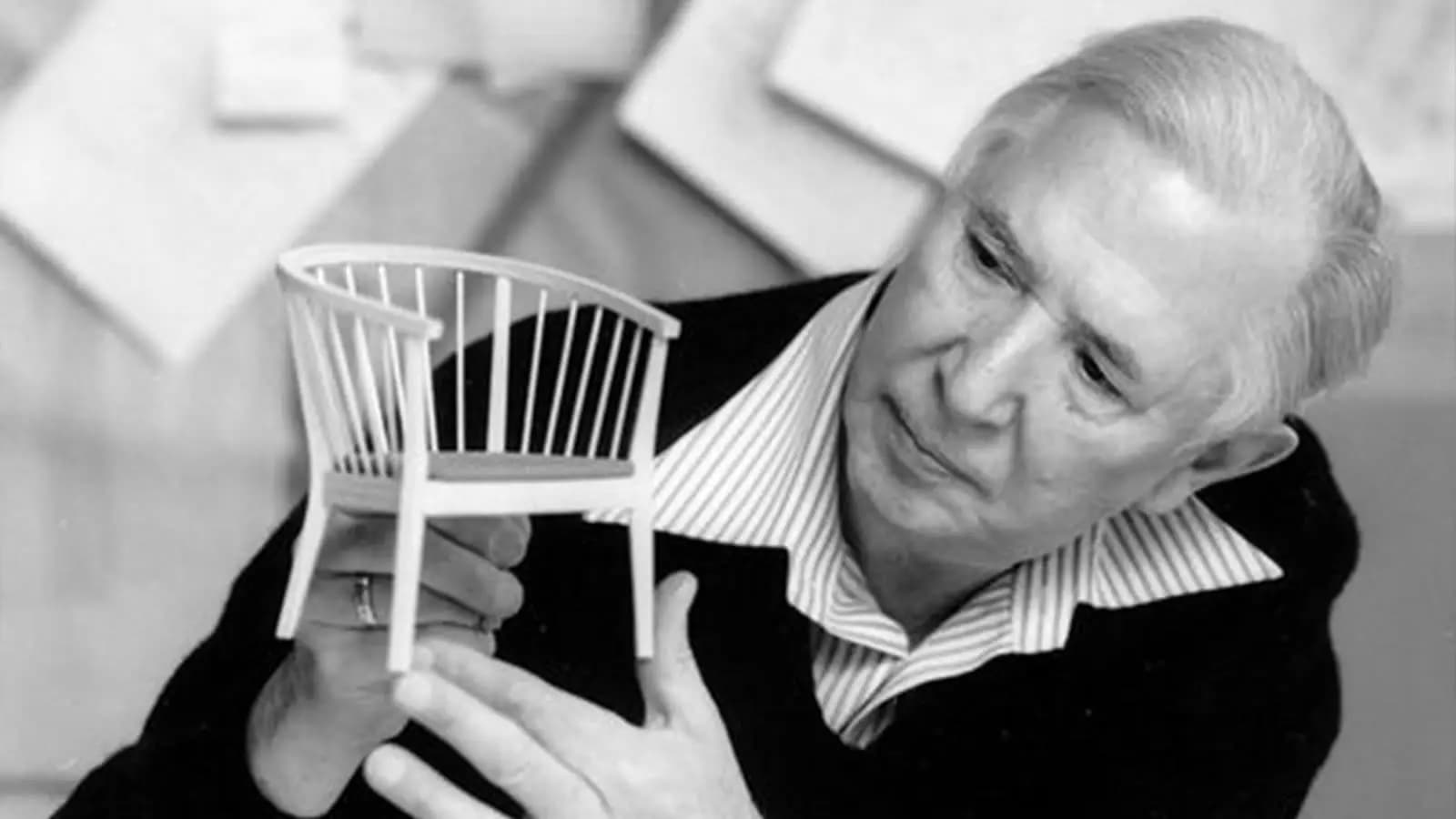
The next step was the small-scale models, made at 1:5, which Wegner produced himself. These models used the same material as the finished product – everything was carefully selected.
The third step was the full-scale 1:1 model, executed quickly and professionally, because Wegner’s experience was that »you can only draw your way to things up to a certain point.« At this stage, he could determine whether the height, angle, and profile were right at full scale without spending too much time or money making it.
In the final step before production, Wegner drew the piece of furniture at full scale – a single 1:1 drawing. Here, views of the piece from the side, front, and top were drawn over one another, making the working drawings both beautiful and practical. But producing working drawings for a chair at 1:1 scale is no simple task.
In the words of master cabinetmaker Ejnar Pedersen: »Wegner is one of the very few who can draw a chair completely through in a single drawing, where everything is explained, and in such a way that the chair can be made directly from the drawing.«
When it came to producing the furniture, the machines were used for what they did best – and the craftsmen carried out what the machines could not. The materials were selected with great care, and that also meant that wood that did not meet the requirements for color, grain pattern, and the absence of knots was sorted out.
In the final phase of development, there is maintenance – and that is quite straightforward. That also means these pieces are exactly what they claim to be: timeless designs of high quality. That did not stop Wegner, however, from returning to a theme and carrying it through into a new design. As he said:
»The good chair is a task one is never truly finished with.«
Wegner died in 2007 at the age of 92. Over the course of his career, he designed around 500 chairs, several of which have achieved the status of design icons.
Before Wegner Became Wegner
Hans Jørgensen Wegner (1914 – 2007) was born in Tønder, the son of master shoemaker and city council member Peter M. Wegner.
Wegner apprenticed as a cabinetmaker because, at a very early age, in the workshops on Smedegade, he discovered that he had a feel for wood – and a love for it.
After completing his apprenticeship in 1931, he remained at his master’s workshop for three years until he was called to military service. Following his service, he began studying at the Danish Technological Institute and the School of Arts and Crafts in Copenhagen.
Here, he was introduced to the Copenhagen Cabinetmakers’ Guild Furniture Exhibition, which gave him his first experience of what the combination of craftsmanship and design could achieve.
Wegner decided that he wanted to become a designer. His goal was to create and sell his own furniture. In 1940, he began working at the studio of Arne Jacobsen and Erik Møller, which had been established in connection with the construction of Aarhus City Hall.
A few years later, he opened his own design studio, and in its early years his goal was, in his own words: »to strip the old chairs of their outer style and let them re-emerge in their pure construction.«
Source: Danish Design Center
-
Source: This article was developed in part based on insights and knowledge from Hans J. Wegner: On Design (Danish Design Center, 1994) by Jens Bernsen.
More from DAC Magazine
DAC Magazine