Kay Fisker Laid the Foundation for the Good Life in the City
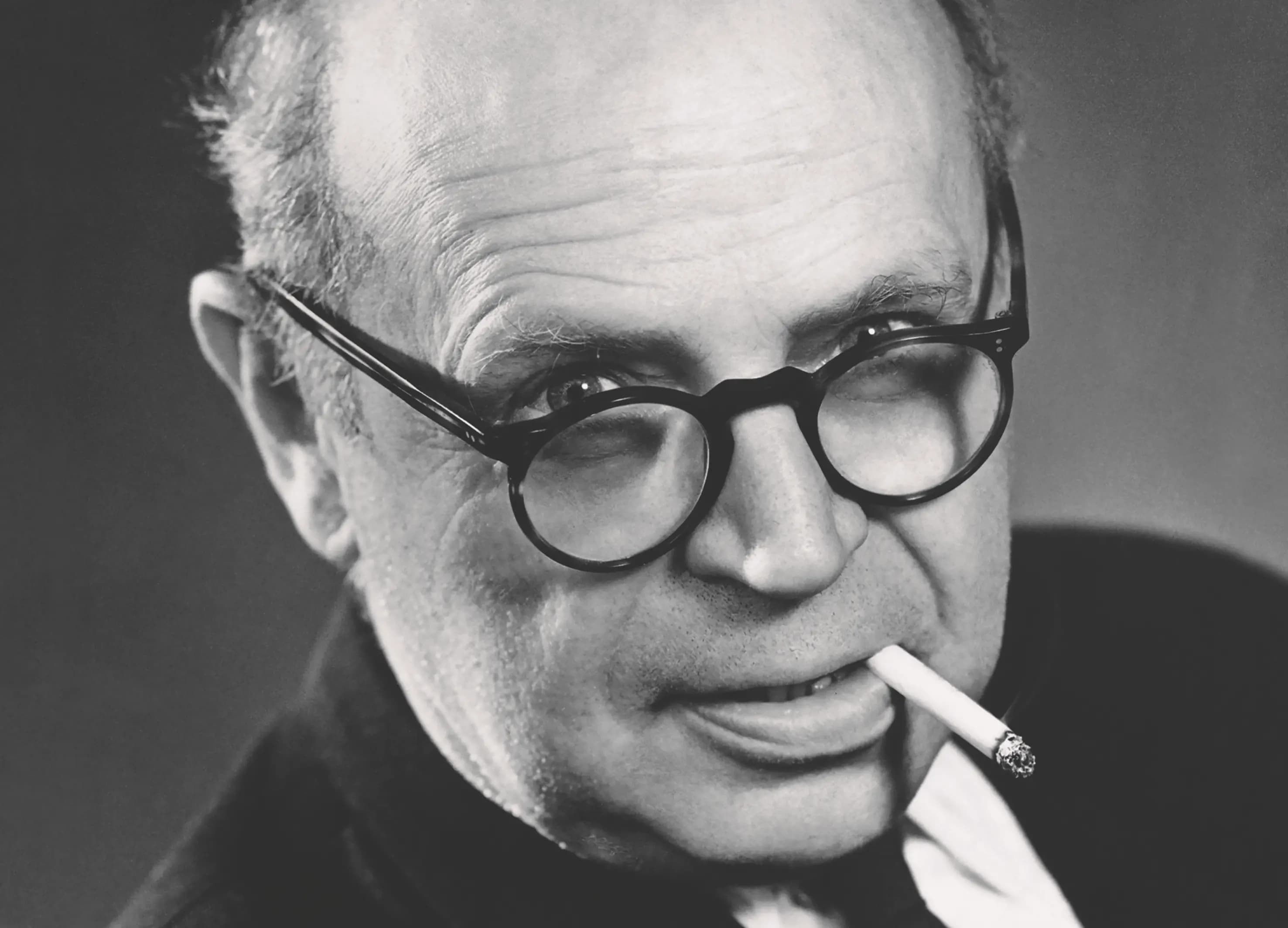
Kay Fisker is one of the Danish architects who left a particularly strong mark on Danish architecture through his interpretation of emerging functionalism. His vision of the good Danish home has shaped the way we live and inhabit cities to this day.
By Camilla Zuleger
It’s Monday morning, and traffic along one of Denmark’s busiest roads – Åboulevarden in Copenhagen – is just beginning to pick up. From Bispeengbuen on the edge of the district of Nørrebro, we encounter the large residential block Hornbækhus, home to nearly 300 apartments and the lives unfolding within them.
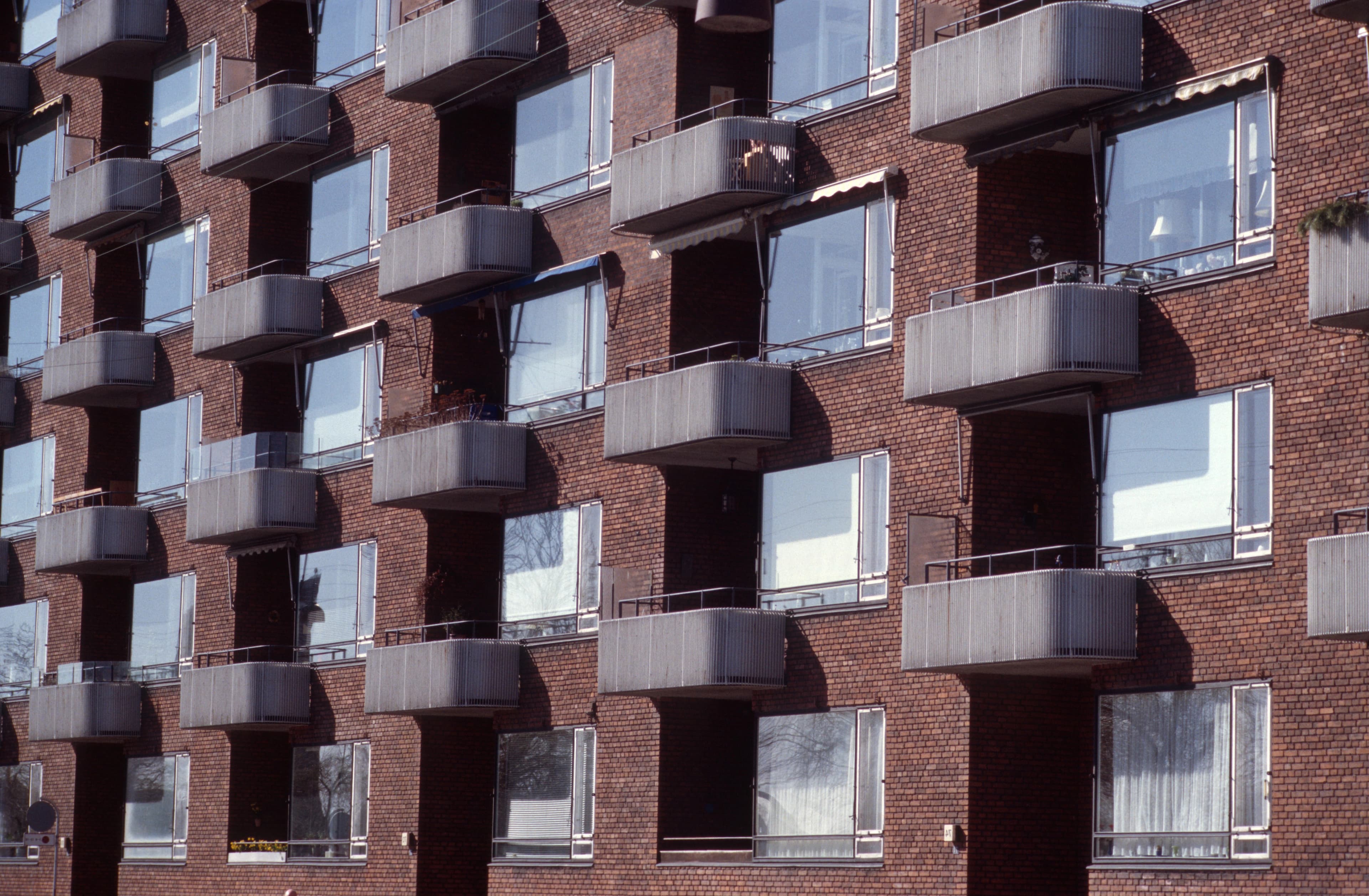
Driving further toward the city center, we may catch a glimpse of the housing development on Griffenfeldsgade before reaching the large complex known as “The Triangle,” stretched between Rosenørns Allé, Kleinsgade, and Åboulevarden. Crossing the lakes, we arrive at one of the city’s most iconic residential buildings, Vestersøhus.
In less than three kilometers, we pass four landmark works by Danish architect Kay Fisker. Most of the 60,000 daily cars and up to 10,000 cyclists traveling along Åboulevarden likely barely notice. Yet his imprint on Danish architecture is not only significant – it is unavoidable.
Unassuming Buildings of Great Importance
At first glance, Kay Fisker’s buildings are not the kind that demand attention. Today, we no longer experience them as extraordinary, largely because so much subsequent construction has followed the path he laid out for the good home and the good life. At the same time, the scale of both his buildings and his productivity makes them impossible to overlook.
From his first project on a former railway site in Copenhagen in 1909 to The Danish Institute in Rome, completed in 1967, he was responsible for more than 200 buildings – both independently and in collaboration with others.
Kay Fisker – In Brief
Kay Fisker (1893–1965) was one of the most influential Danish architects of the 20th century and a central figure in the development of modern Danish residential architecture. He was born in Frederiksberg and educated at the School of Architecture at the Royal Danish Academy of Fine Arts in Copenhagen, graduating in 1920 after study stays in Italy and France, among other places. Early on, he distinguished himself with an architectural language that combined classical proportions and craftsmanship with modern functional principles.
As both a practicing architect and educator, he had a profound impact. From 1920, he was affiliated with the Academy, and from 1936 to 1963 he served as professor of residential architecture. There, he influenced generations of architects and helped formulate the so-called functional tradition – a restrained, site-specific, and socially oriented modernism in which layout, materials, and urban context were central.
His work included residential developments, institutional architecture, and major university complexes. His influence extends far beyond individual projects through his role as a teacher and theoretical reference in Danish architectural history. Kay Fisker received the Eckersberg Medal in 1926 and the C.F. Hansen Medal in 1947 and is today regarded as a leading figure in the development of Danish functionalism.
From Classicism to Functionalism
Kay Fisker was one of the shining stars of his time. As a young, newly graduated architect, he had already secured his first commissions, which would become some of the largest construction projects of the interwar period. It wasn’t long before he took a seat at the Royal Danish Academy of Fine Arts, where he served as a professor from 1936 to 1963, focusing on residential architecture.
His career began during a transitional moment in Danish architecture, when the move away from Neoclassicism had not yet fully taken hold within the emerging functionalist movement. Most of Fisker’s buildings were created within this tension. While pure functionalism called for industrial production and planning, Fisker merged classical building traditions and materials – rich in tactile quality – with new ideals of light, air, and clean lines.
Chronologically, Kay Fisker belongs to modernism – a movement encompassing overlapping but distinct architectural currents, including functionalism. Today, his major works stand as prime examples of a form of functionalism that differs markedly from the version associated with architects such as Arne Jacobsen.
Where Jacobsen embraced a white, industrial aesthetic, Fisker maintained a more grounded approach, rooted in dialogue with the surroundings and Danish building traditions. His buildings appear in yellow or red brick, aging gracefully and clearly connected to the long history of brick in Danish architecture.
Master of Residential Architecture
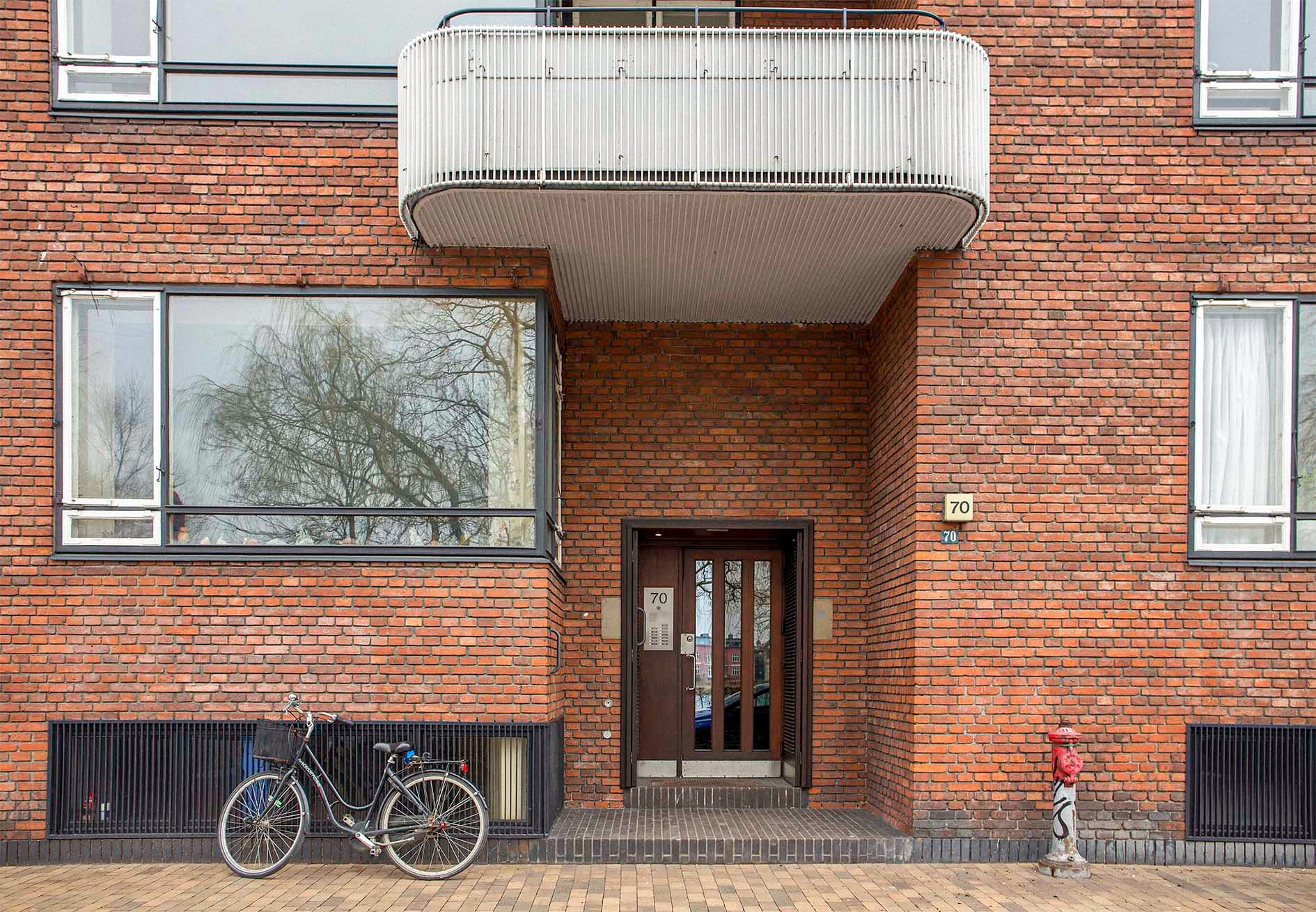
In 1939, Vestersøhus was a groundbreaking building that challenged the notion that quality housing was reserved for the few. With the Housing Support Act of 1933, it became possible to secure government loans for residential construction through support for housing associations and nonprofit housing companies. This opportunity was especially utilized in larger cities experiencing rapid population growth. Kay Fisker designed residential blocks with hundreds of apartments – an unspectacular milestone today, but a significant breakthrough at the time.
Today, the apartments along Sankt Jørgens Sø are among the most expensive in the city, prized for their location. But at the time, Vestersøhus represented a tangible proposal for how housing policy could help address the social challenges of the era. Large parts of Copenhagen’s population had previously been confined to dark rear-yard apartments without toilets or baths. A new approach to architecture and housing policy aimed to ensure decent living conditions for the broader population. Fisker’s strength lay in his ability to combine cost-efficient construction with high architectural quality.
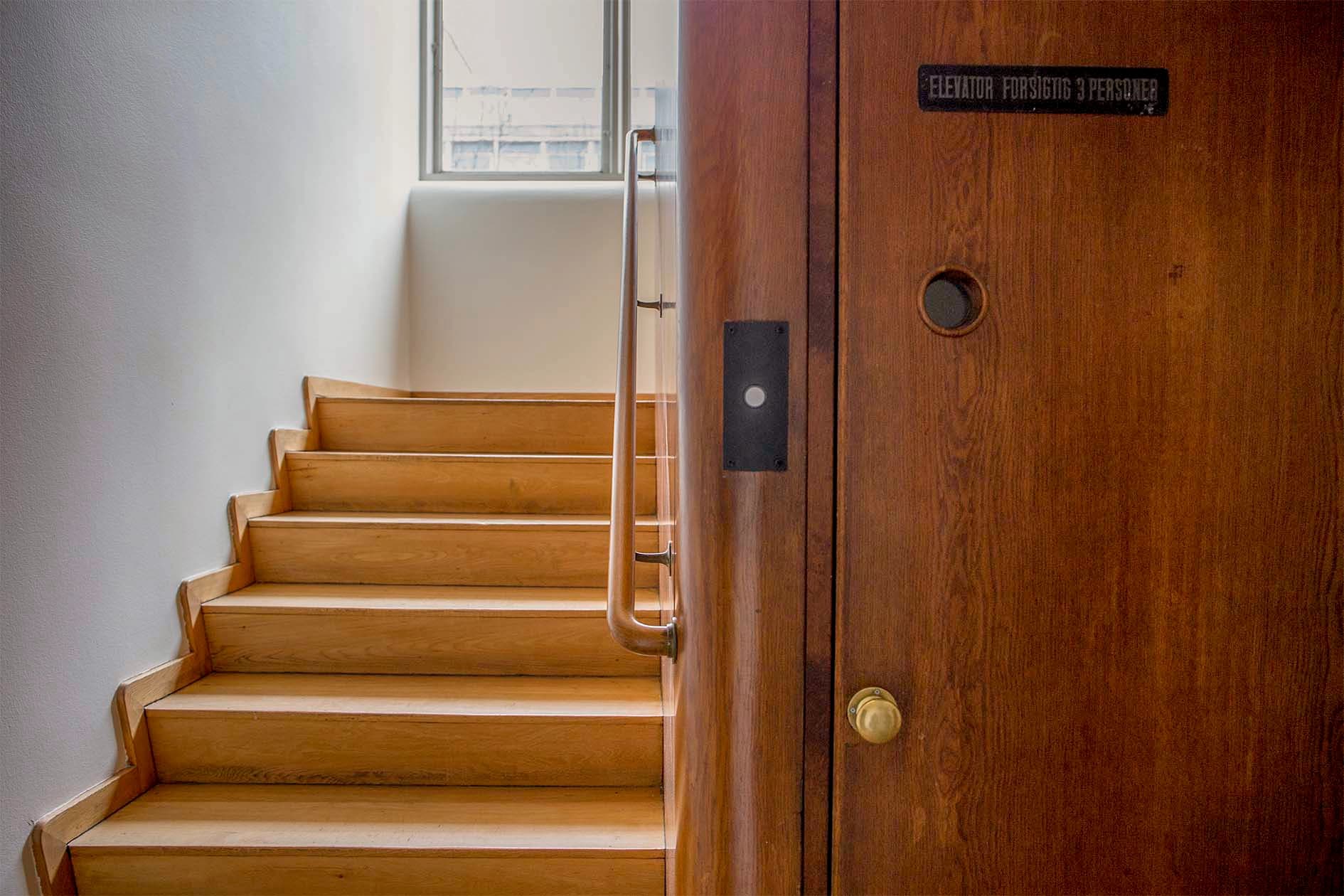
With its distinctive balconies providing all apartments access to light and air, and its green courtyard, Vestersøhus introduced a new way of thinking about the metropolis: quality housing was no longer reserved for society’s elite. Together with Hornbækhus from 1923, Vestersøhus stands as a monument to Fisker’s ability to create humane housing on a large scale – design principles that have since become the norm. For the curious visitor, Kay Fisker even designed an apartment for himself at Vestersøhus, which is occasionally open to the public.
Kay Fisker's Copenhagen
Kay Fisker designed buildings throughout Denmark and a few abroad. To experience the greatest concentration of his work, we recommend a bike ride around Copenhagen, where you can see, among others:
- Hornbækhus on Åboulevarden (1923)
- Vestersøhus on Vester Søgade (1939)
- Dronningegården at Dronningens Tværgade (1943-58)
- “The Flatiron” on Vodroffsvej (1929)
- “The Triangle” on Åboulevarden / Rosenørns Allé (1932)
- Griffenfeldsgade 37-39 (1939-40)
From Housing to Institutions
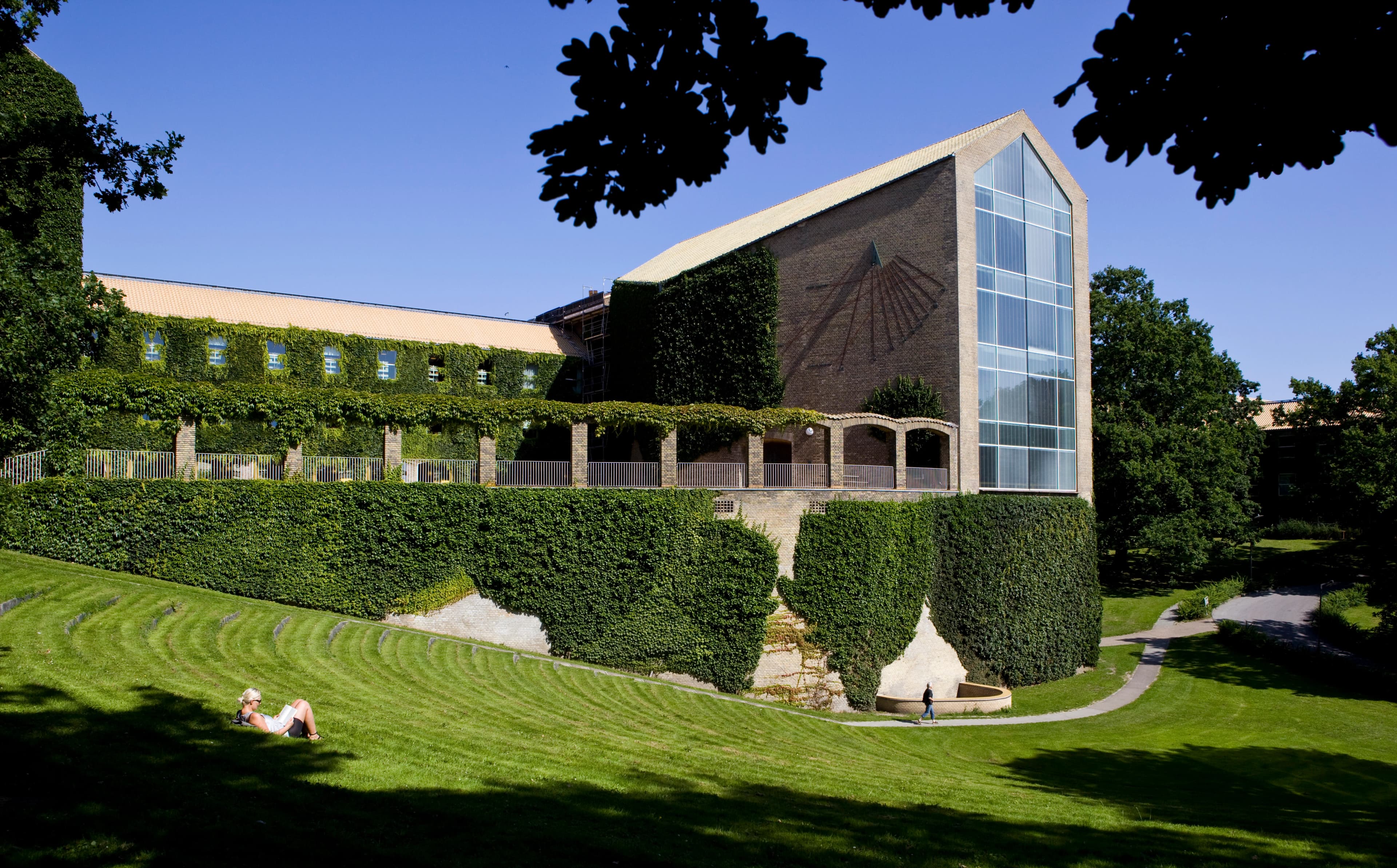
Copenhageners are not the only ones who have benefited from Kay Fisker’s architecture. Traveling across the country to Aarhus, a series of yellow brick buildings testifies to what is perhaps his most widely recognized work: Aarhus University.
In both The Triangle and Vestersøhus projects in Copenhagen, Fisker collaborated with another major architect – C.F. Møller. This partnership also proved fruitful at Aarhus University. Together with Povl Stegmann, they won the competition in 1931, and the first buildings were completed in 1933. Subsequent buildings were designed solely by C.F. Møller.
Kay Fisker was not merely an architect who designed buildings. He helped shape the contours of modern Denmark and gave physical form to the welfare state’s ideals of equal access to quality and dignity for all. Today, as we once again face major challenges in creating sustainable – and affordable – housing for a growing population, there is still much to learn from Kay Fisker’s humanistic approach to architecture.
-
Source: This article draws in part on inspiration and knowledge from:
Kay Fisker: Works and Ideas in Danish Modern Architecture (Bloomsbury Visual Arts, 2021) by Martin Søberg