Jan Gehl Turns 90: The Architect Who Taught the World to Build Cities for People
In 2026, for the second year running, Copenhagen was named the world’s most liveable city in the Economist Intelligence Unit’s Global Liveability Index. This is also the year that Danish architect and urban planner Jan Gehl turns 90.
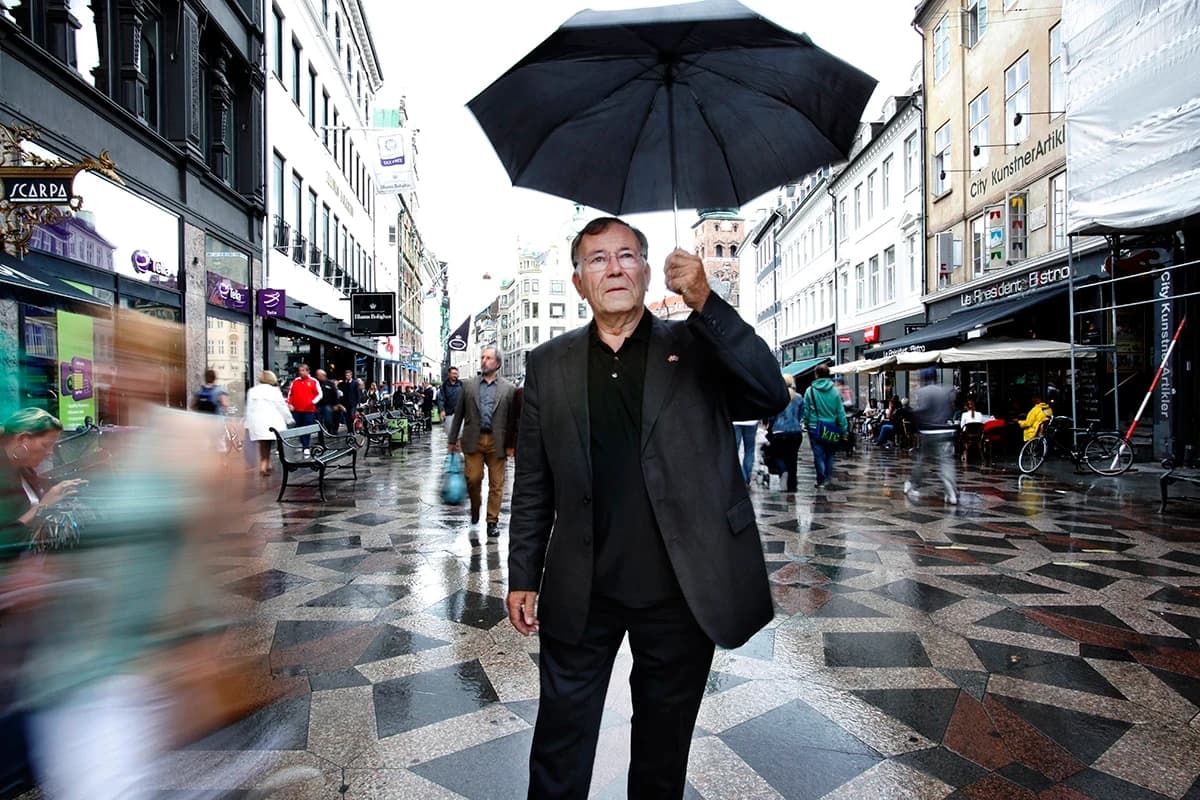
Jan Gehl is one of the most influential architects and urban planners in the field of city life and people-centered urban development. He co-founded Gehl Architects (now the practice Gehl ), which continues and advances his methodologies, advising cities around the world on how to create lively, healthy, and human-centric urban environments. His books have been translated into more than 40 languages, and his ideas have helped transform how architects, urban planners, and decision makers develop cities.
DAC Celebrates Jan Gehl – and Opens a New Main Exhibition
In honor of Jan Gehl’s 90th birthday, Danish Architecture Center is showcasing the key role he has played in urban development with a series of activities this fall. On September 18, Danish and international profiles are gathering for a professional event for invited guests to celebrate his contributions to the field and discuss how his ideas continue to influence the development of the cities of the future.
The event will be followed up by the new main exhibition Cities for People, developed in collaboration with the practice Gehl and Jan Gehl, which opens on World Architecture Day, October 5. Drawing on Jan Gehl’s life’s work and his 12 quality criteria for public urban spaces, the exhibition explores, through both historical and contemporary perspectives, how urban design shapes our lives – and how people-centered urban spaces can improve our health, well-being, communities, and quality of life.
“Jan Gehl has shown the world that the perceived quality of a city is primarily achieved through understanding people’s needs and through caring about how people live as individuals and in communities. This is a clear and compelling idea, but it requires complex knowledge and political support to implement for the benefit of all in the city. Jan Gehl’s and the praxis Gehl’s consulting has proven effective, and their work has altered our fundamental understanding of what is considered a good city and how to design it. This is a huge achievement,” says Kent Martinussen, CEO of Danish Architecture Center.
Read more about the exhibition here.
When the City Became a Place for People
Planning people-first cities is generally a given today. But that wasn’t the case when Jan Gehl first started out in the 1960s. In a time when urban planning was primarily about buildings, cars, and traffic, Jan Gehl asked a different question: How do we design good cities for people?
It all started when Jan Gehl met his wife, renowned psychologist Ingrid Gehl. Jan had been trained to just see buildings, but Ingrid challenged him to also focus on the needs and behaviors of people. Together they studied “life between buildings” and how people move about, meet, and live in cities.
This marked the start of a new approach to architecture. How people experience and use the city became key to the architect’s work. Architecture was no longer just about the design of buildings, but also about the life that unfolds in-between them.
The Book that Transformed Urban Planning
In 1971, Jan Gehl published the book Life Between Buildings (first available in English in 1987). Inspired by American-Canadian urban theorist and author Jane Jacobs, the book challenged the prevailing ideals at the time of heavily trafficked boulevards, free-standing buildings, and large, empty spaces. Instead, he championed densified, vibrant urban environments that support outdoor life and foster community – designed around how people interact rather than how cars move.
More than 50 years later, Life Between Buildings continues to be one of the most globally influential books on urban planning and has been translated into more than 30 languages. Furthermore, Jan Gehl’s fundamental question is more relevant than ever as upwards of 70 percent of Earth’s population is expected to live in cities: If the city is the preferred setting for human habitation, then how do we create cities that allow people to thrive in a contemporary and complex lifestyle?
Through books, research, teaching, and consulting, Jan Gehl has helped shift an entire field of study. Observing human behavior has become a natural part of urban planning, and concepts like human scale, urban life, and life between buildings are now firmly established in the international urban planning lexicon.
When Danish Architecture Started Focusing on People
Jan Gehl’s ideas continue to inspire new generations of architects, urban planners, and decision makers. From Melbourne and Sydney to London, New York, Amman, and Cape Town, his methodologies have reimagined urban spaces based on the needs of people.
At the same time, Jan Gehl has helped expand the narrative about Danish architecture. In addition to iconic buildings, compelling design, and outstanding craftsmanship, Denmark has become internationally renowned for creating cities that put people first. Architecture is no longer just about form and function, but also about the life that unfolds between the buildings.
Read DAC Magazine’s portrait of Jan Gehl here.
For yderligere information, kontakt:
Johanne Troelsgaard Toft, Senior Communications and Press Advisor
Tlf.: +45 6142 1927
E-mail: jott@dac.dk
Facts About Jan Gehl
- Born on September 17, 1936 in Rønne on the Danish island of Bornholm.
- Architect, professor, and international urban planner.
- Co-founder of Gehl Architects, today the practice Gehl.
- Graduate of the Danish Royal Academy of Fine Arts in 1960.
- Author of Life Between Buildings (1971, in English 1987), one of the world’s most influential works on city life and urban planning.
- Internationally renowned for people-centered urban development.
- Has advised cities around the work on the development of lively, healthy, and sustainable urban spaces.
Why Jan Gehl is Important
Jan Gehl was one of the first to systematically study how people use urban spaces and to utilize those observations as a basis for urban planning. His work has helped shift the focus of urban planning:
- from cars to people
- from buildings to the life between buildings
- from assumptions to systematic studies of human behavior
His Most Well-Known Books
- Life Between Buildings (1971, in English 1987) – translated into 30 languages
- Cities for People (2010) – translated to 41 languages
- How to Study Public Life – with co-author Birgitte Svarre (2013) – translated to 14 languages
Jan Gehl has also published a number of Danish and international works on city life and urban planning, including Public Spaces – Public Life, New City Spaces and New City Life, with co-author Lars Gemzøe.
International Influence
Jan Gehl has inspired urban development all over the world. His methodologies have been applied and refined in Copenhagen, New York, Melbourne, Sydney, London, Moscow, Amman, Cape Town, and other cities, and he has played a significant role in promoting pedestrian-friendly, cycling-friendly and people-friendly cities.
Jan Gehl is a recipient of the International Union of Architects’ Sir Patrick Abercrombie Prize, the Royal Danish Academy of Fine Arts’ C.F. Hansen Medal, and the Kennedy Center Gold Medal in the Arts.
He has also been granted honorary citizenship of Sydney, honorary doctorates at the Universities of Edinburgh, Toronto, Varna, and Halifax, as well as honorary memberships and fellowships of architectural institutes in Denmark, England, Scotland, Ireland, the United States, and Canada, and urban planning institutes in Ireland, Australia, and Korea.
Jan Gehl – Selected Quotes
Jan Gehl is one of the most highly quoted architects and urban planners in the world. For more than 60 years, he has articulated why cities should be designed to put people first. The following is a selection of his most famous quotes.
“First life, then spaces, then buildings – the other way around never works.”
“Cultures and climates differ all over the world, but people are the same. They’ll gather in public if you give them a good place to do it.”
“A good city is like a good party – people stay longer than really necessary because they are enjoying themselves”
“Only one thing is better than slow traffic, that is no traffic.”
“Compared to Venice, all other cities look like poor compromises.”