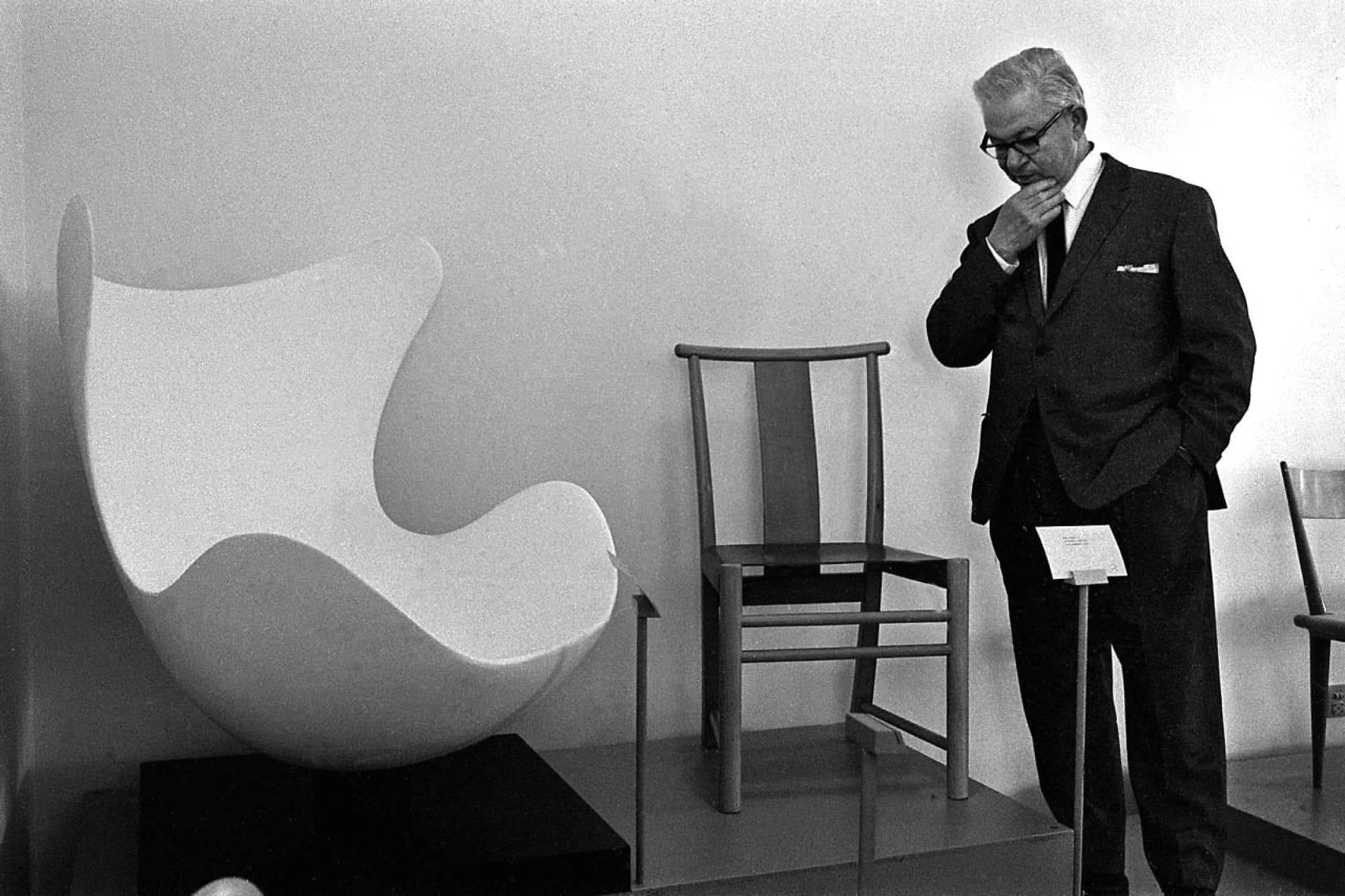
Arne Jacobsen: The Pioneer Behind Danish Modernism in Architecture and Design
Arne Jacobsen was a pioneer of Danish modernism and shaped modern Danish architecture and design by thinking of buildings, interiors, and details as a unified whole – from the National Bank to the SAS Royal Hotel and its iconic chairs.
By Ida Elva Hagen
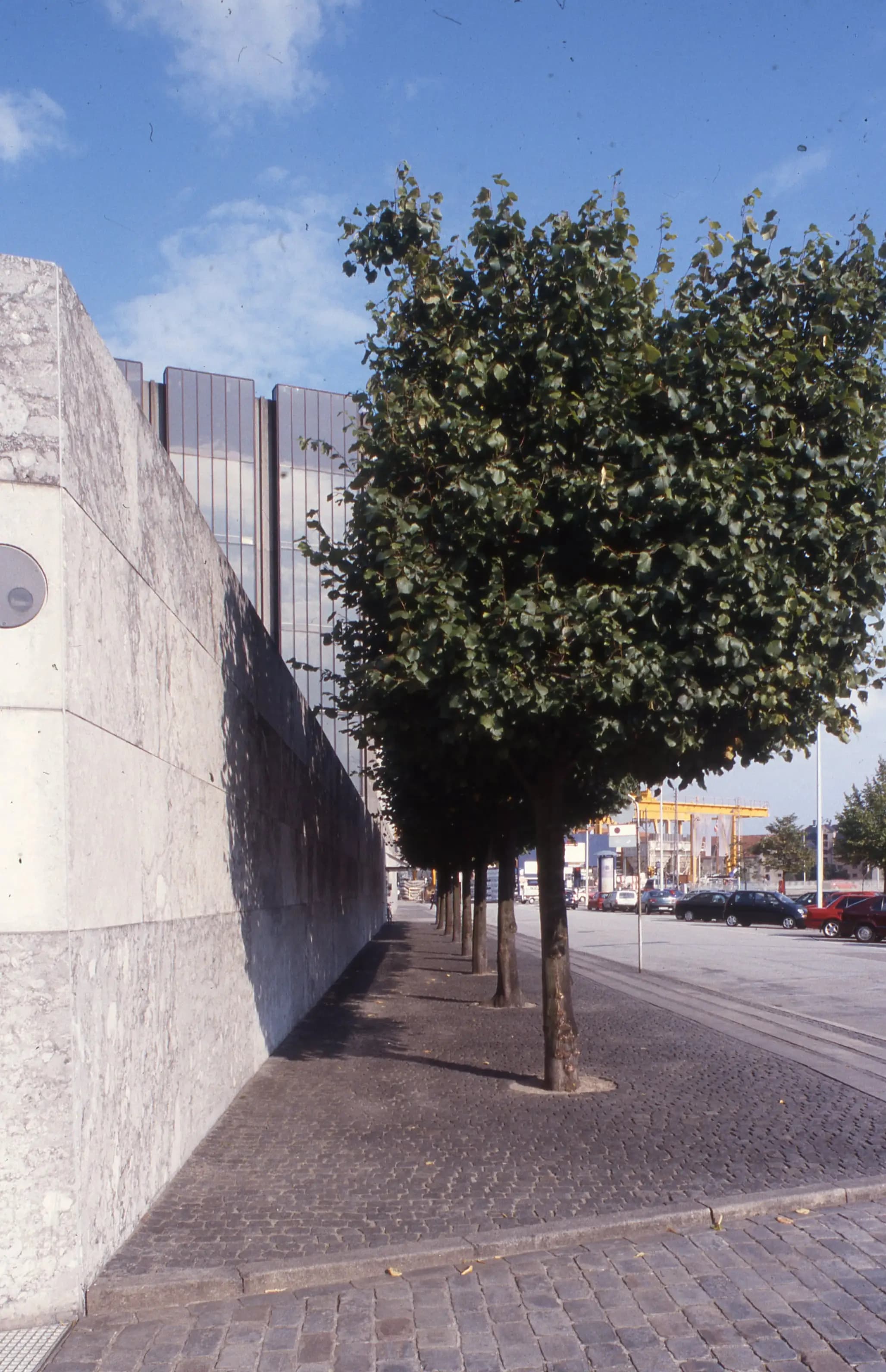
Arne Jacobsen is hard to overlook. His architecture and design are woven into our everyday lives – from the buildings around us to the chair at the dining table. As an architect and designer, he worked across scales and materials and helped shape Danish modernism, putting it on the global map. He designed both striking buildings and some of the most recognizable pieces of furniture in Danish design, which are still widely used today.
House of the Future
Arne Jacobsen’s architectural recognition gained momentum with an innovative idea for a particular house. In 1929, in collaboration with his fellow student Flemming Lassen, he won a competition for The House of the Future. The house consisted of circular floors with flat roofs and open terraces that flowed together into a single, unified form. Even today, it looks like something that belongs in the future.
With this visionary concept, modern architecture, Danish modernism, and functionalism were introduced to Denmark, marking Jacobsen’s major breakthrough as an architect. Functionalism’s simple, angular shapes and clean lines, however, still felt unfamiliar to most people. They were seen as cold and harsh.
Among the wealthy, though, some recognized the potential – and this became the starting point for a series of villa commissions in North Zealand for the young Arne Jacobsen.
Gesamtkunstwerk on a Grand Scale
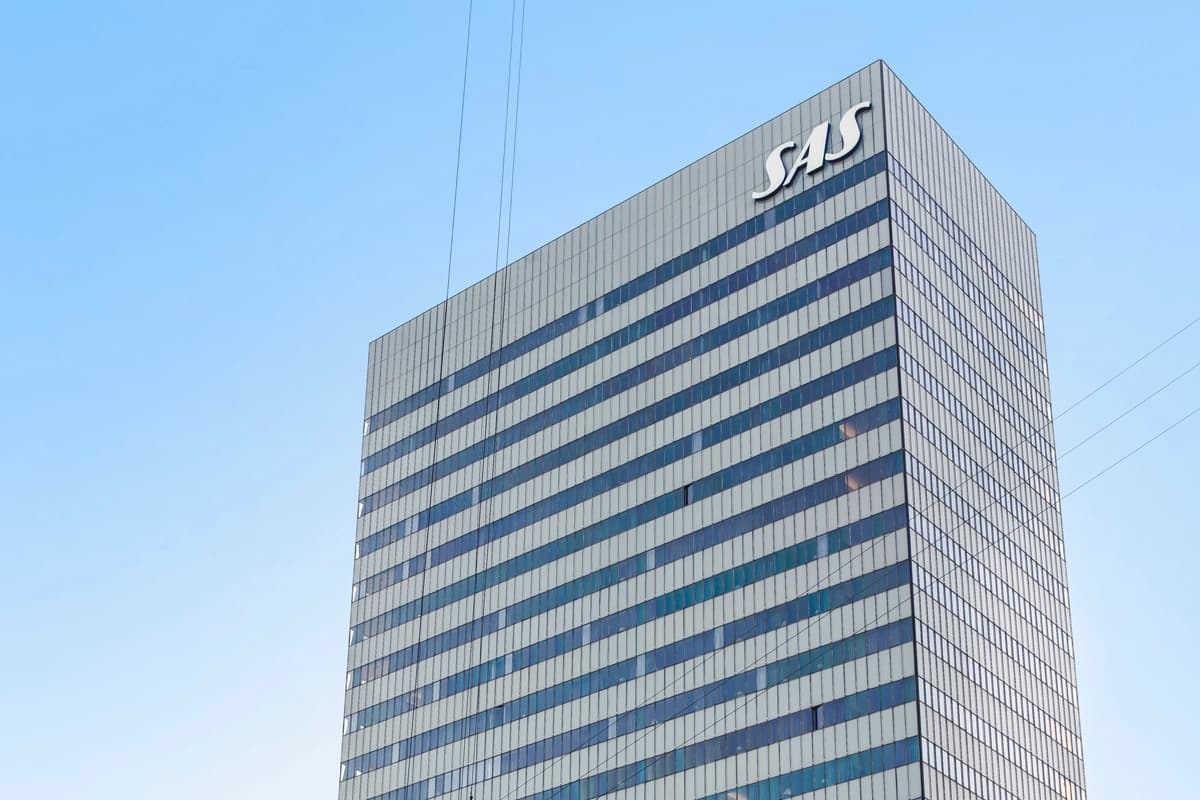
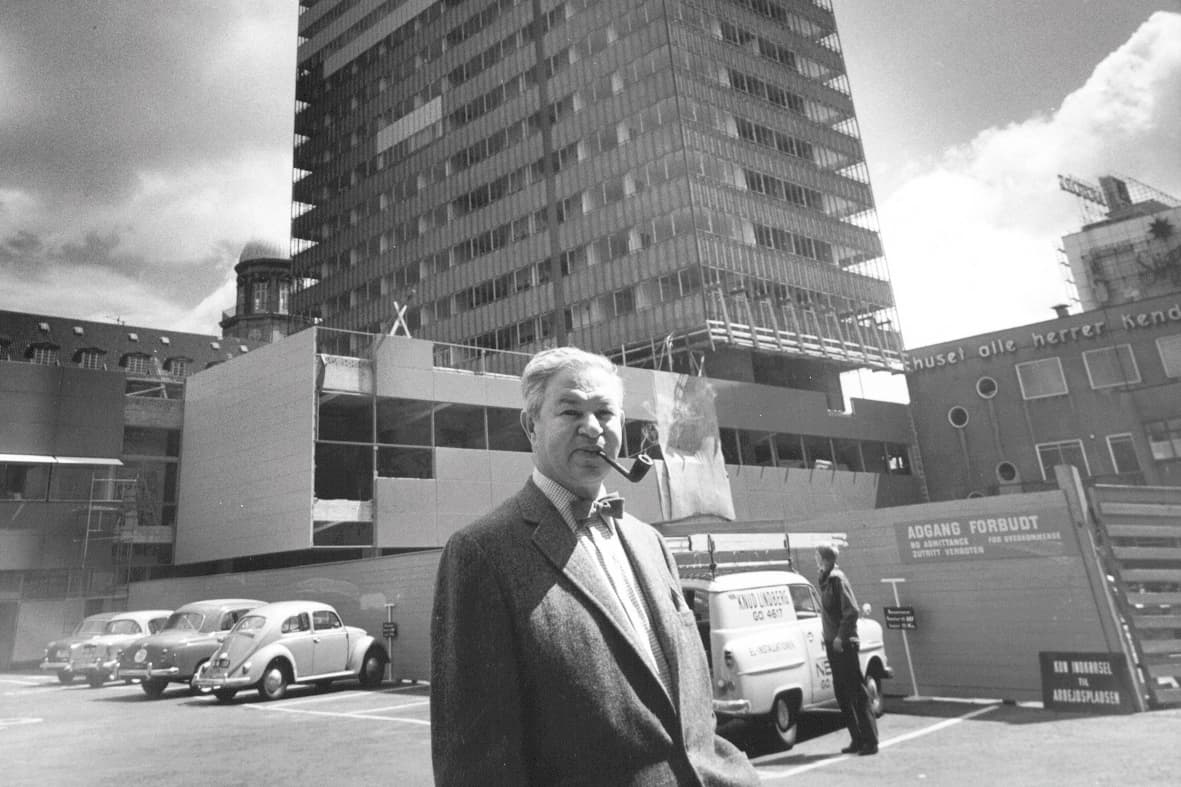
Things moved quickly from here. Arne Jacobsen soon became a major name in Danish architecture and design – both in Denmark and internationally. He was commissioned for large-scale projects such as the SAS Royal Hotel, which opened in 1960. The hotel became one of Denmark’s first skyscrapers and was a true Gesamtkunstwerk – a total design.
Jacobsen had carefully considered and designed the hotel down to the smallest detail – from cutlery to chairs and lighting. It was a rigorously controlled total design that brought an American, glamorous lifestyle to Denmark.
While some praised his work, others rolled their eyes. Speaking about the SAS Royal Hotel, Jacobsen once said in an interview:
»Yes, they call it the punch card, which is quite amusing, because it actually looks like one when the windows are open on a warm summer day. It’s been called many things, for example ‘the glass cigar box’. It even won first prize in a competition for Copenhagen’s ugliest building«, Jacobsen recalled in an interview for a documentary portrait.
Today, however, the building stands as an architectural icon. Each year, thousands of visitors line up to take the elevator to the sixth floor to visit Room 606, the only room that remains exactly as it was at the time of the hotel’s opening.
Chairs such as the Egg, the Drop, and the Swan – along with the cutlery and door handles – have also become such strong design icons in their own right that many people don’t even realize they were originally created for the hotel.
"Why should a chair have four legs when three are enough?"
Design Icons Take Shape
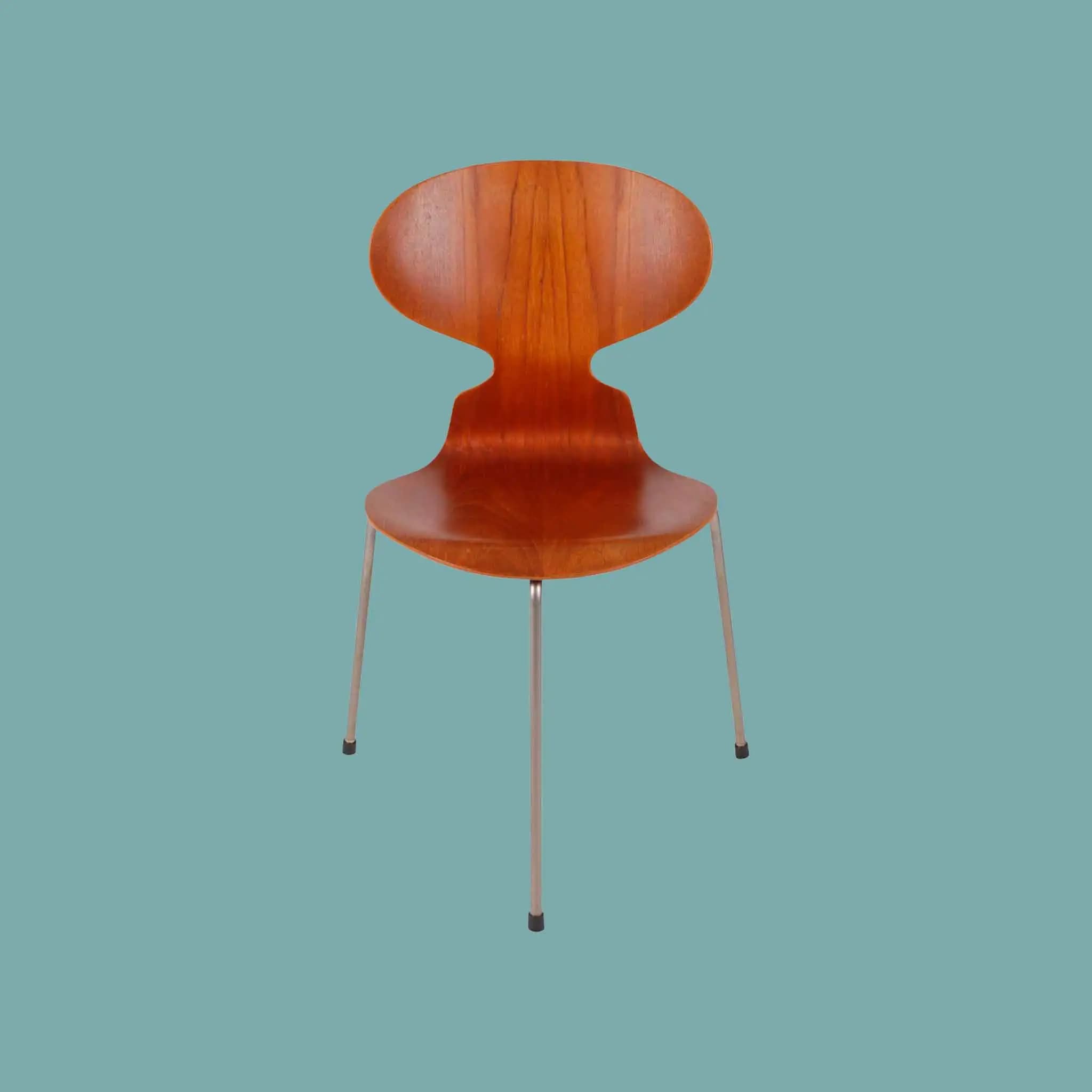
It was actually the Ant, which he designed in 1952, that marked his major breakthrough as a furniture designer. It was initially used in the Novo canteen (now Novo Nordisk) in Frederiksberg. The chair has since achieved iconic status thanks to its simple, elegant form and its functionality.
Jacobsen developed the Ant with three legs, and throughout his life he insisted that this was the ideal solution – both functionally and aesthetically. In 1953, when asked about the idea behind the three legs, he replied:
»Why should a chair have four legs when three are enough?«
The three-legged design is a clear example of Jacobsen’s persistent effort to make design more rational and to minimize material use.
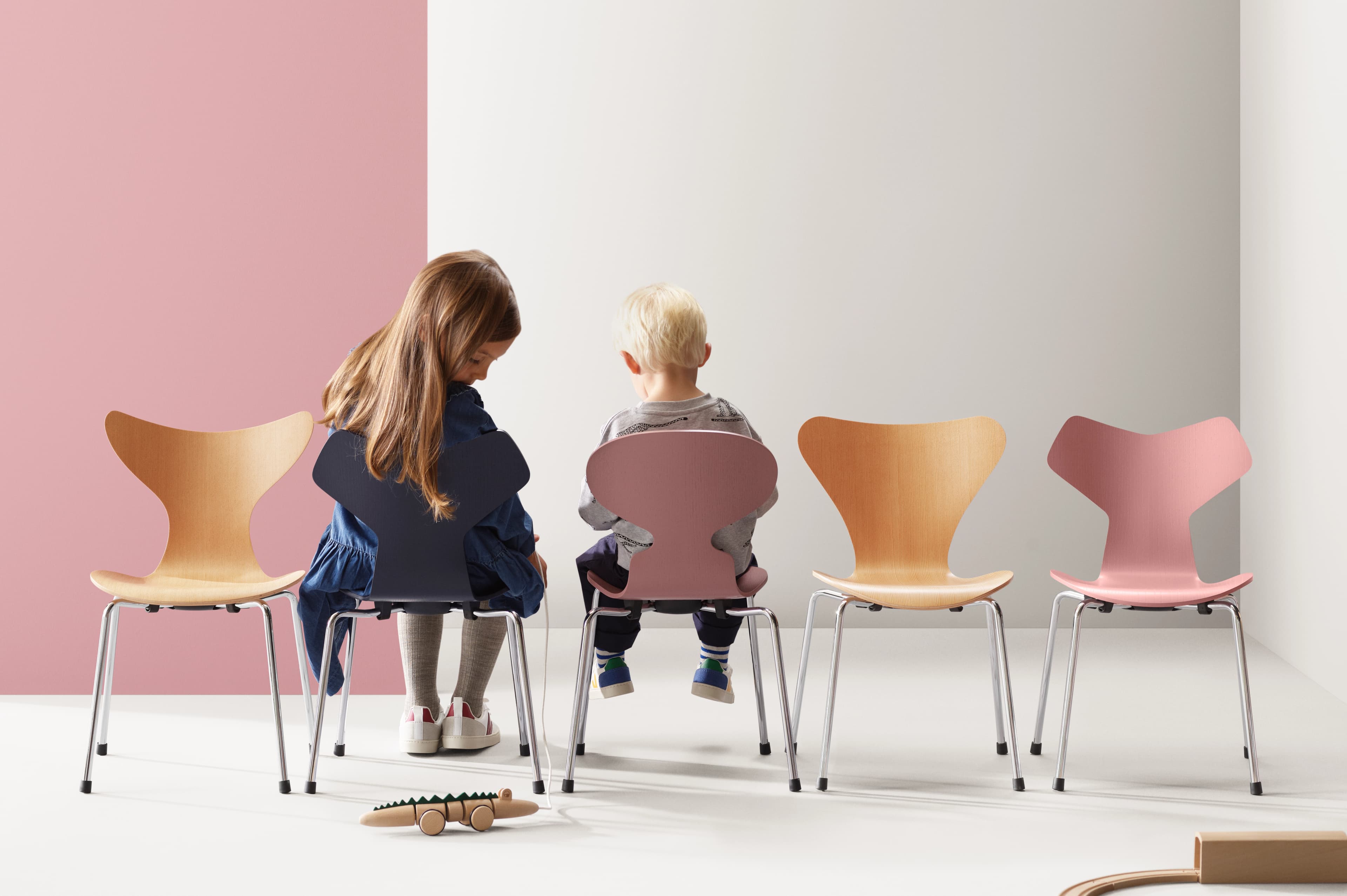
Over time, more chairs were added to Jacobsen’s portfolio, including iconic designs such as the Egg, the Series 7, the Swan, the Lily, and the Drop.
What set Jacobsen’s furniture apart was the combination of functionality and aesthetics. The chairs appear simple, but behind their clean lines lies extensive work with form and balance. They are made to be used – and to last.
With the Ant and later the Series 7, Jacobsen explored new ways of shaping wood, allowing the chairs to be both lightweight and strong. This made them suitable for everything from canteens to offices and private homes.
For Jacobsen, it was essential that furniture worked in everyday life. It had to be comfortable to sit in, easy to use, and able to integrate naturally into the environments it became part of.
Explore Arne Jacobsen’s designs
The Ant (1952)
With the Ant, Arne Jacobsen succeeded in creating something many of his fellow architects and designers were struggling with at the time: a small, practical chair that fit the modern home.
Over the next two decades, he developed a wide range of chairs with new, elegant silhouettes, which were produced by Fritz Hansen.
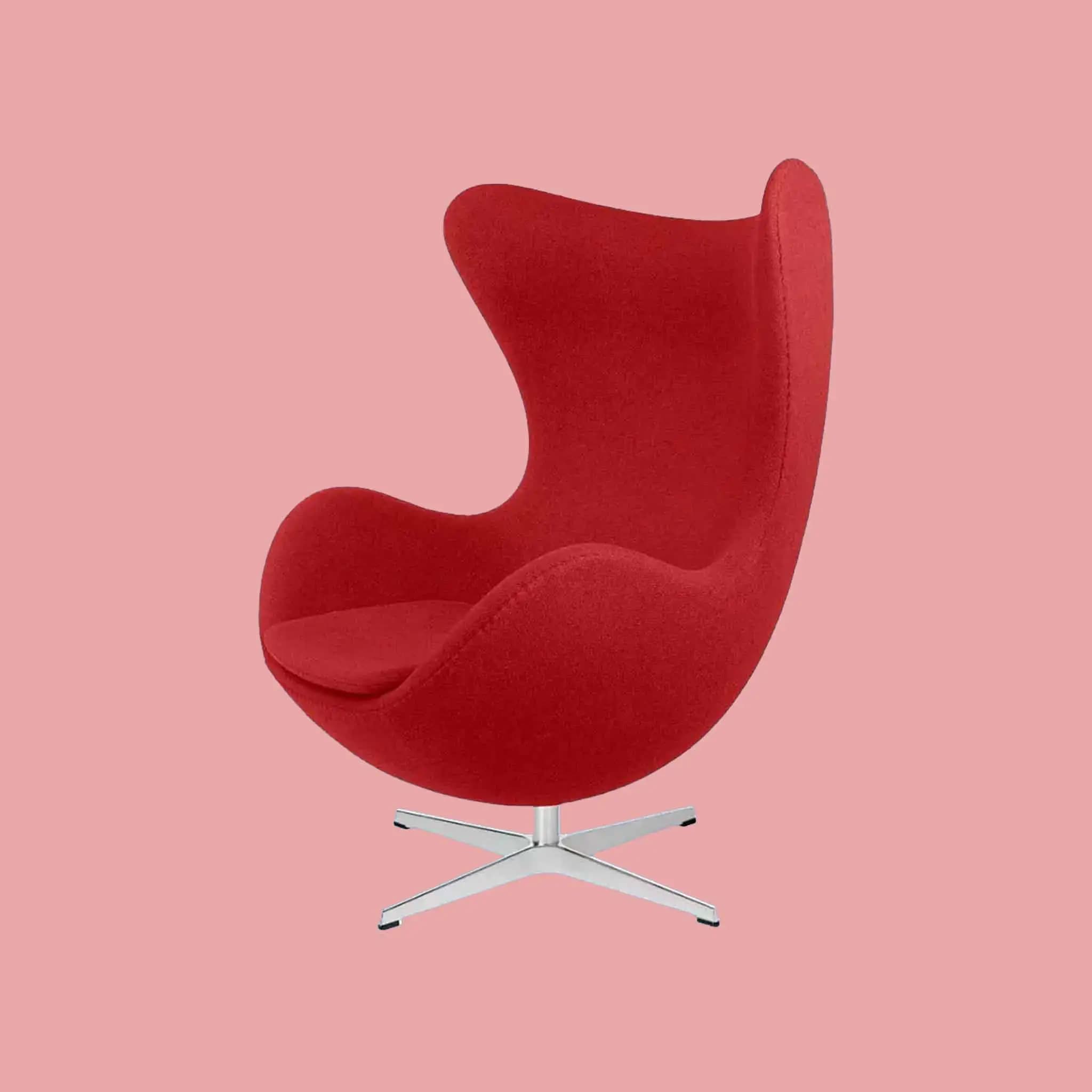
The Egg (1958)
The Egg (1958) was a key element in Arne Jacobsen’s comprehensive design for the SAS Royal Hotel, and today the chair holds the same iconic status as the famous hotel itself. Sandor Perjesi, a model maker in Jacobsen’s studio, recalled the work on the Egg:
»I remember the first time we went to a summer house near Tissø to work on the Egg. We stuffed the plaster model into my car and spent an entire weekend adding and removing material. Back and forth, like classical sculpture.«
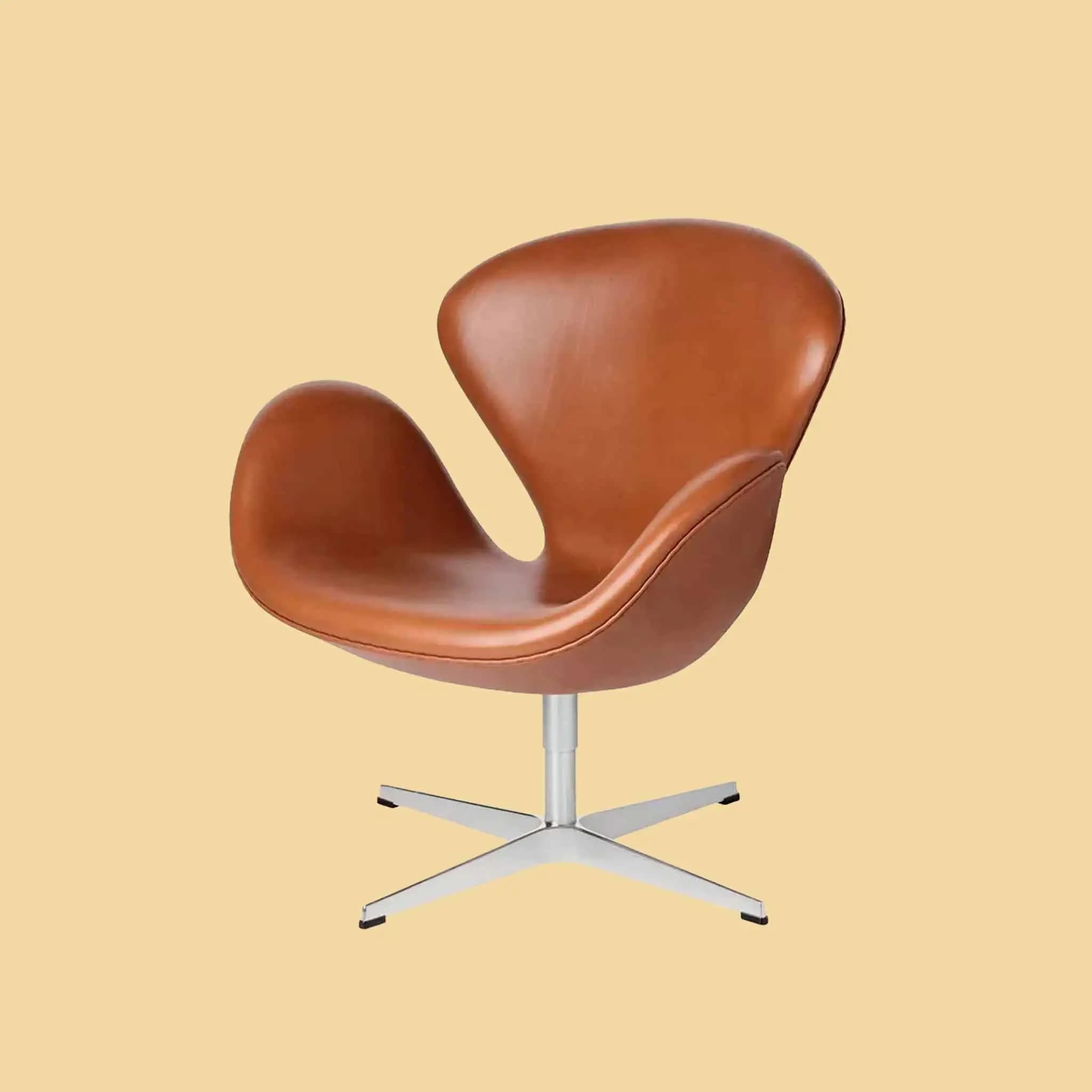
The Swan (1958)
The Swan became part of Arne Jacobsen’s iconic interior design for the SAS Royal Hotel – with its organic, soft lines, it stands in contrast to the building’s minimalist aesthetic. During the 1950s, its free, sculptural form came to symbolize a new era, and today, more than 60 years later, the design can be found in public spaces and private homes around the world.
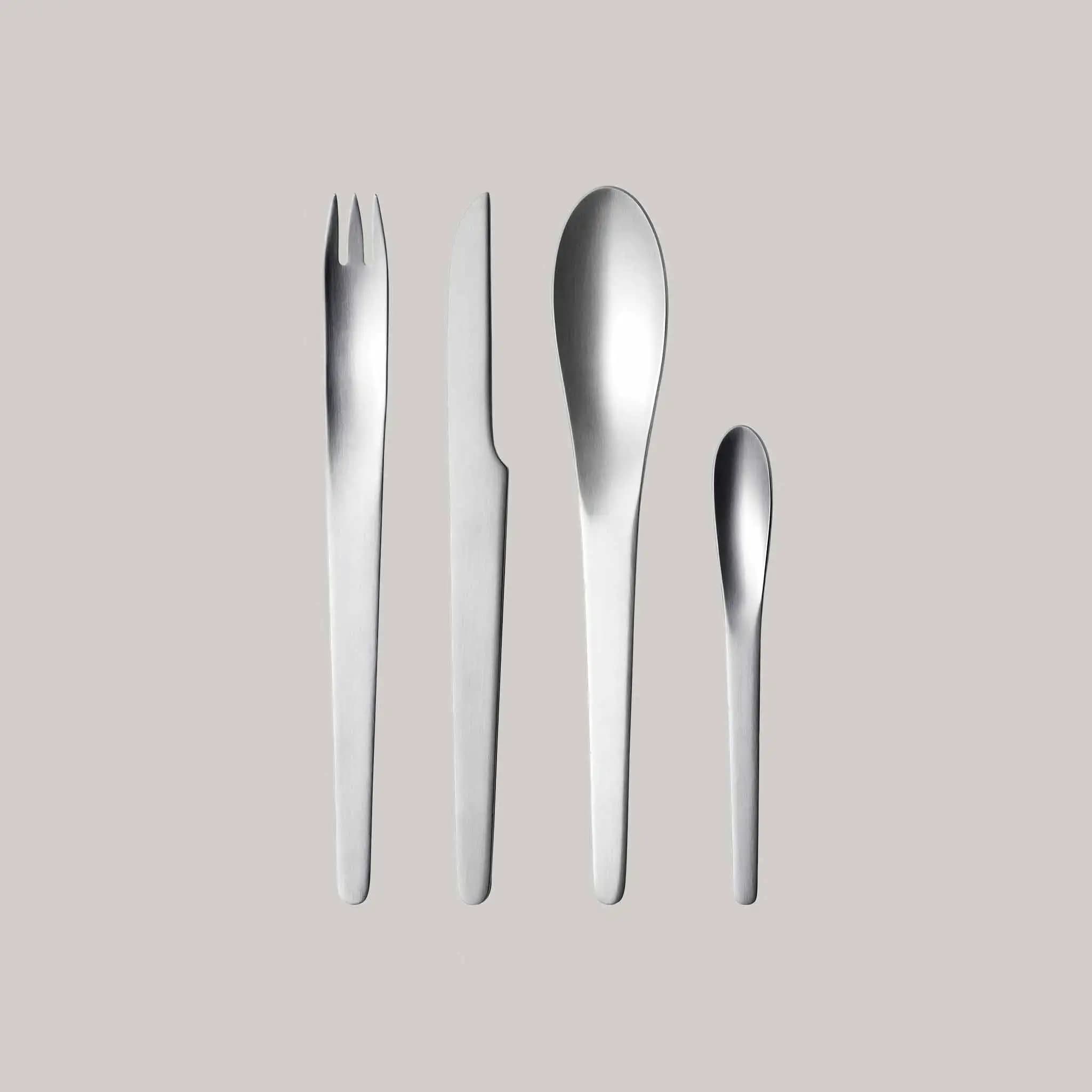
AJ cutlery (1957)
Arne Jacobsen’s stainless steel cutlery was new and unconventional in both form and material when it was launched in 1957. The organic lines of AJ Cutlery reflect Jacobsen’s artistic and experimental approach to design, as well as his ambition to eliminate all unnecessary elements.
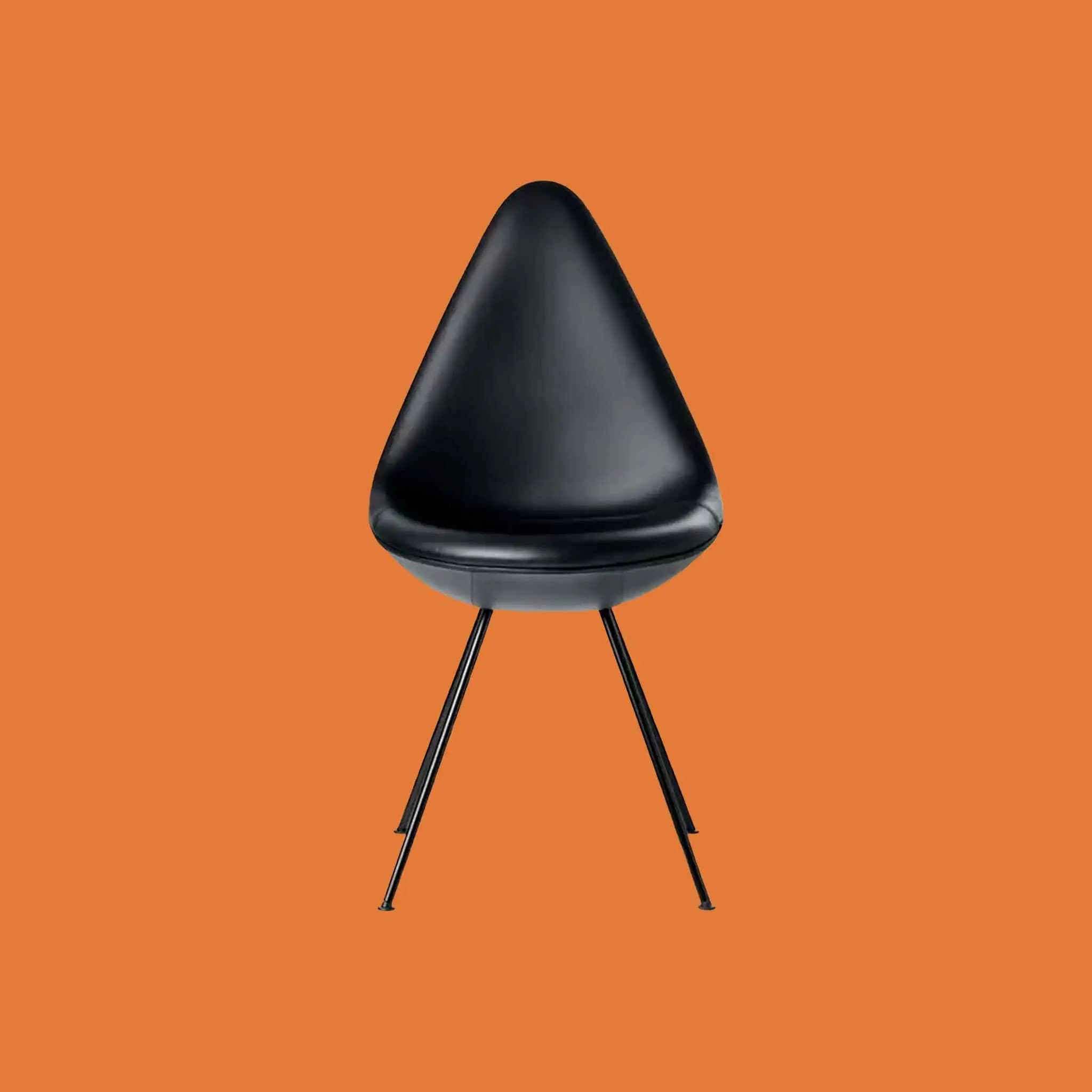
The Drop (1959)
The Drop was also part of the famous total design that Arne Jacobsen created for the SAS Royal Hotel. The clean lines of the Drop made it an ideal fit for the modern, international environment he designed for the hotel.
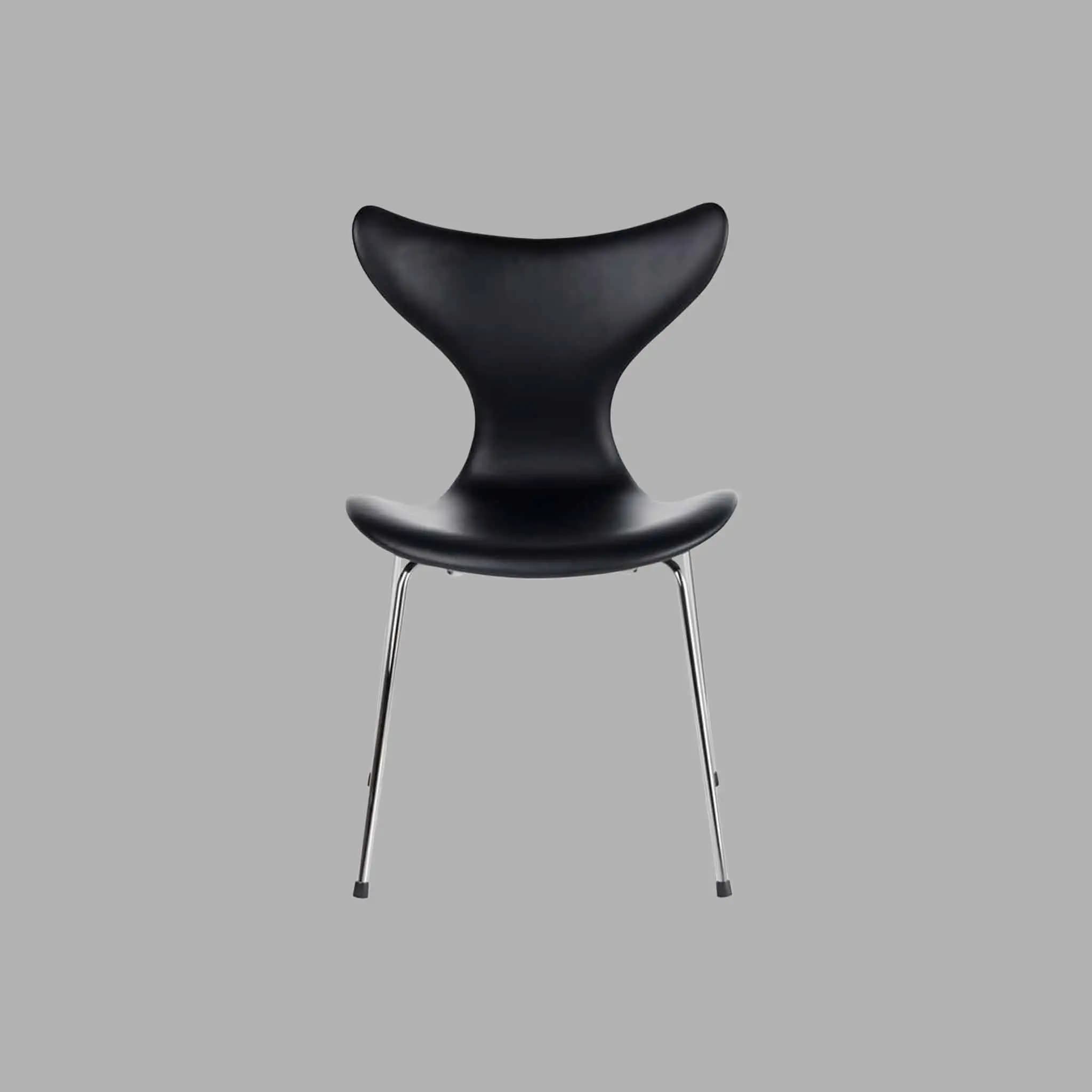
The Lily (1957)
The Lily is the last shell chair Arne Jacobsen designed before his death in 1971. The design, launched in 1969, is one of his most expressive, featuring a striking contrast between the wide back and the narrow waist. The flowing lines that inspired the chair’s name are especially pronounced in the version with armrests, which was introduced the following year, in 1970.
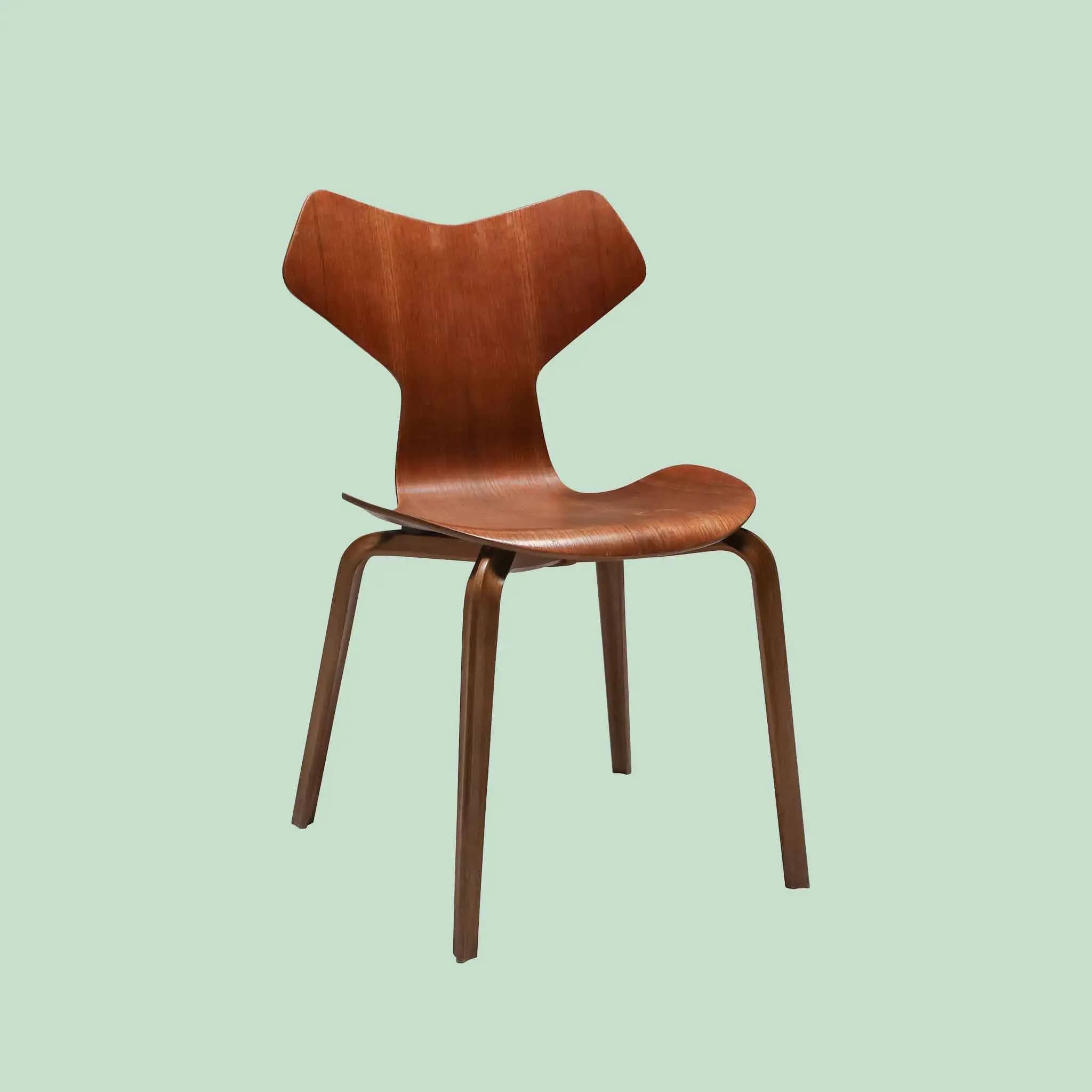
Grand Prix (1957)
In 1957, Arne Jacobsen created the Grand Prix chair as a lightweight, modern piece made entirely of laminated wood. The Grand Prix chair is the only shell chair by Arne Jacobsen that was not designed with steel legs. At the Milan Triennial, it was awarded the exhibition’s highest honor, the ‘Grand Prix,’ which has been the chair’s name ever since.
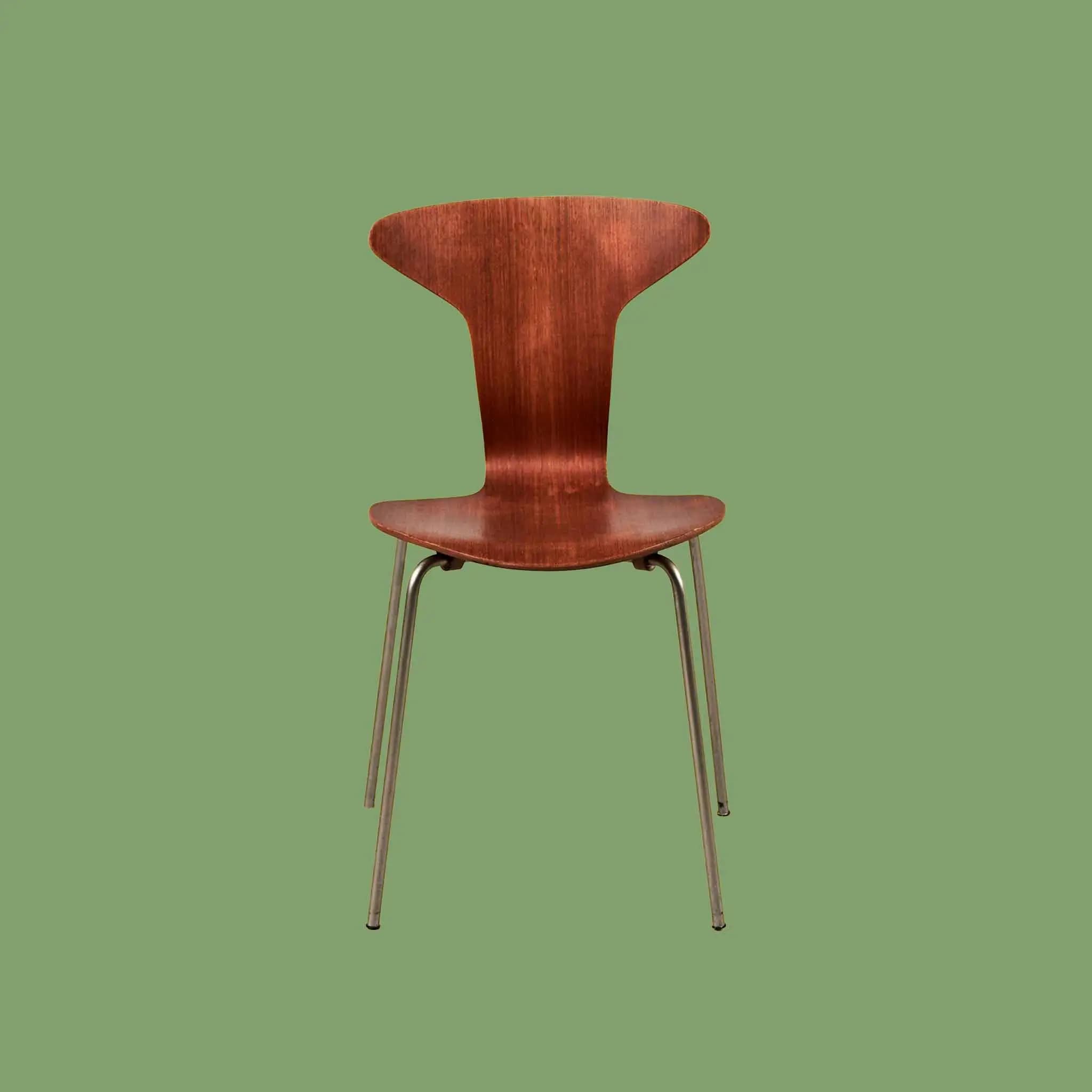
The Munkegaard chair (1955)
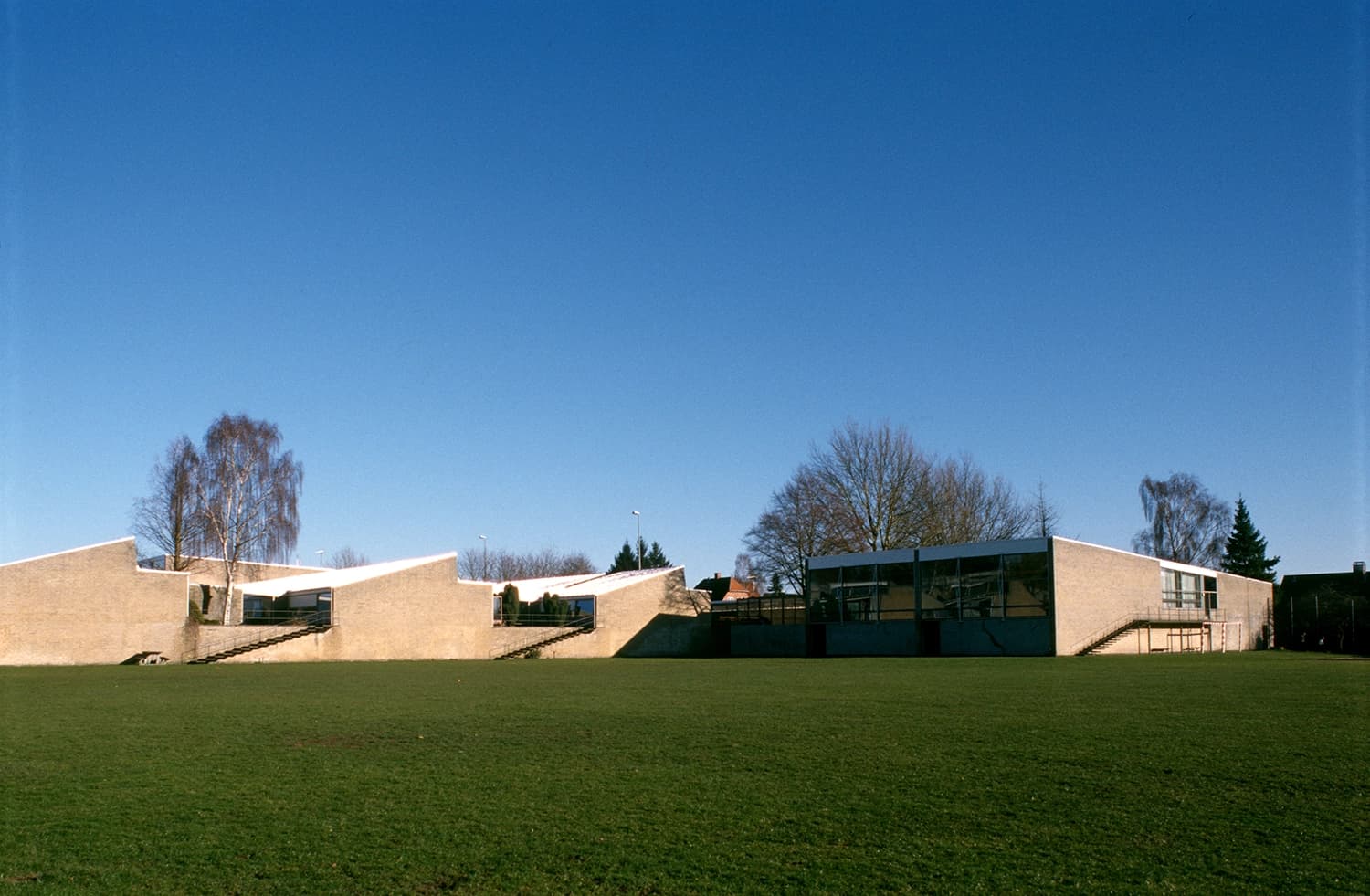
The Munkegaard chair is the third of Arne Jacobsen’s original shell chairs. It was designed for Munkegaard School, which was completed in 1957. With its light, functional construction, the chair was a perfect match for the school’s modern approach.
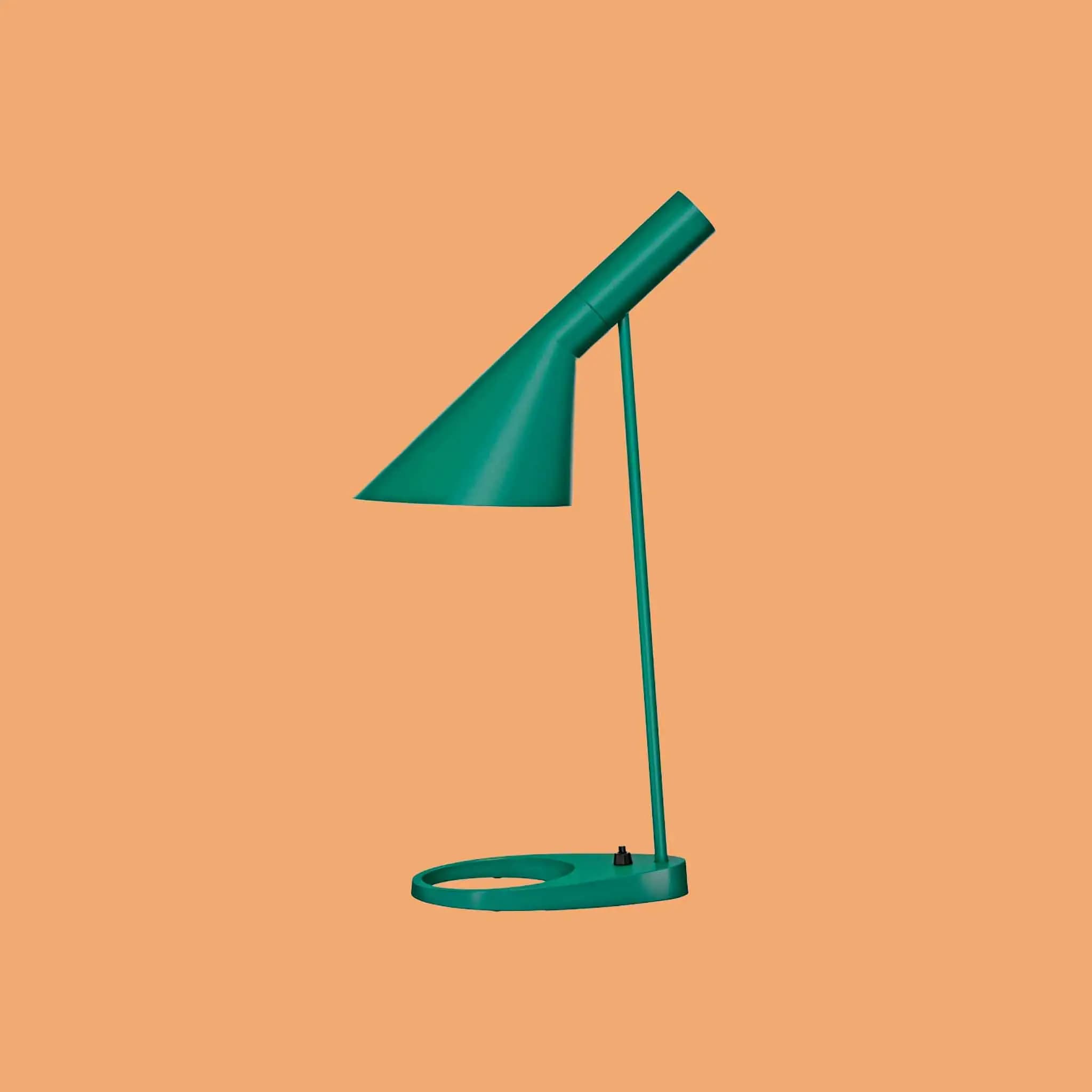
AJ lamp (1957)
The sculptural AJ lamp is one of Arne Jacobsen’s most iconic designs. It became famous as part of his comprehensive interior design for the SAS Royal Hotel. The design builds on several of his earlier lamps, but its expression is defined by straight lines and clean, angled forms that give the lamp a строг, sculptural look. Arne Jacobsen designed three versions of the lamp – a floor lamp, a table lamp, and a wall lamp – all of which are still in production today by Louis Poulsen.
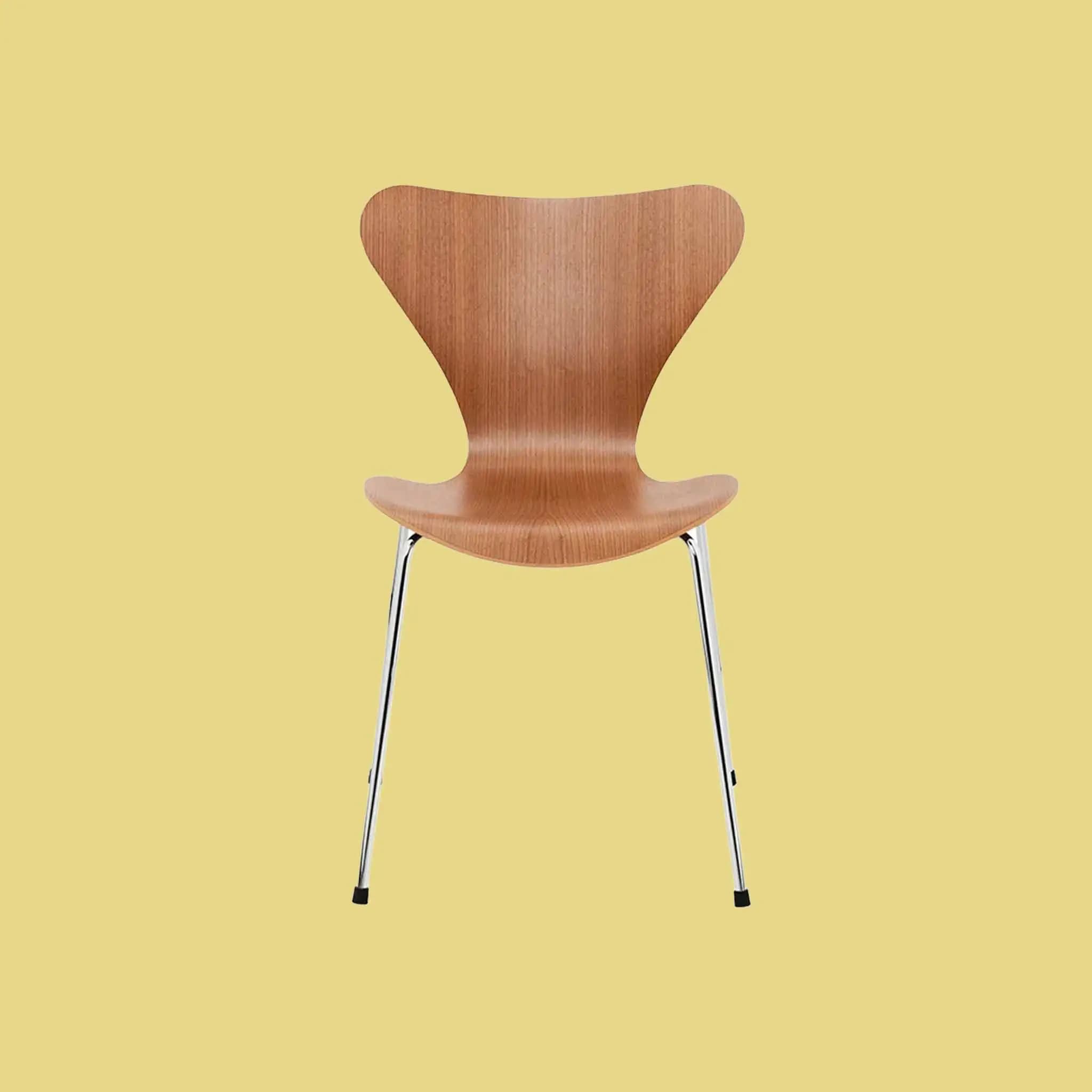
Series 7 chair (1955)
The concept behind Arne Jacobsen’s Series 7 chair was to create a lightweight, stackable, and expressive chair that could be used in a wide range of spaces and settings. It was introduced at the H55 design exhibition in Helsinki in 1955 and addressed some of the criticisms of the Ant – it was therefore made larger, with four legs and optional armrests. Its name, incidentally, comes from its model number, 3107, as well as its distinctive silhouette.
The Botanist
»If I were given a new life, I would be a gardener.«
This is how Arne Jacobsen described his lifelong fascination with plants. That interest was also reflected in his own home. At Strandvejen 413, where he lived and had his studio from 1951, he created a dense and varied garden with more than 300 plant species. From his office, he overlooked the garden, where shapes, colors, and structures became part of his daily visual world.
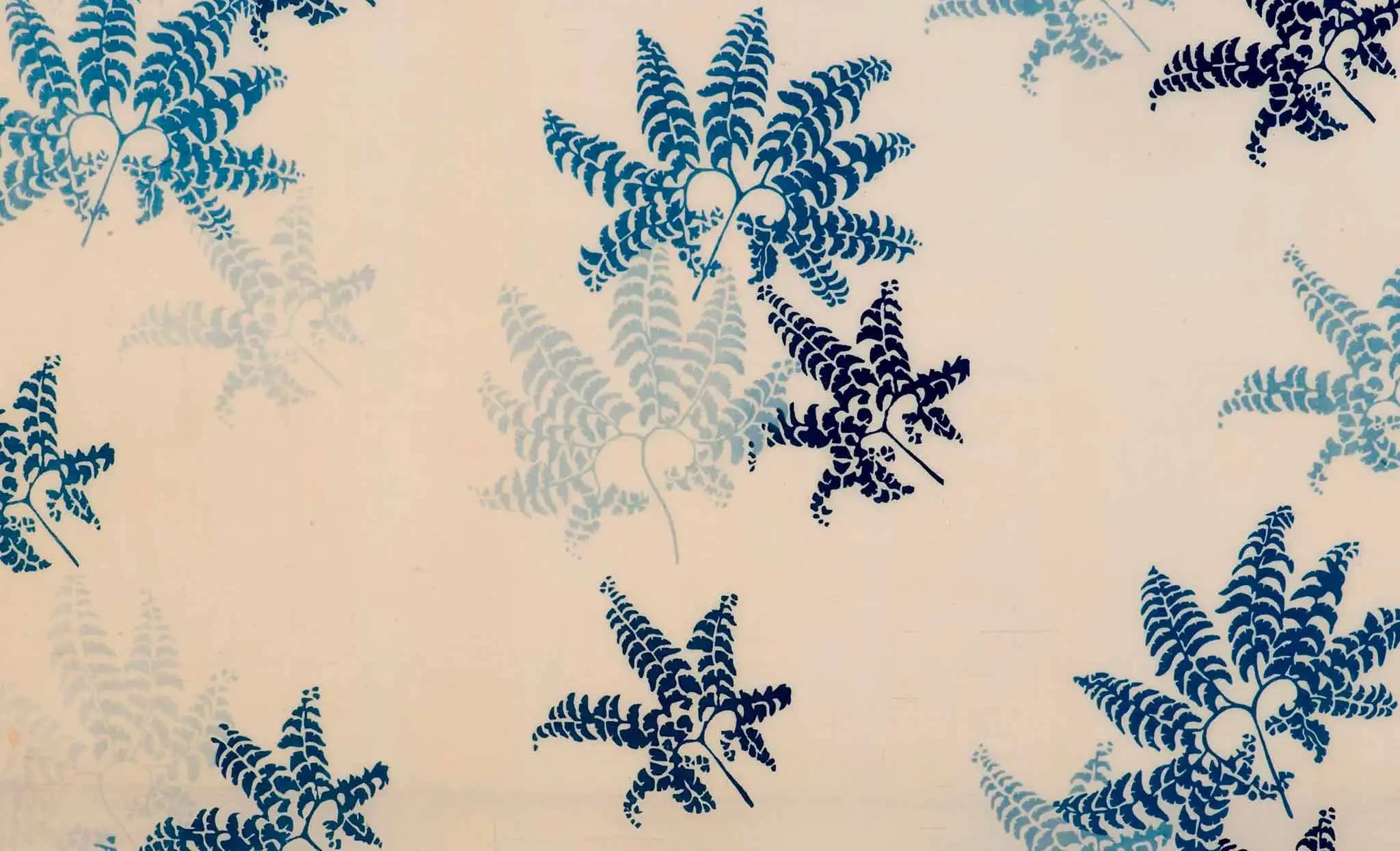
Plants also found their way into his work. They appear especially in his textiles, where leaves, branches, and organic patterns take center stage.
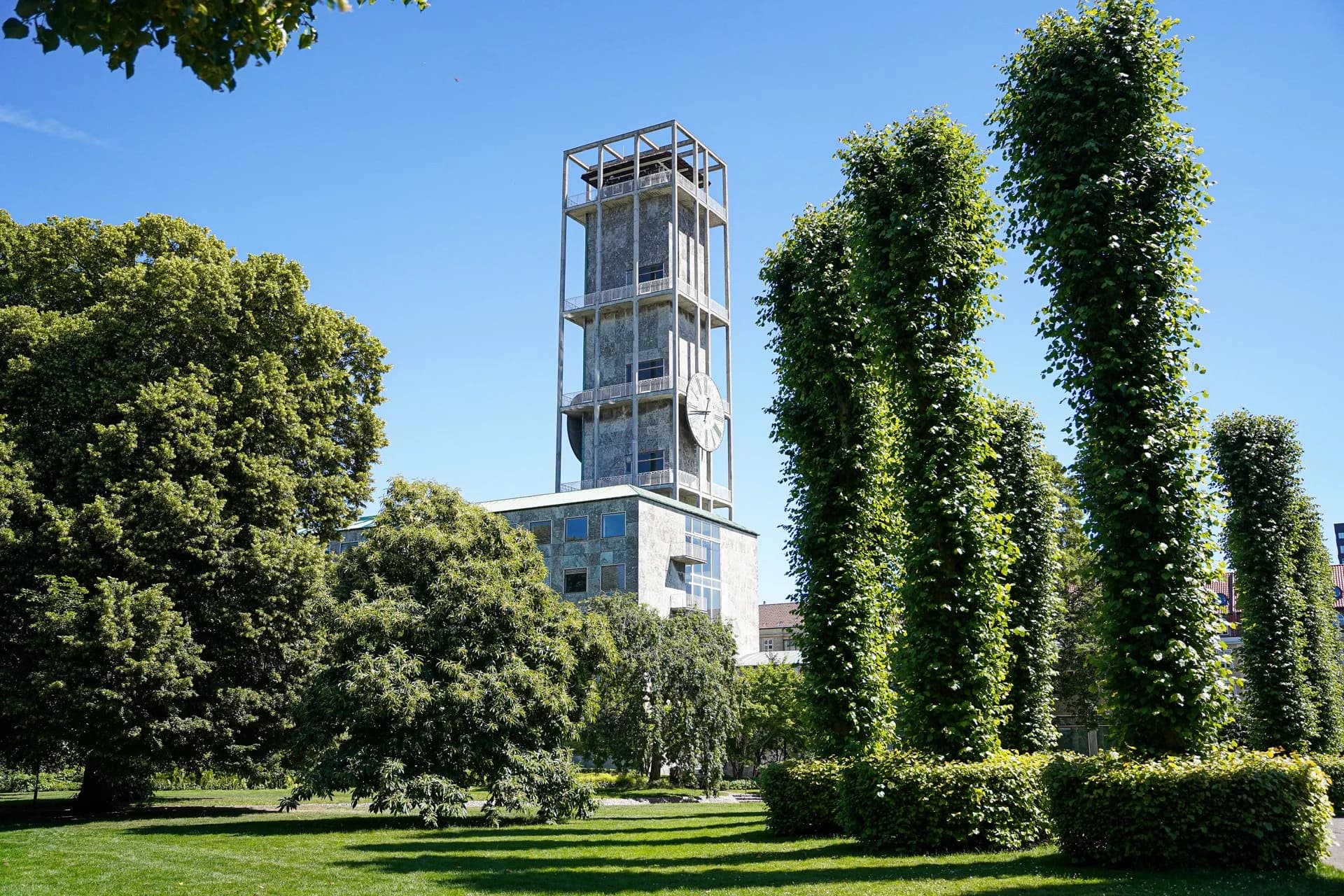
While working on Søllerød Town Hall, Arne Jacobsen met Jonna Møller, whom he married in 1943. His meeting with Jonna was a significant event – not only personally but also creatively. She helped translate his watercolors and plant studies into textile patterns, which she printed. The couple exhibited their work, among other places, at Charlottenborg.
Later that same year, they were forced to flee to Sweden due to Jacobsen’s Jewish background. In Sweden, the couple began collaborating with the department store Nordiska Kompaniet, which put Jacobsen’s textile patterns into production. The designs from this period are characterized by the forms of nature and a rich attention to detail.
Arne Jacobsen (1902–1971)
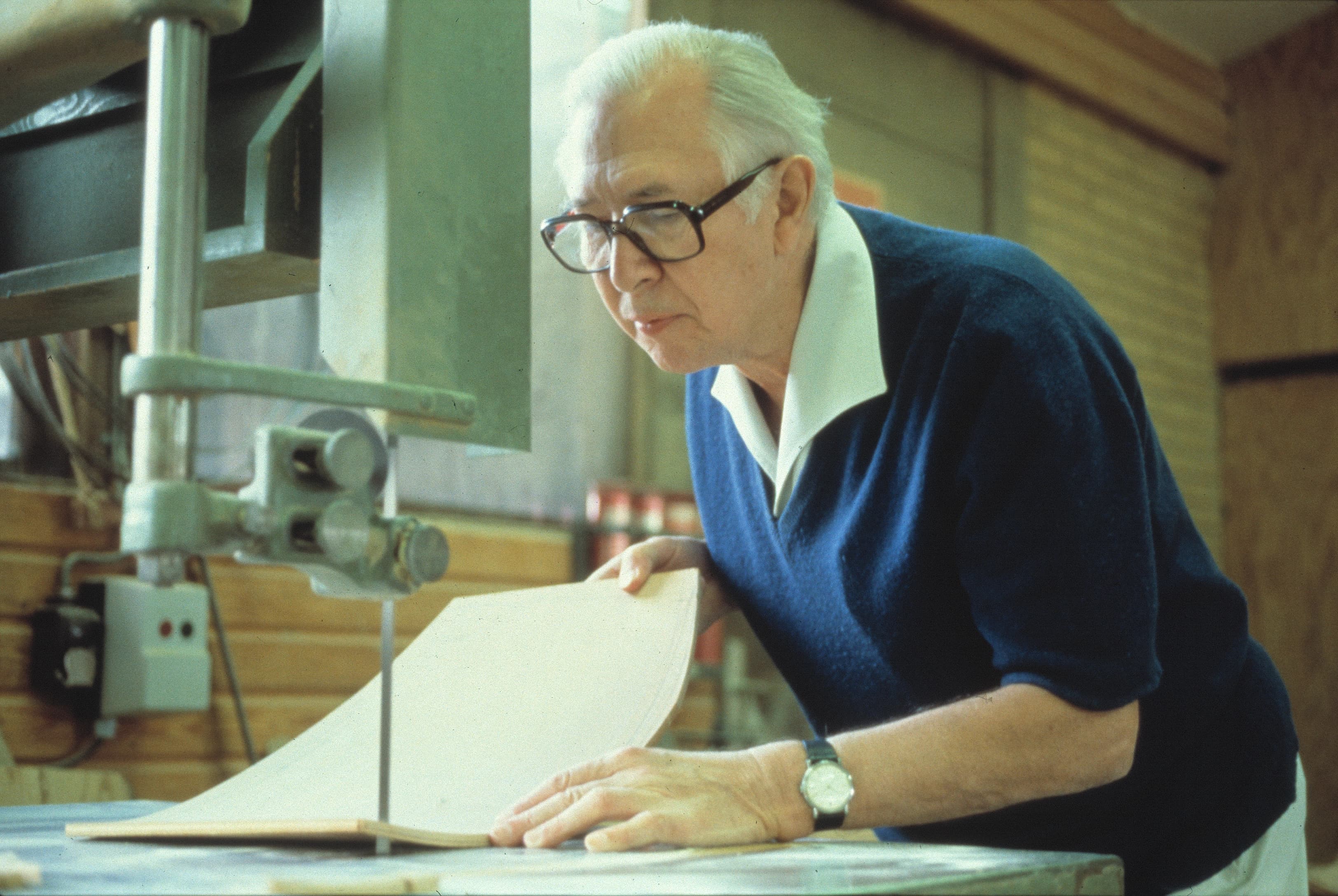
Arne Jacobsen was born in Copenhagen in 1902 and grew up as an only child. As a boy, he was sent to boarding school in Nærum, where he met, among others, the brothers Flemming and Mogens Lassen. He was not academically inclined, but from an early age he showed strong creativity and a restless nature.
He originally dreamed of becoming a painter, as he took great pleasure in creating highly realistic nature drawings. However, on his father’s advice, he chose to pursue architecture instead – always carrying an artistic approach with him.
He graduated from the Royal Danish Academy of Fine Arts, School of Architecture, and supplemented his education with practical experience, including working as a bricklayer in Germany. After positions at several architectural studios, he established his own practice in 1929.
He was a pronounced perfectionist who demanded the same of everyone who worked for him. If you were not prepared to work late into the night on a regular basis, his studio was certainly not the right place for you.
Throughout his life, Jacobsen worked across architecture, furniture design, and textiles – a true multidisciplinary artist.
Sources: Designeren Arne Jacobsen by Henrik Lund-Larsen and Thomas Dickson, and Skærbæk Antik & Design.