From sports to stage: Colorful basketball courts create new fellowships
The street basketball court has evolved from white lines on gray concrete into a canvas of colors and patterns – and it is used for everything from practicing three-point shots to cultural expression and everyday life. From Paris to Copenhagen, a new generation of basketball courts shows how color can open public spaces to new communities.
By Bjørn Etone Broni Jensen
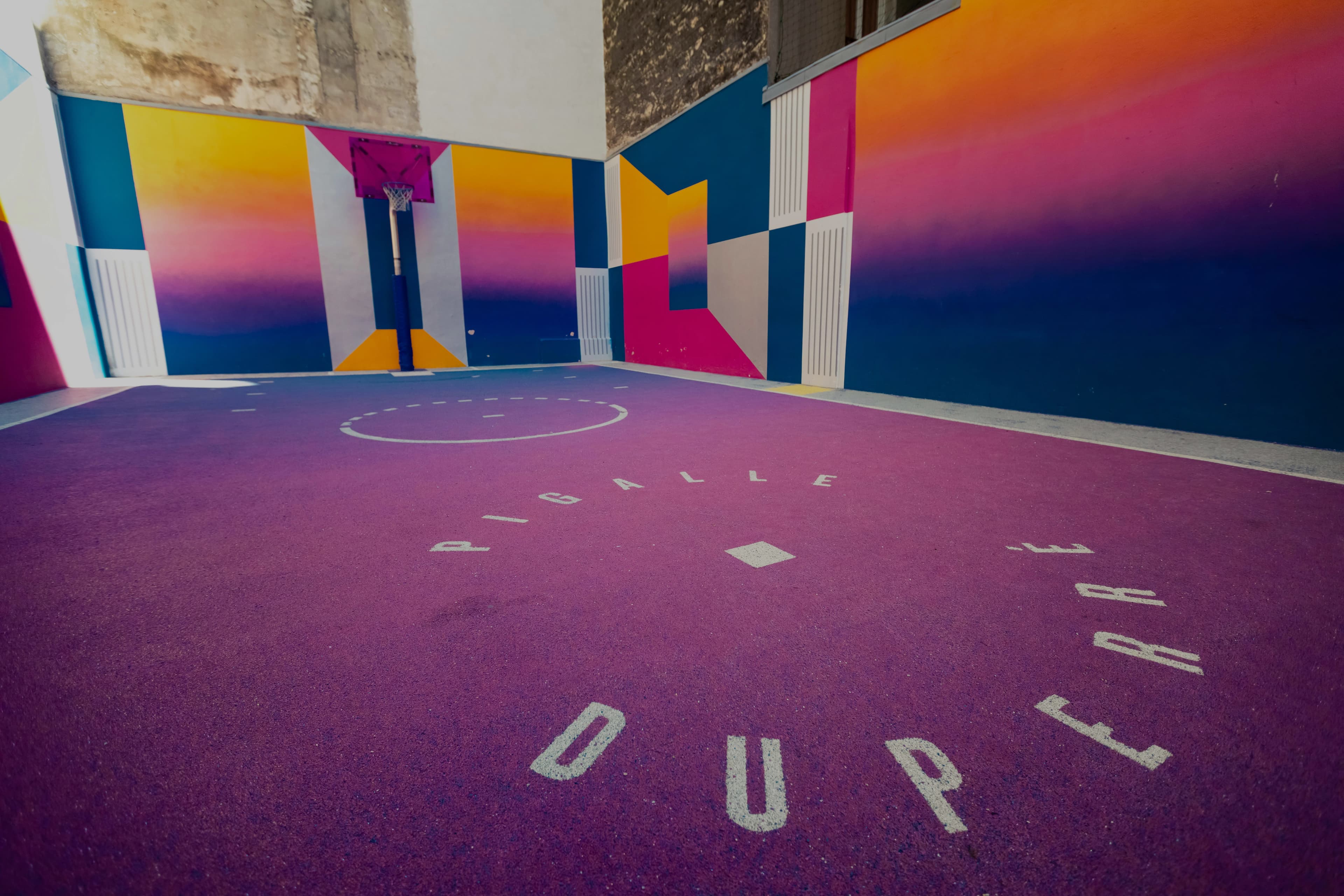
In Paris’s 9th arrondissement, a basketball court is tucked between two apartment buildings in the Pigalle neighborhood. Historically known as a “colorful” area – a red-light district lined with sex shops and strip clubs, with the iconic Moulin Rouge just around the corner.
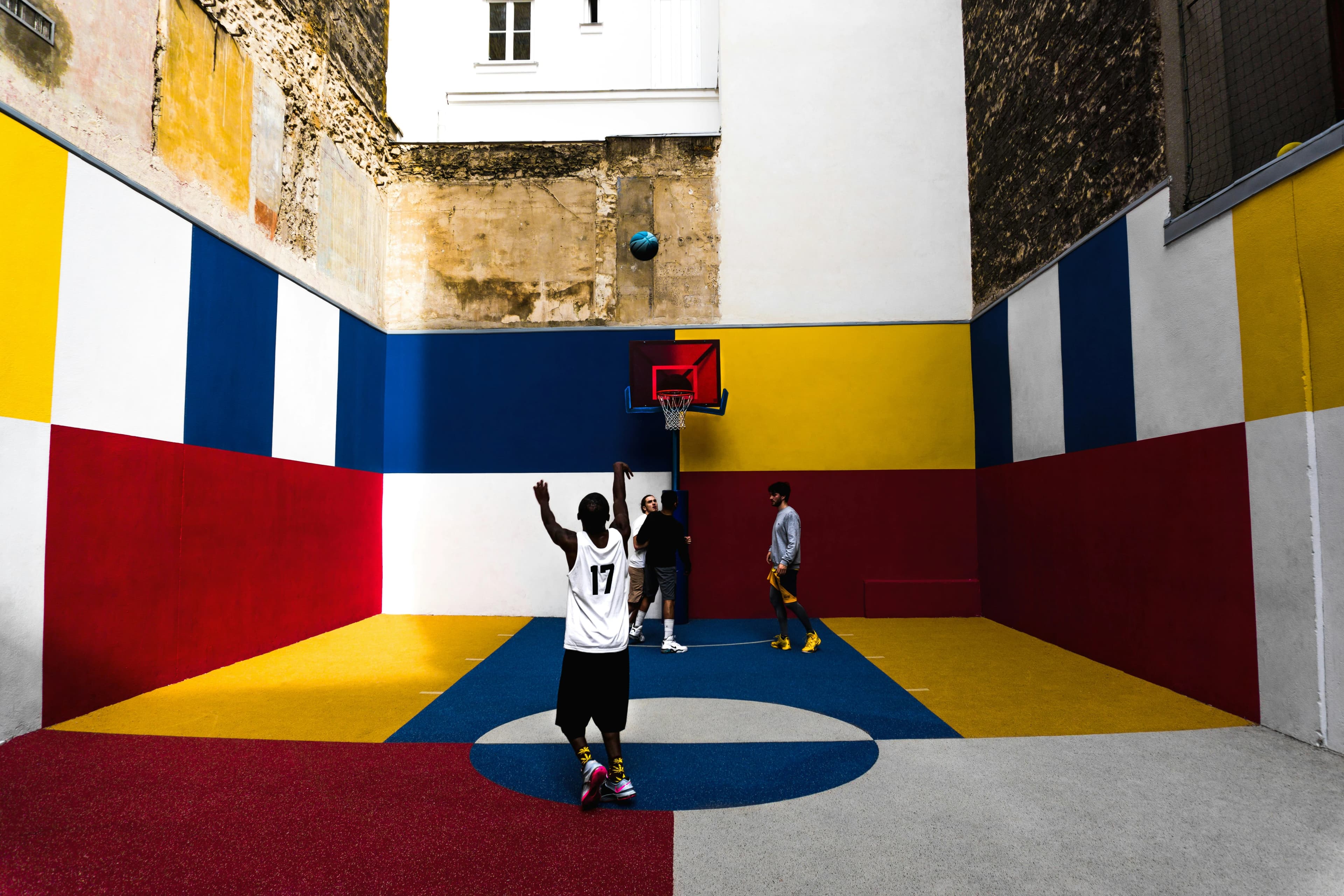
But the basketball court on Rue Duperré brings a completely different vibe. Its colors stretch across the concrete and climb the surrounding walls in bold designs that make you stop and look twice. It’s a place where people play basketball, film TikToks, and hang out.
Known as Pigalle Duperré, the court was designed by fashion designer Stéphane Ashpool in collaboration with the design studio Ill-Studio, with support from Nike. Since its first transformation in 2009, the project has been about more than just creating a visually striking place to play.
»It was about creating a public space that could bring people together across generations and backgrounds,« Stéphane Ashpool explains.
He grew up in the neighborhood and spent a lot of time on that court, but he felt it had been neglected and had become almost invisible. The project wasn’t about adding something new, but about changing how people saw the space.
»I had this intuition that by bringing color and attention to it, we could shift the way people looked at it – and ultimately how they used it,« he says.
The court quickly became a tourist attraction. People from around the world came to see it – not just to play basketball, but to be part of the space. Today, that colorful square in the middle of Paris has inspired a whole new kind of basketball court, designed to bring public space to life.
"It was never about imposing something from the outside but rather translating the neighborhood’s identity into a visual language"
More Basketball, more courts
Basketball courts – and the sport itself – are already easy to access, says Marius Hansen. Through his company, Streetball Consulting, he works daily to develop street courts across Denmark.
»At its core, a basketball court is highly accessible. It’s one of the few places in the city where you can participate without a membership or fixed structure – which makes it a democratic public space,« he explains.
Overall, the sport is growing in popularity in Denmark. According to the Danish Basketball Federation, the number of registered players has doubled over the past decade – from just under 11,000 in 2013 to nearly 21,500 in 2024.
This surge in participation is also driving growing demand for playing outside traditional club settings, in public spaces.
That trend is something Jonatan Jørgensen recognizes. He is the CEO of Dansk Gummibelægning – a company responsible for the construction work behind court renovations across the country. He points out that many existing courts don’t meet the standards needed for more serious play. As a result, there has been a stronger focus on materials and court dimensions.
But it’s not just about size, materials, or the sport itself. Increasingly, the look and design of the court are taking center stage.
Colors in play: Swipe to see the colorful basketball courts →
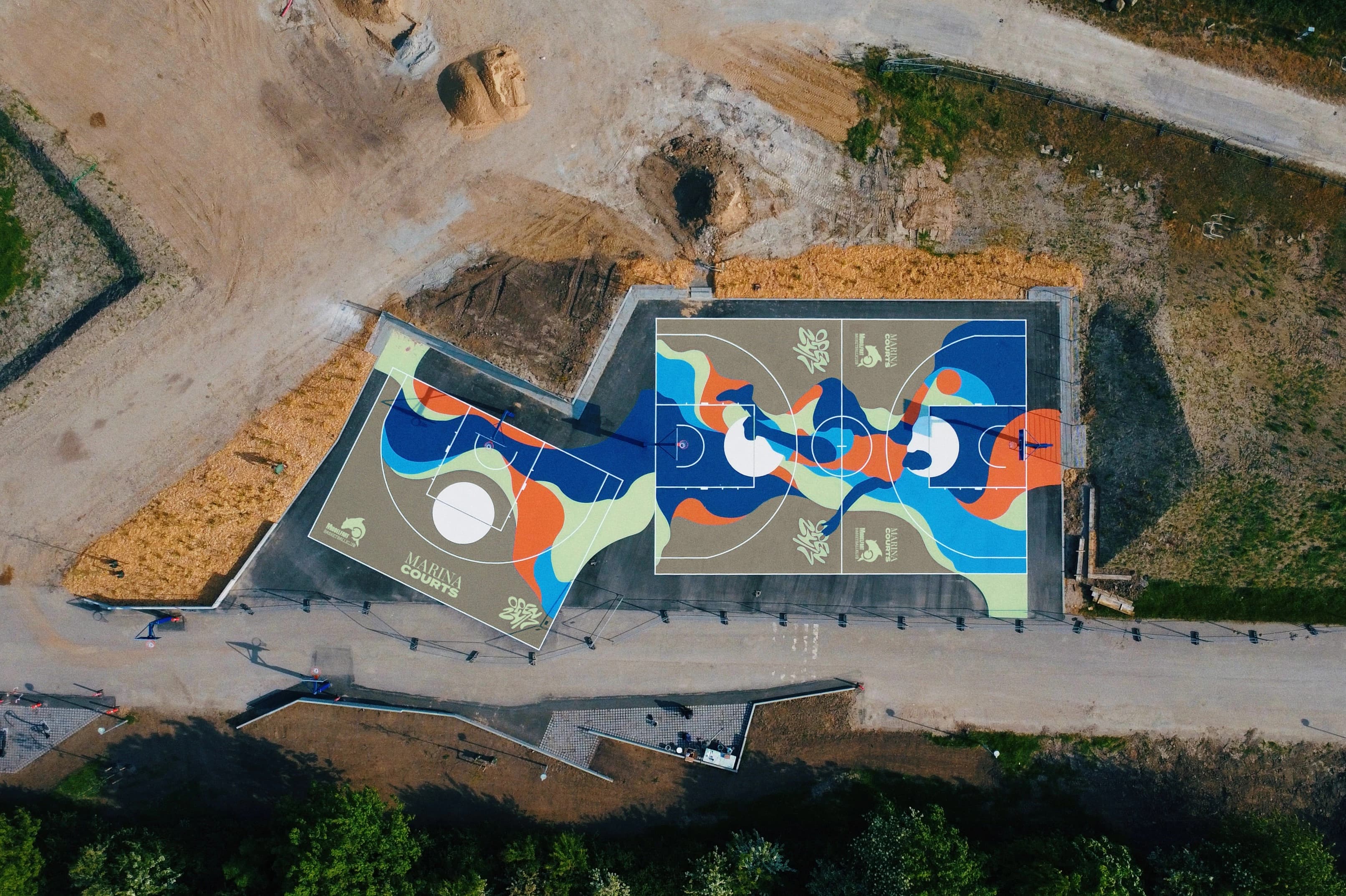
A colorful LeBron James decorates the court by the marina in Middelfart.
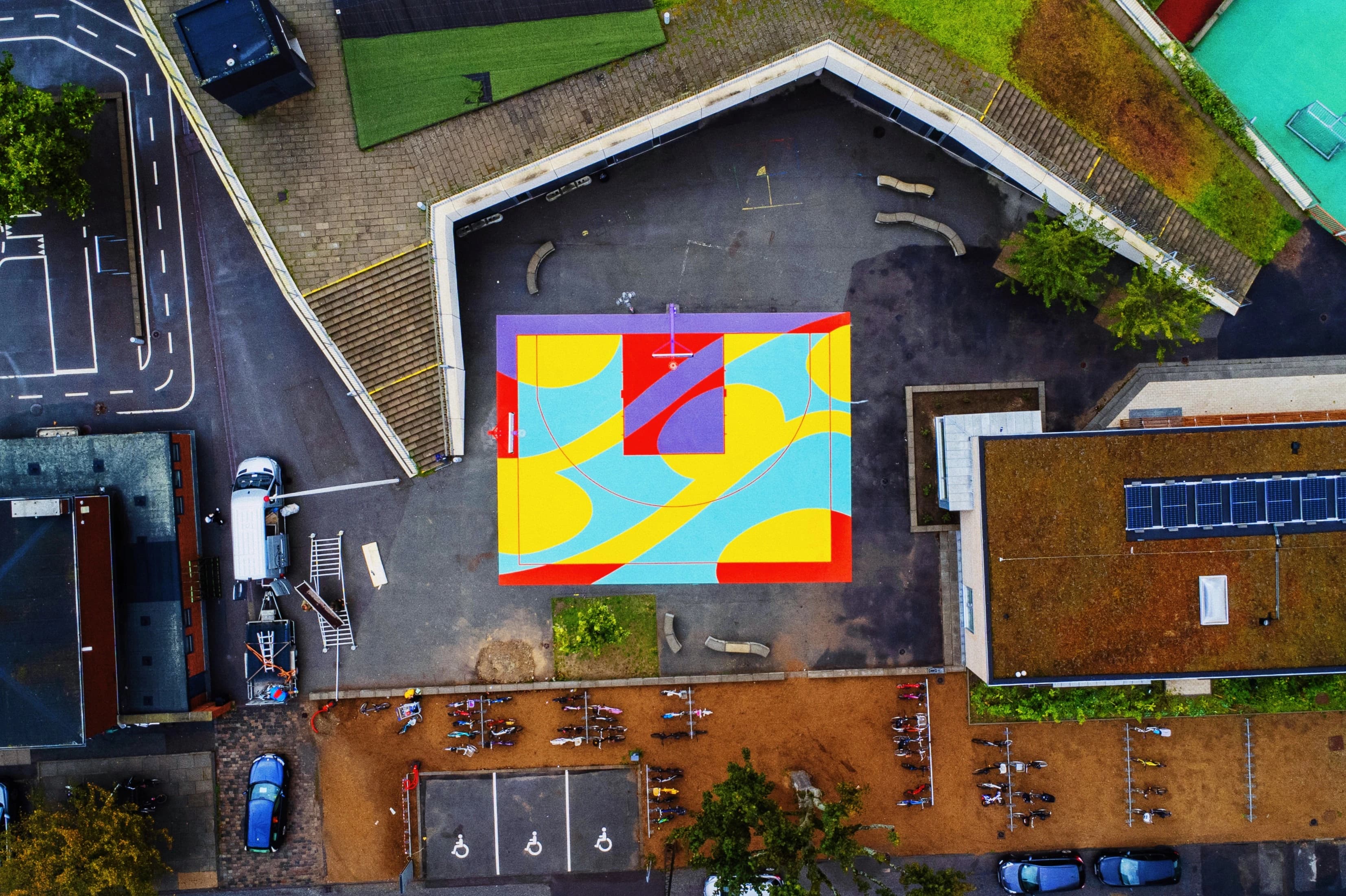
Colors burst from the basketball court at Tagensbo School in Copenhagen.
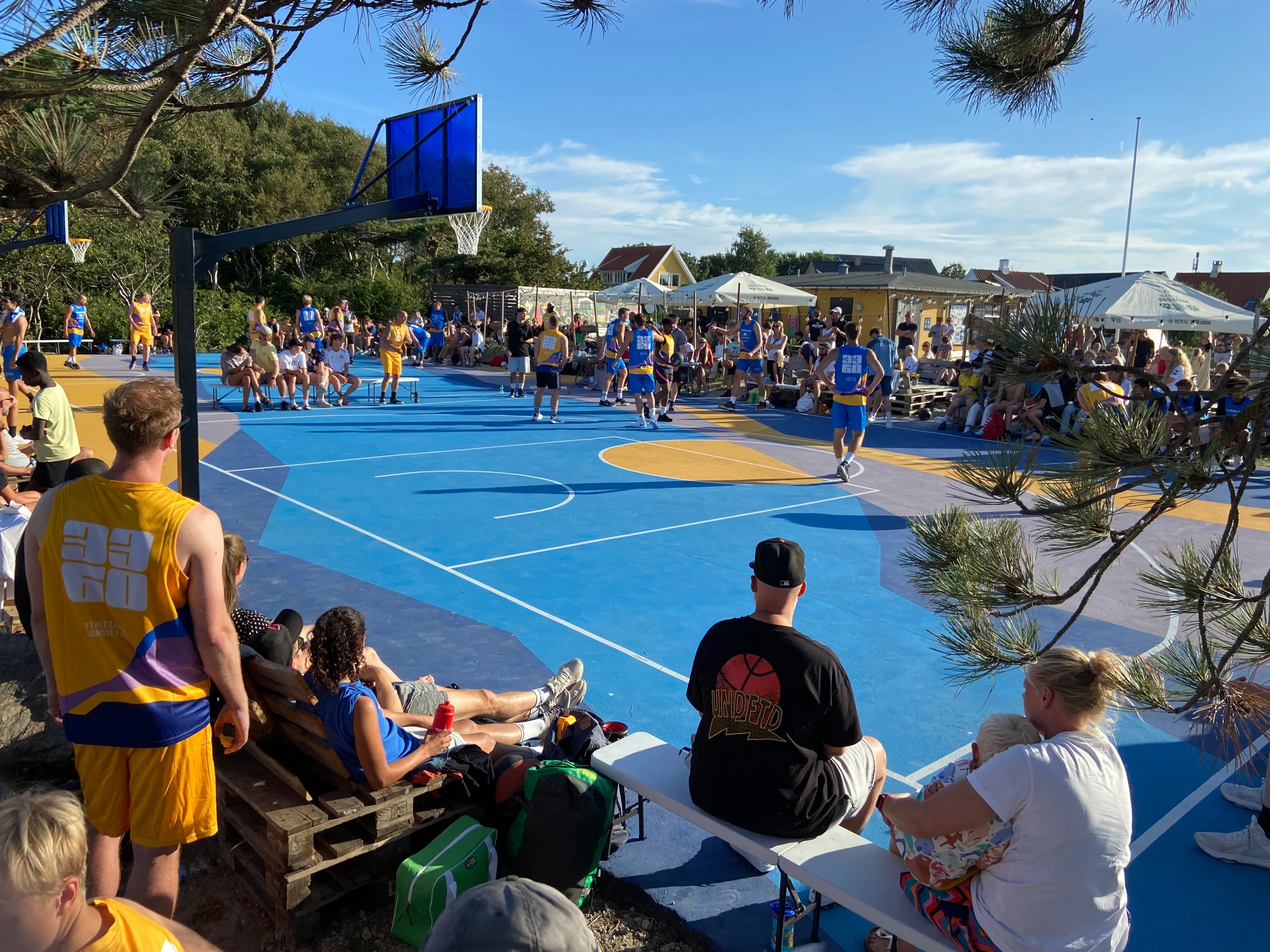
Near Liseleje Beach in Halsnæs, the basketball court matches the area’s beach vibe.
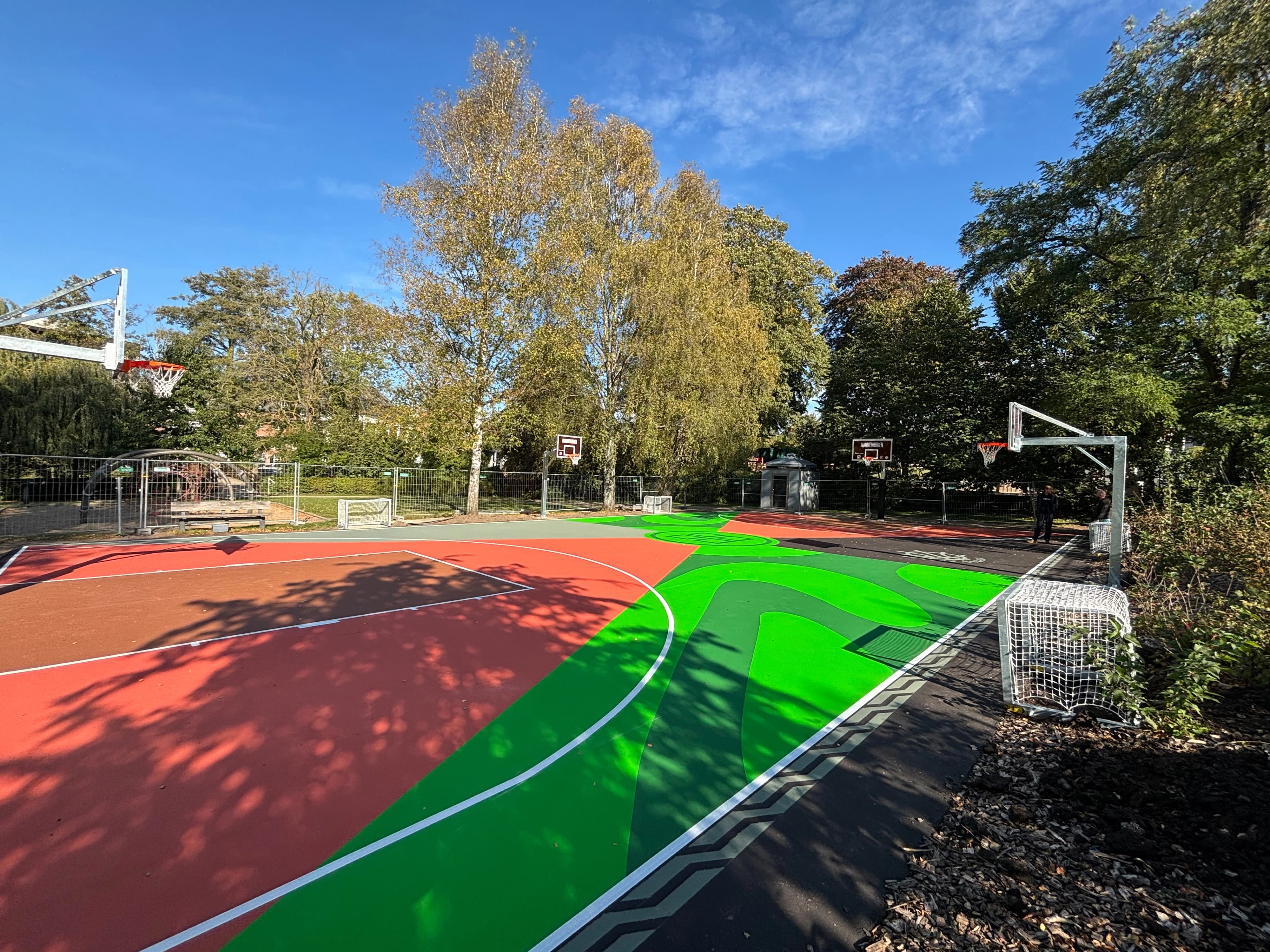
A multicolored basketball court is tucked away among the trees on Nonnebakken in Odense.
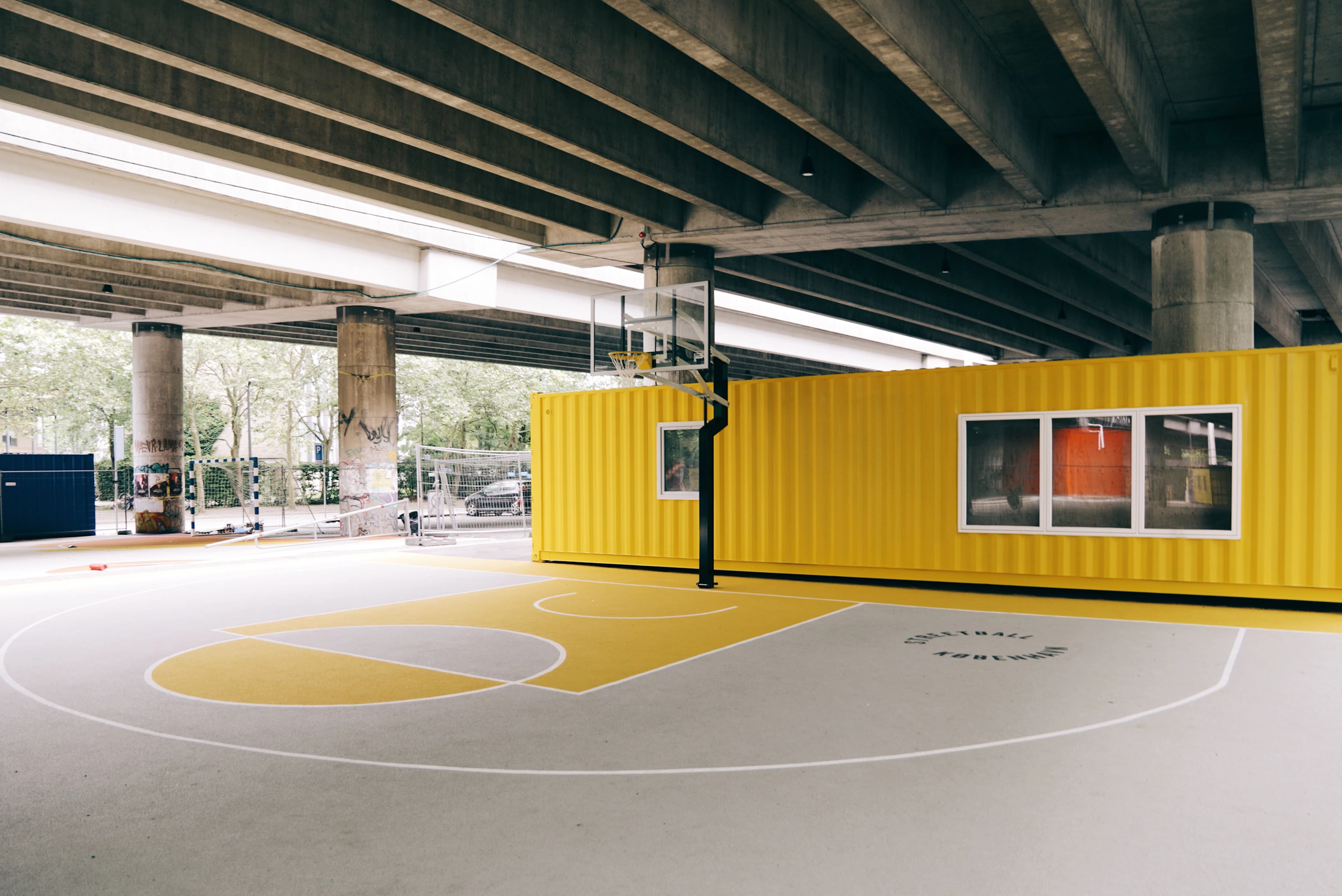
Under the arch in Copenhagen, the basketball court brings color to an otherwise gray area.
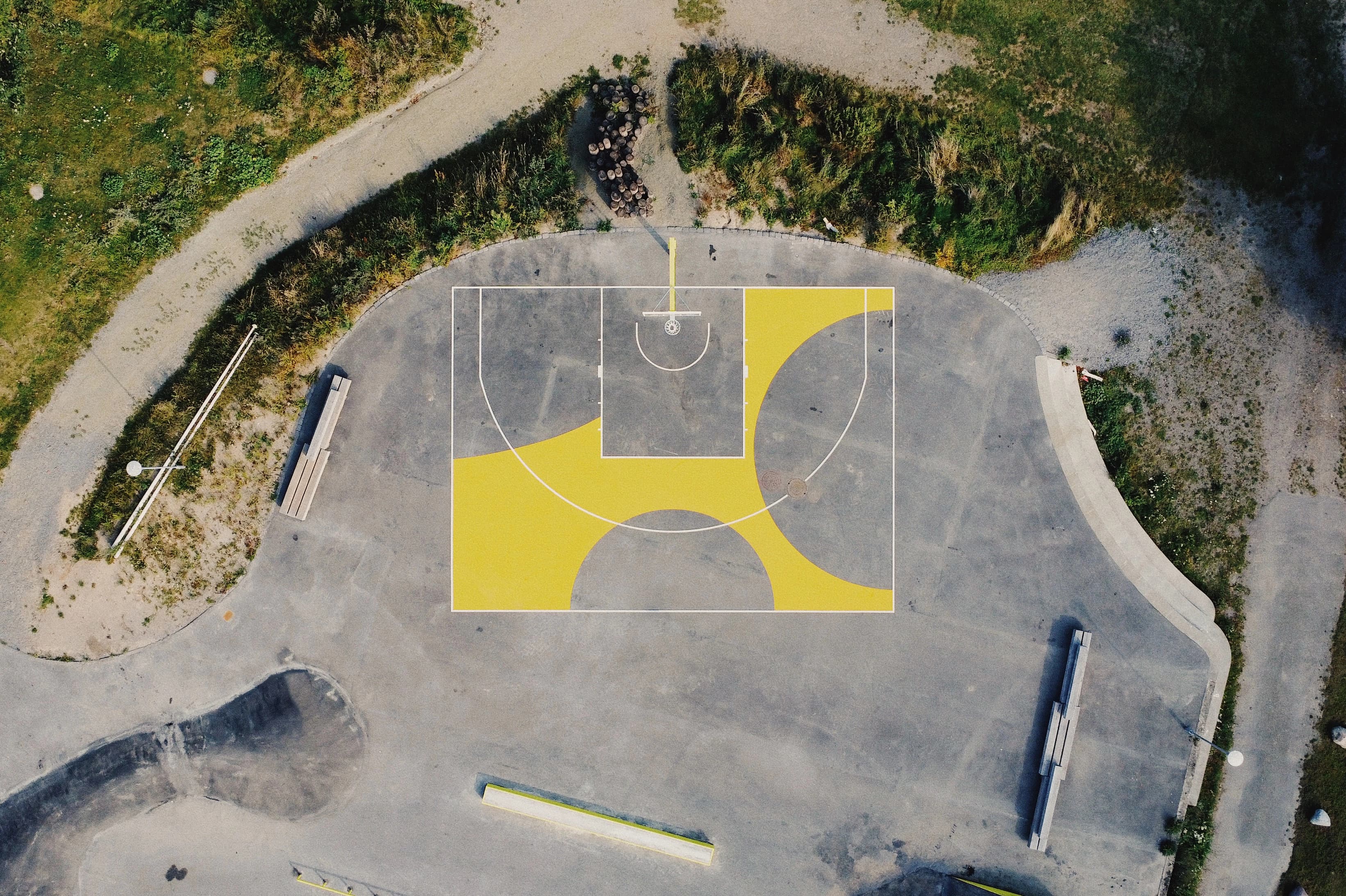
On northern Bornholm, in Allinge, the basketball court is full of holes like Swiss cheese.
Blending into the public space
White lines on cold, gray concrete. Two – sometimes just one – metal hoops that can feel impossible to score on. Often part of a multi-use court, where several sports are squeezed into a fenced-off space. For years, that’s what street basketball looked like in its most basic form: function over aesthetics. But that’s starting to change.
All over the world – including in Denmark – you now see basketball courts inspired by the one in Paris: colorful street courts that stand out from a distance.
Marius Hansen of Streetball Consulting has watched that shift happen. Through his work, he has seen the trend gain real momentum over the past 10–15 years.
»Today, we’re seeing the street court become an integrated part of the public space – not just painted lines, but a deliberately designed space,« says Marius Hansen.
Kasper Nyman has played a key role in that development. He is behind Court Vision Studio and has designed several basketball courts in Denmark. He has seen examples from around the world where the colors and designs really go all out. But for him, designing a court always requires careful thought.
»I think it has a lot to do with the space it’s part of and who it’s meant for,« says Kasper Nyman.
Stéphane Ashpool had that exact same vision with the Pigalle court. He describes the neighborhood he grew up in as chaotic, diverse, and creative – qualities he wanted the court to reflect.
»It was never about imposing something from the outside but rather translating the neighborhood’s identity into a visual language,« says Stéphane Ashpool.
So, the anonymous and purely functional basketball court has been replaced by more aesthetic, thoughtfully designed spaces that are meant to work with their surroundings. In doing so, they open up the possibility of the court becoming more than just a place to play.
A court for everyone
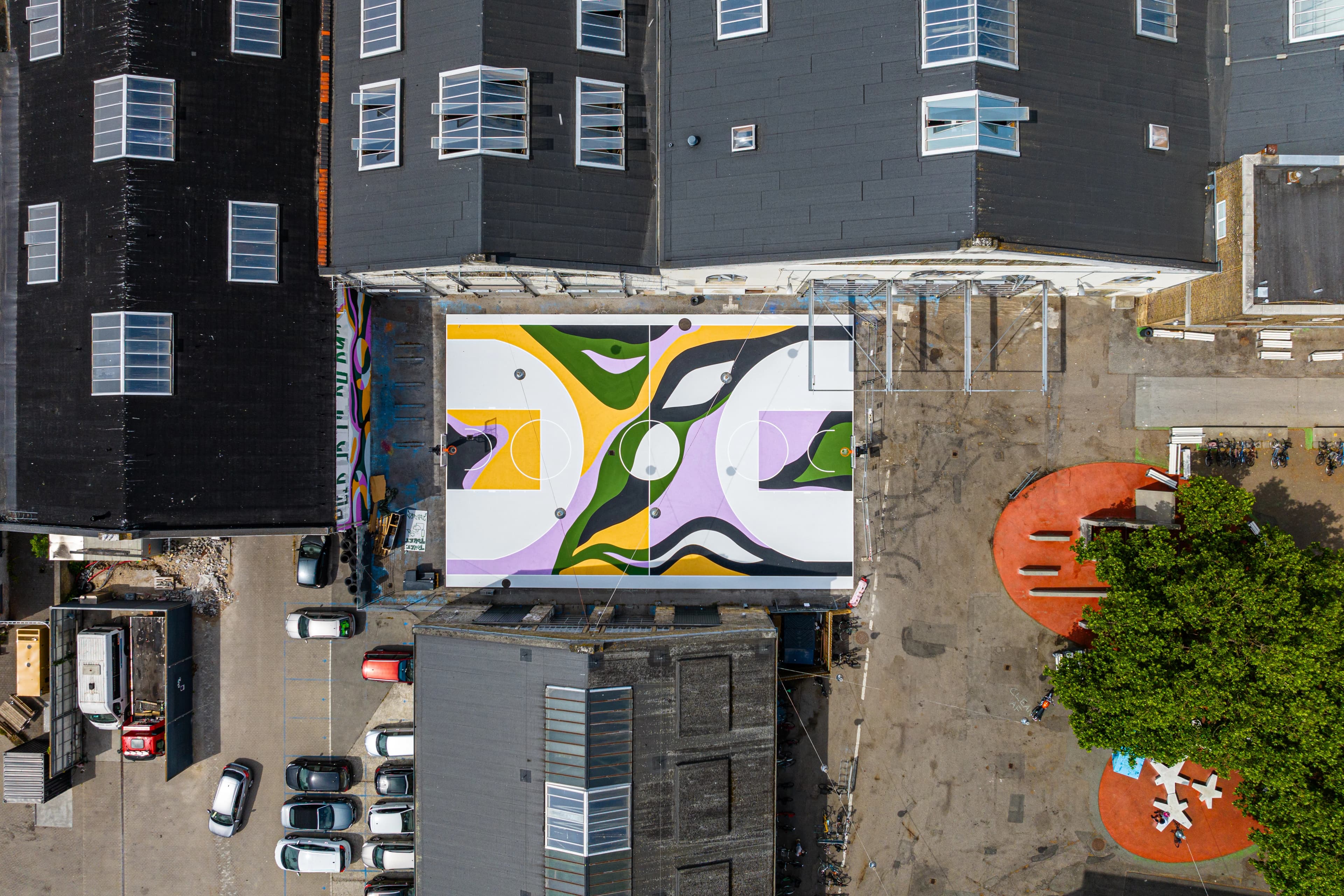
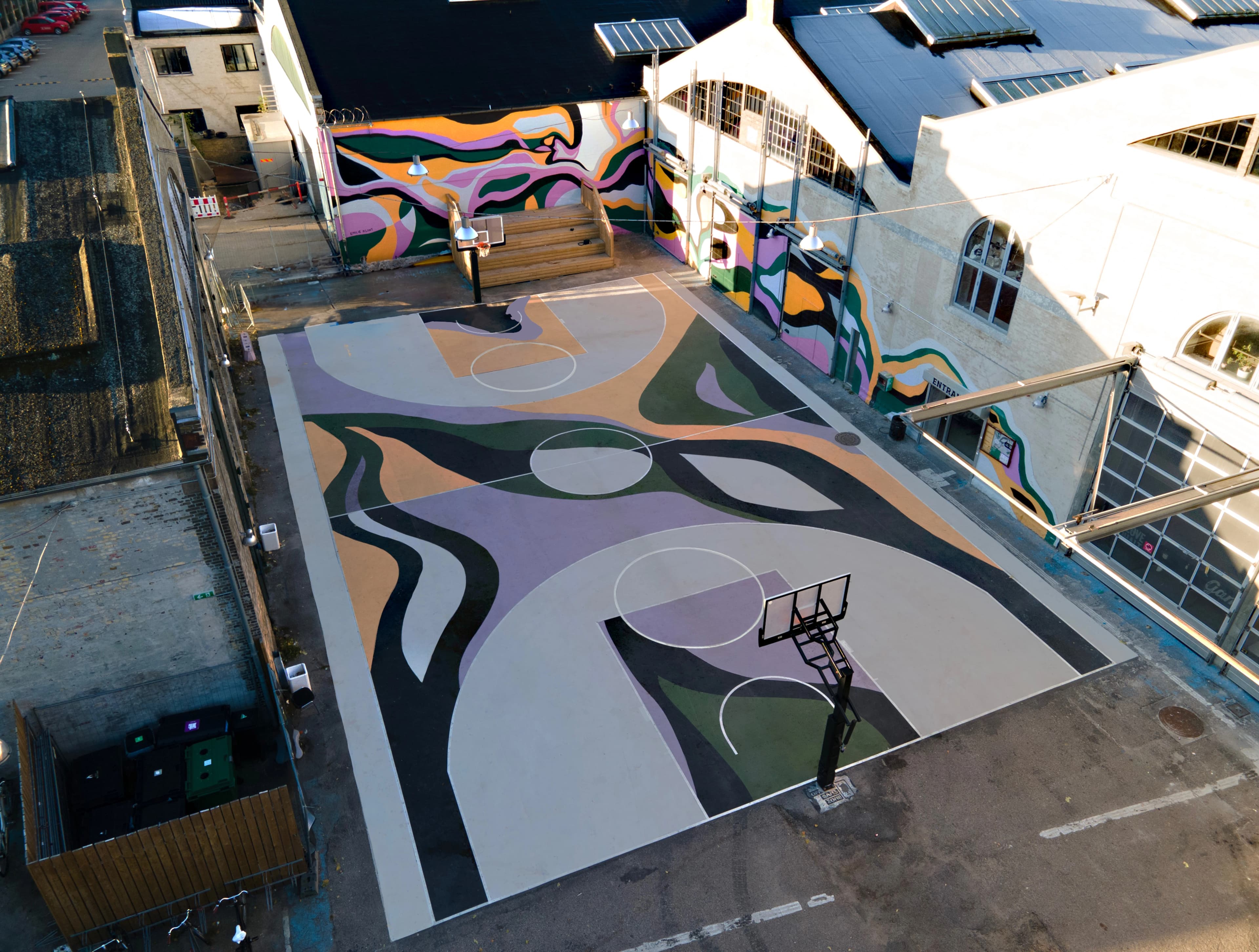
The international nonprofit street sports organization GAME works to create social change among young people through street sports and culture. At one of their street culture hubs in Denmark, called Streetmekka, they have created their own version of the Pigalle court.
Much like in Paris, the court is tucked between two buildings in Copenhagen.
The court was developed in collaboration with designer Emilie Klint, Dansk Gummibelægning, and not least the basketball club Queer Balls, which trained at Streetmekka Copenhagen. The club was created as a safe space where primarily queer individuals who identify as women, transgender, nonbinary, and gender-fluid can come and play basketball together.
Rasmus Ziegler Hansen, Head of Street Culture Development at GAME, explains that the project grew out of a desire to open the court to more users. That’s why it was important to involve Queer Balls in the design process.
»It really comes from an inclusion perspective – and how we can expand the target group so that more people feel this is a great place to be,« explains Rasmus Ziegler Hansen.
And having a great place like that matters to young people. According to a 2022 study from the Center for Youth Studies, community, friendships, and having a place to be are the most important factors for young people in sports. The study also shows that young people are strongly drawn to environments that are open, bright, colorful, and allow for a variety of activities.
That is certainly true of the court in Copenhagen today. Rasmus Ziegler Hansen explains that the court’s new colors and patterns have encouraged more people at GAME to use it. In fact, it attracts not only players but also new users, who are changing the way a basketball court can be used.
»People make TikTok videos. Everything from 30-year-old dancers to 12-year-old girls. It brings new people into the community around us and the courtyard who weren’t there before,« says Rasmus Ziegler Hansen.
The court at Streetmekka combines a raw, urban feel with colors and patterns that make it the perfect stage for a wide range of activities and events. It has, among other things, served as a backdrop for Fashion Week, a music video by rapper FVN, and performances by dancer Natasha Jacoby.
Natasha holds a Master’s degree in Applied Cultural Analysis and is a professional dancer. She films dance videos for social media in different locations. As a dancer, she looks for visually striking places that match both choreography and music. She is also a former employee of GAME, which made the court an obvious place to film when it got its new look.
»It brings color, playfulness, and culture. It really makes you want to make use of the different spaces around the city,« says Natasha Jacoby.
The court’s possibilities have multiplied. It is no longer just a place where you play – but a place where you belong.
A designed element in the city
Today, multicolored street basketball courts can be found across the country – and more are on the way. Both Dansk Gummibelægning and Streetball Consulting report several upcoming projects.
These courts are here to stay – and for good reason. They create social spaces that open the door to a wide range of uses and users: play, creative expression, a stage, or simply a place to hang out. As open, public spaces, they become natural gathering points for people in the surrounding area. At the same time, the quality of the courts has improved, ensuring that basketball itself remains at the core.
Even though the Pigalle court is now a major attraction in Paris, that was never Stéphane Ashpool’s intention.
»The intention was always local. But I think the combination of color, community, and authenticity made it resonate more widely,« he says.
It shows how the street basketball court has evolved from a simple, semi-functional sports facility into a designed element within the urban landscape – a space that has always been open to everyone but didn’t necessarily draw much attention.
With color, pattern, and new materials, the court has become something you don’t just play on – but spend time on. A gathering place that brings more people together and creates new ways of connecting.