Dronningegården: Light and Air for More People
Dronningegården was built in response to the unhealthy housing conditions in central Copenhagen. Today, with its many distinctive balconies, the complex stands as a striking example of how architecture can unite necessity, rich detail, and quality of life in the heart of the city.
If you stroll through central Copenhagen, it can be hard to imagine the decayed and miserable apartments that characterized the area around Adelgade and Borgergade in the early 1900s. A large share of the city’s poor working class lived here under conditions that were directly harmful to their health. As a result, in 1942 the Copenhagen City Council approved a sweeping urban renewal of the neighborhood.
At the same time, World War II was raging across Europe, and there was a shortage of nearly everything – including building materials. In the middle of that reality, architects Kay Fisker, C.F. Møller, and Svenn Eske Kristensen were commissioned to design the housing complex that would later become known as Dronningegården.
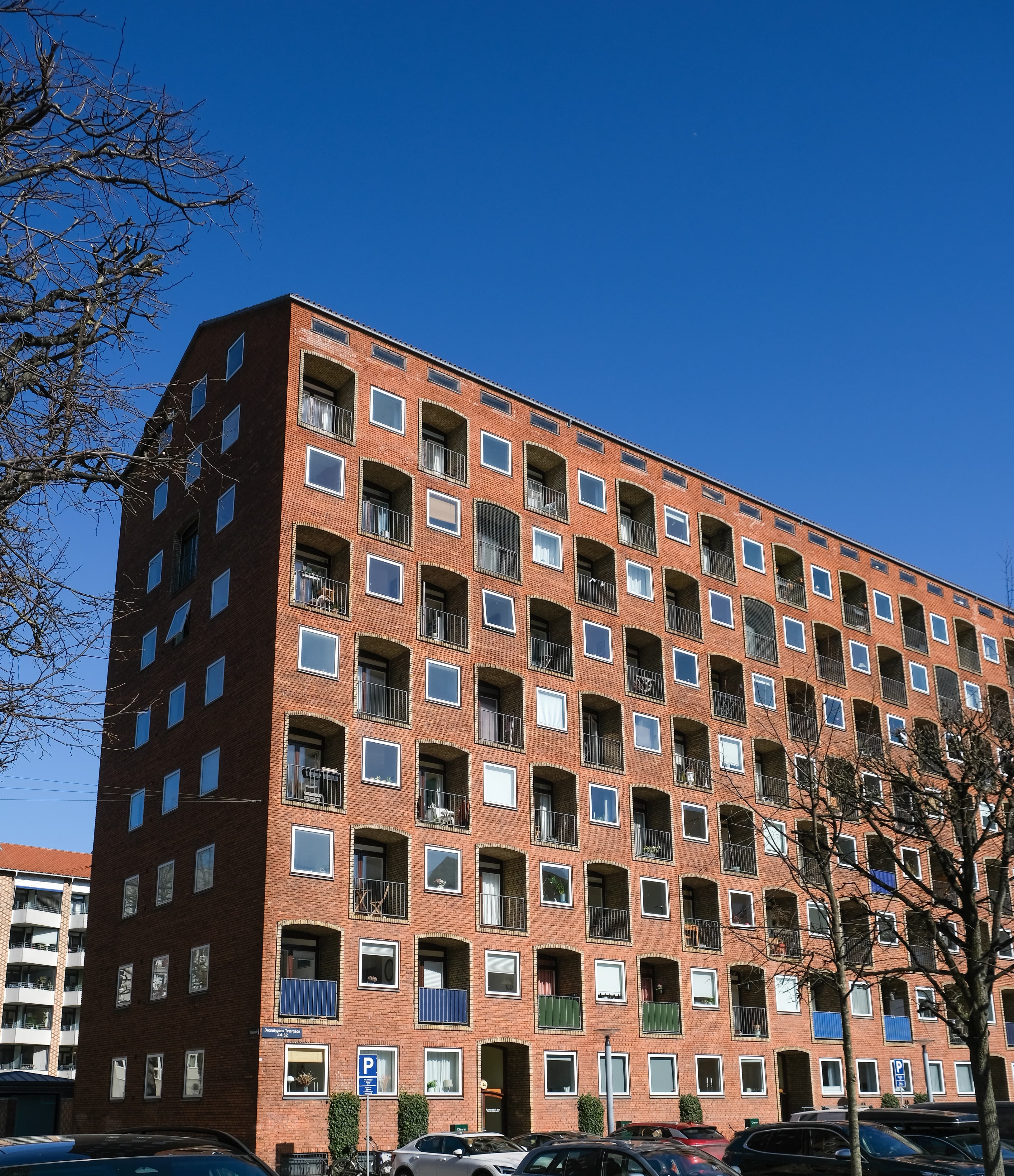
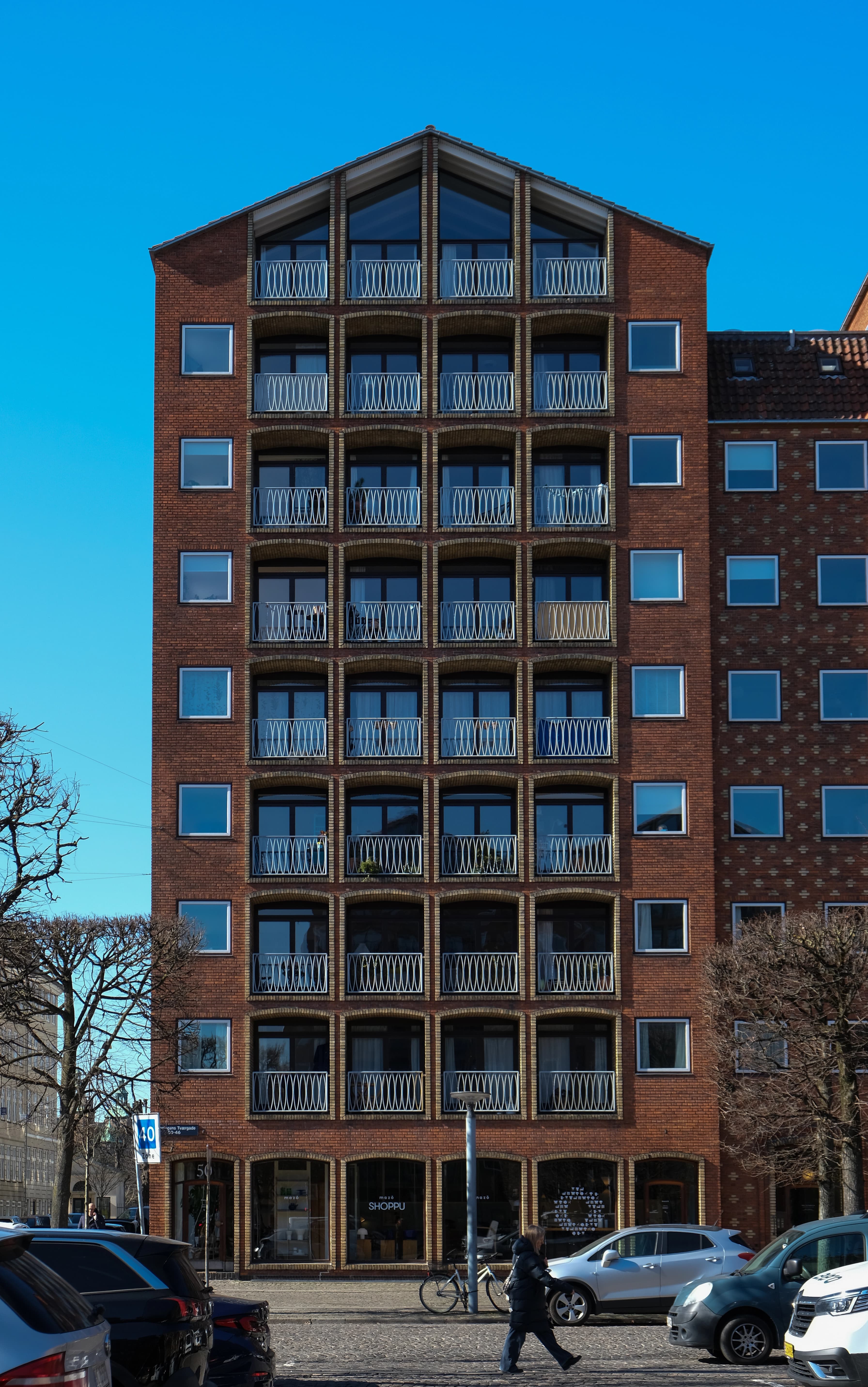
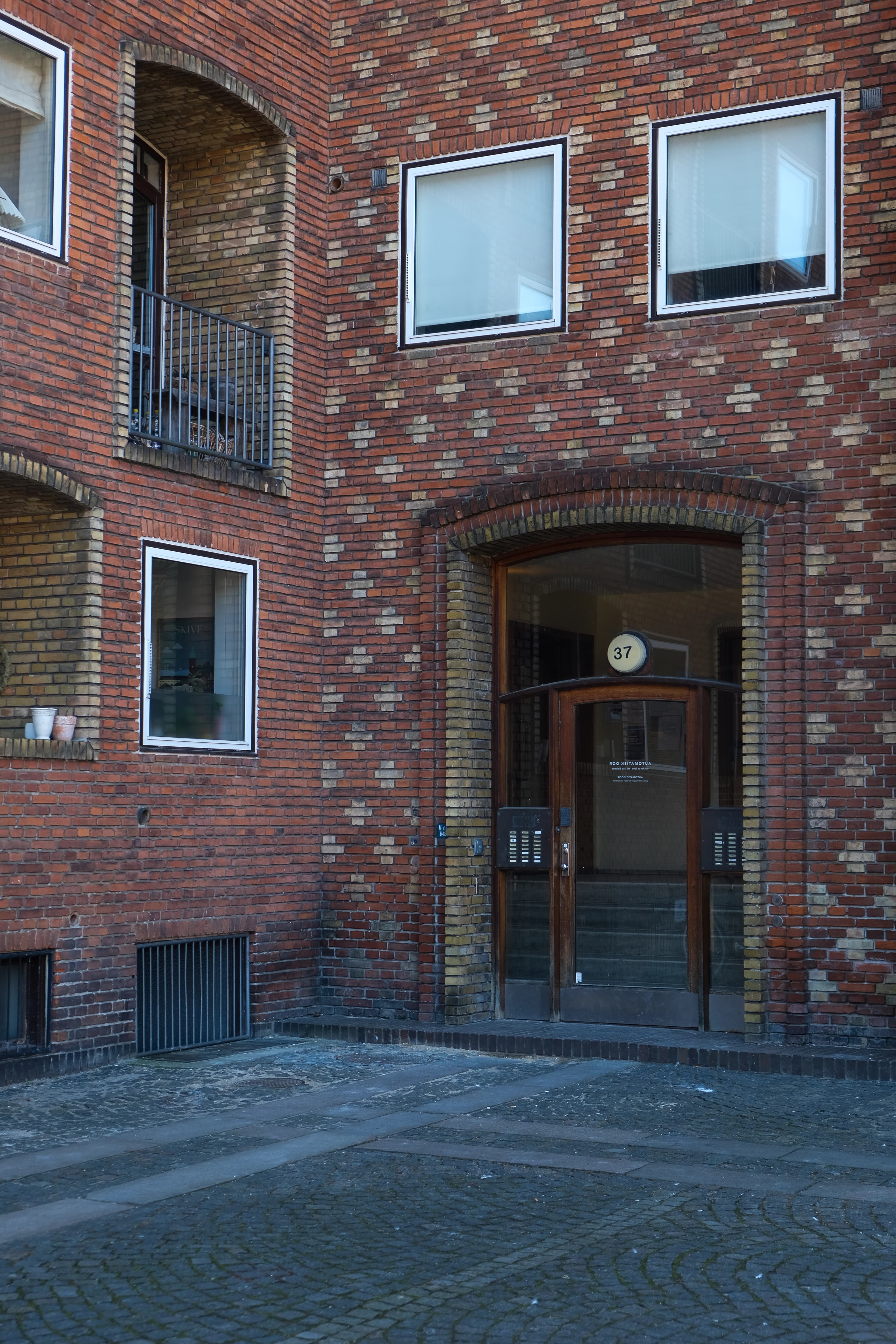
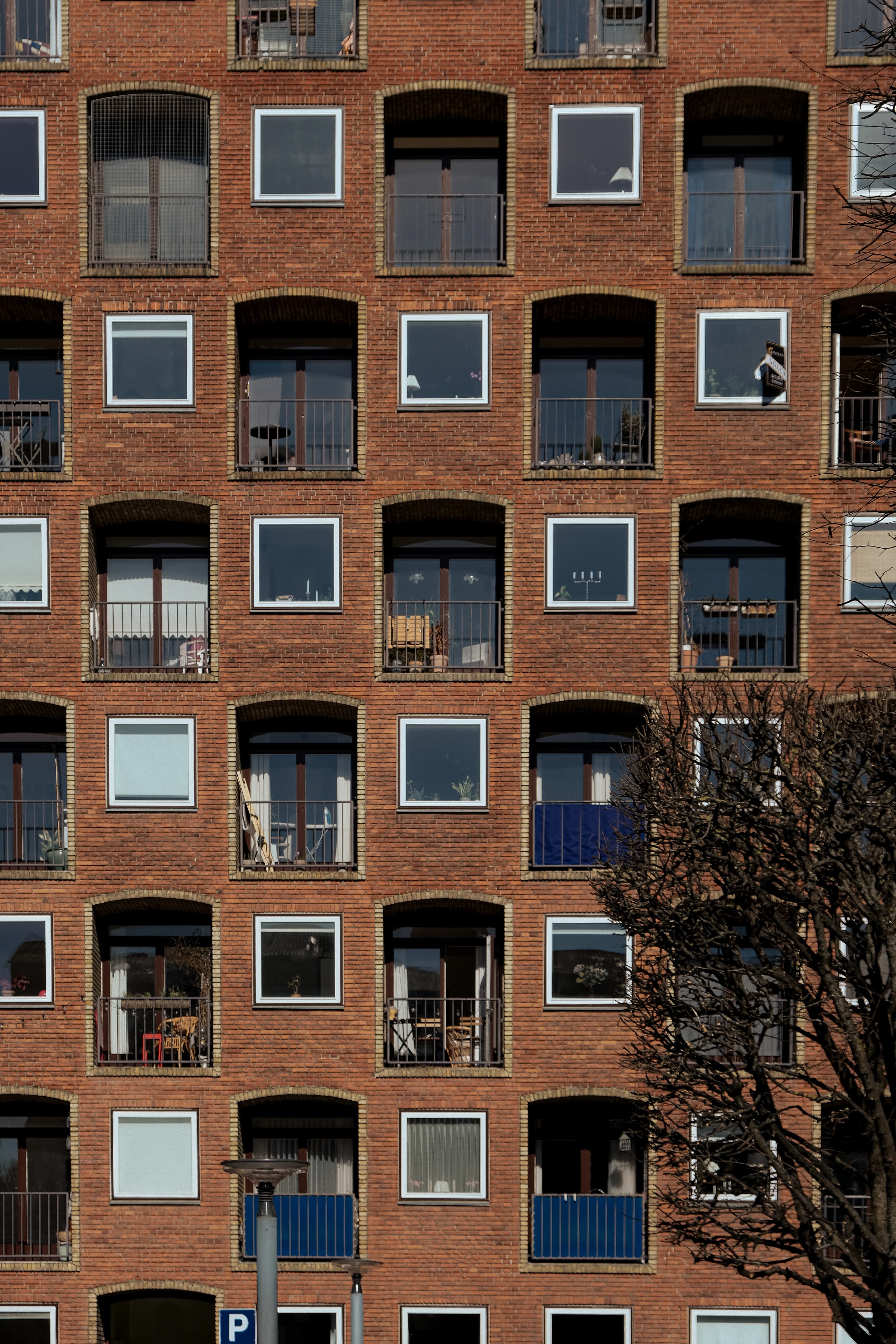
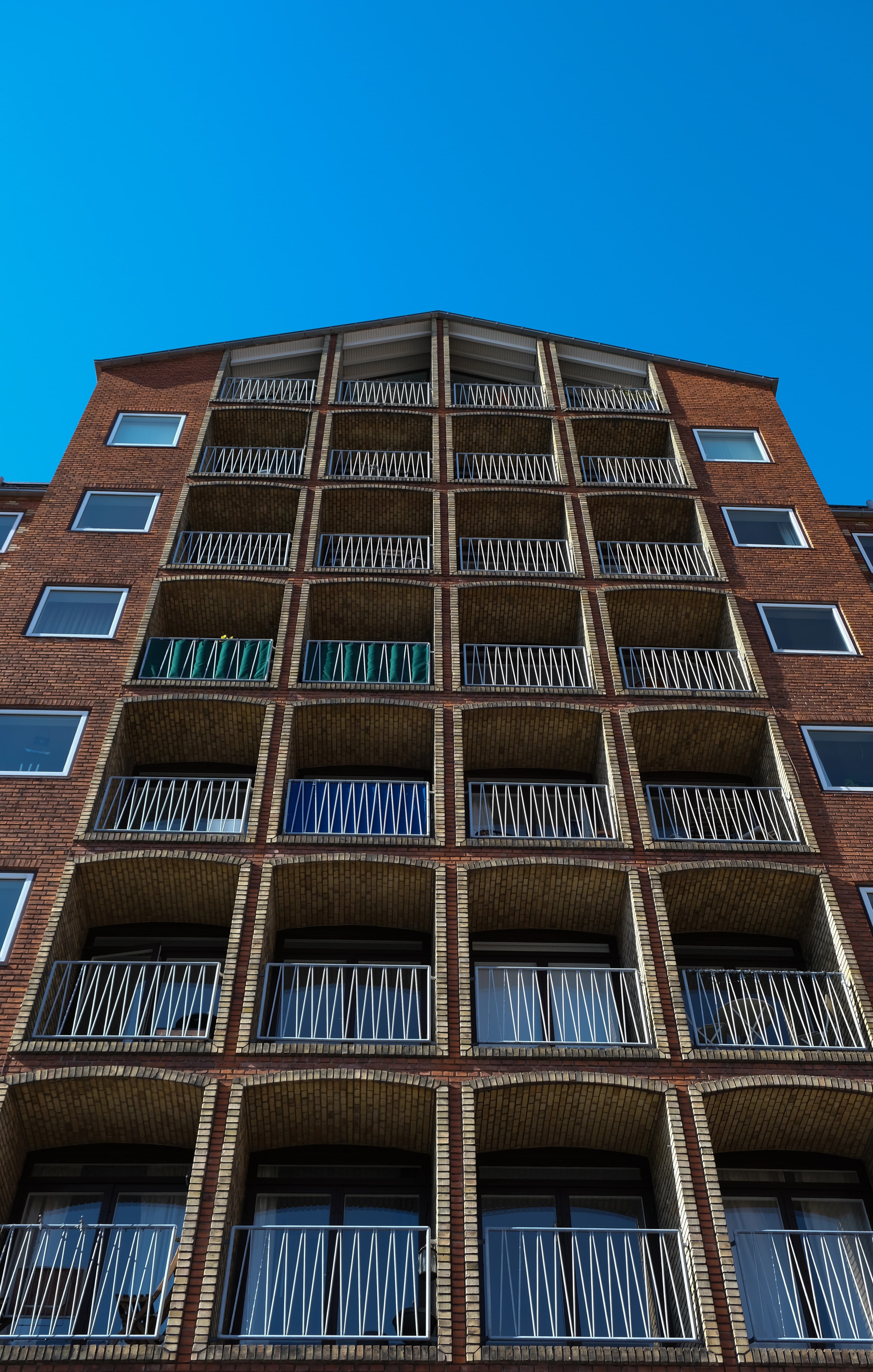
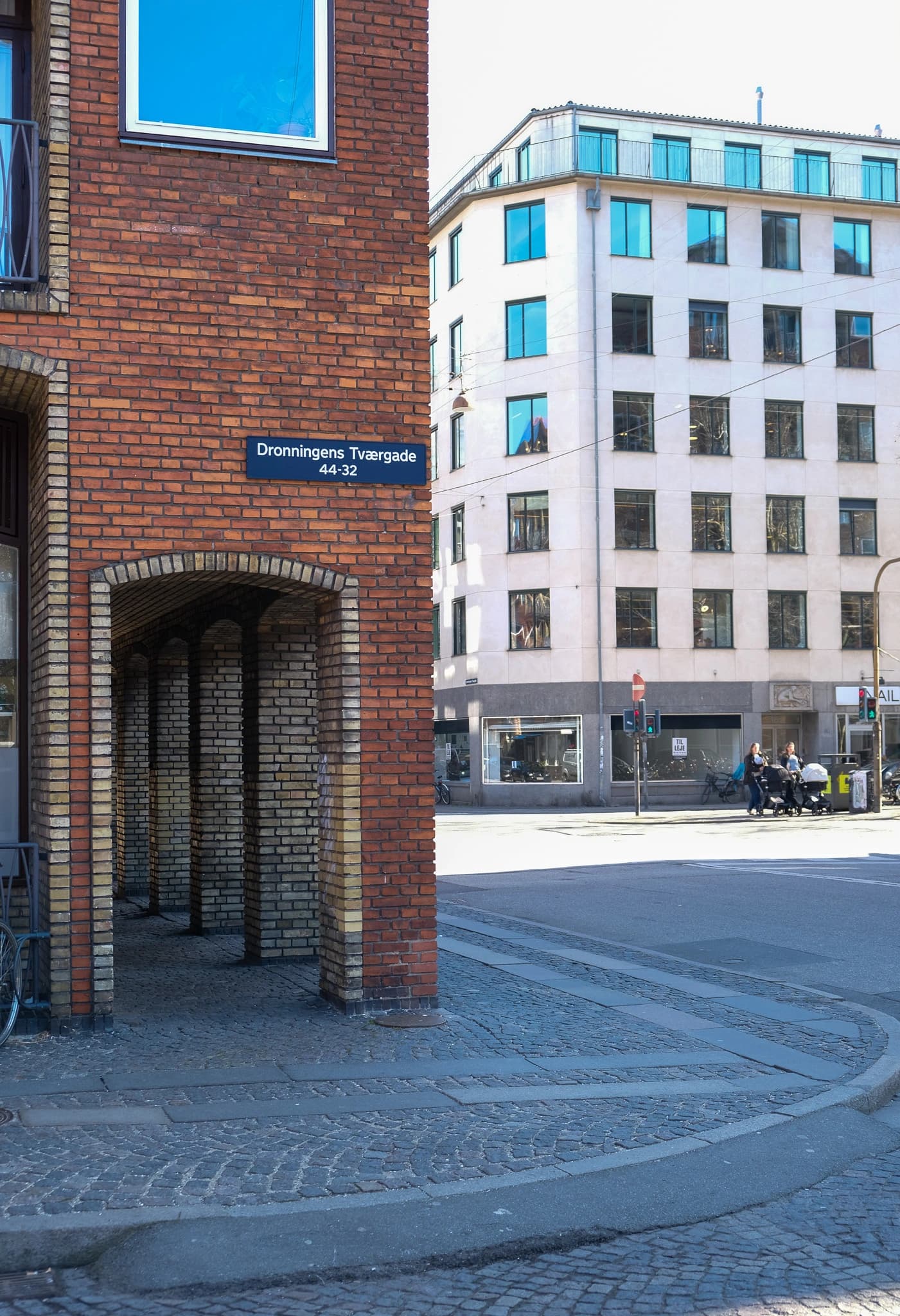
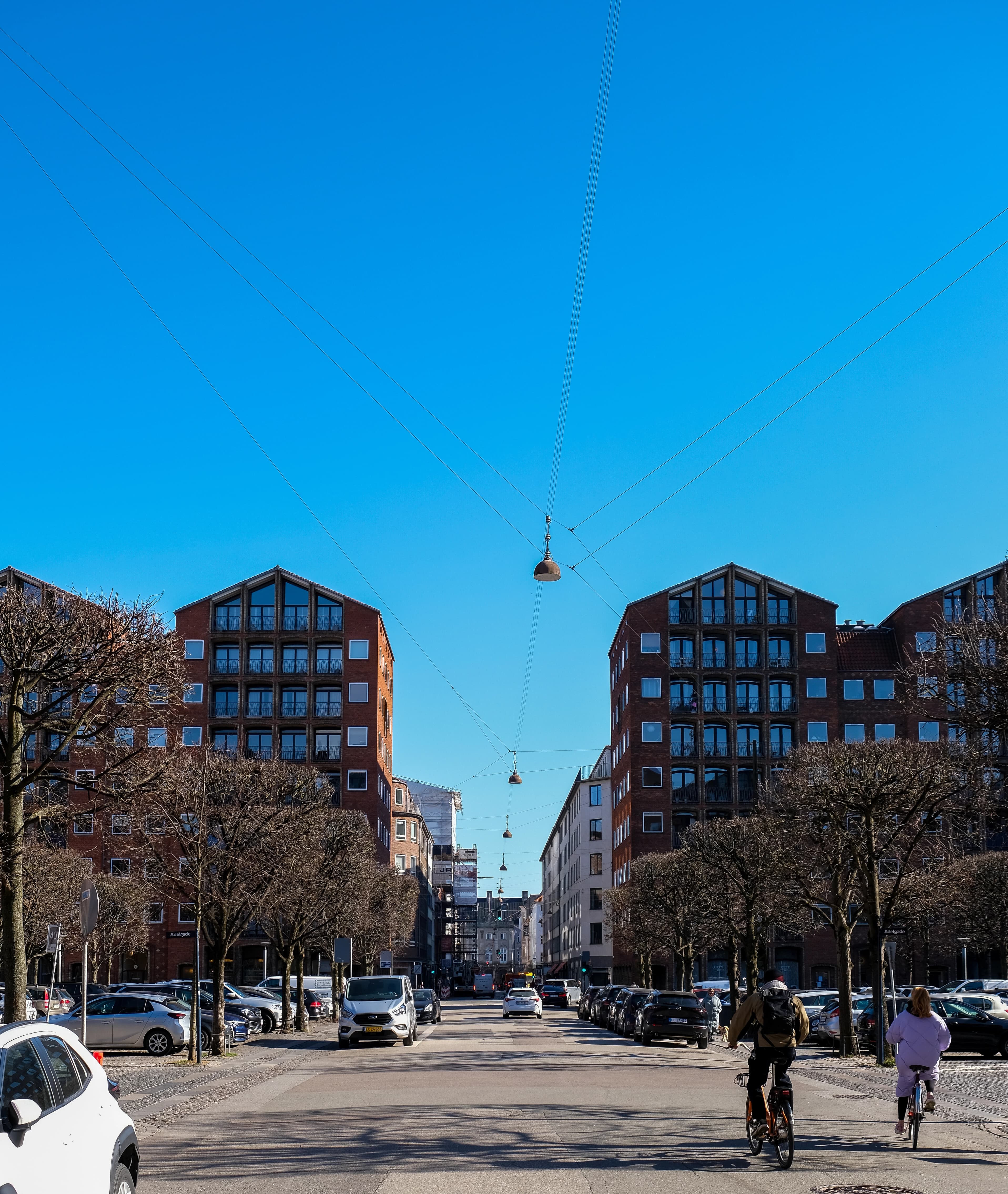
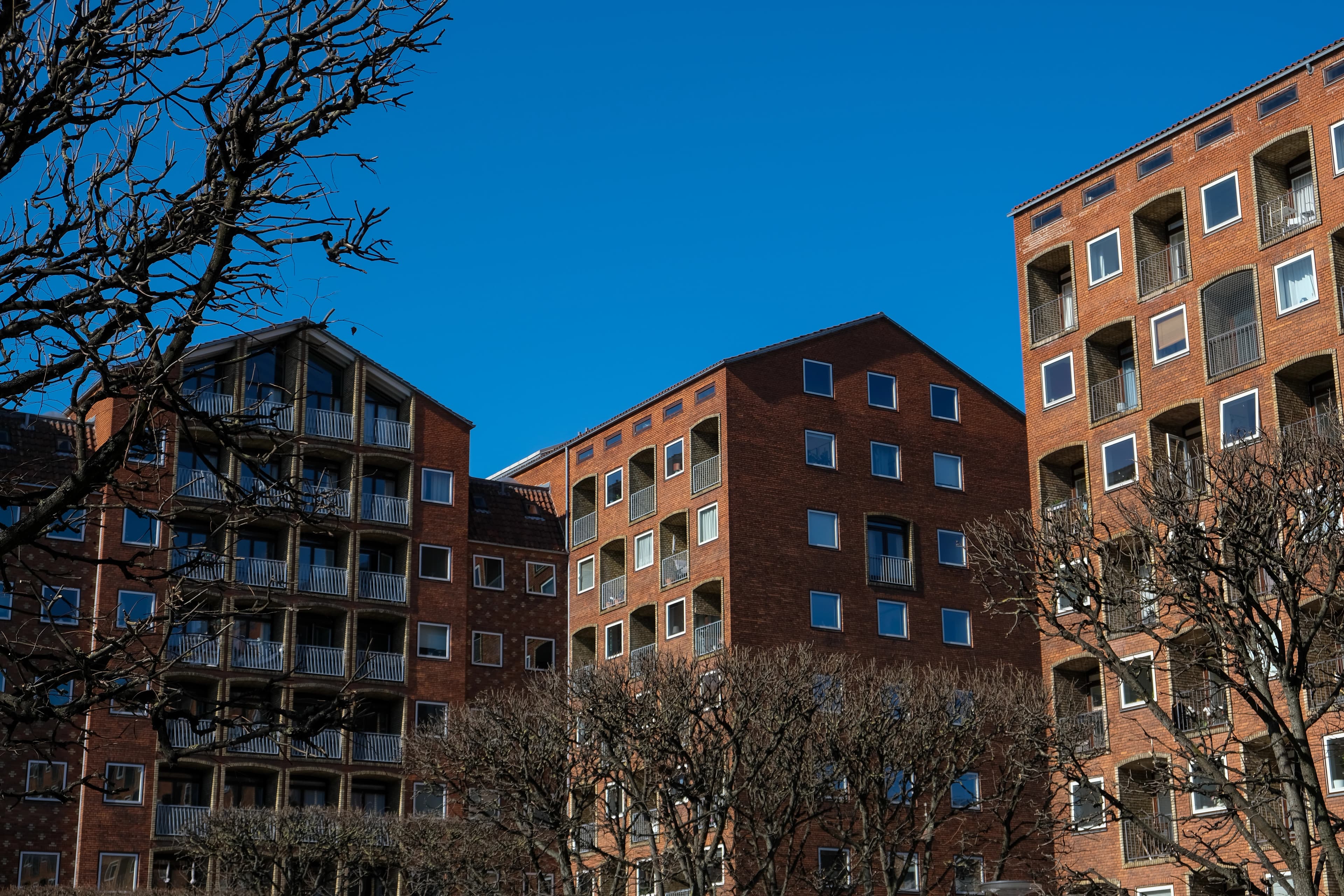
The development consists of four independent residential blocks: Christiansgården, Prinsessegården, Kongegården, and Dronningegården. The facades are built in red brick with integrated balconies framed by yellow brick. On the connecting buildings, yellow bricks form cross patterns against the red background.
From the Constraints of War to Creative Solutions
It was not common to build residential buildings nine stories high, but once again the scarcity of the time stood in contrast to Kay Fisker’s perfectionist ambitions. In a 2023 biography by Martin Søberg, the architect is quoted as saying:
»… personally, I am not especially fond of the buildings. They are too tall, and I greatly regret that the material situation made it impossible to build them in yellow brick, so that they would have corresponded to the Sølvgade barracks and the other brick buildings of the Rigensgade neighborhood.«
But the times called for compromises and constraints. Christiansgården was completed in 1943 as the first part of the complex, and because of wartime shortages, recycled building materials were used extensively. Construction relied on older techniques involving formwork and large quantities of brick, while concrete was used more heavily in the later buildings of the complex.
Light and Fresh Air for Everyone
At first glance, the buildings may seem uniform, with an almost systematic design approach. But look more closely, because the facades also contain small ornamental details. Pay special attention to how the railings vary subtly from building to building, bringing life to an otherwise restrained expression.
The real breakthrough of Dronningegården lies precisely there – in the many balconies, which stand as a symbol of the democratization of light and air. Even the smaller apartments have multiple balconies.
The next time you pass by, take your time. Not just to take in the scale of the architecture, but also to discover all the details: the subtle variations in the colors and patterns of the brickwork, the play of light across the balconies – and to reflect on the remarkable transformation from slum to architectural icon in the center of Copenhagen.
Overview
- Built 1943
Who
Architect
- Svenn Eske Kristensen
- C. F. Møller
- Kay Fisker
What
Type
- Residential
Style History
Where
Place
- Copenhagen, Inner City
Address