The Mailbox Leaves an Empty Space in the City and in Danes’ Hearts
The iconic red mailbox is bowing out after several hundred years of postal history. Here, we take a look at its royal roots – and especially its distinctive color.
By Anna Skovby Hansen
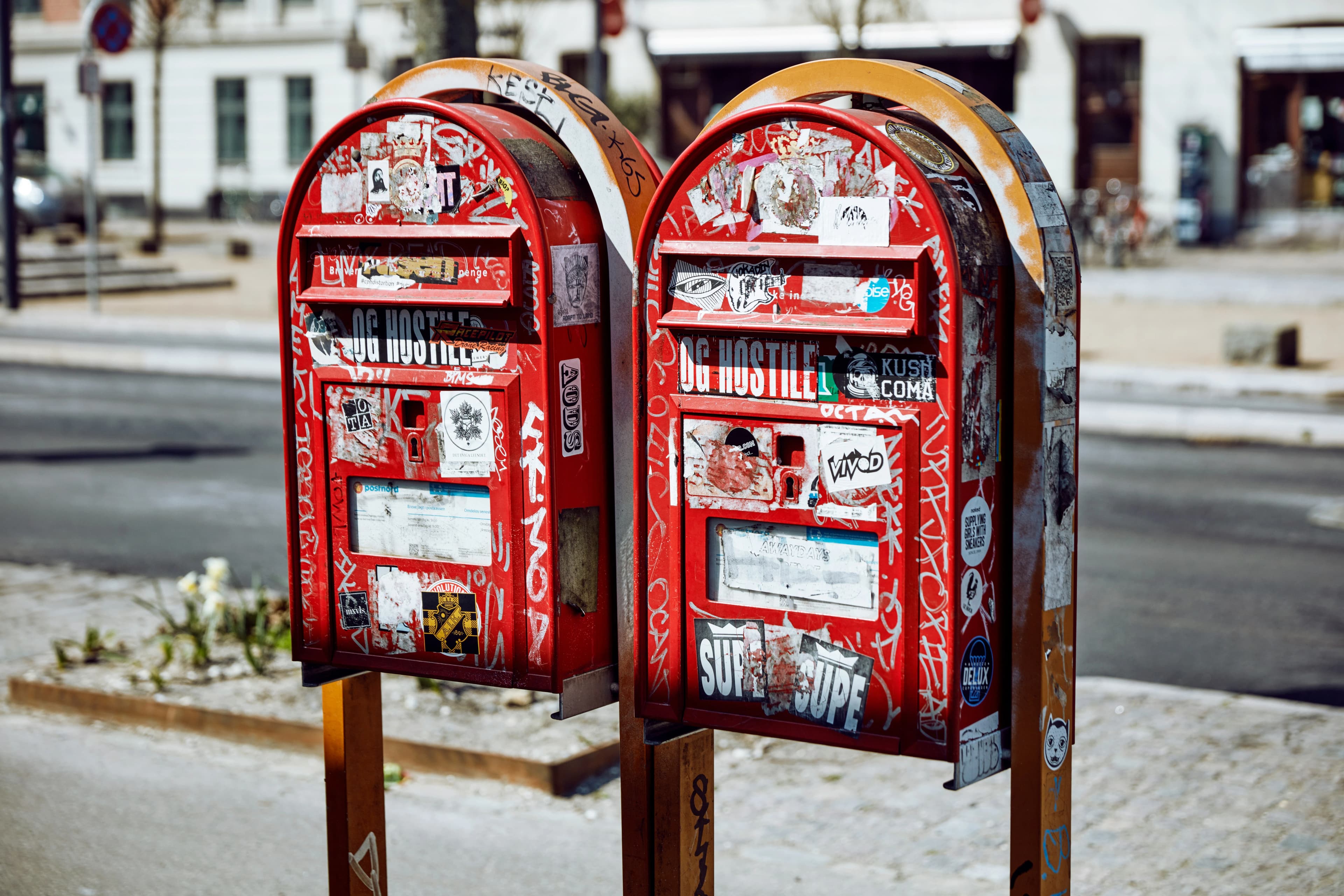
Most Danes rarely send a physical letter these days, the kind you drop into the mailbox on the street corner. Still, it can feel a bit bittersweet when the mailbox posts are dug up, leaving a bare spot right there at the corner. Not so much because of the mailbox’s function, but because of the history and symbolism behind it.
According to PostNord, the number of letters has dropped by about 90 percent since the turn of the millennium. At the same time, the company has seen a dramatic increase in parcel deliveries, with nine out of ten Danes buying one or more items online every month.
»We can see quarter by quarter that Danes are sending fewer letters and more packages. So it’s a natural development that the red mailbox is now heading into a well-earned retirement,« says Isabella Beck Jørgensen, Head of Press at PostNord.
Even though very few Danes still send physical letters, the removal of the mailboxes is nevertheless tied to emotion, explains Arne Noack, project manager at ENIGMA – Museum of Post, Telecommunication and Communication.
"We’ve delivered letters for more than 400 years, so there’s no doubt this has been a difficult decision – to tie a bow on that chapter of our history."
»I would almost think that if PostNord removed the mailboxes without saying anything, it would take a while before many people even noticed. It’s more of a symbol of something nostalgic. The mailbox has been a visible representation of the connection between Danes,« Arne Noack says.
The red mailbox is part of Denmark’s cultural heritage – with many centuries of postal history behind it. That’s why the decision to remove it has not been an easy one.
»We’ve been delivering letters for more than 400 years, so there’s no doubt it was a difficult decision to tie a bow on that part of our history,« says Isabella Beck Jørgensen.
The Evolution of the Mailbox
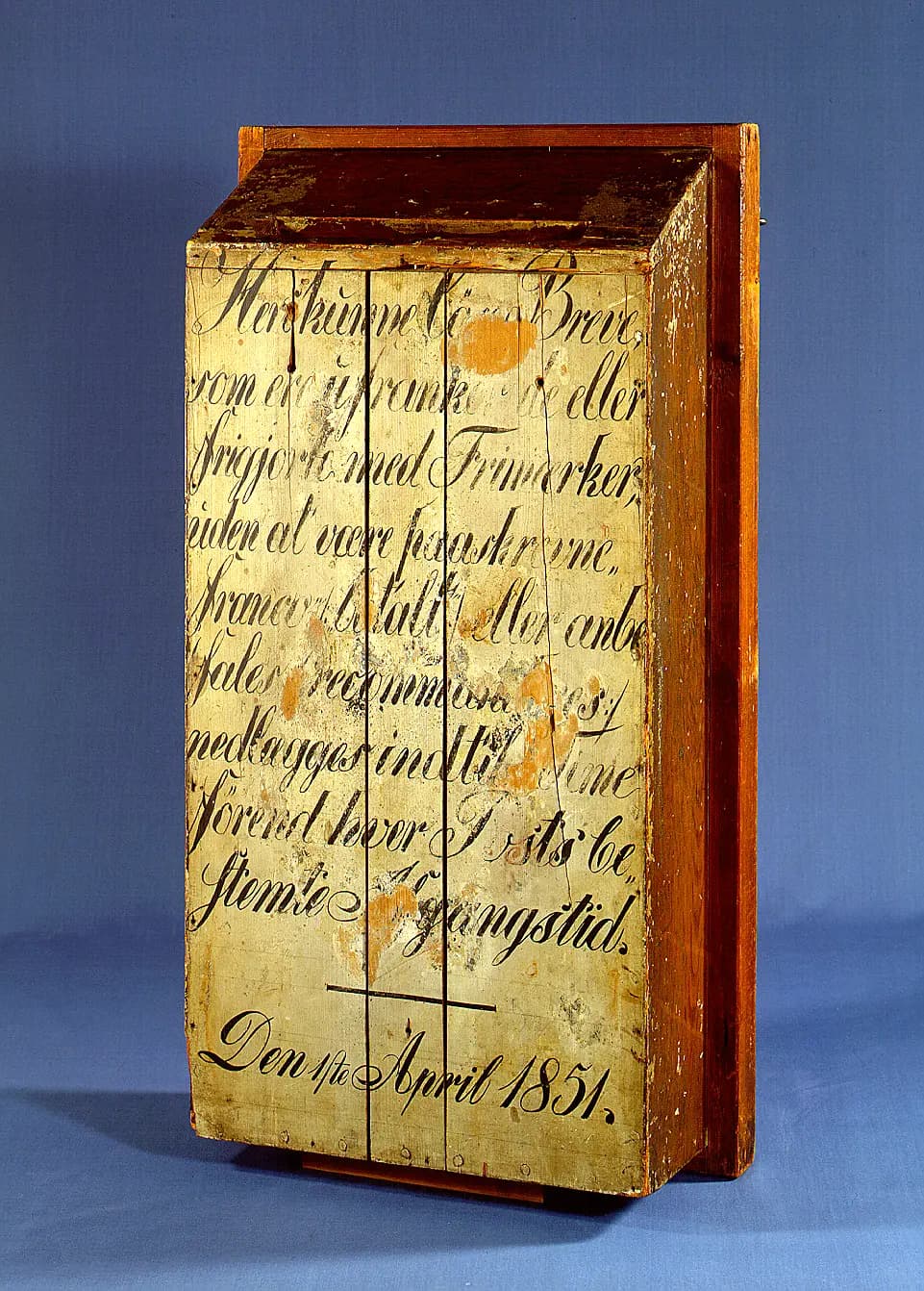
1851: The First Mailbox
Public mailboxes are introduced at the same time as the postage stamp in 1851. Thirteen mailboxes appear in Copenhagen, but there are no design requirements yet – each postmaster decides what the mailbox should look like.
1860: Royal Colors
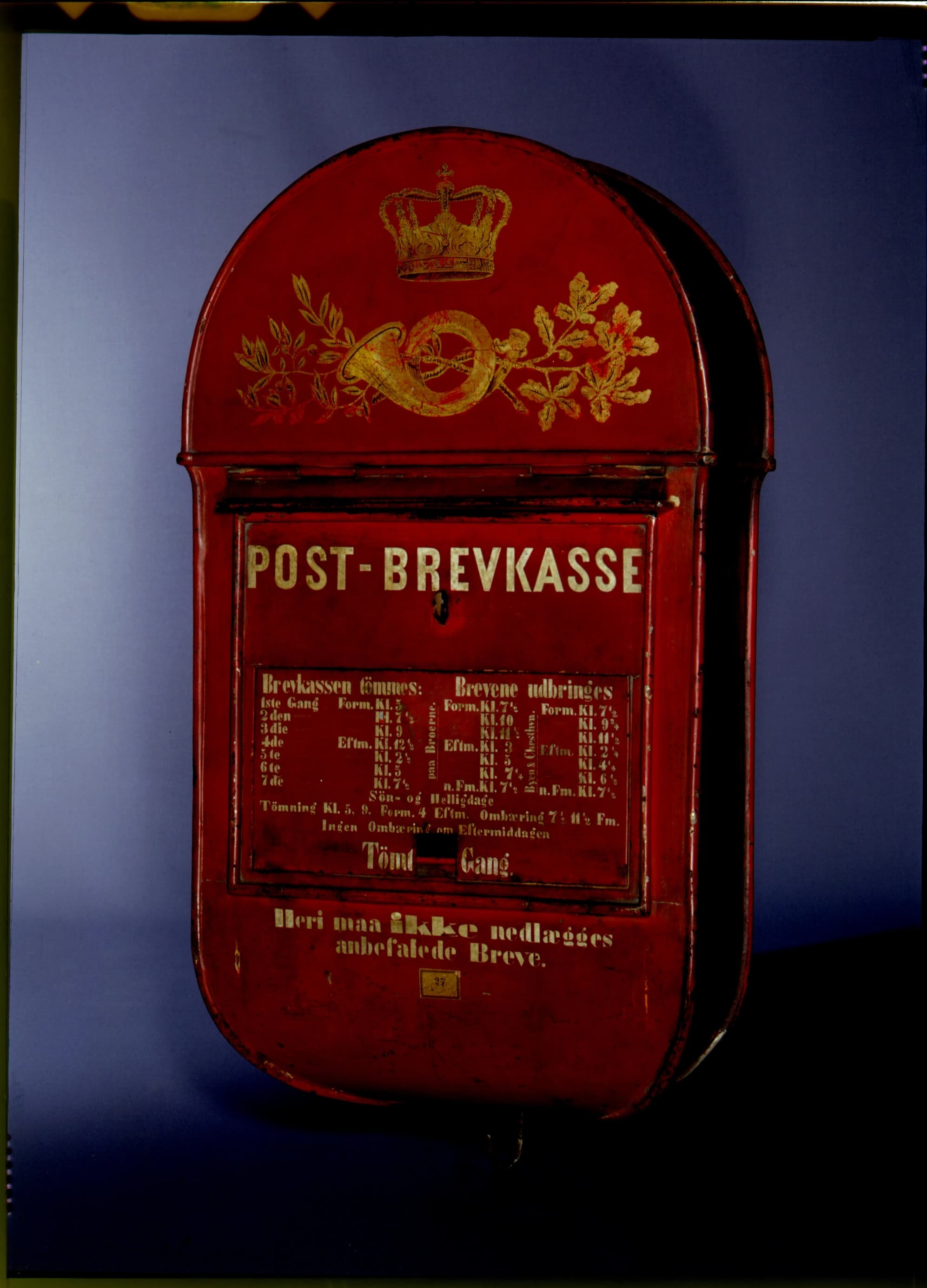
Mailboxes are standardized with the red and yellow colors taken directly from the central field of the Danish coat of arms, where the two colors symbolize the House of Oldenburg.
2000: A Record Year for Letters
In the year 2000, 1.4 billion letters were sent – an all-time record.
2025: The Last Mailbox Is Removed
In 2024, Danes sent 130,000 letters, the lowest number in many years. By the turn of the year from 2025 to 2026, PostNord will remove the last remaining mailboxes.
A Very Special Shade of Red
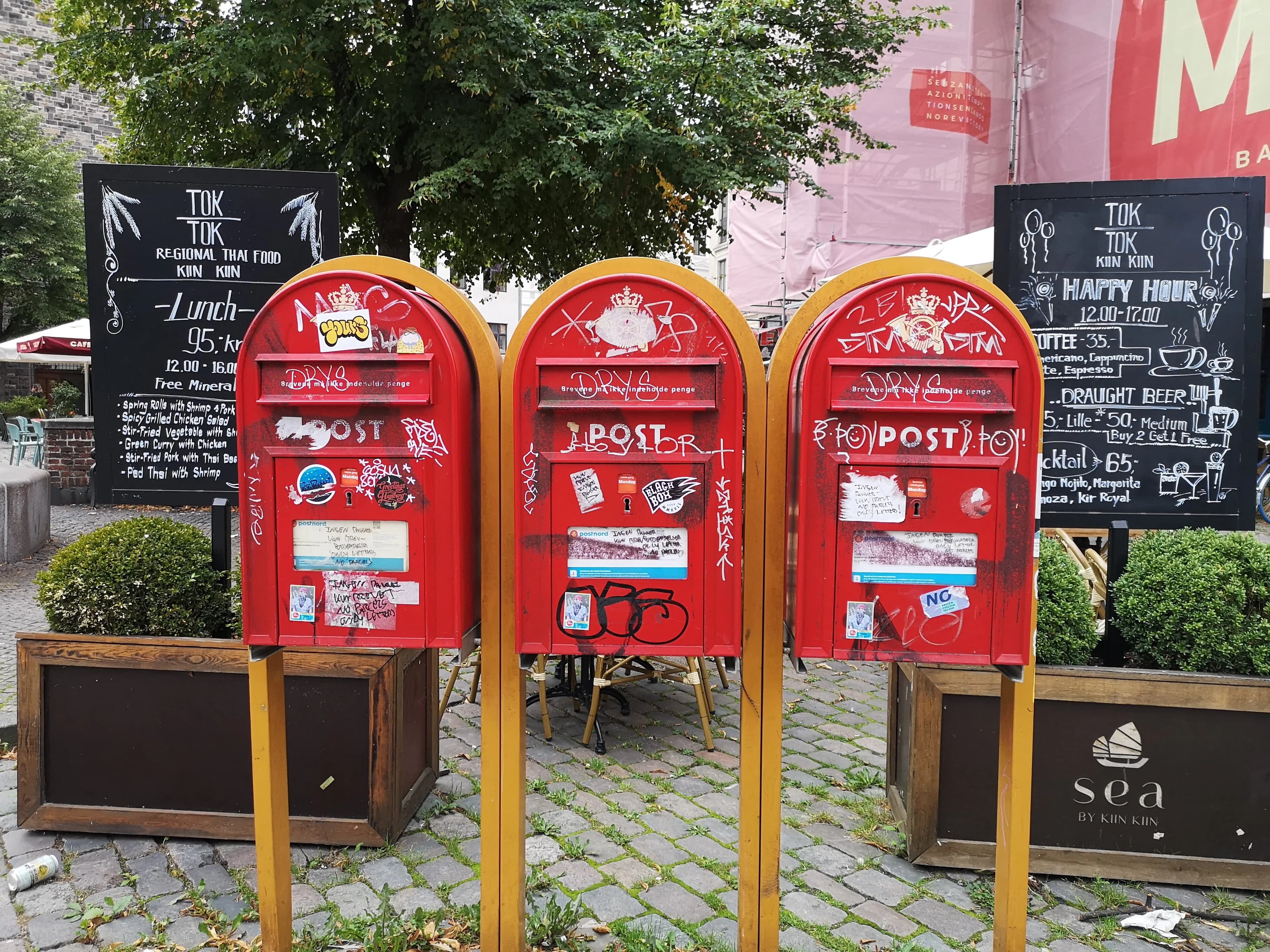
The color, in particular, has achieved near-iconic status. “Mailbox red.” It’s far from accidental – its origins are royal. It stems from the coat of arms of the House of Oldenburg, which also includes the Danish royal family, explains historian Jacob Vrist Nielsen, co-author of Post og tele – Kommunikationen og danskerne.
»The colors convey authority. They signal state power, orderliness, and modernity – and at the same time, they were more aesthetically pleasing than earlier mailboxes, which weren’t uniform,« says Jacob Vrist Nielsen.
The first mailboxes to appear in Denmark were anything but uniform. It was up to each individual postmaster to install them, and many early models were black with white lettering. It wasn’t until the 1860s that the red mailbox with the crown and post horn – essentially the design we know today – was introduced.
As early as 1704, the postal service received its characteristic red uniforms, which remained for more than 300 years. The exception was rural postmen, who wore dark blue uniforms until 1919. In 2017, PostNord replaced the traditional red uniforms with blue ones.
»When you look at the uniforms, they were quite striking – almost like military uniforms with silver details, ribbons, and sabers. There was a certain authority in being part of the postal service. There was a degree of respect attached to it« says Arne Noack from ENIGMA.
The mailbox has also symbolized trust and democracy, explains Jacob Vrist Nielsen.
»In the first Danish constitution from 1849, it states explicitly that the privacy of correspondence is inviolable, and that no one may open a letter without a court order. It was a key element in Denmark’s democratization,« explains Jacob Vrist Nielsen.
Just as society continually evolves, so do the elements that make up our urban spaces. Once, street corners featured phone booths and kiosks. Today, you’re more likely to find charging stations, for example.
The mailbox’s final disappearance from the urban landscape ties a bow on a long history and illustrates how our public spaces continually adapt to the needs of contemporary society.