Arne Jacobsen: Pioneer of Danish Modern Architecture and Design
Arne Jacobsen (1902–1971) was a pioneer of Danish modernism who shaped modern architecture and design by treating buildings, interiors, and details as a unified whole – from Bellavista to the SAS Royal Hotel and his iconic chairs.
By Dansk Arkitektur Center
The House of the Future
In 1929, Arne Jacobsen and fellow architect Flemming Lassen won a competition with their visionary proposal The House of the Future.
Even today, the project still feels futuristic. At the time, it was radically new. With this design, modern architecture, functionalism, and Danish modernism were introduced to Denmark – marking Jacobsen’s breakthrough as an architect.
The clean lines and geometric forms of functionalism initially felt unfamiliar to many, who found them cold and austere. Nevertheless, Jacobsen soon began designing villas for wealthy clients who recognised the potential of his modern vision.
Bellavista
Jacobsen’s first major project was the Bellavista housing development north of Copenhagen, built between 1932 and 1933. Here, he realised the functionalist vision of the modern city.
In the press, Jacobsen was even described as Denmark’s answer to Le Corbusier, one of the leading figures of modernism.
The 68 apartments were designed in a clean and elegant functionalist style. White-rendered brick created smooth surfaces, while steel and iron formed part of the structure. Teak window frames reflected Jacobsen’s early attention to material quality. Bellavista remains one of the most important examples of functionalist architecture in Denmark.
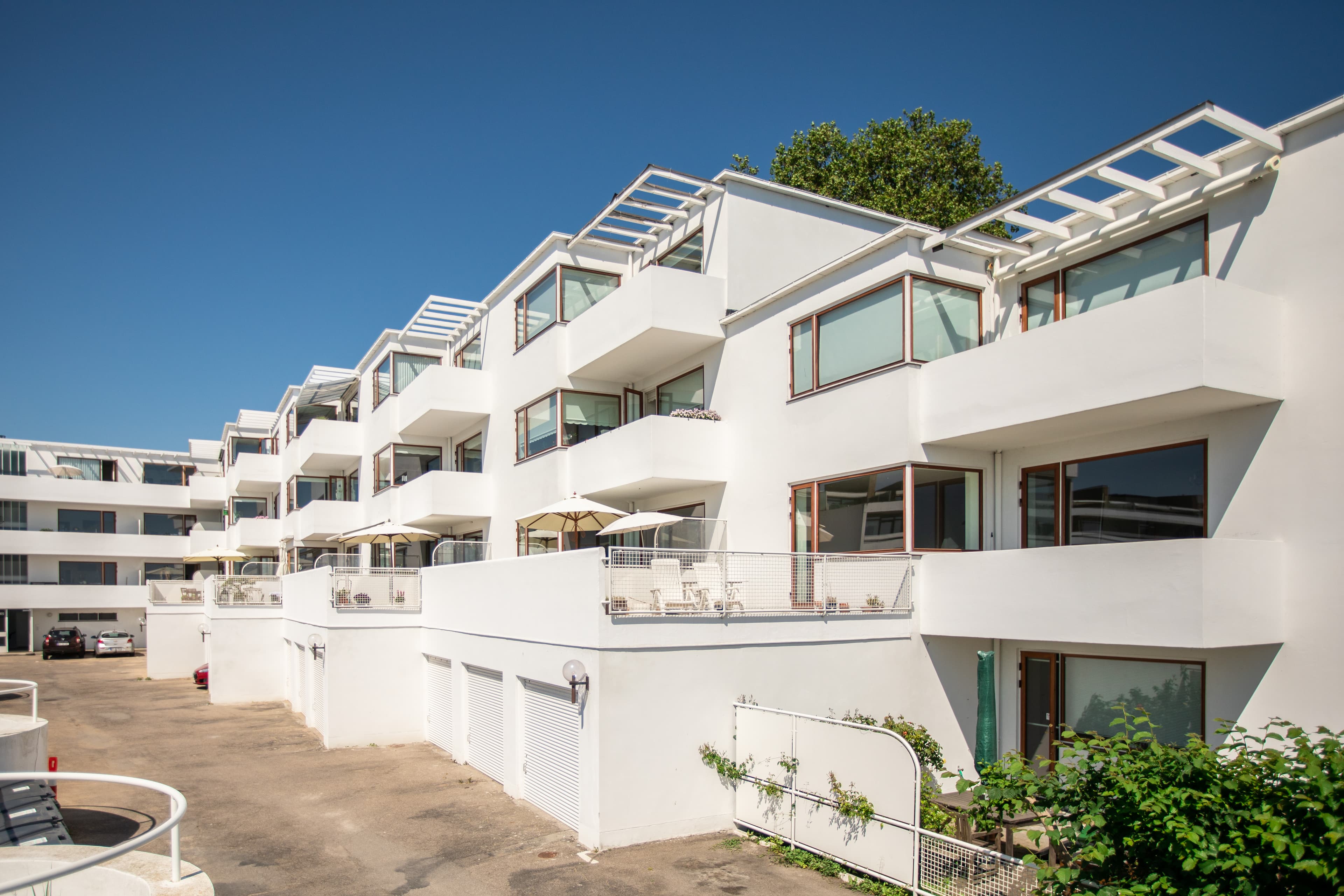
Jacobsen carefully maximised views of the Øresund. The buildings were arranged in three wings around a green courtyard, ensuring that they did not block each other’s views. Apartments were staggered so that each had two living rooms with sea views.
Rounded corners and balconies added life to the otherwise simple geometry, while shifting forms created dynamic shadows on the white façades.
International Recognition
Jacobsen’s career quickly accelerated. He became a leading figure in Danish architecture and design, both nationally and internationally.
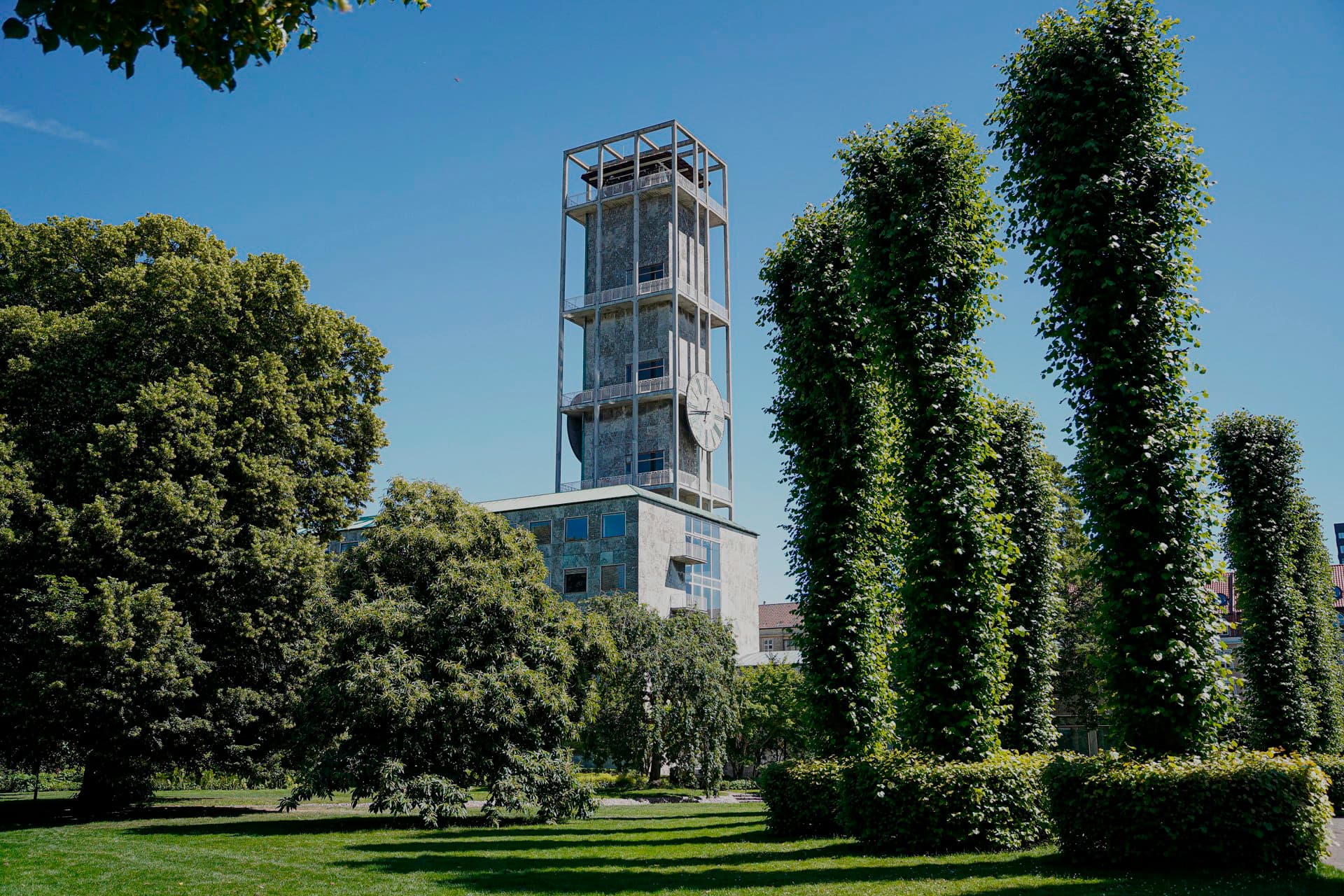
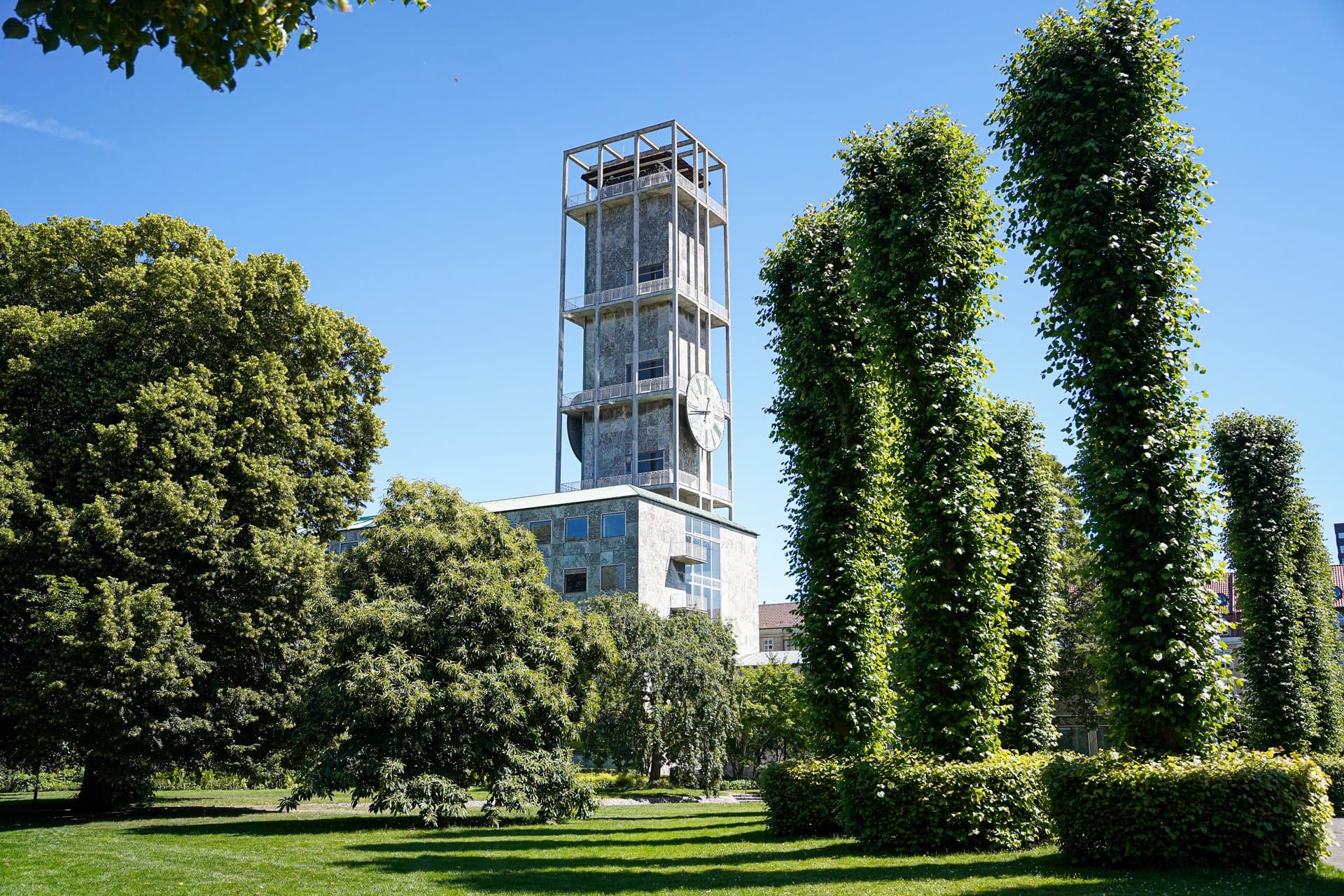
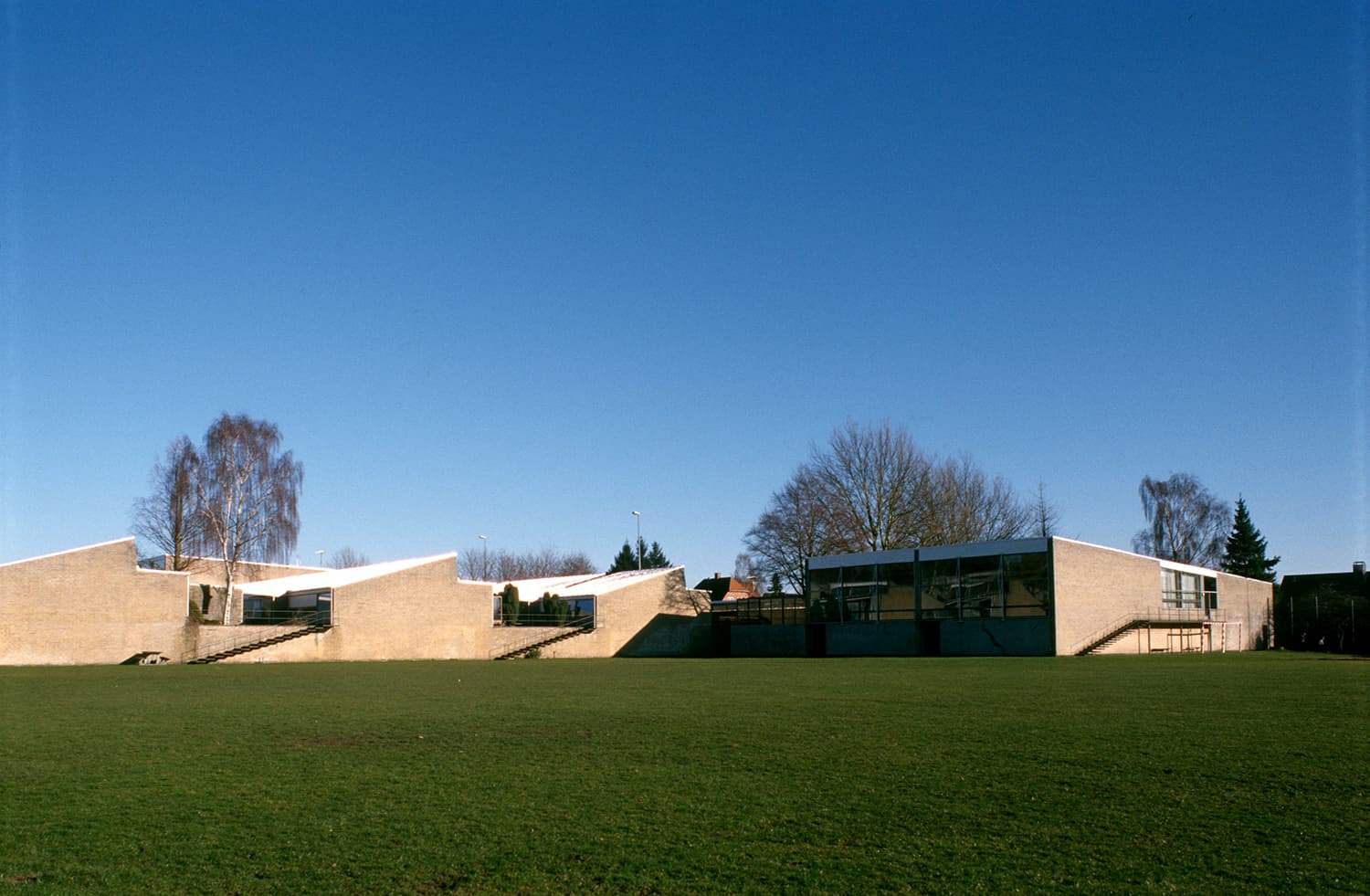
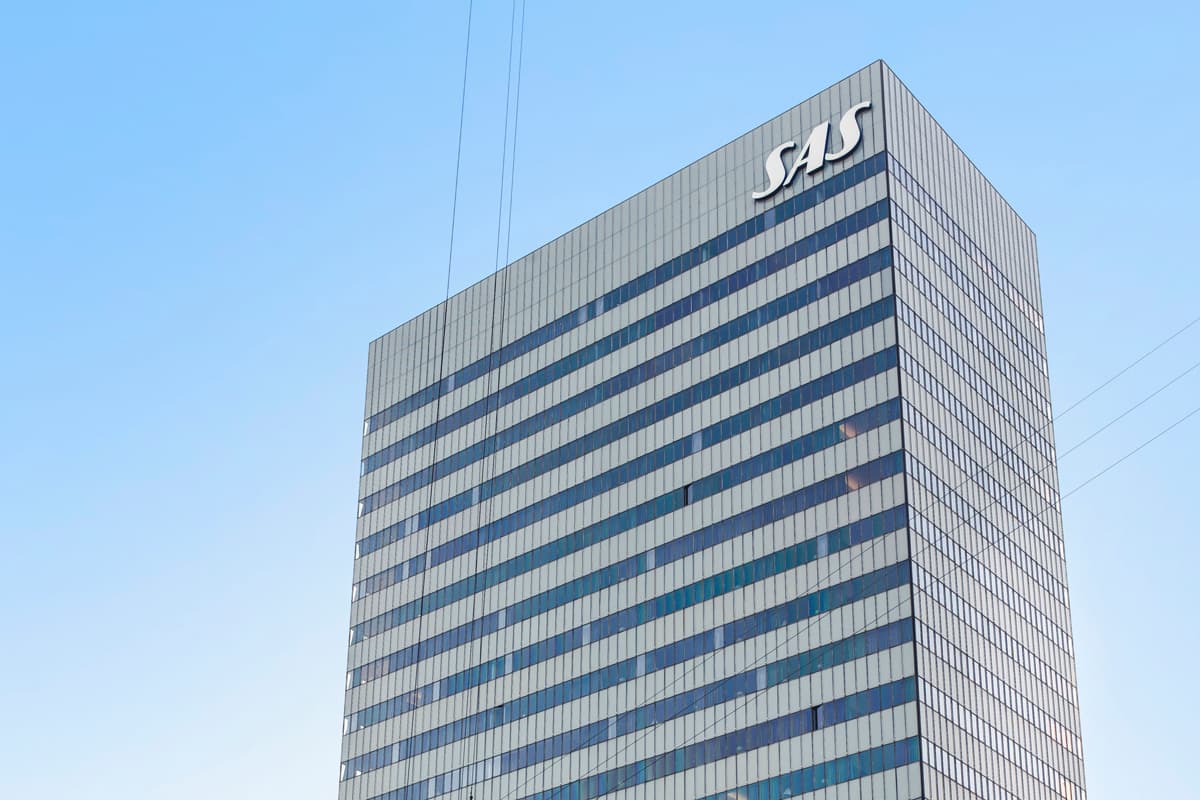
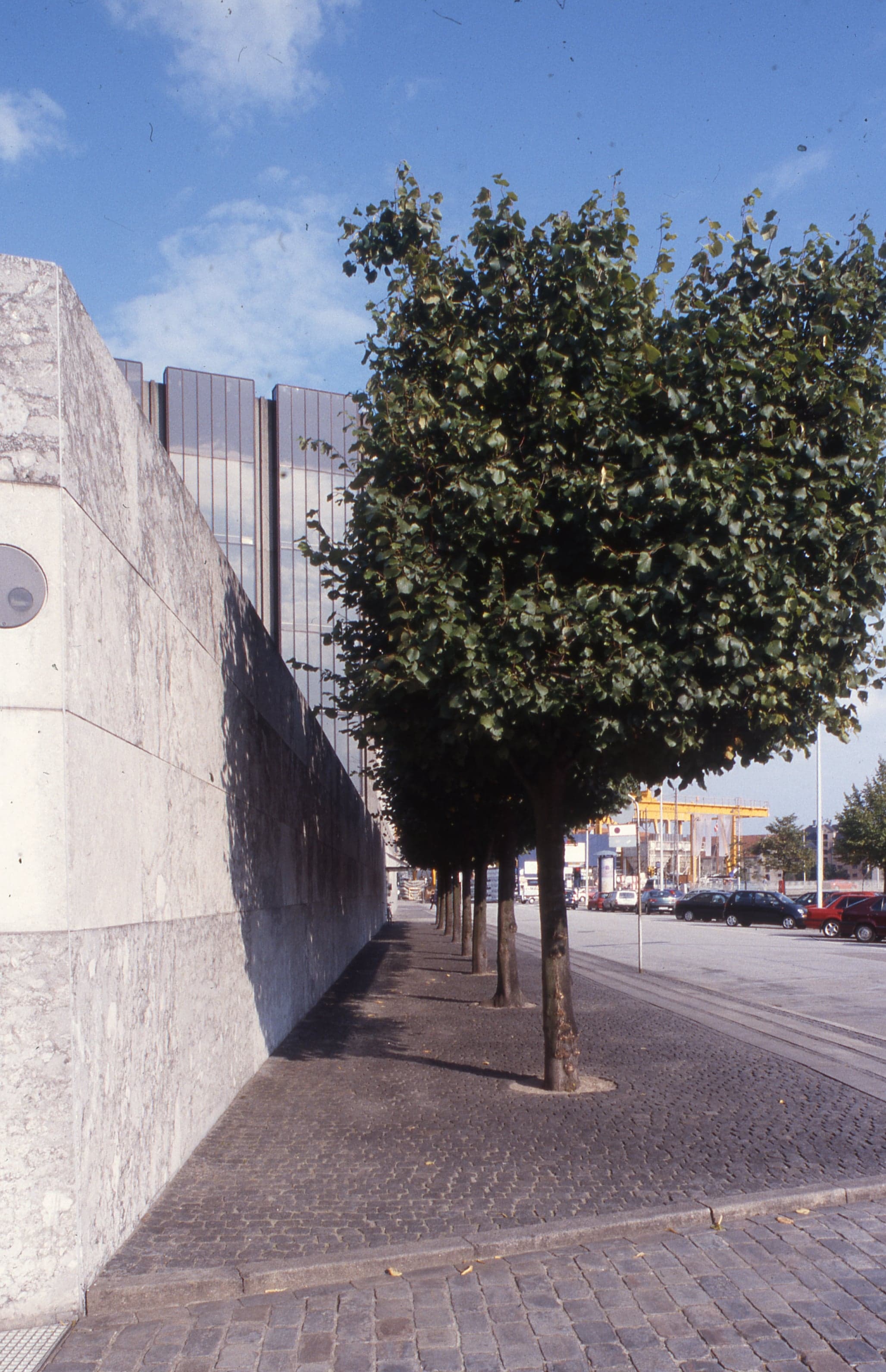
His major works include Aarhus City Hall (1939–42), Munkegård School (1955–59), the SAS Royal Hotel in Copenhagen (1958–60), and the National Bank of Denmark (begun in 1965).
All of these projects are characterised by exceptional craftsmanship, simplicity, and attention to detail. Every aspect was carefully considered and executed to perfection.
The Designer
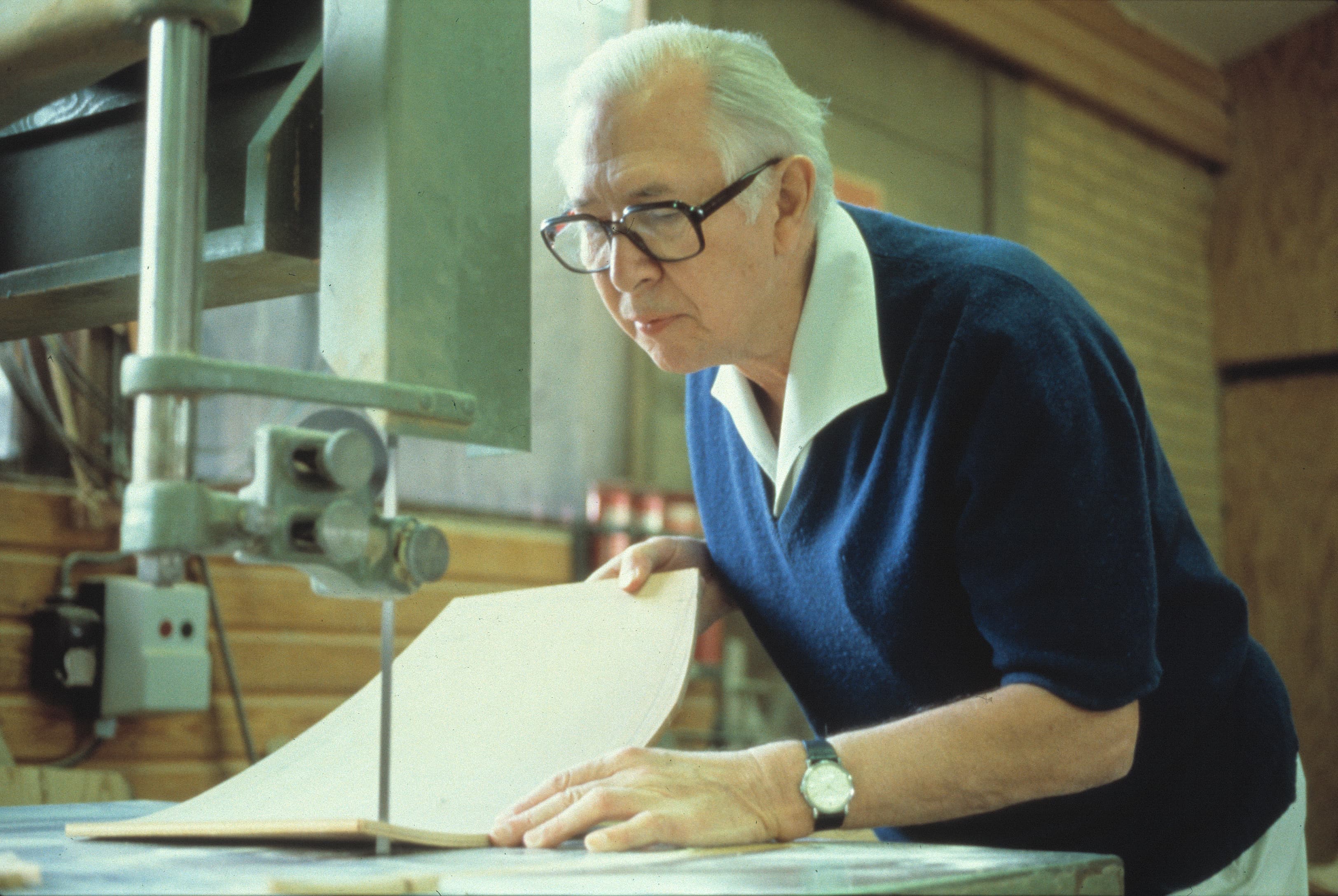
Arne Jacobsen did not limit himself to designing buildings. He also created furniture, lighting, door handles, textiles, tableware, and more – all as part of a unified architectural vision.
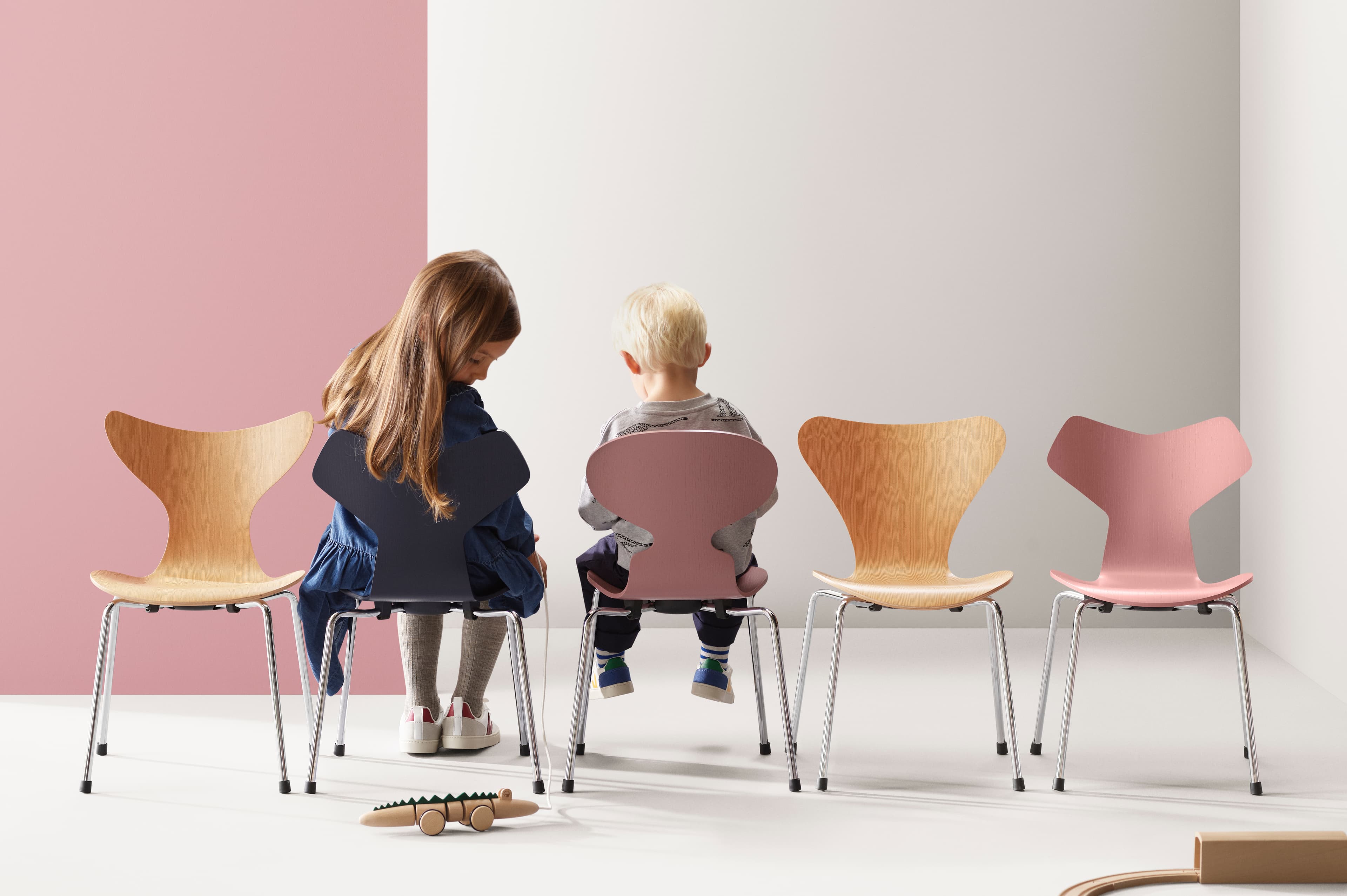
Among his most famous designs are the chairs The Ant, The Swan, and The Egg, which have become icons of Danish design. Their forms are simple yet sculptural – for example, The Ant, shaped as a single continuous element.
Detail and Total Design
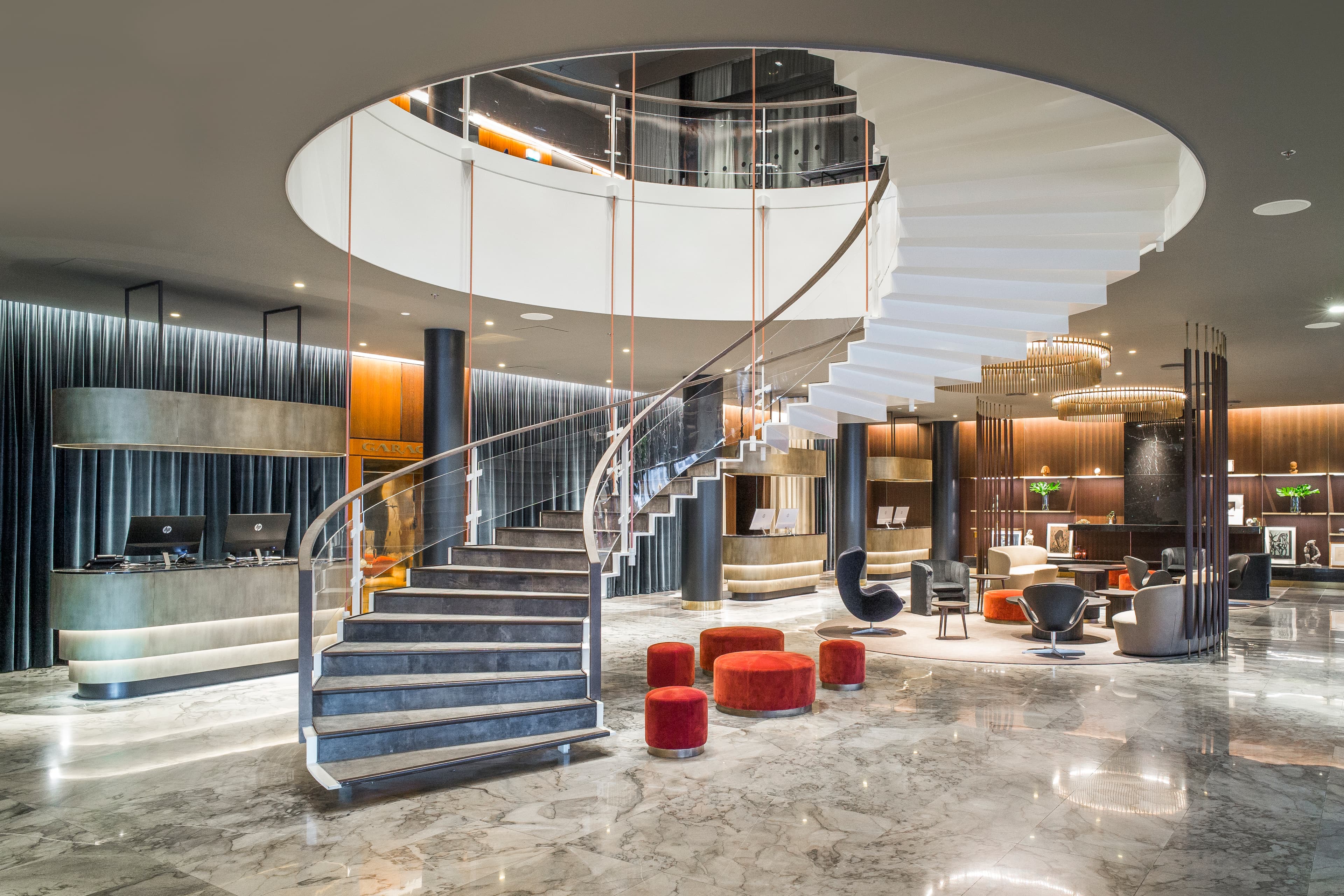
Jacobsen often designed furniture specifically for his buildings. The SAS Royal Hotel (now the Radisson Collection Royal Hotel) featured custom-designed furniture, lighting, textiles, and tableware, including The Swan and The Egg chairs.
For Jacobsen, these details were essential in creating a complete and cohesive architectural experience.
He consistently used high-quality materials such as steel, glass, aluminium, and polished natural stone. His forms were simple, yet this simplicity revealed a refined and lasting beauty. As a result, Arne Jacobsen’s designs remain timeless and continue to define Danish modern design.
The Petrol Station (The “Mushroom”)
Arne Jacobsen’s petrol station in Charlottenlund, known as The Mushroom (Paddehatten), is an icon of functionalist architecture. With its distinctive canopy, it is considered a small functionalist masterpiece.
In the 1930s, the rise of car culture created a need for new types of infrastructure, including petrol stations. While many were designed using classical architectural styles, Jacobsen took a different approach, applying the clean and rational language of functionalism.
The station features an elliptical canopy supported by a single central column, merging with the roof of the building behind it. The shape echoes the curved back of The Ant chair, which Jacobsen later designed in 1952.
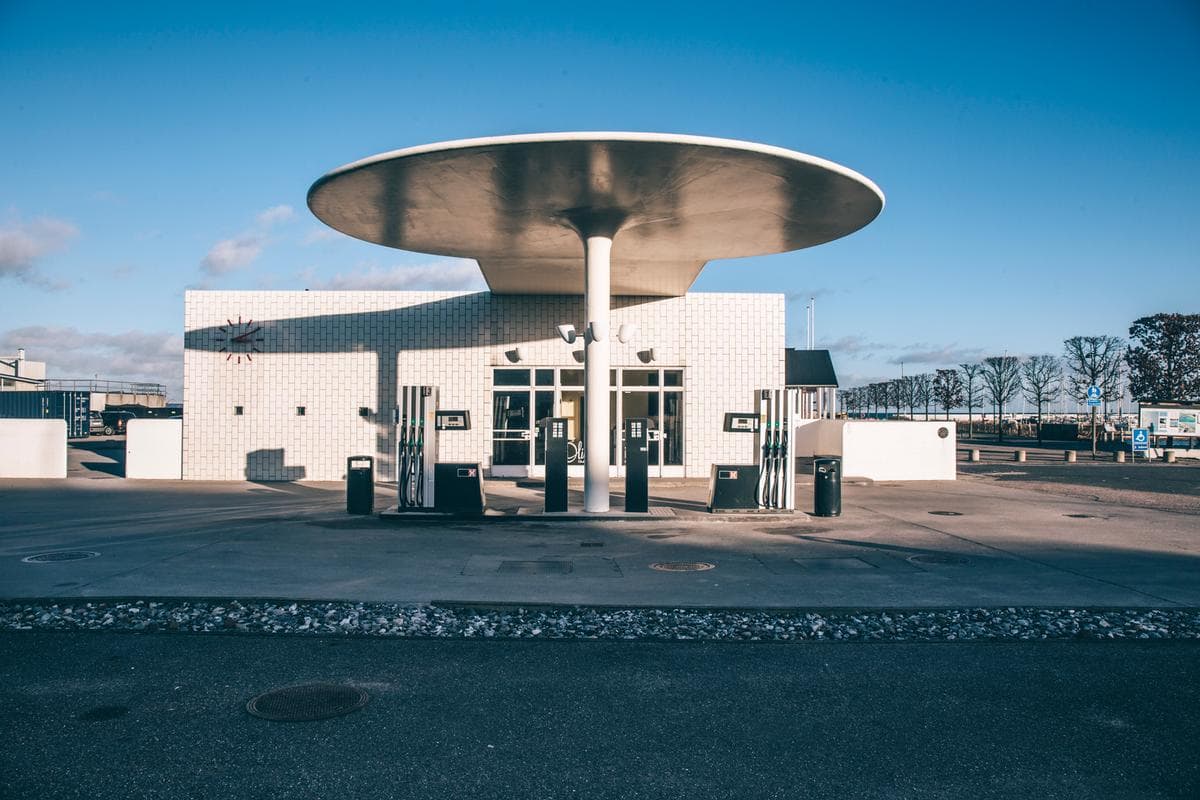
Constructed in reinforced concrete and clad in white Meissner tiles, the building expresses cleanliness and order. The canopy is also lit from below, making it function as a visual sign – even at night.
With minimal means, Jacobsen created a striking and expressive structure that remains one of his most celebrated works.
The station was originally designed as a prototype for the Texaco company, but no additional examples were built. Today, it remains largely unchanged and is protected as a heritage building.
More from DAC Magazine
DAC Magazine