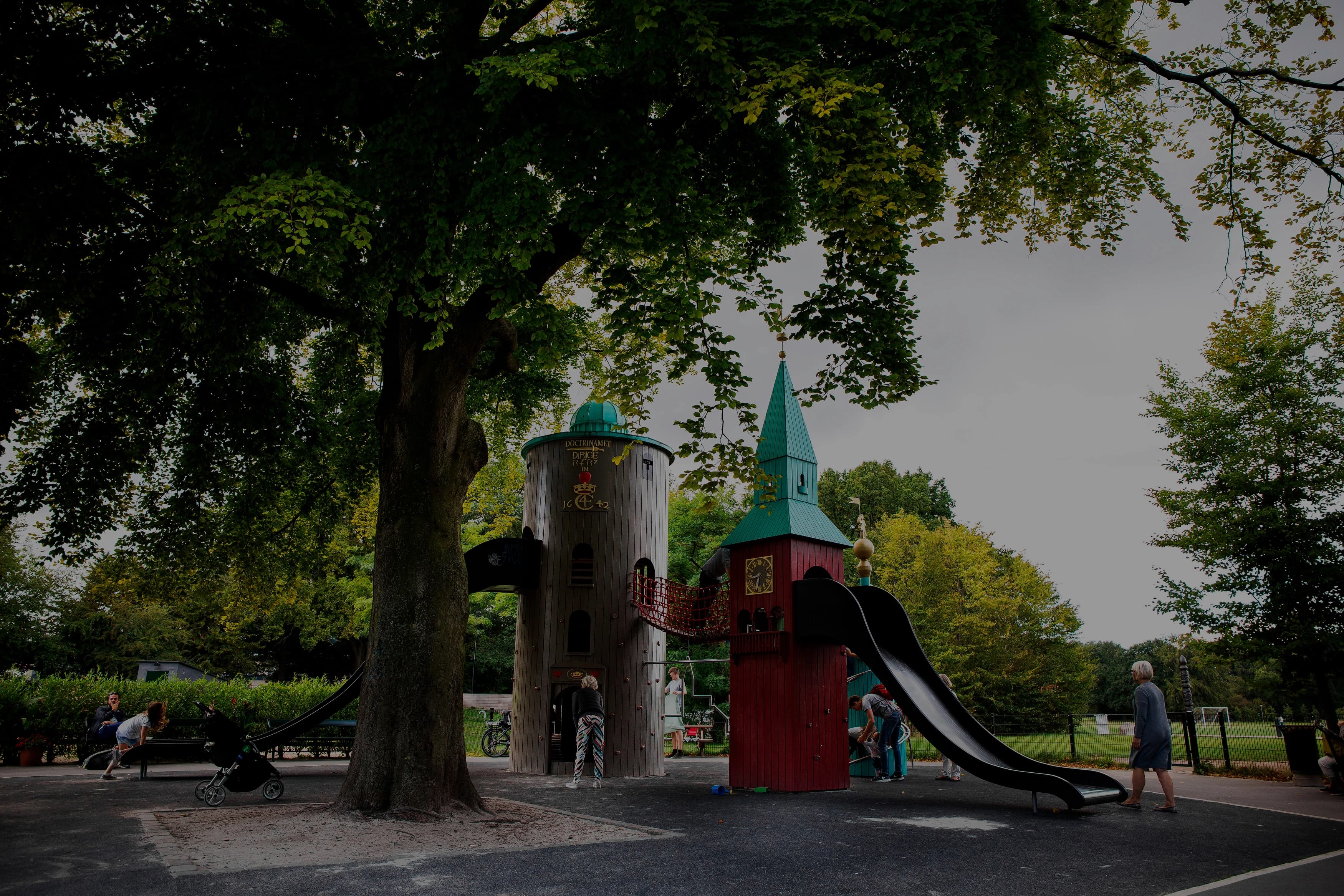
Danish Playgrounds Move Into Children’s Imaginations Around the World
With open-ended functions, natural materials, and unfinished narratives, Danish playground design shows how playgrounds can take children’s imaginations seriously and make room for free play – in Denmark and across the globe.
By Camilla Zuleger
A slide. A swing set. A seesaw. Bright colors and soft rubber surfaces. Those are the basic ingredients of a playground. Right?
At least, that’s the kind of playground we’ve all visited at some point in our lives. But in Denmark, playgrounds are also something more than just play equipment – they are adventurous settings where children’s imaginations are free to run wild.
The Architecture of Imagination
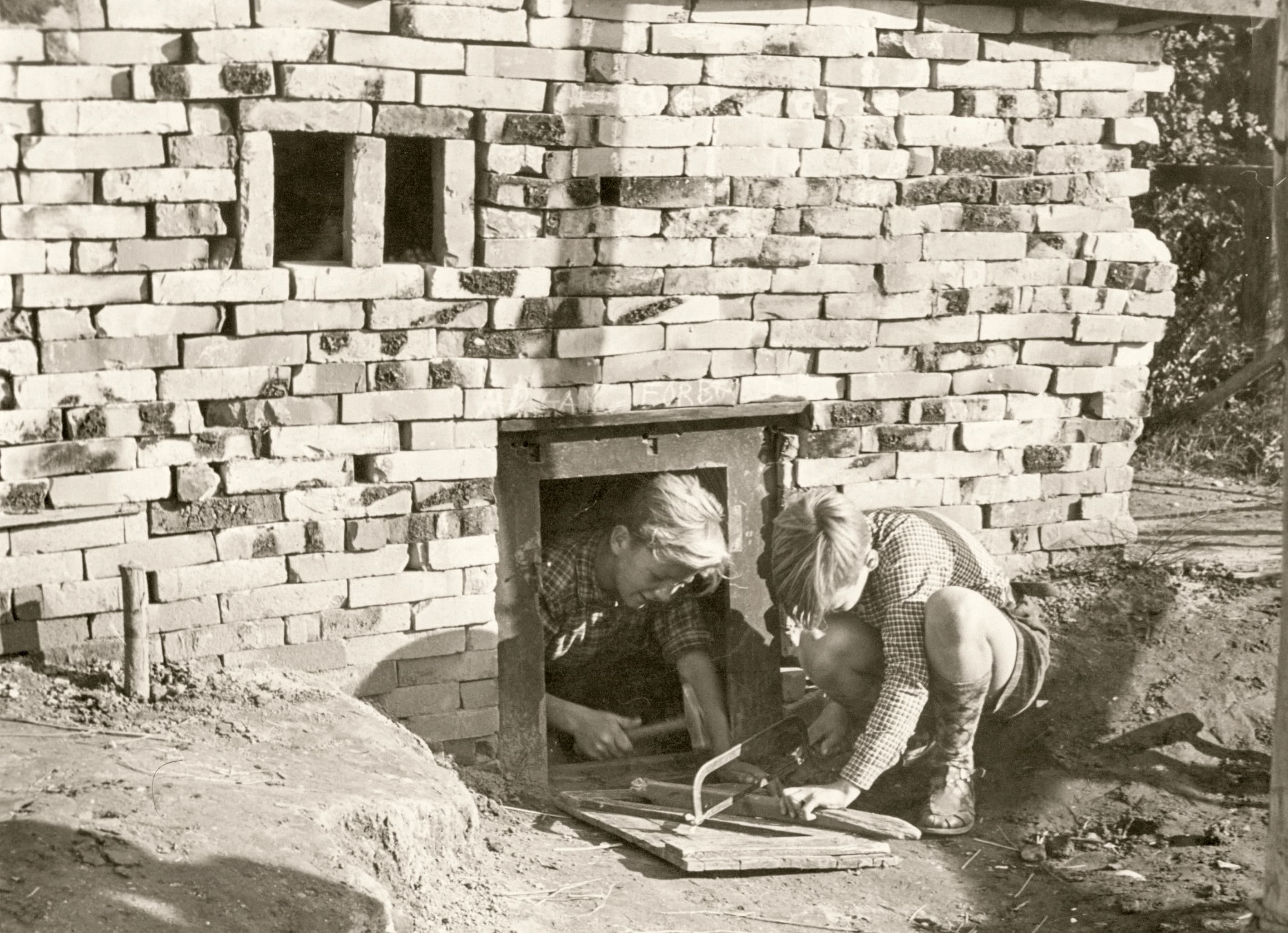
From 1943, when the first junk playground opened in Emdrup, to today’s sensory nature playgrounds and fairy tale-inspired wooden worlds, Danish playground design tells the story of liberating the child’s imagination. These are places that avoid dictating how children should play and instead invite them into dreamscapes shaped by their own creativity.
There’s more at play here than just Danish Design. It is the materialization of a particular view of childhood – a way of creating the best possible conditions for children to simply be children. The point is not for them to settle into a play machine that says swing! seesaw! or slide! It’s not the children visiting the playground – it’s the playground moving into the children’s imagination.
From Junk to Concept
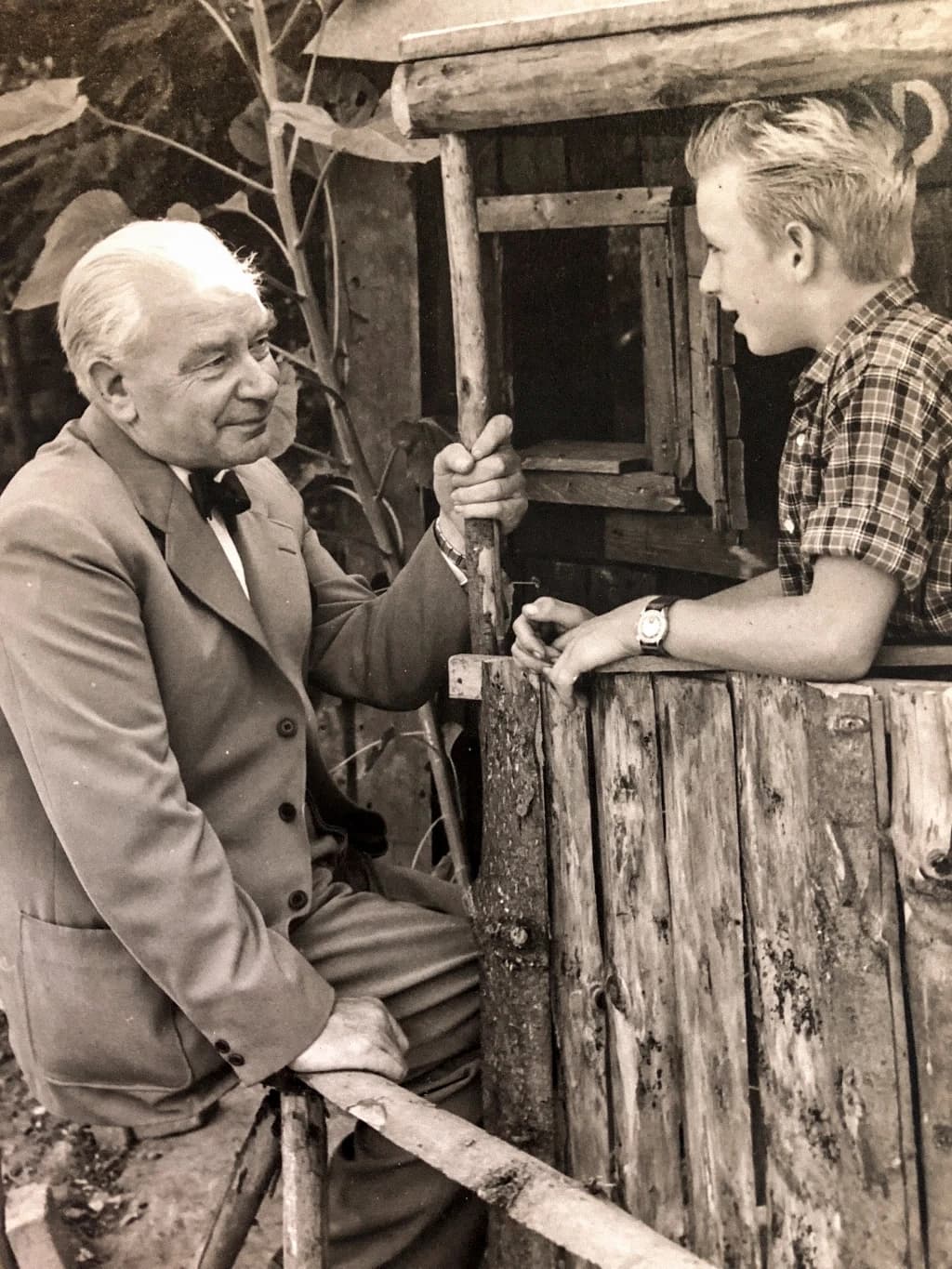
The now-iconic landscape architect Carl Theodor Sørensen (pictured above) was the visionary behind the first so-called junk playground in Emdrup in 1943, where children could immerse themselves in raw building materials and create something where previously there had been nothing. The concept later became known as adventure playgrounds and spread to cities across Europe – today, Germany alone has around 400 adventure playgrounds.
Open-ended functions were the key principle behind those early junk playgrounds: no specific activity was designed into the space. Instead, children were invited to explore what might happen there.
Space for Free Play
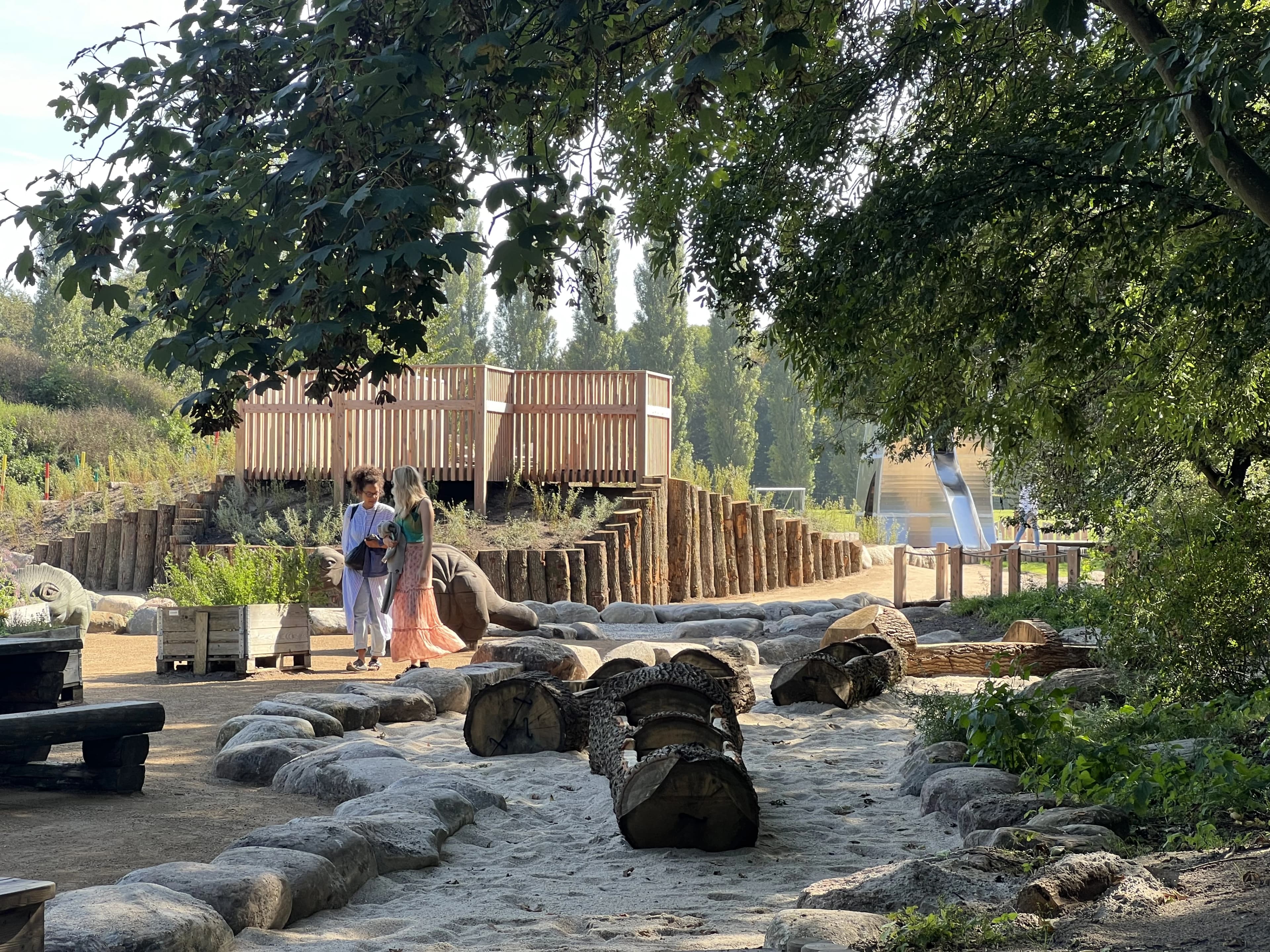
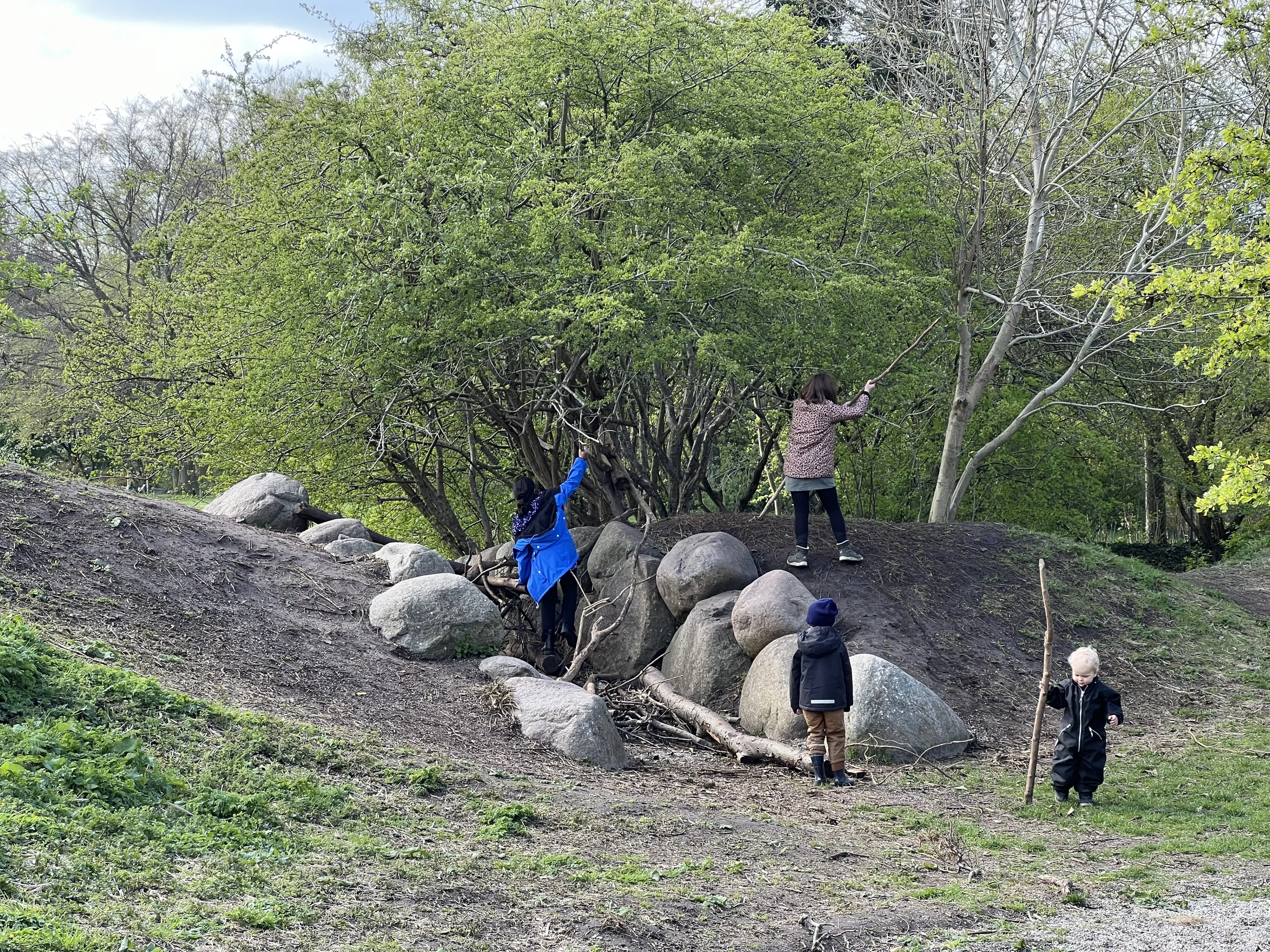
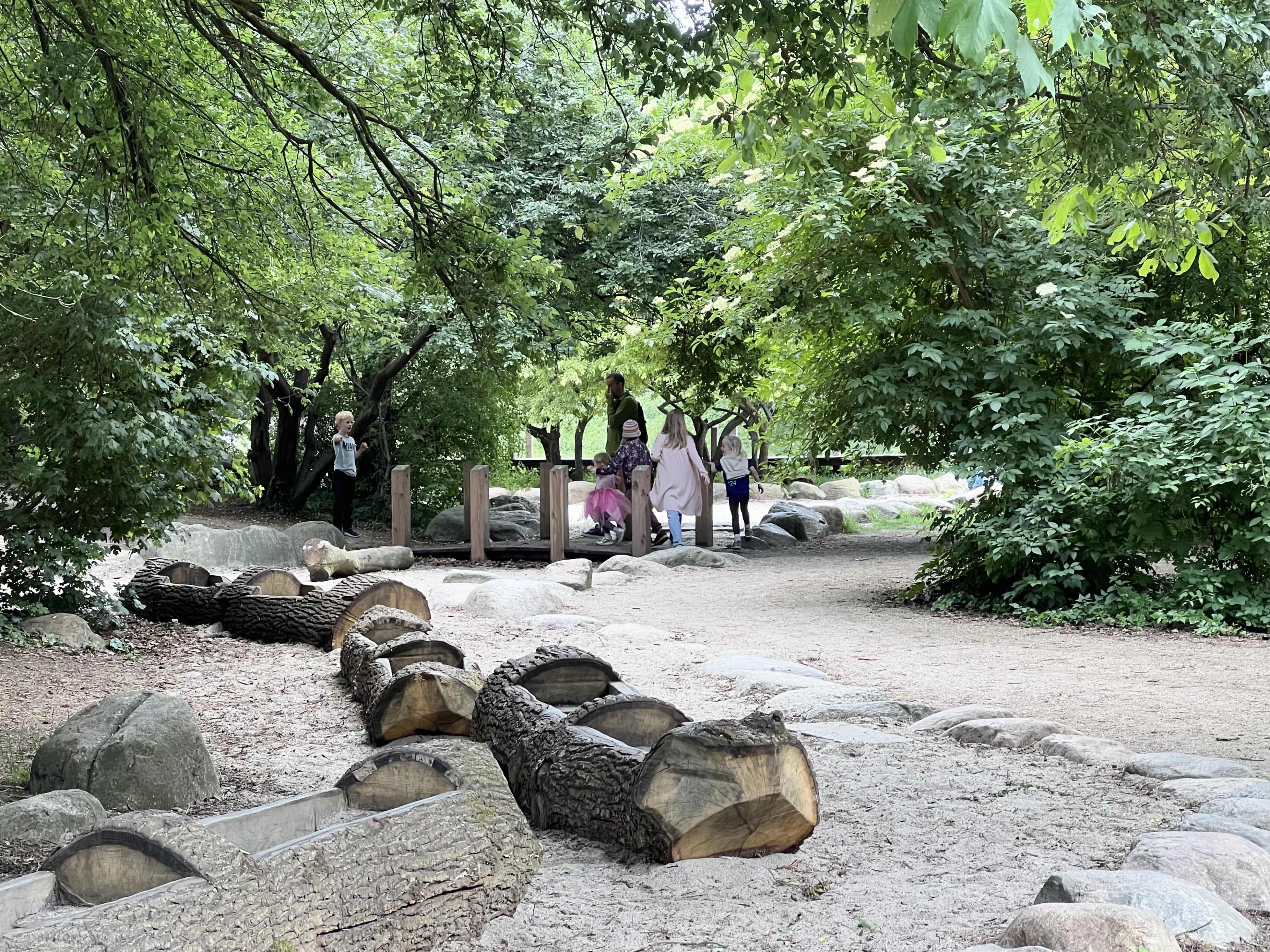
That same philosophy lives on today in the work of Danish landscape architect Helle Nebelong and her nature playgrounds rooted in sensory experiences and unpredictability. She works with what educators, and toy designers call open-ended design: objects without one fixed purpose, capable of becoming anything in a child’s imagination.
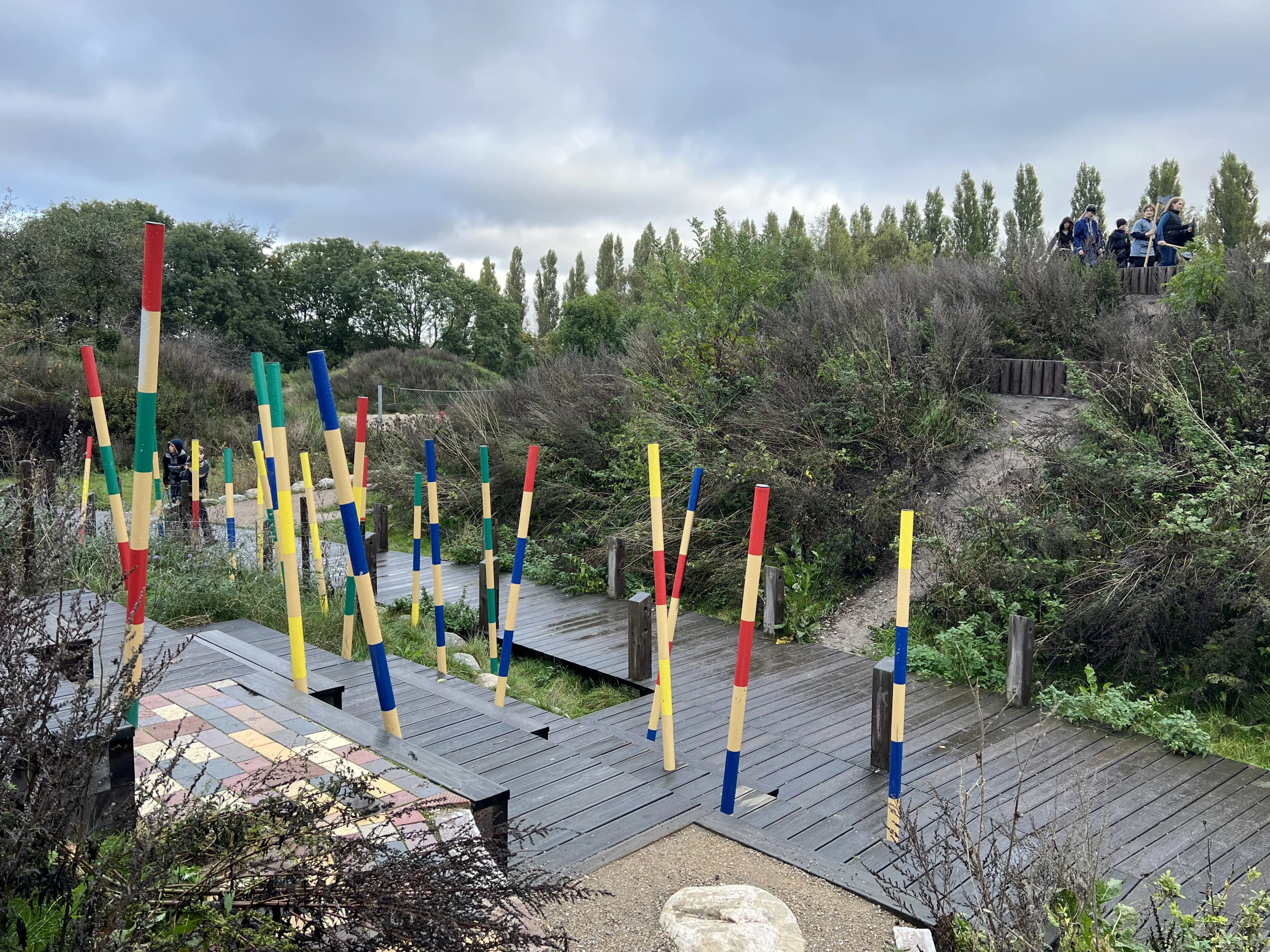
One example is her giant “Pick-up sticks”, which can be found both in the nature playground at Valbyparken in Copenhagen and at the Ilse and Charles Jobson Natural Play Park in Illinois, USA.
At the opening of the latter, an adult asked what the poles were for.
»I don’t know, but the children will figure that out,« she replied.
Later, she watched children play and realized that the gap between two poles had become a portal to another dimension – an idea that had never occurred to her. And that is exactly the point: where adults see a poorly designed climbing structure, children see endless possibilities.
Nature playground in Valbyparken
Nature playground in Valbyparken
Nature playground in Valbyparken
Nature playground in Valbyparken
The World Beyond the Playground
For Helle Nebelong, this philosophy is also a long-running critique of the standardized playground.
“Nothing is left to the imagination. They represent adults’ view of children’s play, where everything related to play has to be colorful, super fun, and as safe as possible,” she says.
The goal is not danger for danger’s sake, but teaching children to pay attention to the world around them.
“Children can see that the boulders are dangerous, so they are careful. They assess for themselves what they can do and what they dare to do,” she explains. These are skills they can carry with them beyond the playground fence.
Playgrounds as an Export Success Story
Helle Nebelong is far from the only Danish designer exporting landscapes where childhood can unfold freely. What began as a design for founder Ole Barslund-Nielsen’s son’s daycare has since grown into a small empire of sculptural storytelling created by the playground company MONSTRUM.
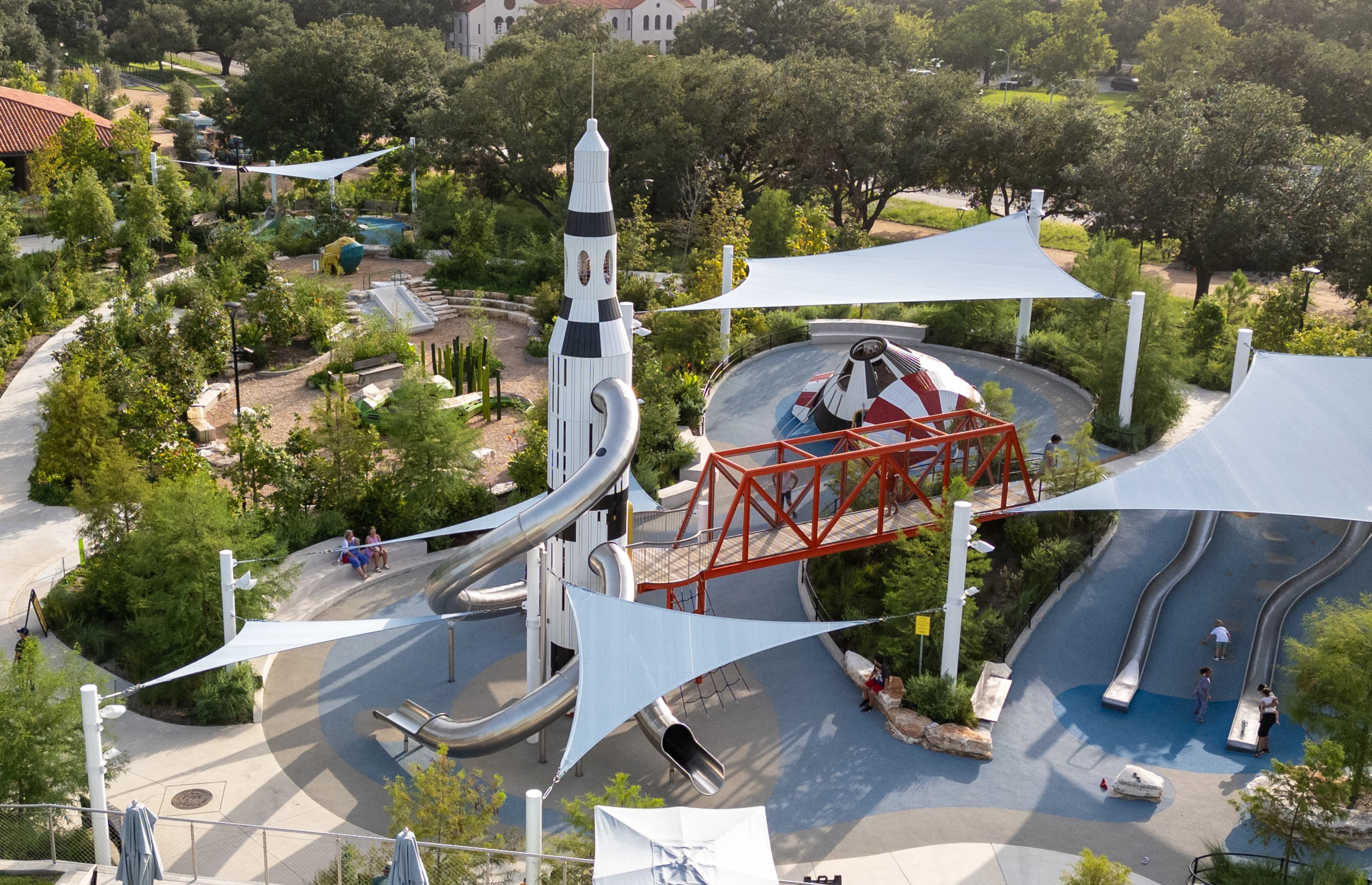
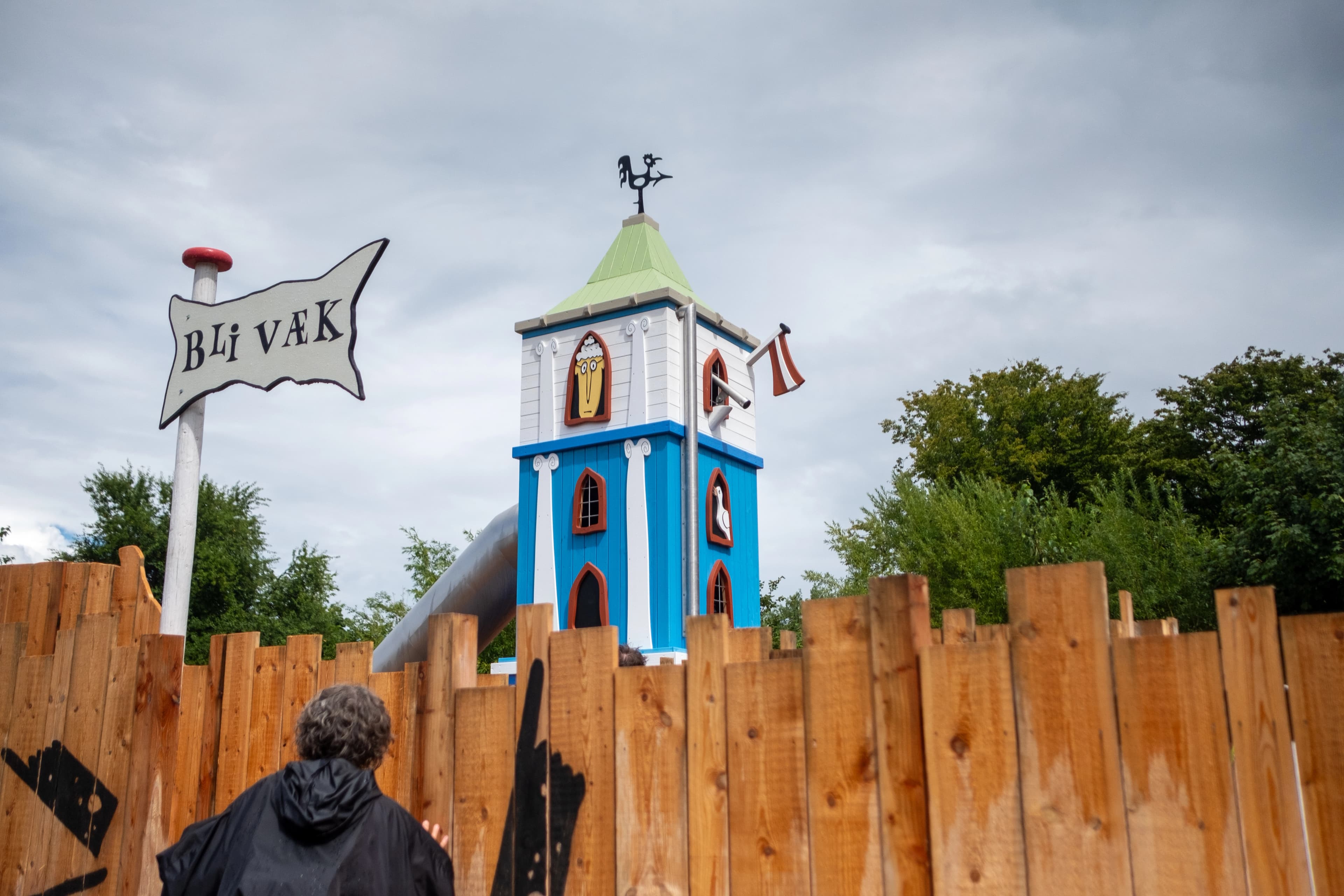
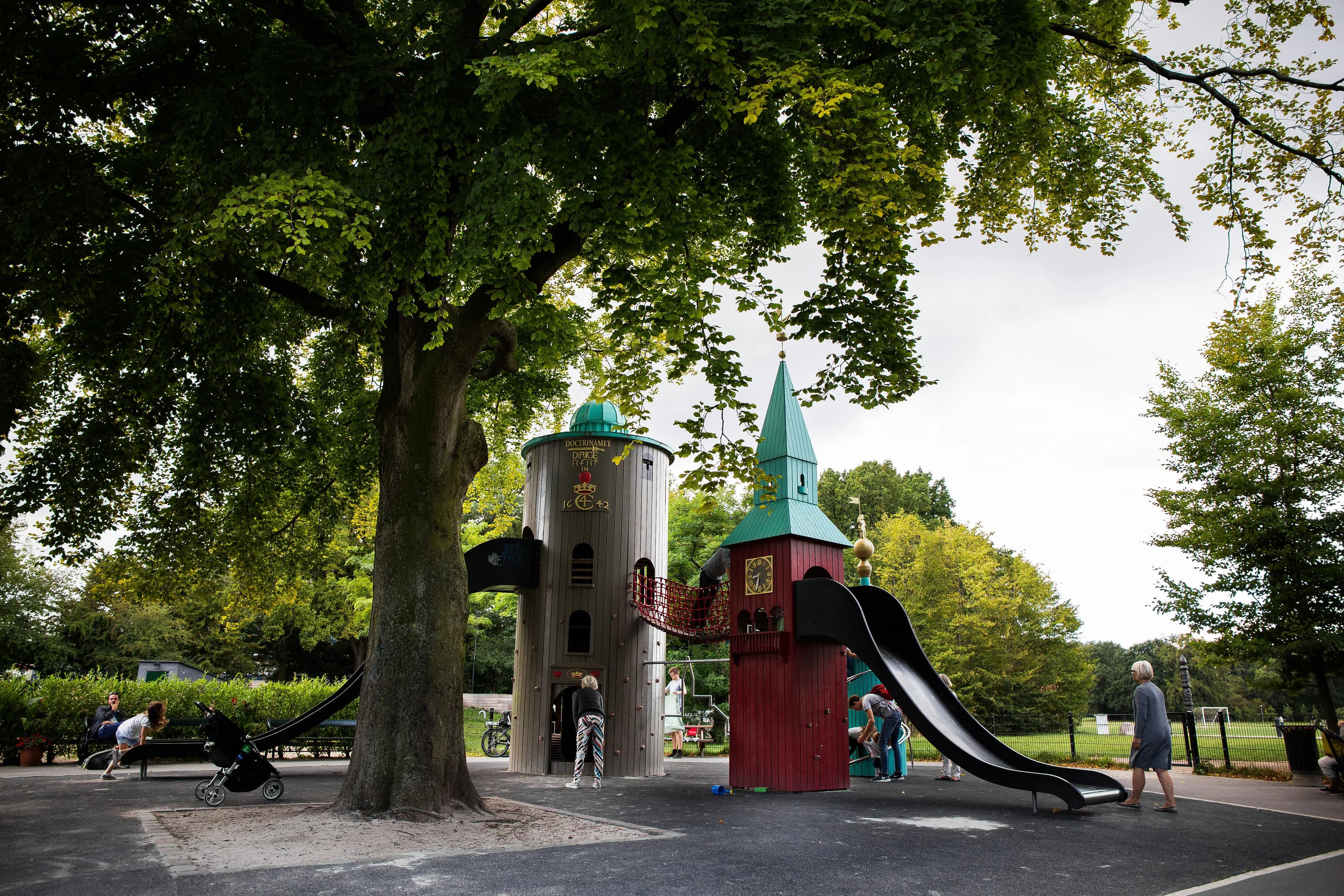
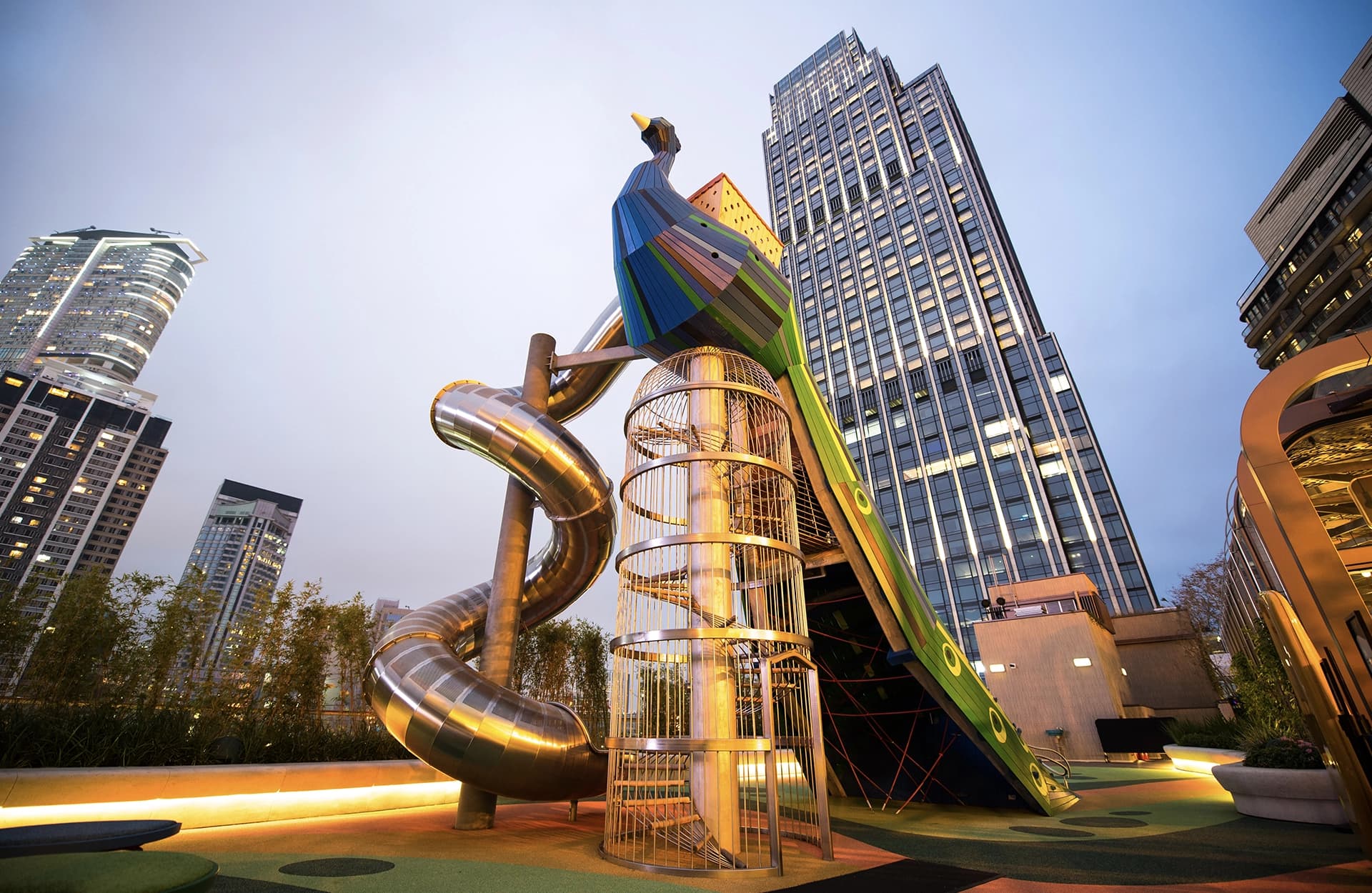
In Denmark, the company is behind landmark playgrounds such as the Tower Playground in Fælledparken in Copenhagen, Frøsnapperbyen at the Open-Air Museum (Frilandmuseet) in Lyngby, and the nine playgrounds atop LEGO House in Billund. But most of their installations stand on foreign soil: from a space station in Houston to a peacock in Hong Kong and a plesiosaur in Svalbard, Norway.
The River Giants, Tulsa, USA
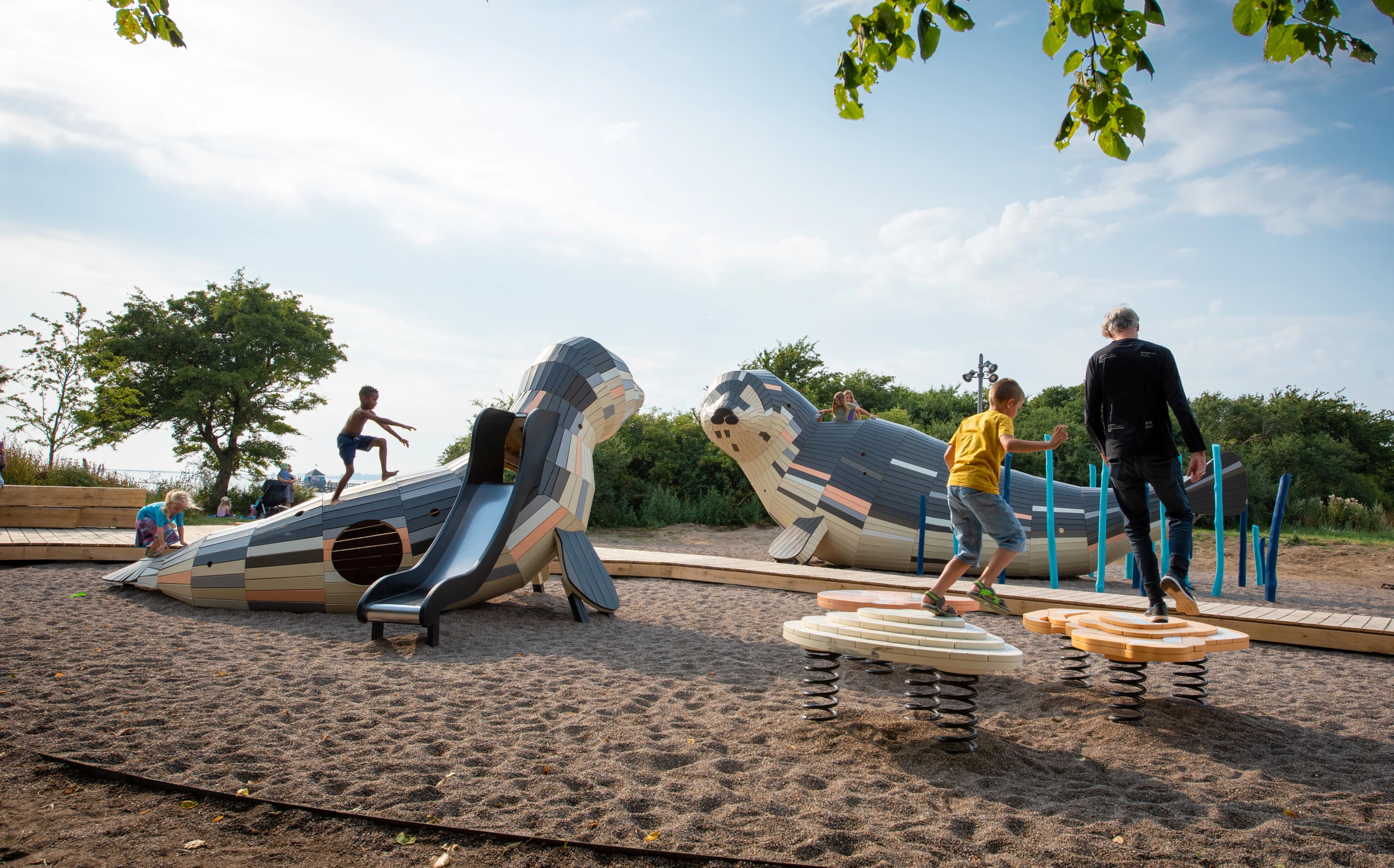
The Visiting Seals, Nakskov, Denmark
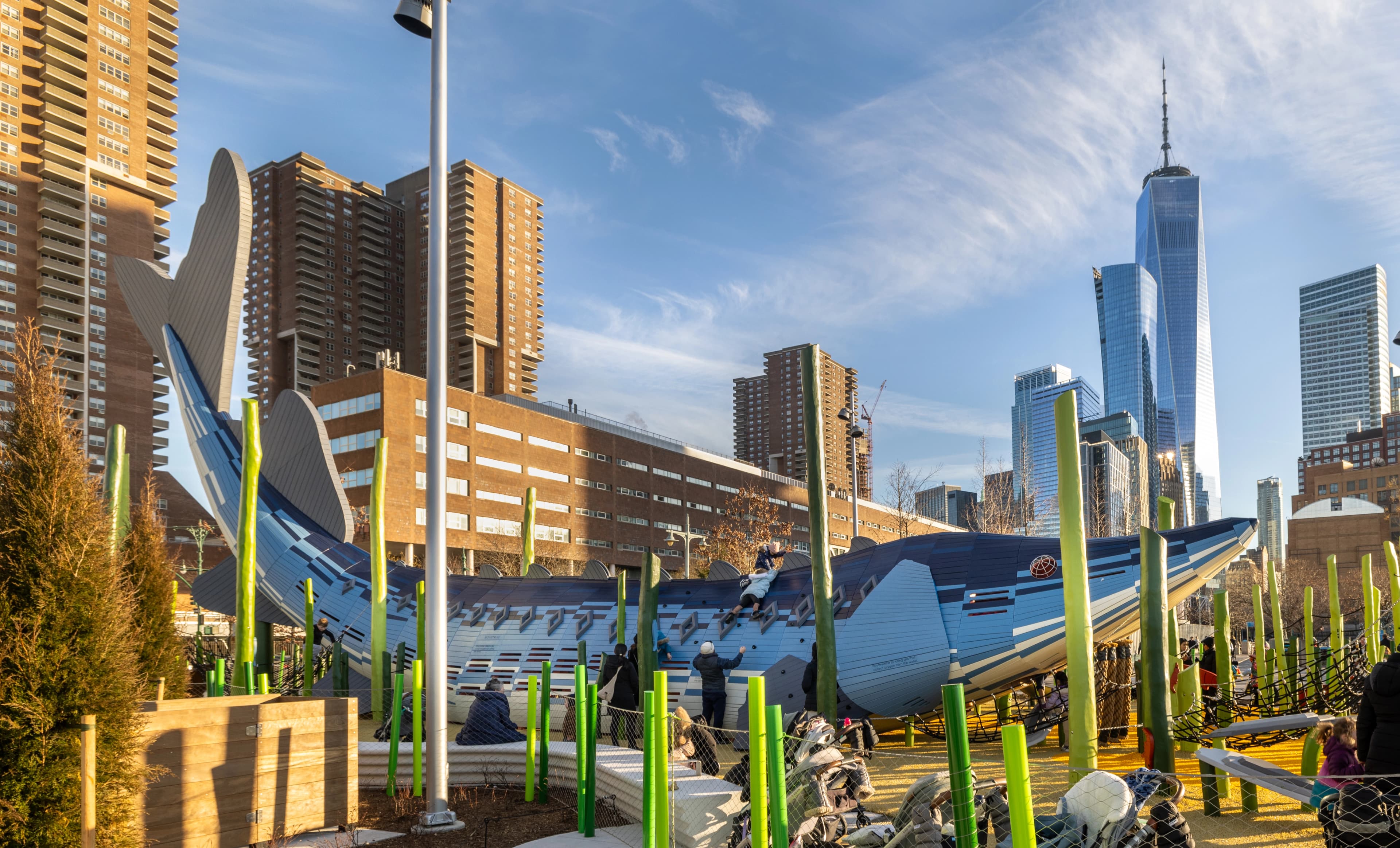
The Sturgeons at Pier 26, New York City, USA
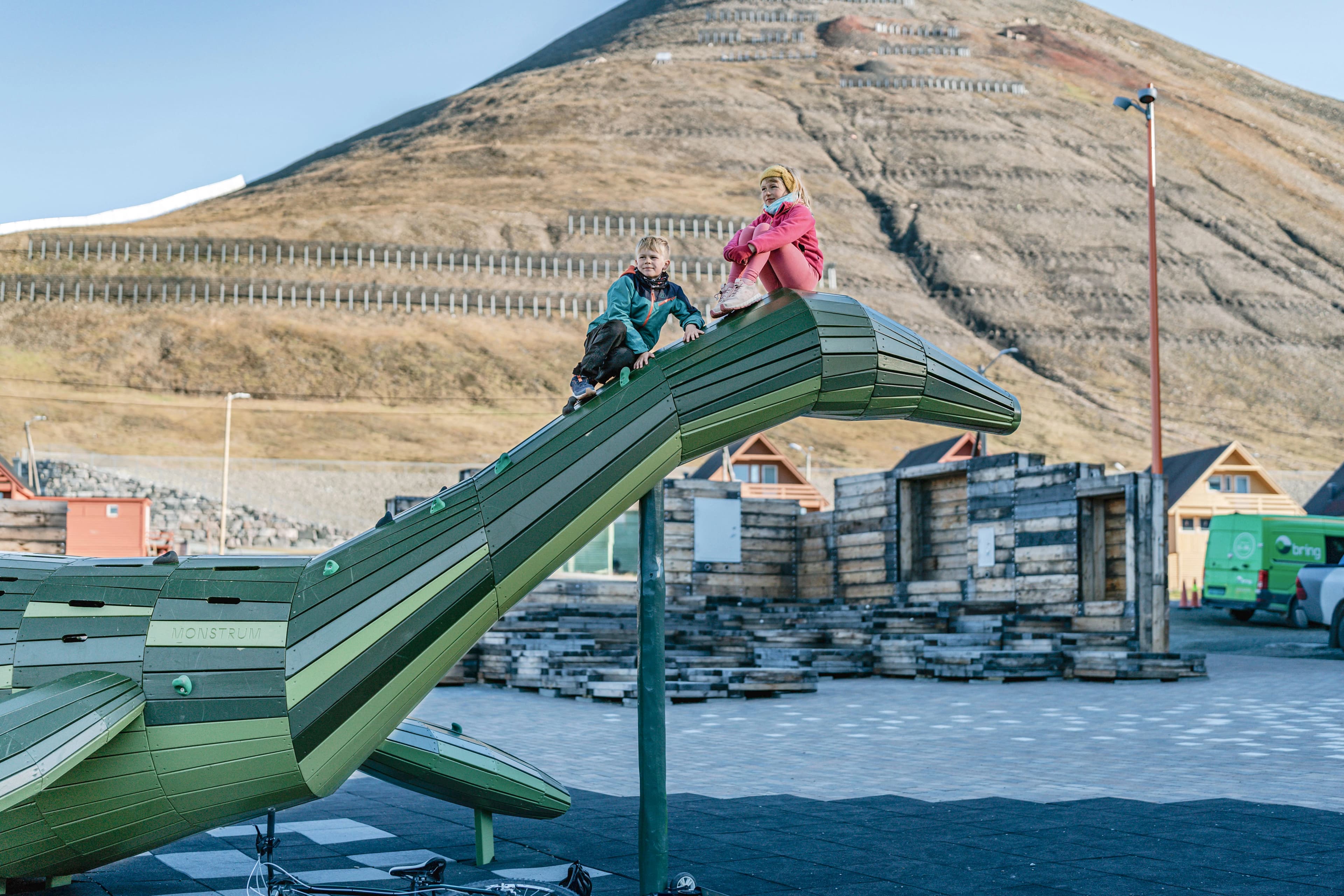
The Plesiosaur of Svalbard, Longyearbyen, Norway
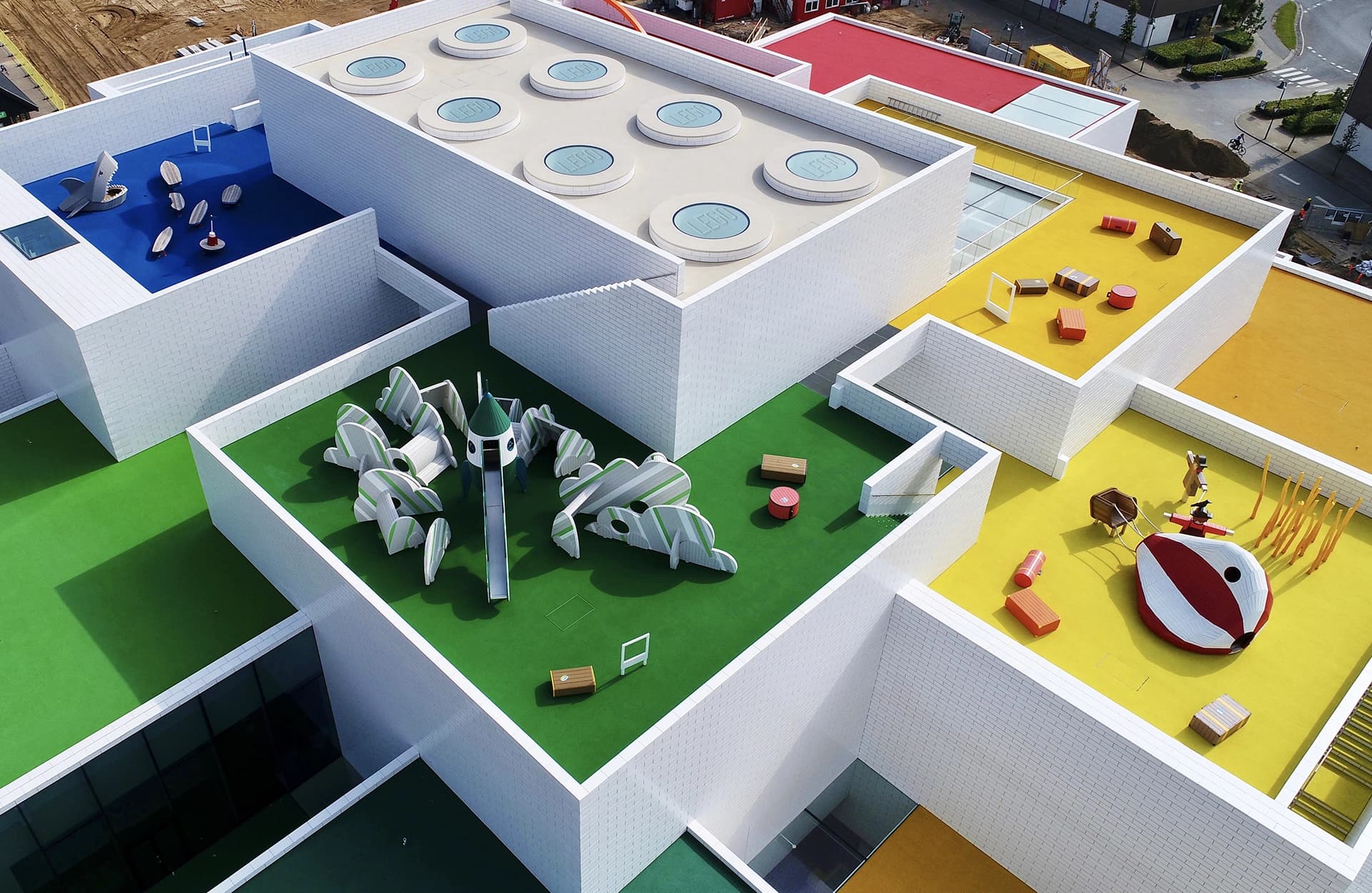
The Journey to LEGO House, Billund, Denmark
The Space Garden in Hermann Park, Houston, USA
Frøsnapperbyen at Frilandsmuseet, Lyngby, Denmark
Towers of Copenhagen in Fælledparken, Denmark
The Colourful Peacock in Hong Kong, China
Unfinished Stories in Wood
»The best playground begins out on the street – it draws children in and holds their attention while curiosity, movement, and imagination are allowed to drive the play,« says Ole Barslund Nielsen about the company’s philosophy.
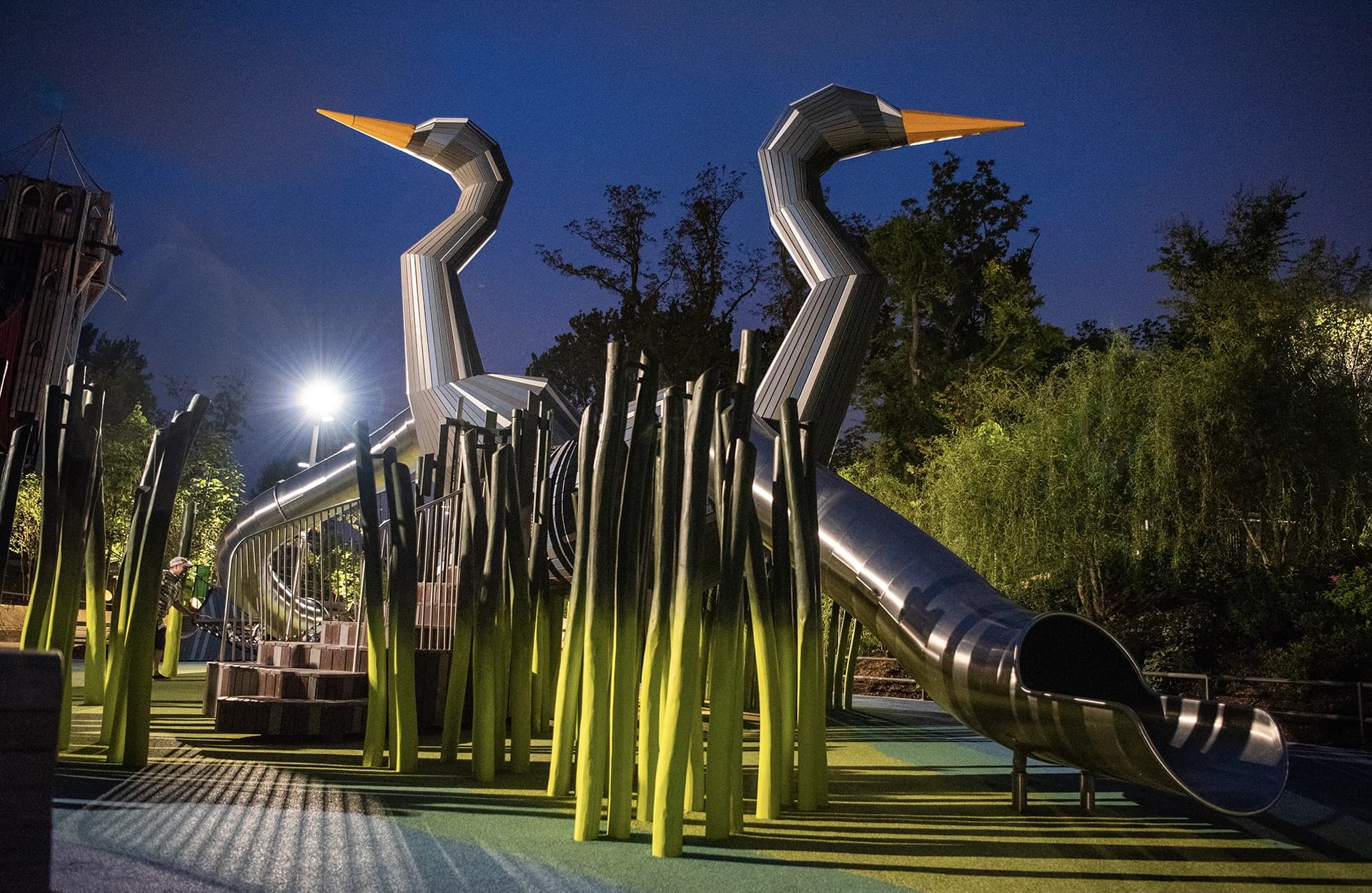
The sculptures represent a specific story, but the narrative is intentionally unfinished. A slide emerging from a 7-meter-tall heron is not the same kind of slide you find on a standardized playground. It is embedded in a world the child continues to invent for themselves. And although the Moominmamma standing in Frederiksberg Centret comes directly from Tove Jansson’s beloved stories, that poses no obstacle for children to whom she is simply a giant white troll.
Playgrounds for Children
In 1975 – 32 years after the junk playground opened in Emdrup – Carl Theodor Sørensen reflected on his life’s work and arrived at one conclusion: creating good play opportunities for children was the most important thing he had ever worked on. Yet he felt he had fallen short of his own ambitions.
»It succeeded to a far too limited extent. Everything I – and others – have created should be evaluated and improved. But not by having play experts design brightly colored things that children are supposed to play in and with. It may be fun to create such things for children, but then one forgets that it is the children who are meant to play. Honestly, what is built and constructed often seems made more for monkeys than for human children.«
Today, another 50 years have passed – and Danish playground design continues its determined pursuit of creating playgrounds on children’s terms, not adults’. Perhaps that is why the world looks to Denmark and recognizes a distinct philosophy of childhood – materialized in something as tangible as architecture for the imagination.
More from DAC Magazine
DAC Magazine
Design Classics at a Child's Scale - Childhood Finds Its Place in Modern Interiors
Jan Gehl: Good Cities Should Feel Like One Big Hug

Danish Architecture Wouldn’t Be the Same Without Them: 5 Danish Women Architects to Know
New tunes in old bricks: Here are 7 venues where concerts echo with an industrial past