Form Follows Function: Understanding Architectural Form, Proportion and Facade
What does “form follows function” mean in architecture? Learn how architectural form, proportion, geometry and facade shape both function and experience.
By Dansk Arkitektur Center
In architecture, form is not merely an exterior appearance — it carries both function and meaning. Through geometry, rhythm, and proportion, architecture shapes how we experience buildings and the places they belong to.
Form is one of the most important aspects of a building and of how we experience architecture. A building’s form is created by its walls and roof. It is the building’s most fundamental visual element — the part we encounter first as viewers.
When studying architectural form, you can consider:
- What is the basic form?
- What is the rhythm of the facade?
- Is the form based on geometric shapes?
- How does the facade relate to the street?
- What kind of roof does the building have?
- How many stories and bays are there?
- Is the building organized around a central axis?
- Are the stories identical or different?
- How does the overall form of the building appear?
Basic Form
In architecture, a building’s basic form is often based on a geometric shape such as a circle, square, rectangle, or triangle.
The basic form influences how we experience a building. Entering a long, narrow space feels very different from entering a circular one. An elongated space directs movement forward, while a circular space creates calm around its center.
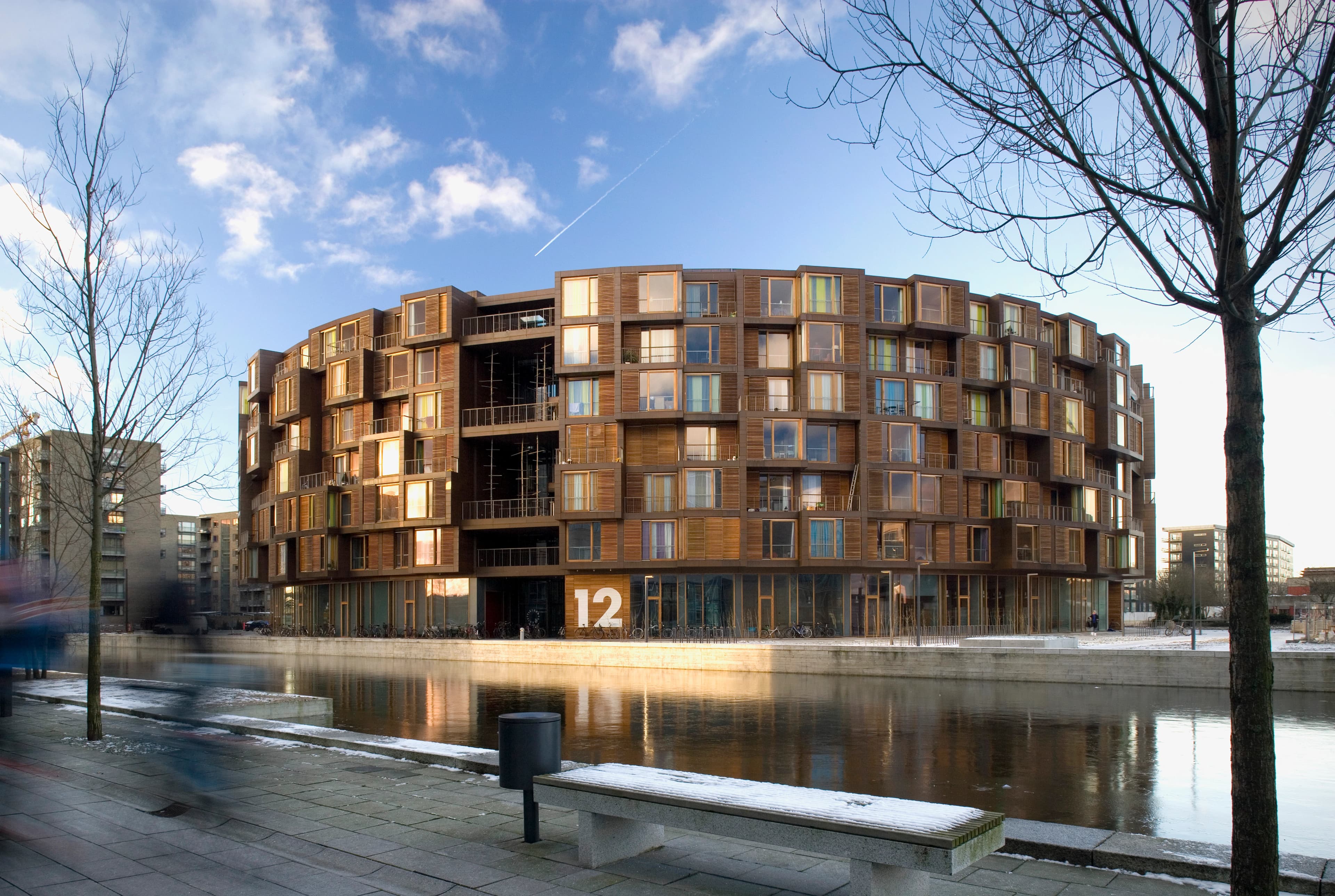
Basic form is often connected to function. Long spaces are suited for processions and are therefore often used in churches and palaces. Circular spaces create a special, elevated atmosphere because everything is gathered around the center. Square rooms support different types of social interaction, from large halls to smaller living spaces. The four corners create multiple directions within the room, allowing people to gather in different ways rather than being guided in a single direction.
Historically, geometric forms were considered meaningful. The circle symbolized the heavenly, while the square symbolized the earthly.
Proportion
Proportion in architecture refers to the relationship between different parts of a building, such as height and width or the size of windows and doors in relation to the facade.
When analyzing proportion, consider:
- Is there balance between height and width? They do not need to be equal, but a very tall, narrow building feels different from one with more equal proportions.
- Are the windows too large, too small, or appropriately sized?
- Is the door appropriately scaled in relation to the facade?
- Does the ornamentation enhance the building, or does it dominate it?
Facade
The facade can be described as the building’s face and is a central element in architectural analysis. It is the part of the building that faces the street and is often the most carefully designed.
When studying a facade, consider:
- The arrangement of doors, windows, and decorative elements (facade rhythm)
- Whether geometric shapes appear in the composition
- The color of the facade
- Whether the facade projects, recedes, or remains flat
- Details such as balconies or bay windows
- The shape of the corners
- The type of roof and its relationship to the facade
- How the different elements work together
Rhythm
The concept of rhythm comes from music.
In music, rhythm unfolds over time. In architecture, rhythm is experienced visually. When you follow a building’s lines with your eyes, you experience rhythm.
If elements repeat in a regular pattern, this creates a sense of rhythm. A regular rhythm makes a building appear more stable than an irregular one.
For example:
- Window–window–window–window creates a steady rhythm
- Window–door–window–door creates variation
- A waltz-like rhythm can appear in patterns such as window–bay window–door (1–2–3)
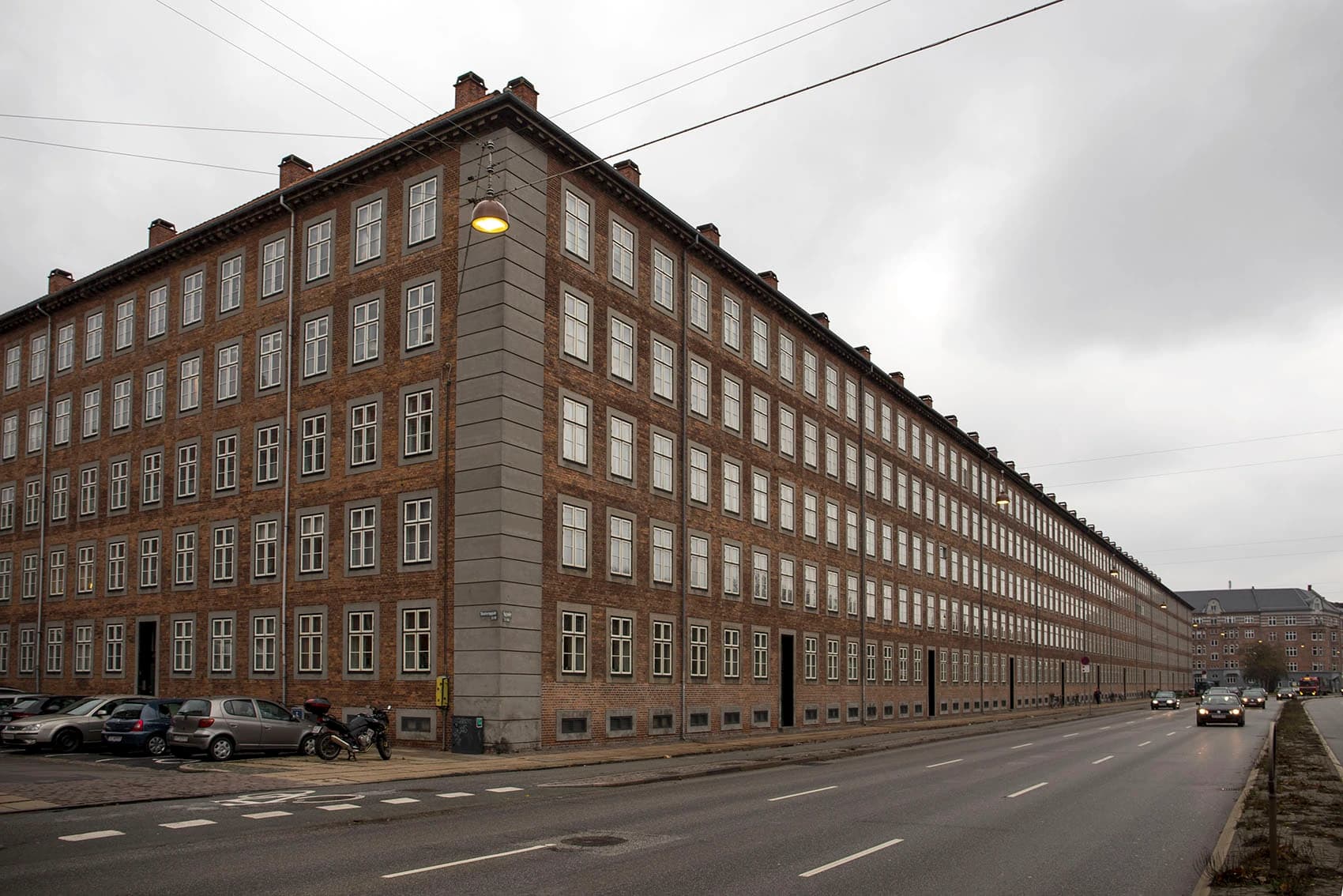
In the housing complex Hornbækhus in Copenhagen, the facade rhythm is regular, creating a sense of order and calm.
Geometry
Geometry in architecture often makes a building appear stable and harmonious.
A facade built on geometric shapes has a clear structure. These shapes can include triangles, squares, rectangles, circles, or pyramids.
Color and Ornamentation
- What color is the facade?
- How does the color interact with the form?
- A light color can make a large building appear lighter, while a dark color can make even a small building appear heavy.
- What is the ornamentation like — elaborate or simple?
Facade and Street
- Does the facade project into the street, remain flat, or pull back?
- Does it create depth or projections such as balconies or bay windows?
- Are the corners sharp or rounded?
Roof
- Is the roof a hip roof, a half-hip roof, or a gable roof?
- How does the roof relate to the facade?
- Does it dominate the building or play a smaller role?
Overall Composition
- How do the different parts of the facade work together?
- What is the overall impression of the building? Is it monumental, inviting, intimidating, cozy, or elegant?
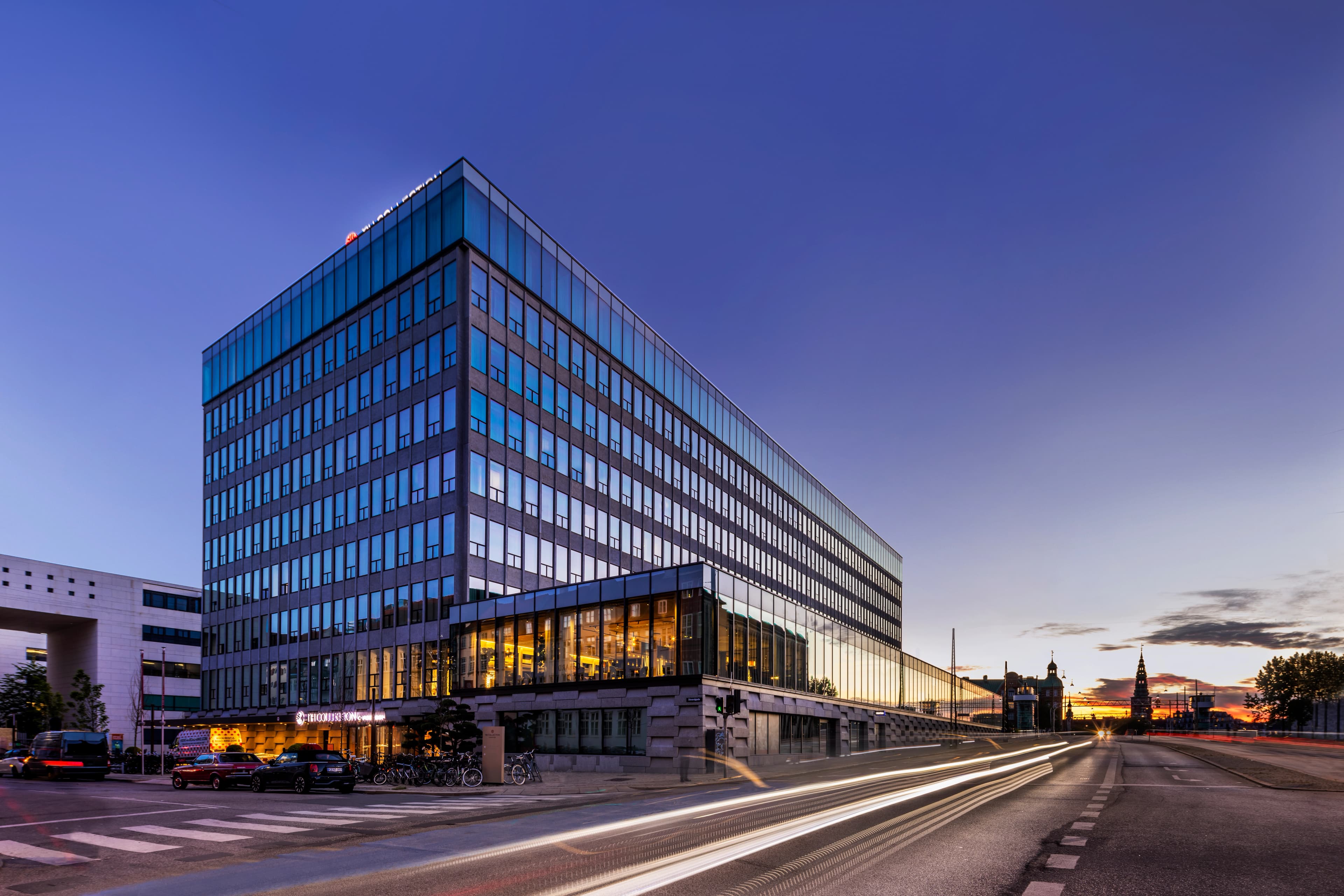
Stories and Bays
An architectural work consists of both horizontal and vertical divisions. These are known as stories and bays. Stories are the horizontal divisions, and bays are the vertical divisions.
When analyzing stories and bays, consider:
Number of Stories and Bays
In some buildings, the divisions between stories and bays are clearly marked, while in newer buildings they are often less defined. In most cases, the start of a new row of windows can be used to identify these divisions.
The number of stories and bays indicates the building’s size and influences its proportions, structure, and rhythm.
Odd number of Bays
If there is an odd number of bays — that is, an odd number of windows — the building is usually organized around a central axis.
For example, the entrance may be placed along this axis.
Elements placed on the central axis are emphasized.
Uniform or Varied Stories
In some buildings, the stories are identical from top to bottom. In others, they differ.
The ground floor may be constructed in a heavier material, making the building appear more solid and anchored to the ground.
This expectation can also be challenged by designing the ground floor in glass, creating a surprising effect, as we typically expect the base of a building to appear heavy.
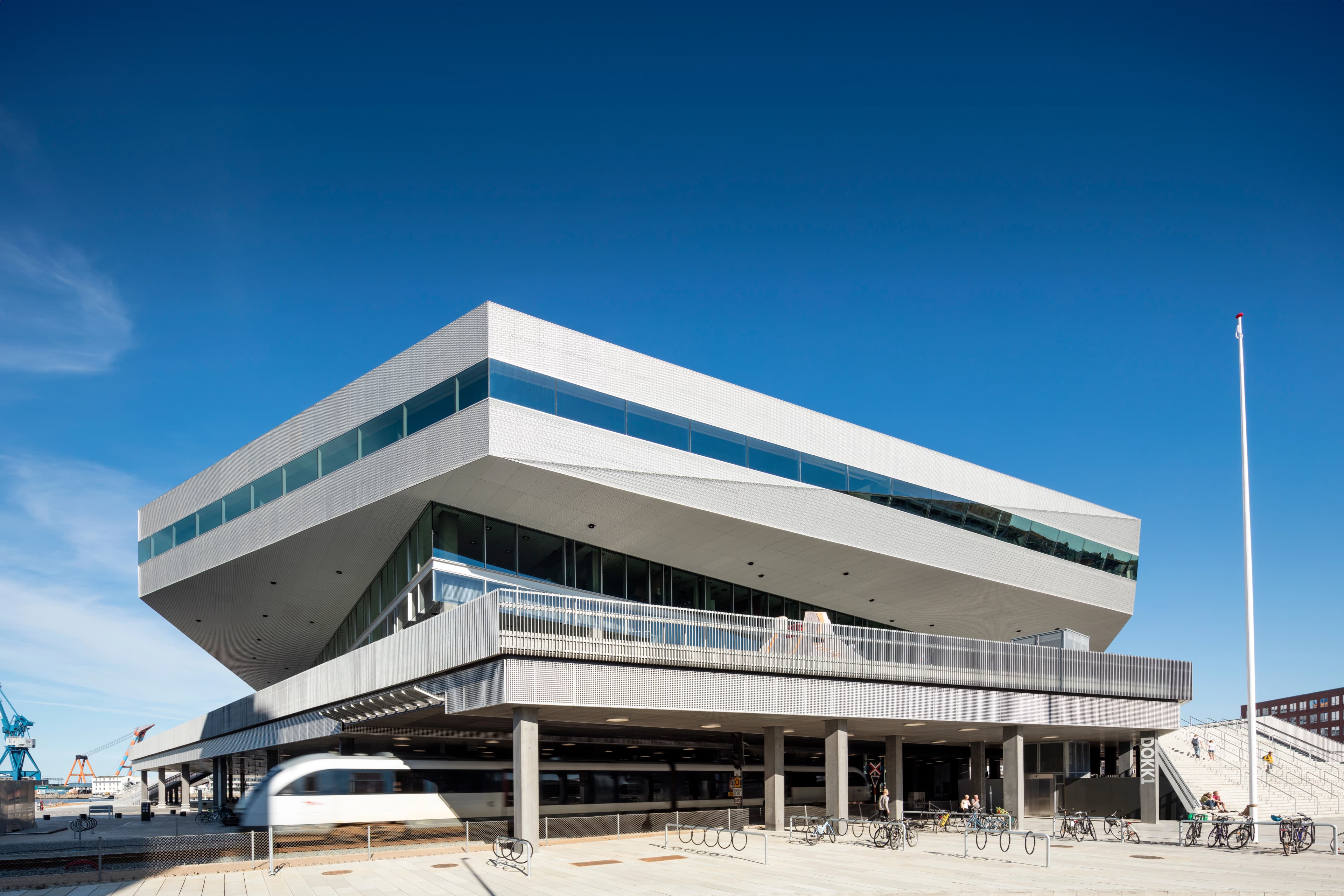
Architecture is not only about designing a building, but also about creating a place. It involves shaping and organizing space — whether within a building, a city, a garden, or a landscape.
In architecture, form must be relevant so that space can support its intended functions. At the same time, form can carry artistic expression. The aim is to assess the building’s composition: Is there coherence between its parts? Does the form appear harmonious, clear, and logical? Is there an interaction between exterior and interior space? Has the architect found a form and expression suited to the specific place?
The Three Basic Forms
Architecture often works with three fundamental shapes:
- Triangle
- Square
- Circle
These forms can be combined and manipulated to create a wide range of architectural expressions — from simple to monumental.
Form and Expression
The architect must find a form and expression that suit the building’s function, surroundings, and users. Should the expression be dynamic or calm? Simple or complex? Should the form be geometric or organic?
The choice also depends on the architect’s personal style. This becomes clear when comparing Tadao Ando’s building for the furniture company Vitra with Frank Gehry’s building for the same site and client. The two neighboring buildings represent very different approaches — the simple and the complex.
Tadao Ando’s building is characterized by a simple and restrained expression, with clear geometric forms and strong linear composition. The material palette is minimal, with a prominent use of concrete. The building is easy to read, based on clear rectangular volumes that are self-contained.
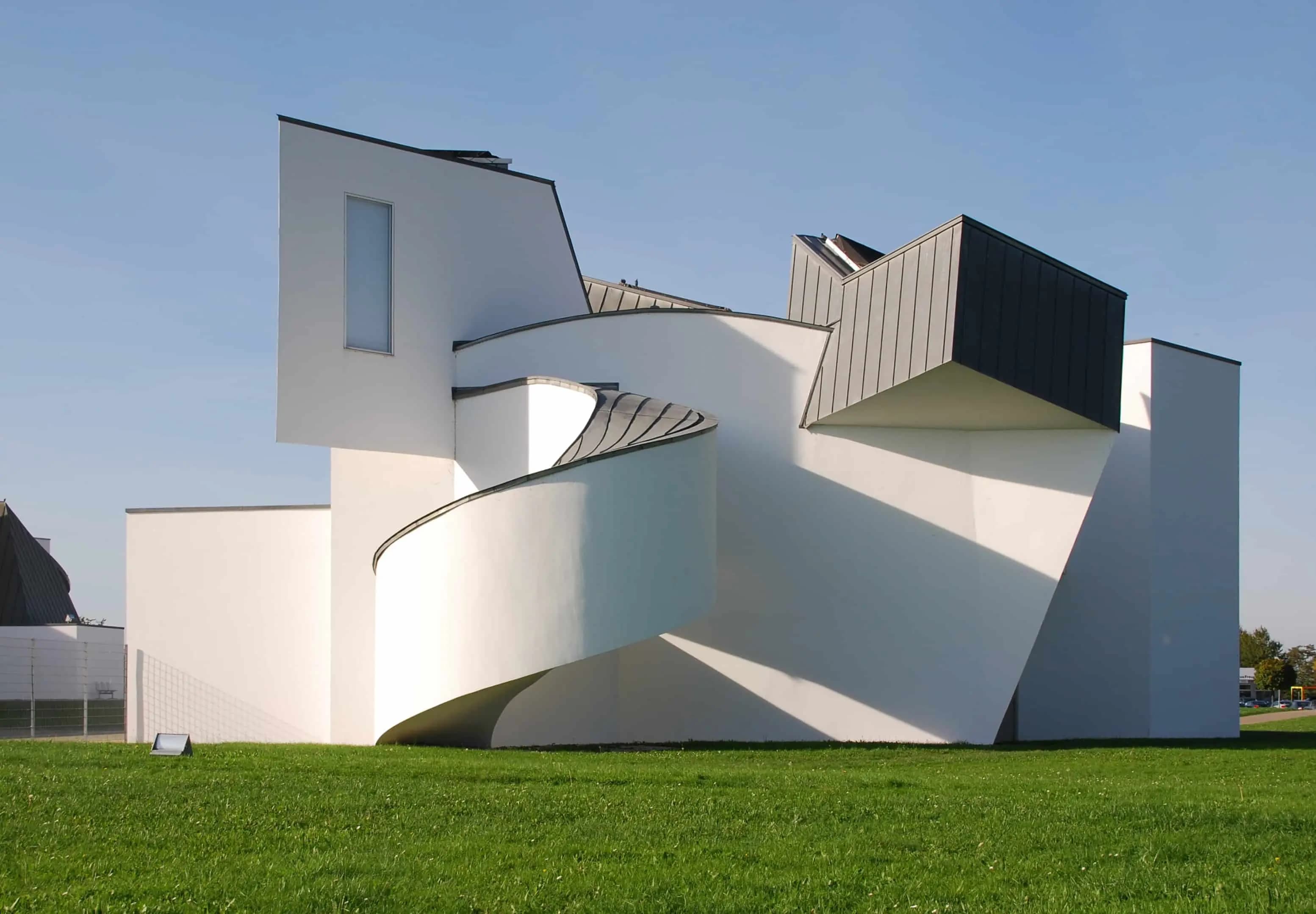
Frank Gehry’s nearby design museum, by contrast, appears as a dynamic and expressive composition of cubes, towers, and curving ramps woven together. The building is finished in white plaster, where light and shadow create vivid patterns across its complex form. The titanium roof adds another layer of reflected light.
Interior and Exterior Space
Architects often aim to create a strong interplay between a building’s exterior and interior spaces.
A direct connection can be achieved by repeating materials and elements from the exterior inside the building, creating a smooth transition between the two spatial experiences.
In Villa C by Belgian architect Juul Vanleysen, there is a close relationship between interior and exterior. Large glass surfaces open the house toward the garden, creating an almost invisible transition between inside and outside. In contrast, the opposite side of the house is dominated by a solid stone wall, which continues into the interior.
A cone-shaped form breaks the clean modernist lines and cubic volumes. The cone cuts into the transparent glass structure and creates a continuous transition between interior and exterior, as its cladding is shared by both spaces and the form can be experienced from both inside and outside.
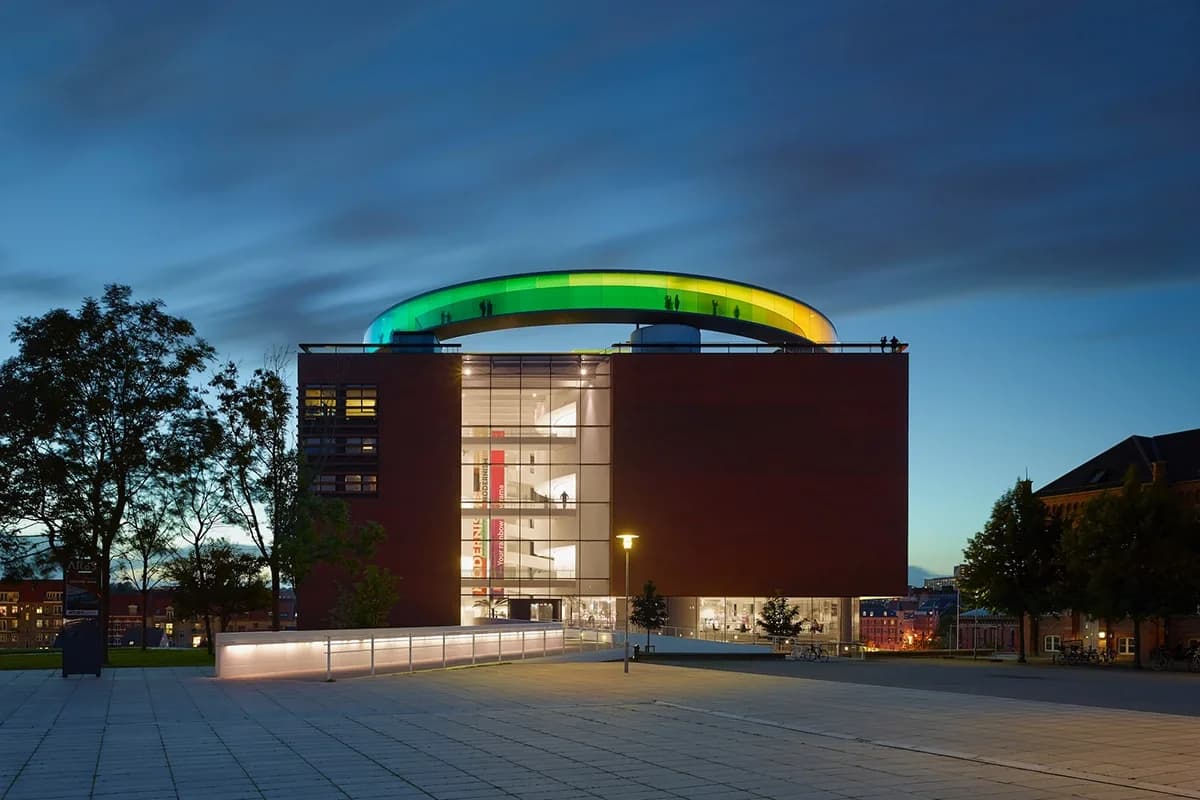
At the ARoS Art Museum in Aarhus, the architecture firm Schmidt Hammer Lassen instead creates a contrasting transition between exterior and interior. The exterior is defined by a heavy red brick cube, while the interior features light, open spaces and flowing forms. From the outside, visitors can glimpse the interior through a dramatic cut in the building, where the cube is split by a glass opening.