Formal Analysis in Architecture: How to Analyze Architectural Form
The formal analysis method examines architectural form, expression, and core elements. Learn how to analyze architecture through composition, space, facade, materials, light, color, and sound.
By Dansk Arkitektur Center
The formal analysis method focuses on architectural form and is a method for analyzing architecture through its core elements.
In a formal analysis, the aim is to study architecture in itself. Architecture is considered primarily through its form, composition, and basic elements, rather than through social, religious, or cultural context.
A classical formal analysis begins with a study of architecture’s core elements and asks questions such as:
- How does the architecture relate to its surroundings?
- What is its function?
- How are light, sound, and color used?
- What materials are used, and what construction techniques have been applied?
- What style and period does the architecture belong to?
Surroundings
When studying architecture in relation to its surroundings, you can examine:
- What are the site, terrain, light, and wind conditions like?
- What lines and colors characterize the surroundings?
- Does the building stand alone in the landscape, or does it interact with others?
- If the building is placed in an urban setting, how does it relate to the forms, colors, materials, and proportions of neighboring buildings?
- Do the architecture and its surroundings work together, or do they stand in contrast to one another?
- Do they highlight one another’s qualities, or do they overshadow each other?
In Frank Lloyd Wright’s house Fallingwater (1935–39), the building harmonizes perfectly with the landscape.
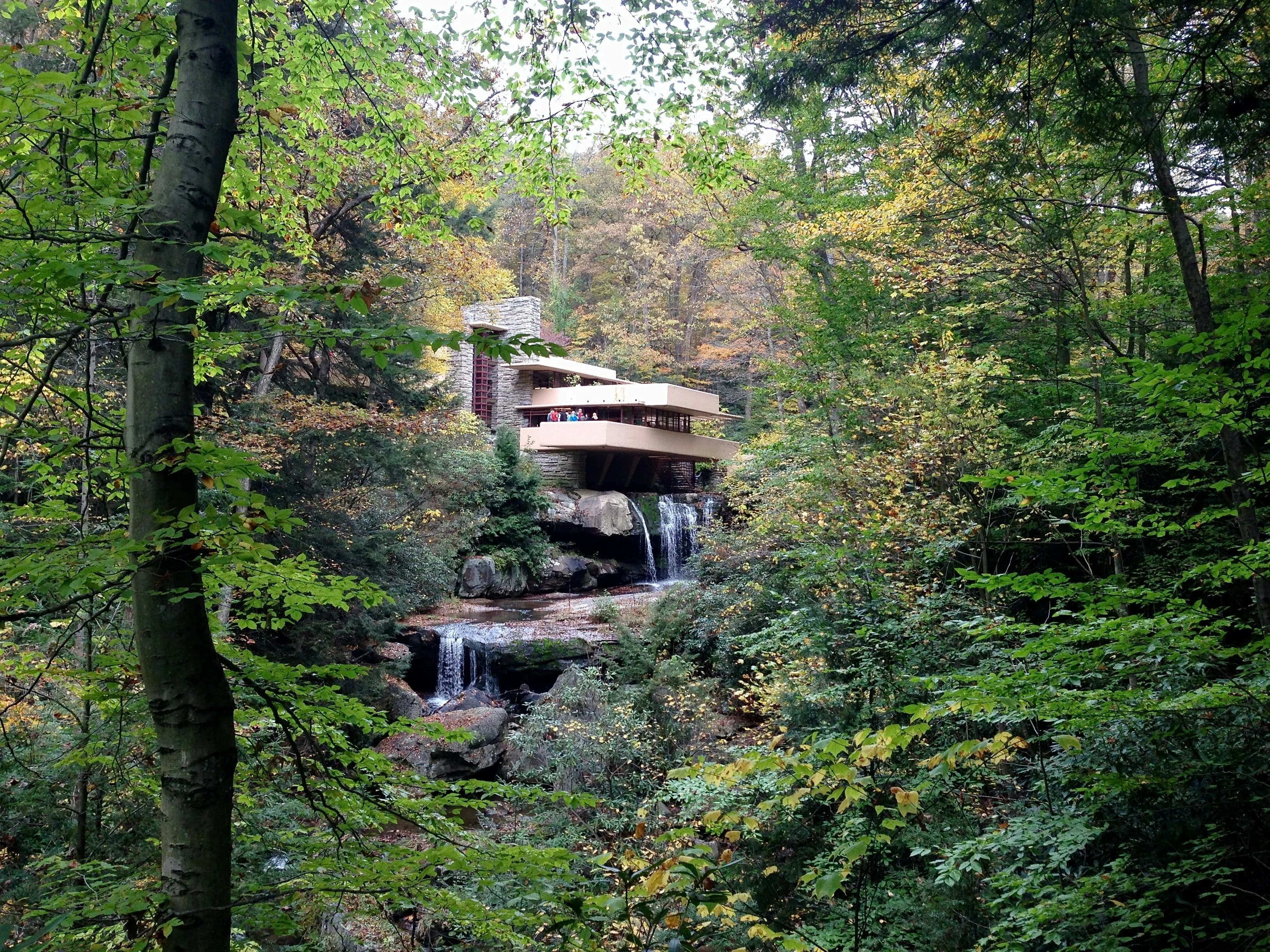
The building’s horizontal lines echo the structure of the rocks, and the house is built in materials that match the colors of nature.
The church Notre-Dame-du-Haut (1950–55) is located in a mountainous landscape in Ronchamp.
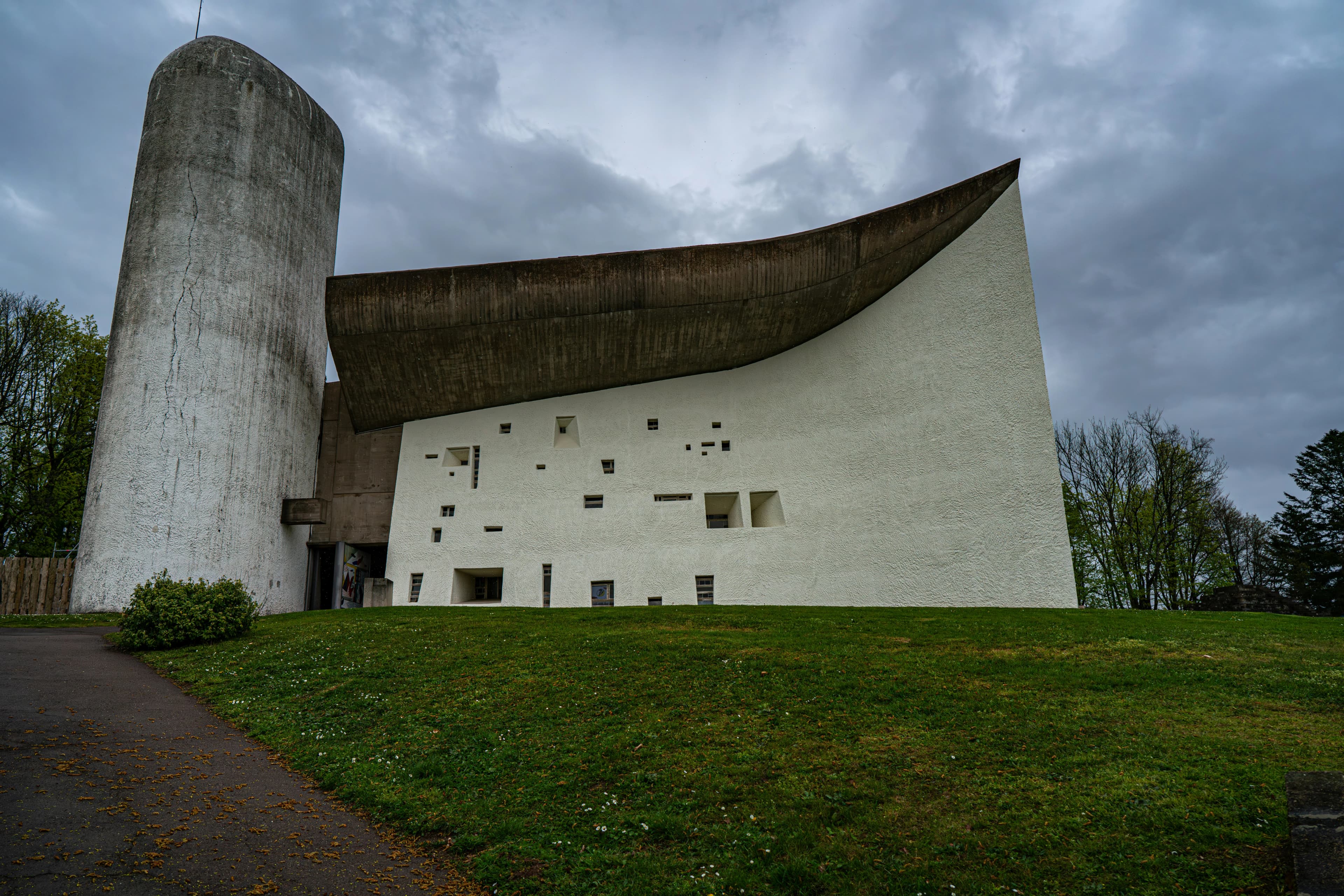
The French-Swiss architect Le Corbusier did not give the church a single flat plane. Instead, he allowed the building to follow the landscape’s undulating form and dynamic rhythm.
Function
Architecture is not merely art to be admired; it must also be used. Architects therefore have to take a building’s function into account.
In antiquity, the Roman architect Vitruvius (ca. 80–70 BC) wrote that the value of architecture should depend on a building’s durability, usefulness, and beauty. These three standards still apply today. A building’s form and function must work together.
- What type of building is it—for example, a house, city hall, or church?
- What is the building intended to be used for?
- What demands does its function place on the architecture?
- Does the building function well?
- Is the plan efficient, without unnecessary rooms or circulation space?
- How is access to the building organized?
A home must also fulfill different functions depending on where in the world it is located.
- Should the building protect against cold, wind, and rain?
- Or should it shield against sun and heat?
Form – Space or Mass?
In the formal analysis of architecture, the relationship between space and mass is central.
Architects have often shaped a building according to an overarching idea. In architecture, one speaks of mass and space: the mass is the physical body of the building, while space is the void enclosed by the walls.
- Did the architect begin with the building’s mass or its space?
- Is the interior space determined by the exterior form?
- Or has the form of the interior spaces determined the building’s mass?
The Copenhagen Police Headquarters (1918–25) by Hack Kampmann (1856–1920) is an example of an architecture that emphasizes space. The circular courtyard determines the building’s mass. The building’s body takes shape around the space.
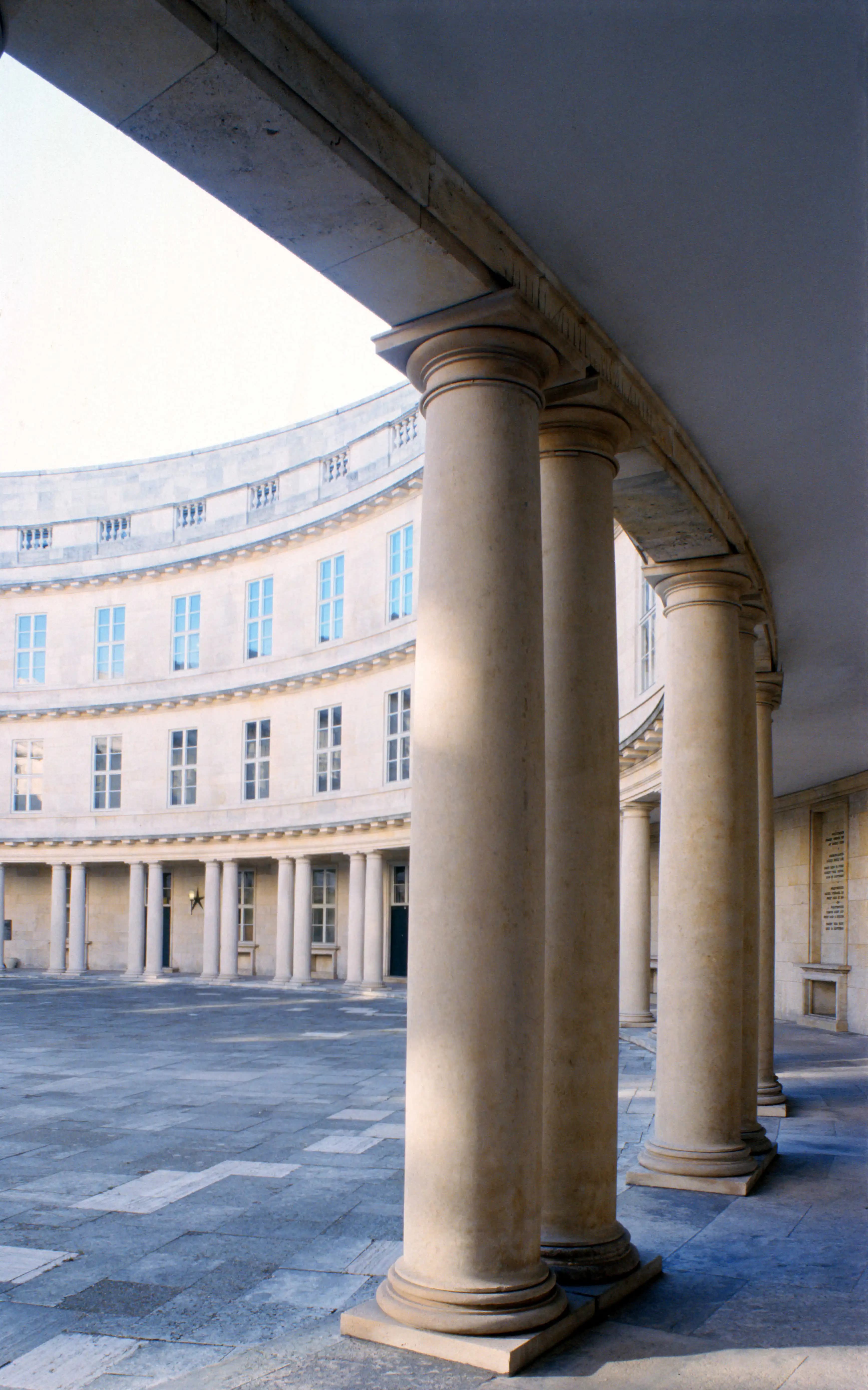
How is the boundary between outside and inside defined?
In many modern buildings, the clear distinction between space and mass has disappeared. A striking example is Philip Johnson’s Glass House from 1949. Here, all exterior walls are made of glass, and the massive separation between outside and inside has vanished. The house’s only enclosed room is the bathroom.
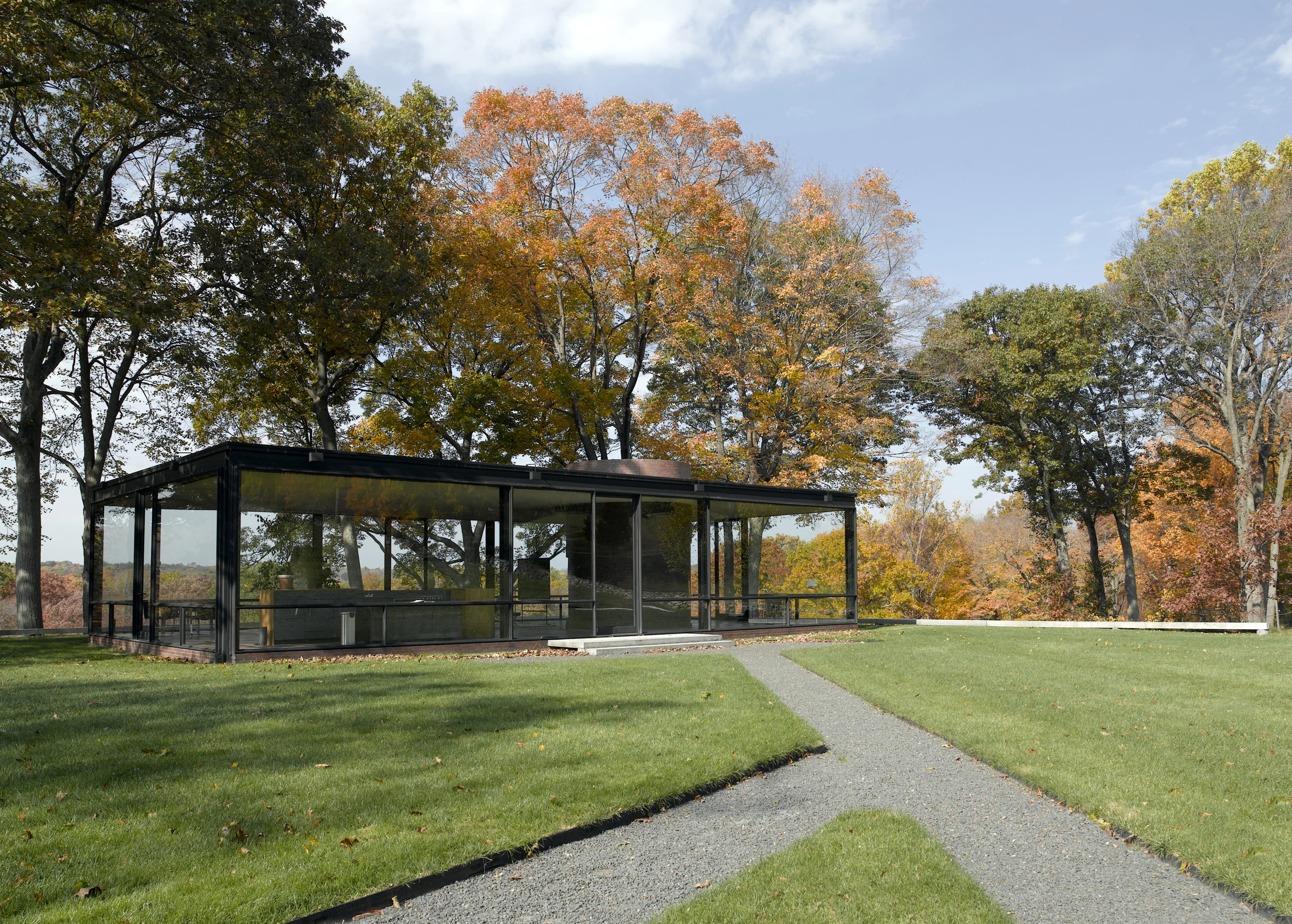
Plan – Dynamic or Calm?
Architectural history has been shaped by different stylistic periods. In some periods, architects sought dynamic form and emphasized movement and interaction in buildings. In other periods, they aimed for a calm and simple expression.
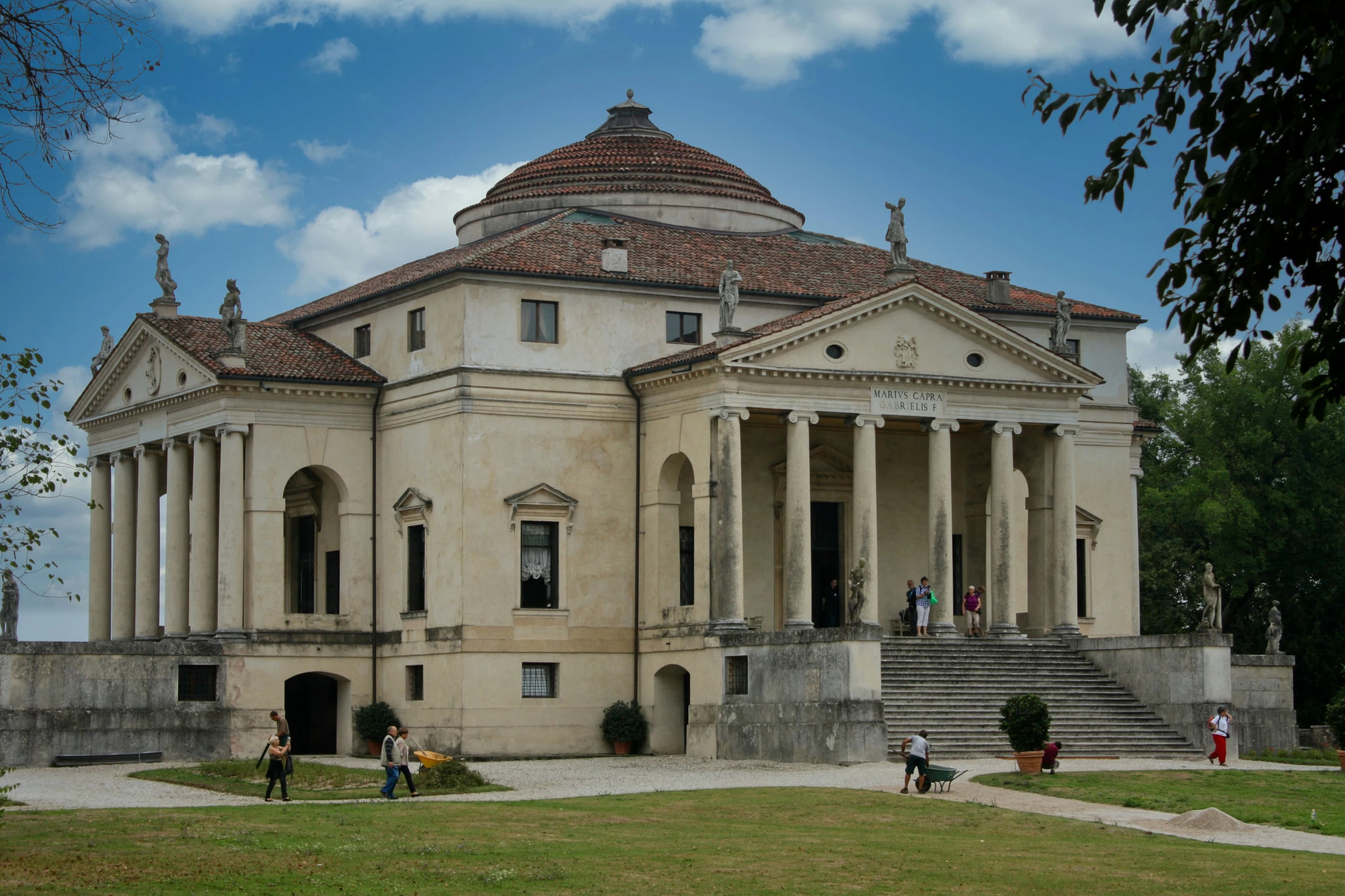
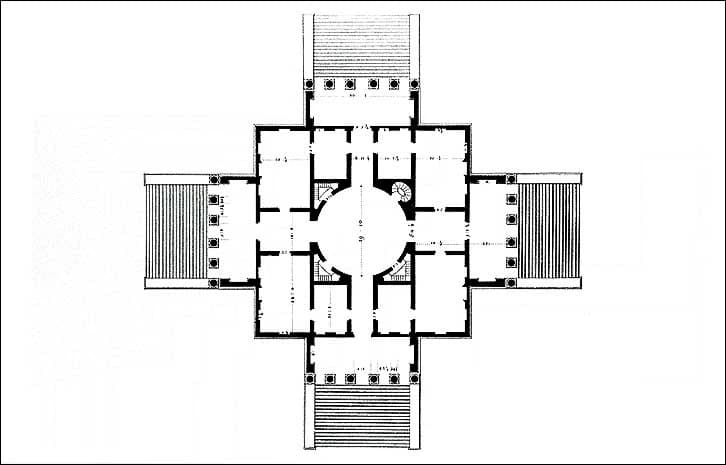
In the Renaissance of the sixteenth century, floor plans were often based on geometric forms such as the square, octagon, and circle. Architects sought the perfect form, one that rested in itself. Buildings were meant to appear harmonious, complete, and balanced. In the plan of the Renaissance building Villa Rotonda, one can see how the circle and square are used in a symmetrical and balanced composition. The entire building is shaped like a Greek cross.
In the Baroque period of the seventeenth century, architects wanted to create movement and dynamism in architecture. They used more dynamic spatial forms, such as the oval, which can be seen in the Roman church Sant’Andrea al Quirinale (1658–70) by the famous architect Gian Lorenzo Bernini (1598–1680).
- Is the plan drawn from geometric forms such as the circle, square, hexagon, or octagon, or does it follow a freer line?
- Is the plan based on a Greek or Latin cross?
- Is the plan dynamic or calm?
Spatial Sequence – Connected or Offset?
The size of a room has a major impact on how we experience a building. The placement of rooms in relation to one another is equally important.
- How are the rooms connected?
- Are they offset, or are they linked through a long central axis?
- Does the architecture use human scale or monumental scale?
- Are the rooms placed appropriately?
- How are the rooms arranged?
- How do circulation paths move through them?
In Baroque palace architecture, rooms were often linked by a long central axis.
In this way, the length of the rooms was emphasized. This arrangement creates a monumental effect. When one moves through rooms in this way, the eye is directed toward the farthest point. Today, architects more often work with offset spaces, where walls project and recede in relation to one another.
This leads movement around the room rather than simply forward in a straight line, allowing each space to be experienced individually.
Facade
The facade is the part of a building that faces the street. A building’s facade often reflects its function.
- What does the facade look like?
- Is it open and inviting?
- How does it attract attention?
- How many stories are there? These are the horizontal divisions.
- How many bays are there? A bay typically runs from one window to the next. These are the vertical divisions.
- Is the work organized around a central axis?
- How do the stories appear? Are they different or similar in expression? Is the effect light or dark, dynamic or calm, symmetrical or asymmetrical?
- Is the facade decorated?
- Can geometric forms such as the triangle, rectangle, square, and circle be found in the facade’s composition?
- Is a sense of heaviness or lightness emphasized?
- Is there an emphasis on straight lines and right angles, or on an interplay between concave forms, which curve inward, and convex forms, which curve outward?
- How does the facade relate to the street space? Does it create recesses, or does it project outward?
- What are the corners like—sharp or rounded?
- How does the roof work in relation to the facade?
- How do the different parts of the facade fit together?
In the facade of the church Il Gesù in Rome, the architect worked to create a dynamic interplay between the different decorative elements.
The triangular pediments, for example, point upward toward the sky, while the semicircular pediments pull downward together with the facade’s volutes, the two scroll-like elements on either side. This creates dynamism in the facade’s lines.
The facade of the Baroque church Santa Maria della Pace works with convex and concave forms, which likewise create a dynamic expression. The almost sculptural facade has a rich variation of light and shadow effects.
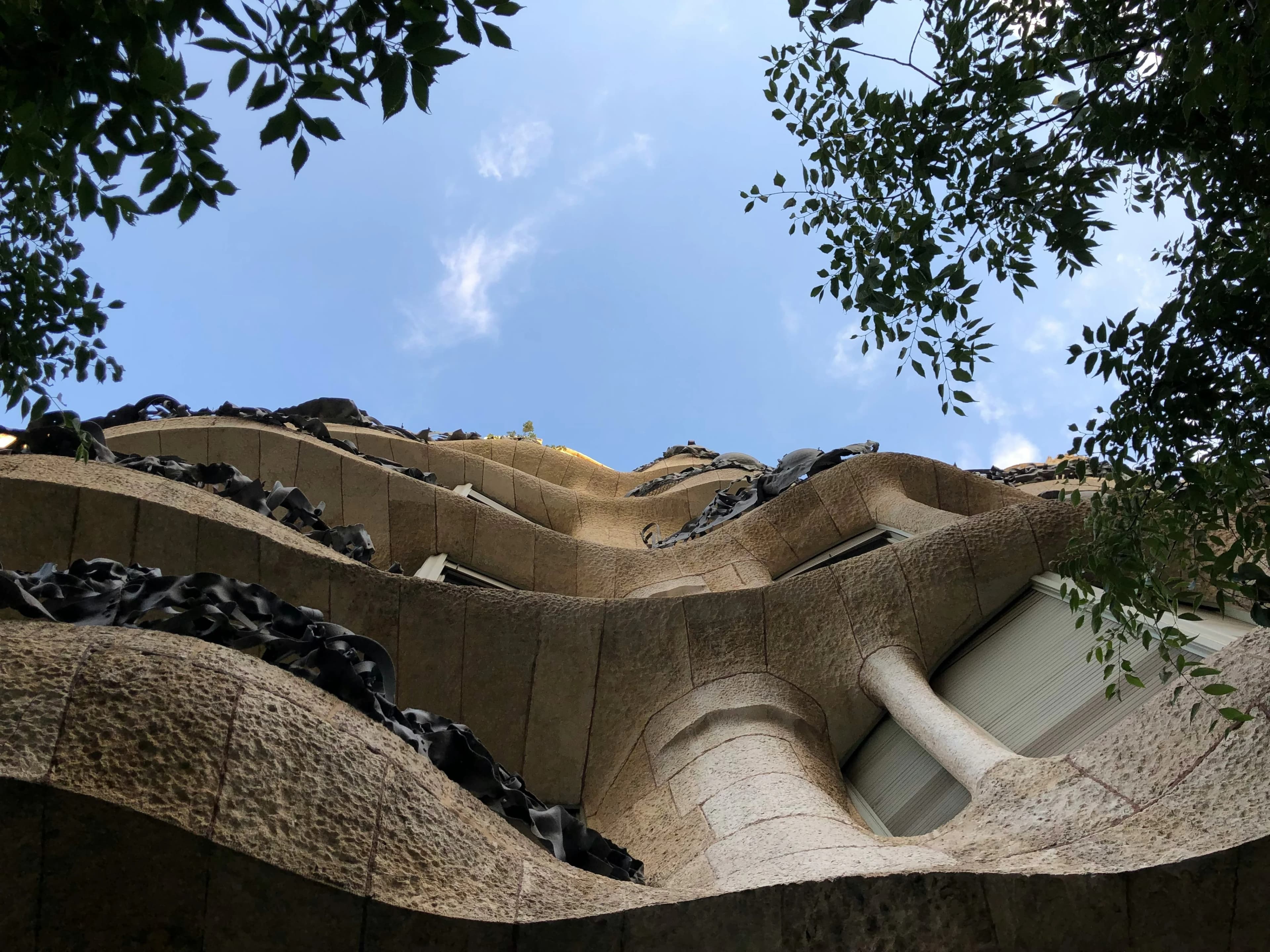
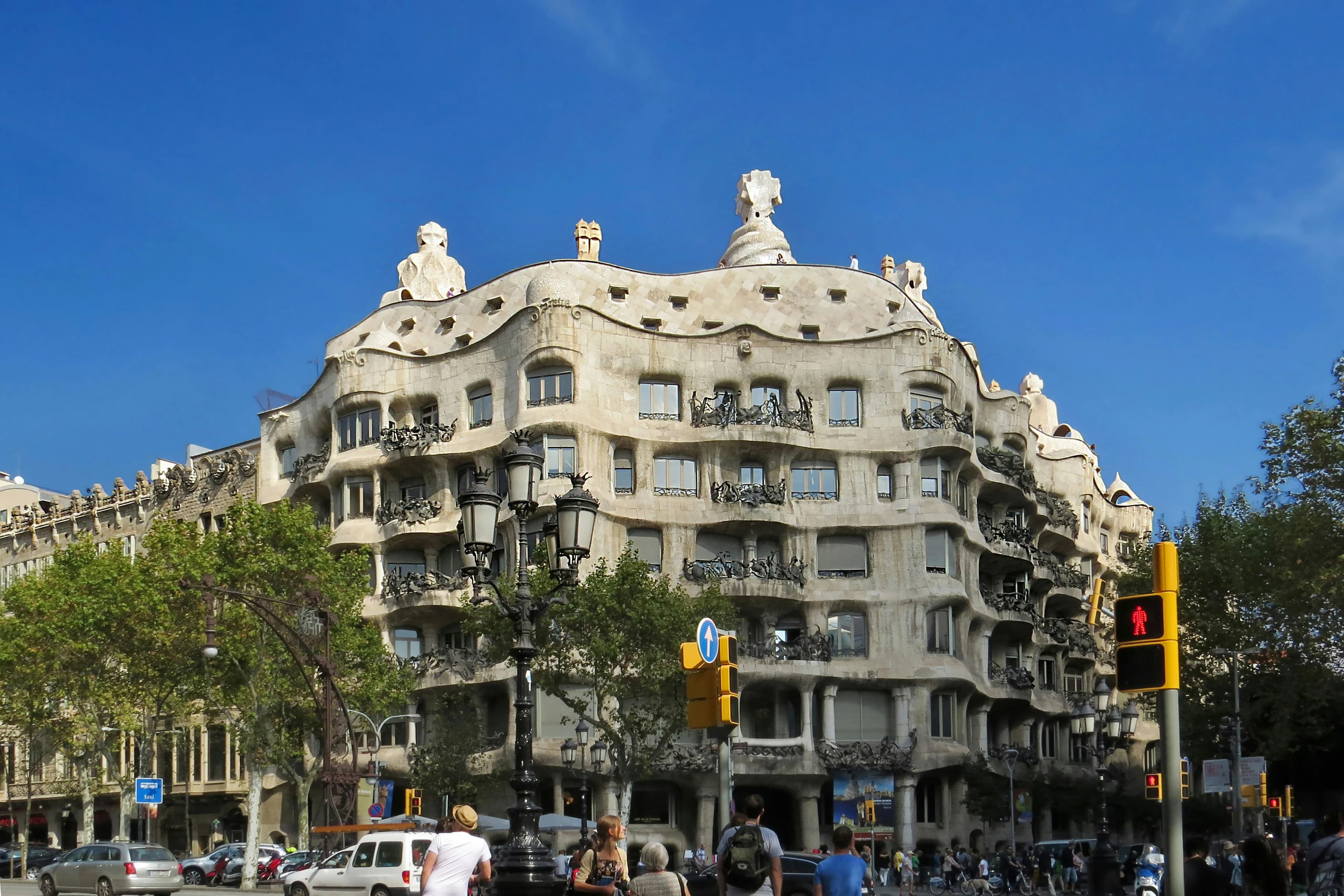
The right angle and straight line are almost absent in the facade of Casa Milà by the Spanish architect Antoni Gaudí (1852–1926).
Rhythm
What rhythm does the facade have?
The word rhythm comes from music, which unfolds over time. Architecture does not have a time dimension in the same sense. Yet one can have a rhythmic experience when taking in architecture. When you follow a building’s lines with your eyes, you use time. If the building’s lines curve and repeat in a fixed pattern, you may gain a sense of rhythmic structure.
On a facade, one often sees a regular repetition of the same elements—for example, window–window–window–window. Reading a facade from left to right, this may be experienced as a 1–1–1–1 beat. If the windows in another facade alternate with doors, the beat becomes 1–2–1–2. A full waltz rhythm can be experienced on facades that alternate between window, bay window, and door: 1–2–3–1–2–3–1–2–3.
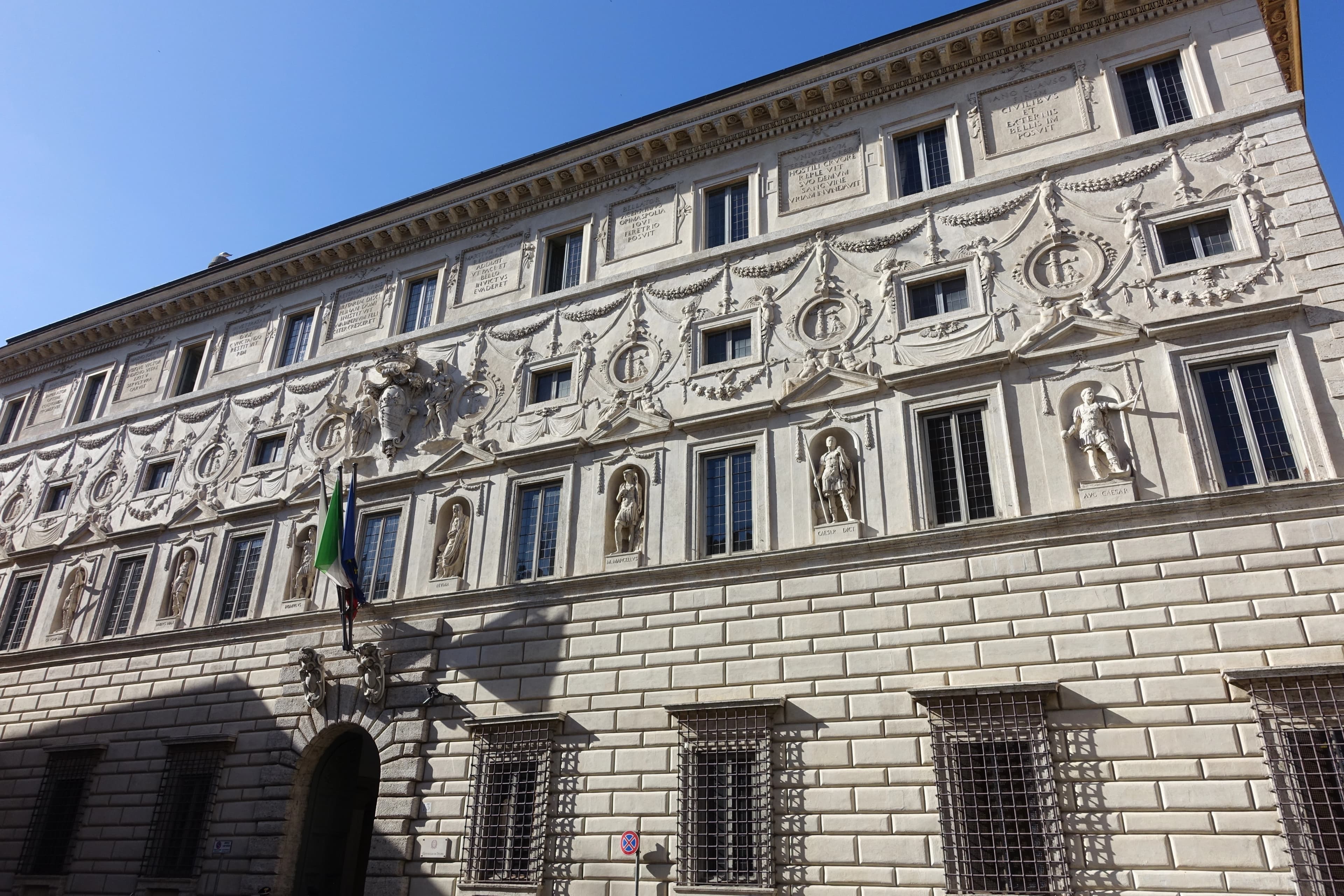
On Palazzo Spada, the facade works with three different rhythmic sequences: one created by the windows, one by the triangular pediments, and one by the decorative festoons. In this way, the facade appears dynamic.
Decoration
Is the building decorated or ornamented? What kinds of decoration are used?
Do the decorations tell a story, or are they there purely for the sake of beauty?
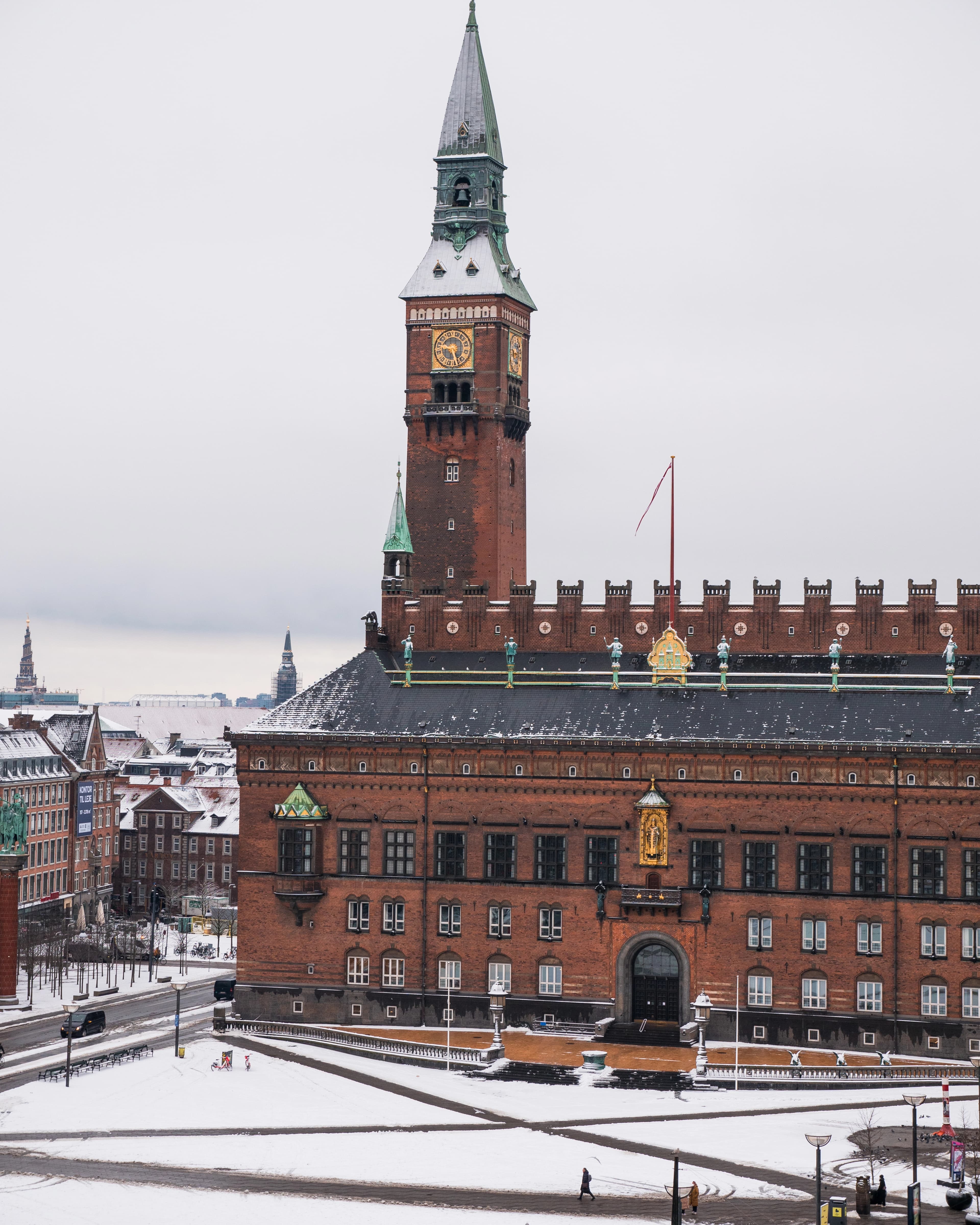
Copenhagen City Hall is full of stories and fairy-tale-like figures.
Materials
In the formal analysis method, materials are important because they must suit the building’s idea, construction, and expression.
Materials speak directly to the senses and play a major role in giving a building its character. Their durability, usability, and beauty are of great importance. The surface of the materials should reinforce the building’s character.
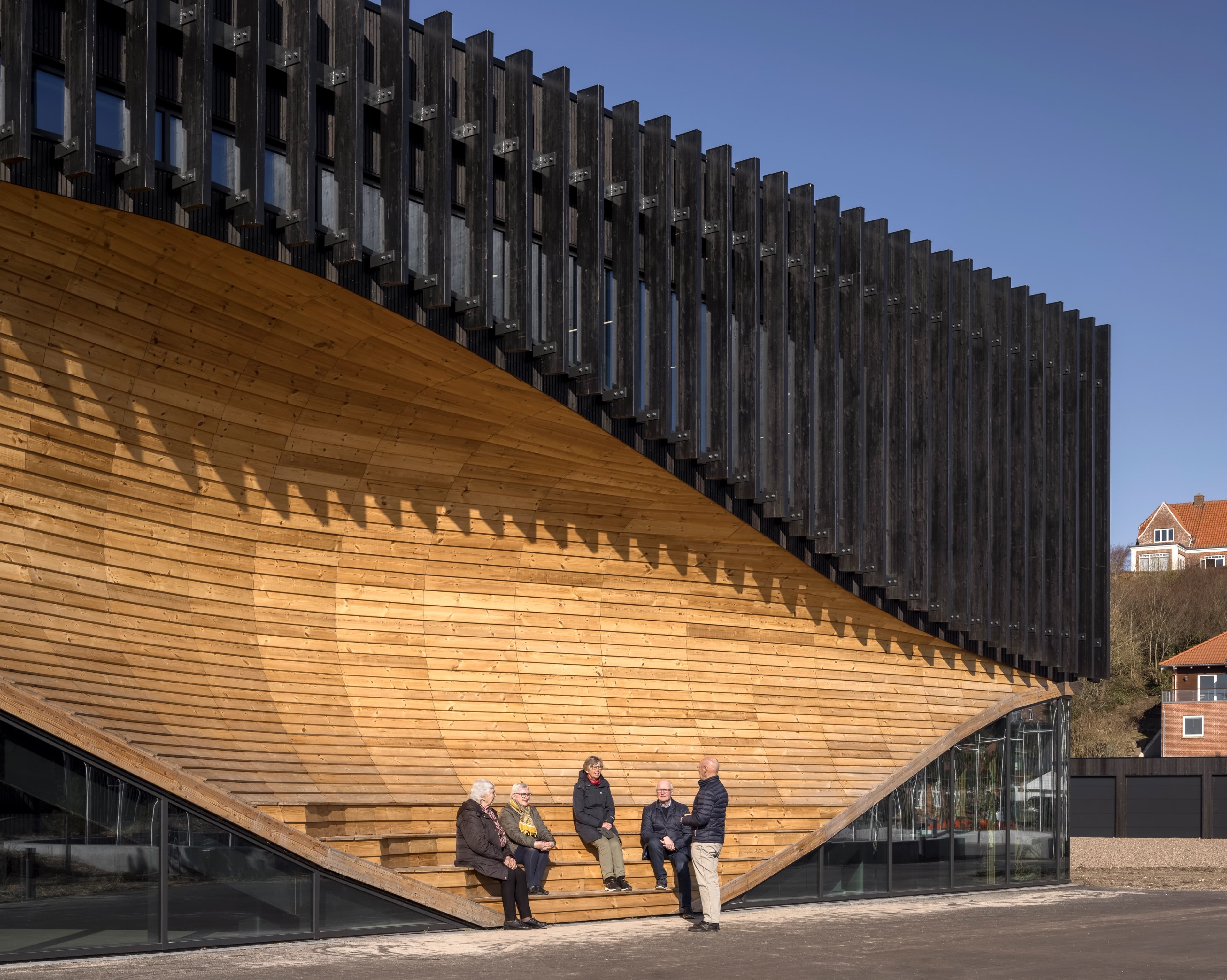
The simple expression of Klimatorium makes room for a striking design element that is seen immediately: a large three-dimensional wooden arch rising across the building’s facade.
- Do the materials fit the surroundings?
- Have local or readily available materials been used?
- Is there coherence between the materials and the building’s form and expression?
- Does the building appear heavy or light?
- What are the surfaces like—rough, smooth, glossy, matte, coarse, or refined?
- What kind of expression do the materials have—soft, natural, fragile, solid, hard, or cold?
- What significance does the choice of materials have for the way light falls on the building?
- How does the building transition between different materials?
- Are the materials’ textures and patterns emphasized, or are they hidden, for example, beneath a plastered facade?
- How do the materials age? Are they affected by weather and wind?
Construction and Technique
The choice of construction method has consequences for the house’s surfaces, its acoustics, and its indoor climate.
- What technique is used? Is the building made of brick masonry, assembled from precast concrete elements, or framed in wood?
- Is the structure made visible or hidden?
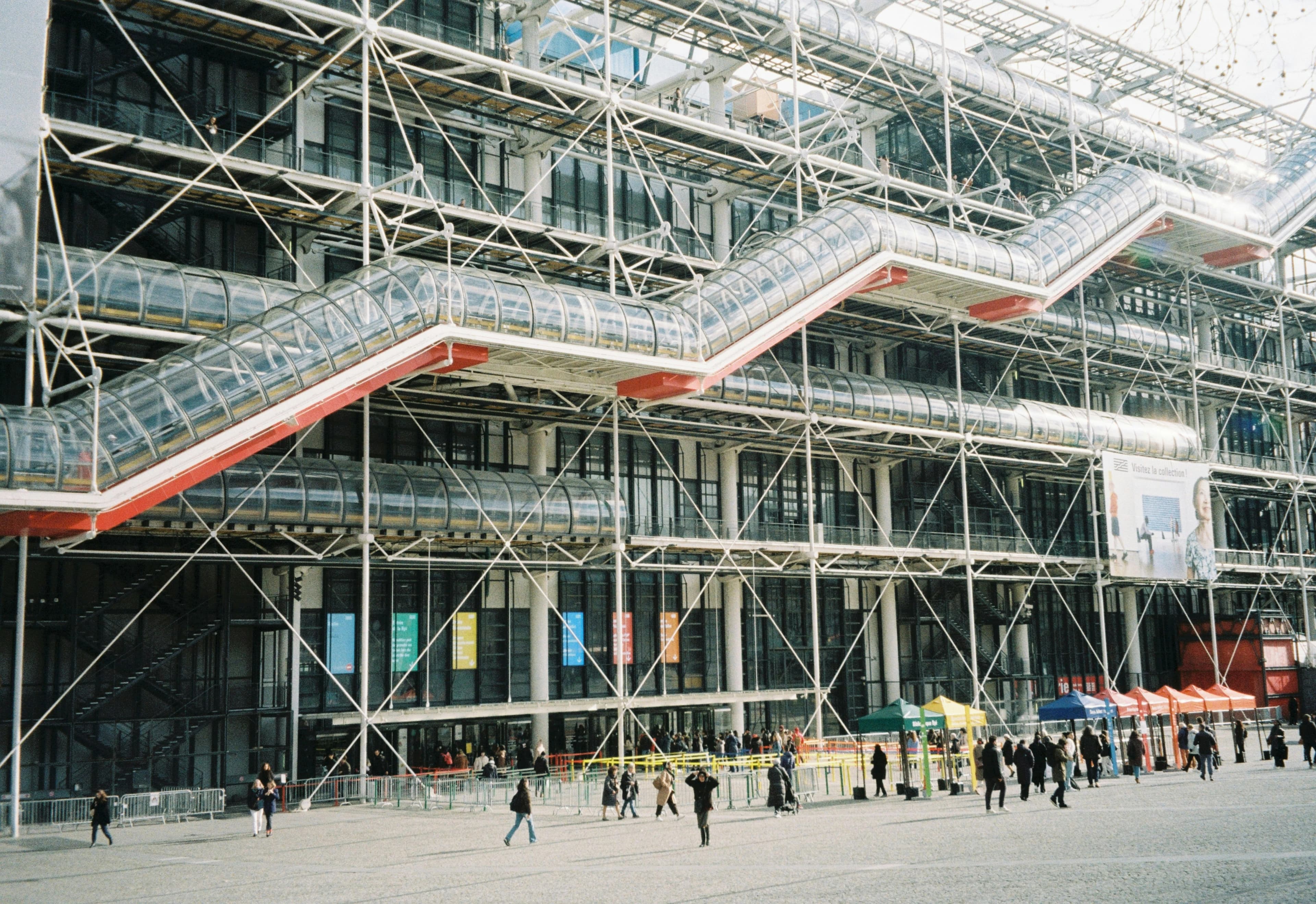
The Pompidou Centre in Paris exposes its structure and technical systems. The building’s load-bearing elements and access systems are placed on the exterior.
Light
Light is an important architectural tool, both aesthetically and functionally.
Light is crucial to our perception of space. It helps explain and shape a room. It gives us a sense of the rooms’ form and materiality. By changing the light in a room, one can create very different experiences.
- Where are the light sources?
- Does the light suit the functions the space is intended for?
- Is daylight being used effectively?
- How is the building oriented in relation to the sun? Which rooms receive morning sun, and which receive evening sun?
- Has artificial light been added?
Daylight changes constantly. While the other elements of architecture are fixed, light changes from morning to evening and across the seasons. It changes in both intensity and color.
The Taj Mahal in India is an example of how light changes architecture. Daylight changes the color of the marble, making the rhythm of the day visible and turning it into a symbol of the rhythm of life.

The cool morning light gives the marble a faint bluish cast. Later in the day, the light grows warmer, and the marble’s tone slowly shifts to a reddish gold that is intensified at sunset.
Color
Colors on buildings can reinforce architectural character and expression, highlight form, and create atmosphere in a space.
- What effect do the colors have on the room or the building? Do they make the building appear light or heavy, cool or warm, large or small?
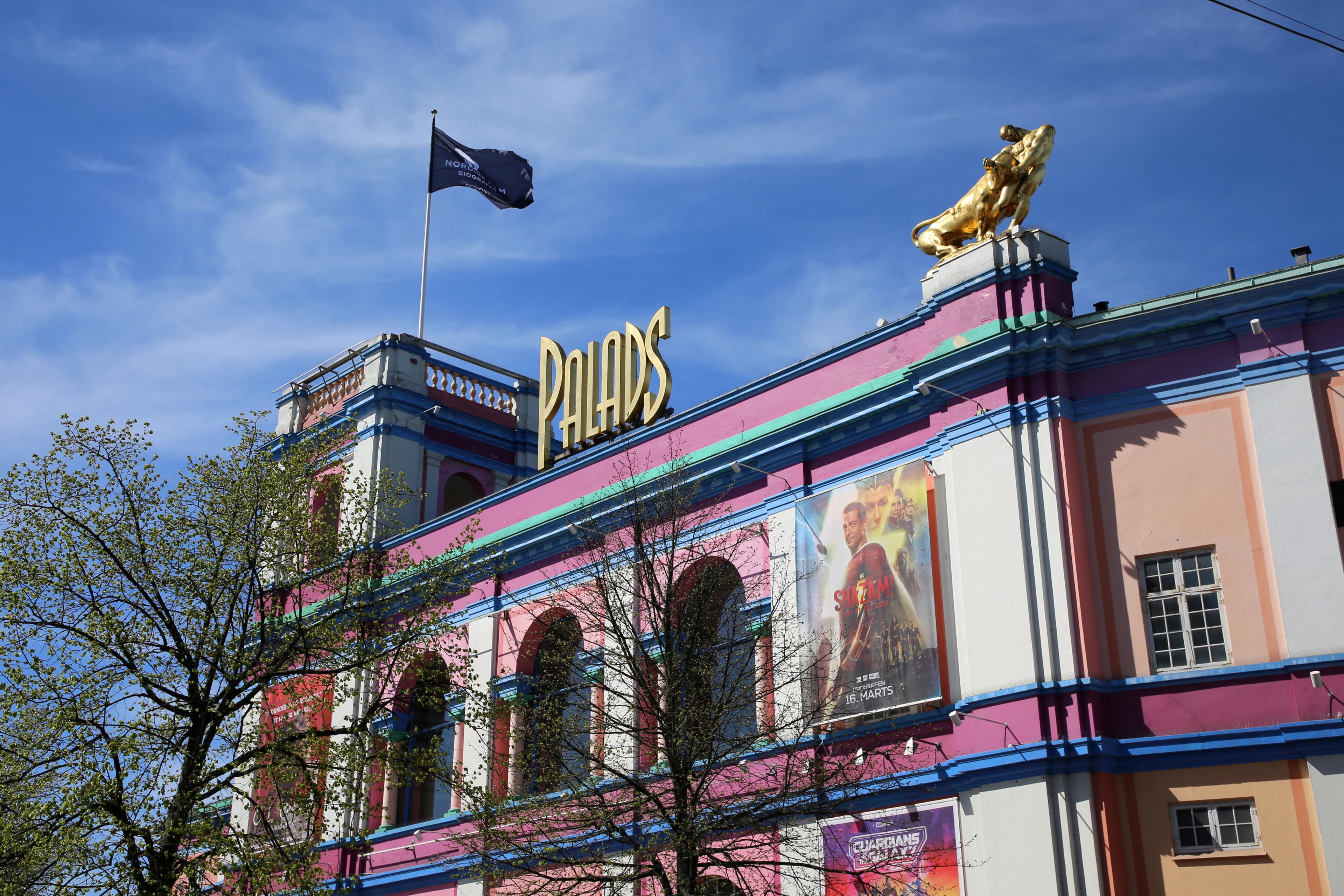
Color can be used to emphasize articulation and form in architecture, as can be seen in the Palads Theater in Copenhagen. The building dates from 1918 and was originally white, but it was redecorated by Poul Gernes (1925–96) in 1988. The classical marble temples of Greece were once highly colorful as well.
Style
Style is also an important element in architectural analysis.
- What is the building’s style?
- Does the architect have a distinctive style?
- How does the building relate to a national style?
- How does it relate to the international style?
Sound
Acoustics also have a major impact on how we experience space. Reflected sound gives us an impression of our surroundings. It can tell us about the room’s form and size and about the materials used. A room with soft surfaces dampens sound, while a room with hard surfaces reflects it. It is important that acoustic conditions match the room’s function. Acoustics are especially significant in theaters, concert halls, and churches.
- Is the sound hard or soft?
- Is there reverberation, or is the sound absorbed?
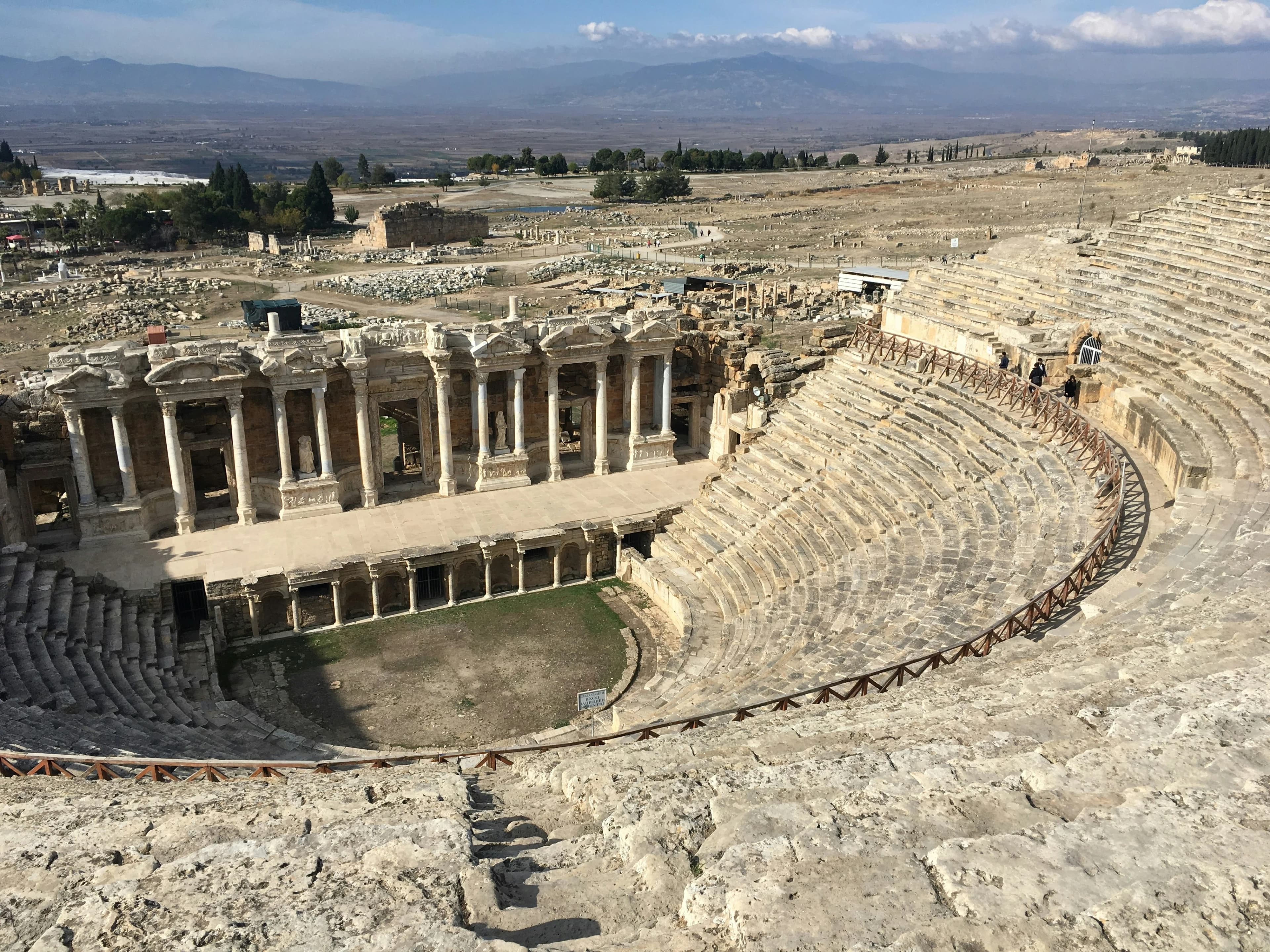
In the Roman Empire, countless amphitheaters were built. At that time there were no loudspeakers, so seating areas were arranged around the stage to ensure that sound could reach the audience as effectively as possible.