Japan and Scandinavia found each other long before we learned to call it Japandi
Japandi is one of today’s most influential terms in interior design. But the connection between Japanese and Scandinavian design began long before Japandi became a trend.
By Anna Skovby Hansen
Rice paper lamps hang above Danish dining tables, the grain of oak is quietly replacing glossy white kitchen fronts, and shades of beige are taking the place of stark white walls. Japandi has taken root in Danish homes, leaving its mark on contemporary Scandinavian design and architecture.
»Japandi is a fusion of Scandinavian functionalism and Japanese minimalism. It has become quite popular in recent years, although the term first emerged in the mid-2010s. And now it has really taken off,« says Jens Sejrup, Associate Professor of Japanese Studies at the University of Copenhagen.
Jens Sejrup sees Japandi as a move away from clutter and decoration. The focus is on quality, materials, nature, and neutral colors. Craftsmanship takes center stage, reflecting a desire for simplicity.
One designer who has worked at the intersection of Danish and Japanese design traditions is Frederik Werner, partner and designer at Norm Architects. He believes Japandi is much more than a passing trend.
»I don’t see it as a trend, but as a response to a genuine need. We live in a time of noise, overstimulation, and acceleration. In that context, the calm, presence, and materiality found in both traditions appeal to a broad audience,« says Frederik Werner.
Long Before Japandi There Was Japonisme
The term Japandi itself is relatively new, but the connection between Scandinavian and Japanese design traditions goes back much further.
In the second half of the 19th century, after a long period of very limited contact with the outside world, Japan increasingly opened up to the West and began participating in international world’s fairs. Japanese woodblock prints, ceramics, furniture, and decorative arts were met with great enthusiasm.
»The West fell in love with Japanese visual composition, refined craft traditions, and an entirely different approach to materials, colors, and forms. This period in the late 19th century, when Japanese influences made a strong impact on European art and design, later became known as Japonisme,« explains Jens Sejrup.
Japonisme reached Denmark in part through Arnold Krog, artistic director of the Royal Porcelain Factory – now Royal Copenhagen. During a trip to Paris in 1886, he saw an art dealer’s collection of Japanese art. When he returned home, he introduced an entirely new visual language to the factory’s decorative designs.
Two years later, Pietro Krohn designed the Heron dinnerware collection for Bing & Grøndahl – a collection so elaborate that Japanese inspiration clearly did not mean minimalism at the time.
Japandi in Brief
Japandi is a design and interior style that combines Japanese and Scandinavian design traditions, particularly Japanese minimalism and Scandinavian functionalism.
The style emphasizes calm spaces, a few carefully chosen pieces of high-quality furniture and objects, and natural materials. The color palette is typically warm and muted.
The American Connection
Japanese influences left a lasting mark on European and Scandinavian design – not least during the golden age of Danish design in the mid-20th century.
»There is a long cultural history of Danish designers, architects, and craftspeople drawing inspiration from Japan. In fact, Japan has had an enormous influence on both European and American design,« says Jens Sejrup.
And by the mid-20th century, Japanese influences often reached Denmark by way of the United States. American architects such as Frank Lloyd Wright had long drawn inspiration from traditional Japanese architecture, and their work became an important source of inspiration for a young generation of Danish architects.
Jens Sejrup also points out that some of the best-known figures in Danish design history – including Kaare Klint, Poul Kjærholm, Axel Salto, and Finn Juhl – were inspired by Japanese craftsmanship and approaches to materials in their work.
»You could argue that the fascination with Japan helped shape Nordic modernism. Japandi is of course something different because it is a contemporary interior design style. But it builds on ideas and processes that go back much further than the term itself,« says Jens Sejrup.
And the simplicity that Danes fell in love with was, to some extent, an American interpretation of Japan.
Japanese Inspiration in Danish Design and Architecture
Home: Halldor Gunnløgsson
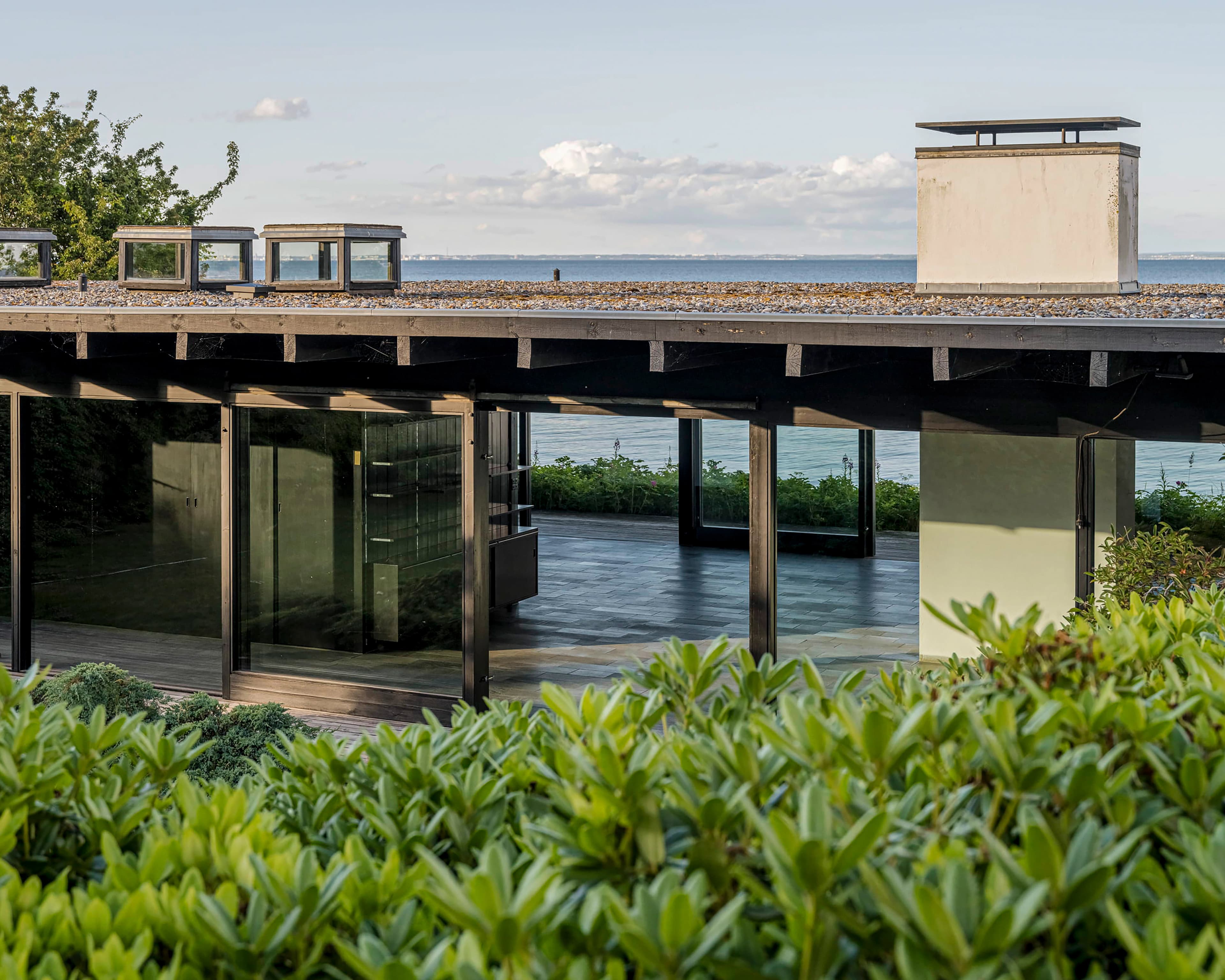
In the mid-20th century, architect Halldor Gunnløgsson left his mark on Danish single-family homes, drawing inspiration from American and traditional Japanese architecture.
The clearest example is his own 1958 home in Rungsted Kyst, where large expanses of glass open the rooms toward the Øresund and, inspired by Japanese architecture, almost bring nature right into the house.
Furniture: Finn Juhl
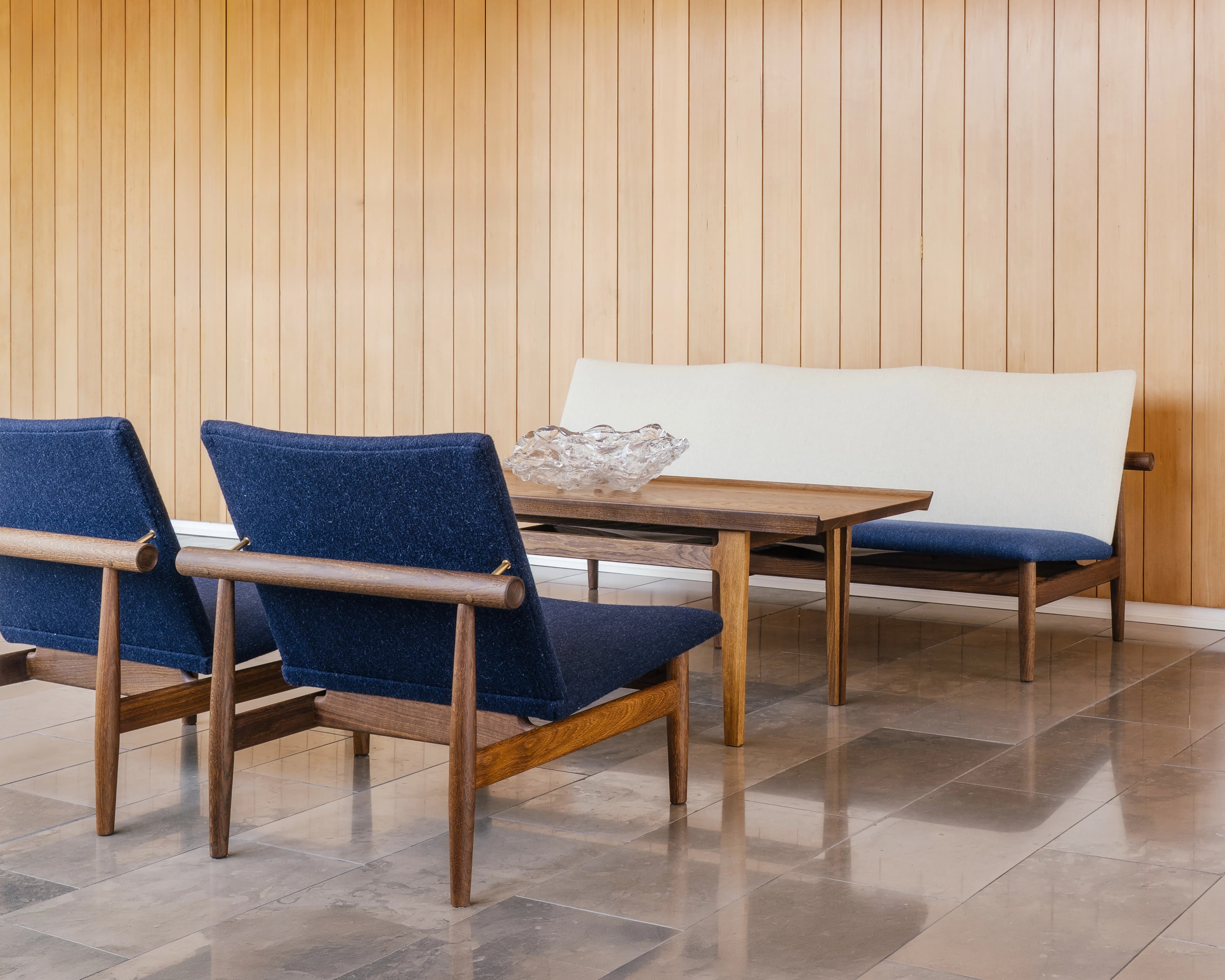
In 1957, architect Finn Juhl designed the Japan furniture series, consisting of an armchair, a footstool, and two sofas.
The Japan Chair’s substantial horizontal backrest rests on gently tapered legs, creating a design that echoes traditional Japanese architecture and the form of a Japanese temple gate.
Ceramics: Gutte Eriksen
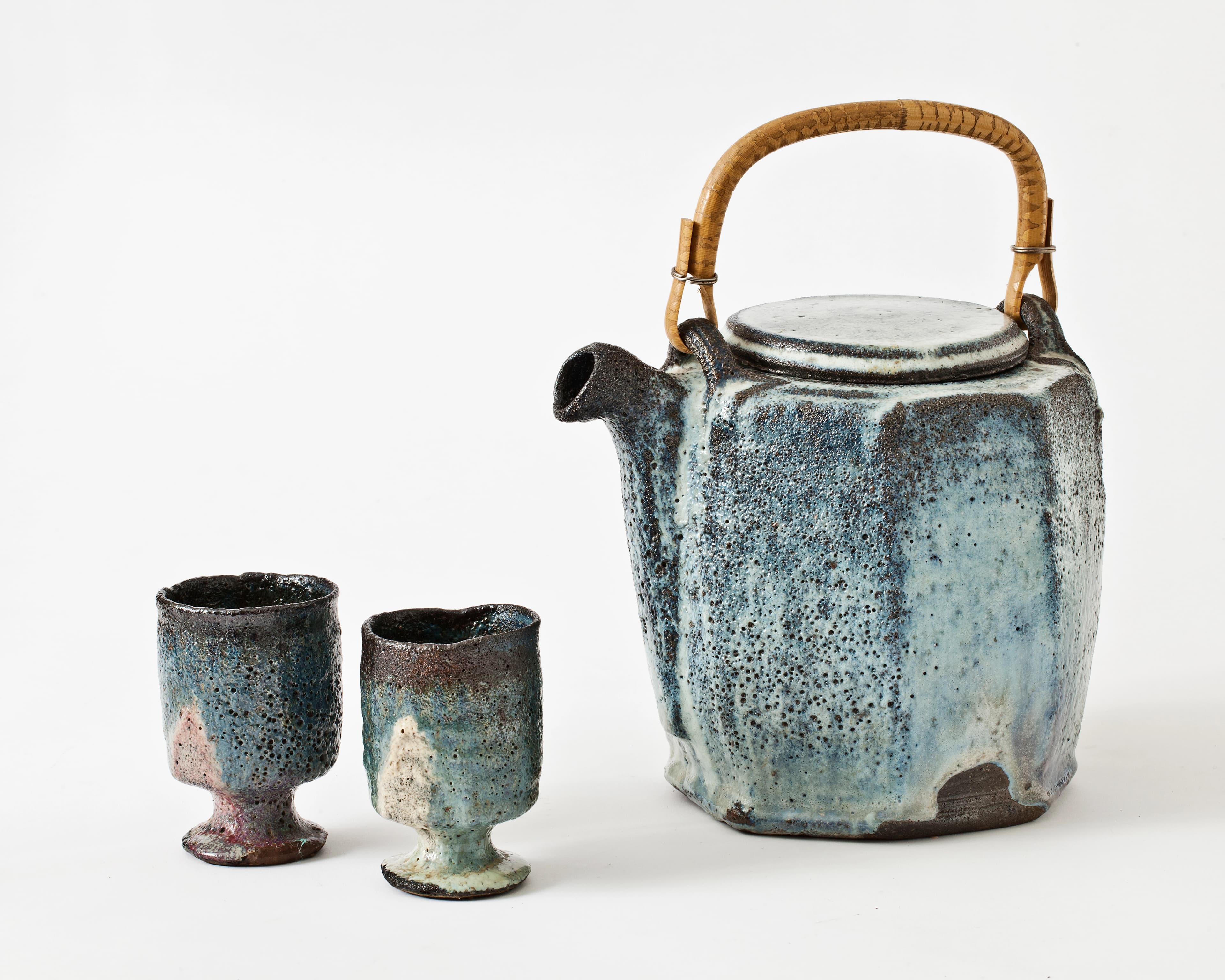
During a period of study with British ceramicist Bernard Leach in 1948, Gutte Eriksen discovered Japanese ceramics.
Several trips to Japan followed, and between 1970 and 1973, she worked in central Japan.
During this period and in the years that followed, a rustic style inspired by Japanese ceramics gained ground in Denmark – not least through the influence of her work.
Lighting: Le Klint
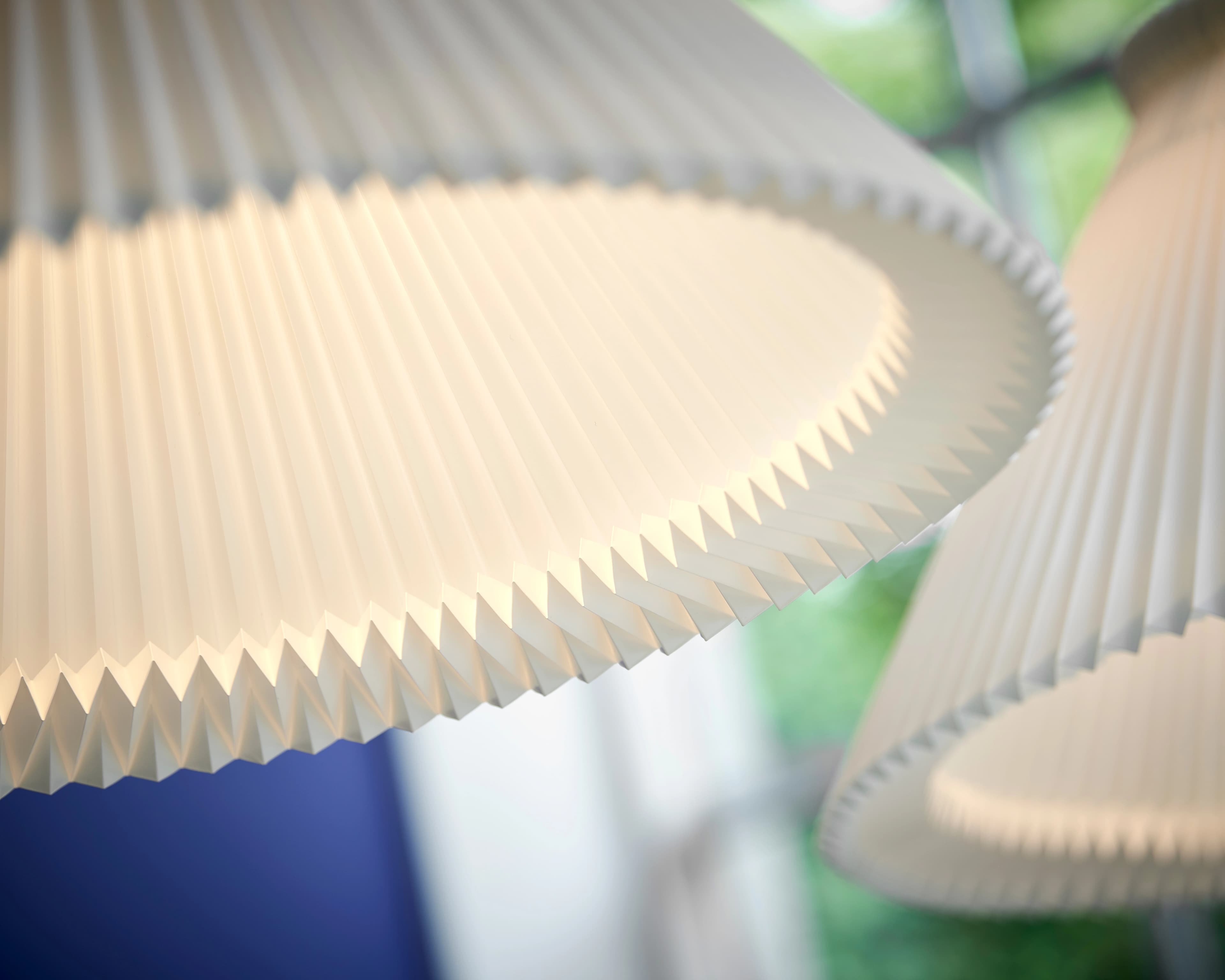
In the early 20th century, architect P.V. Jensen-Klint folded a lampshade that would later become the foundation for lighting company Le Klint, established in 1943.
Inspired by Japanese origami, he developed a pleated lampshade that remains a hallmark of many of the company’s best-known and most beloved designs today.
Japandi Emerges as a Concept
Throughout the 2010s, a design movement that had yet to be named began to make its presence felt at design fairs. In 2014, Stockholm Furniture & Light Fair presented a special exhibition titled Material Attraction – Scandinavia Likes Japan. The Formland design fair in Herning had a similar focus in February 2016, and just a few months later, the theme was also strongly represented at Salone del Mobile, the international furniture fair in Milan.
Around this time, the word “Japandi” itself began to appear. In December 2016, the Australian newspaper The Daily Telegraph described Japandi as the latest design trend.
During 2017, the term appeared in a growing number of international design and interiors publications and as a search term on Instagram and Pinterest. By 2018, it had also made its way into mainstream Danish media, with Bolig Magasinet highlighting Japandi as one of the year’s defining trends.
Interest in the Japanese-Scandinavian aesthetic was now gaining real momentum – a development that trend expert Mads Arlien-Søborg also noticed. He points to Audo House in Copenhagen as one place where the two design traditions come together.
»Interest in Japanese design grew in part through Norm Architects, who helped create a warmer version of modernism with darker tones and the movement that came to be known as New Nordic,« says Mads Arlien-Søborg.
At the same time, this marked the beginning of a new kind of minimalism. While classic minimalism could often feel cool and austere, it gave way to what design circles began calling soft minimalism.
»It became more inviting and human. It was still simple, but not sterile. And that’s exactly where the connection between Scandinavian and Japanese design becomes even clearer,« says Mads Arlien-Søborg.
Japandi in Architecture: The Landscape Before the Buildings
Today, you don’t have to scroll far on Instagram or attend many dinner parties before you come across traces of the Japandi aesthetic. Windowsills are bare, knickknacks are almost frowned upon, and the few objects on display are chosen with surgical precision.
But Japandi isn’t just about the objects that make their way into Scandinavian homes – or perhaps more accurately, the ones that don’t. It is just as much about a way of thinking about architecture and design.
Japandi celebrates the raw character of materials. Wood is allowed to show its grain and knots, while natural stone covers large surfaces such as floors and staircases.
The same thinking shapes the architecture, where buildings are increasingly designed in response to the landscape rather than to command attention. In Japanese architecture, the boundary between indoors and outdoors is often fluid, making nature feel like part of the space rather than something simply viewed through a window.
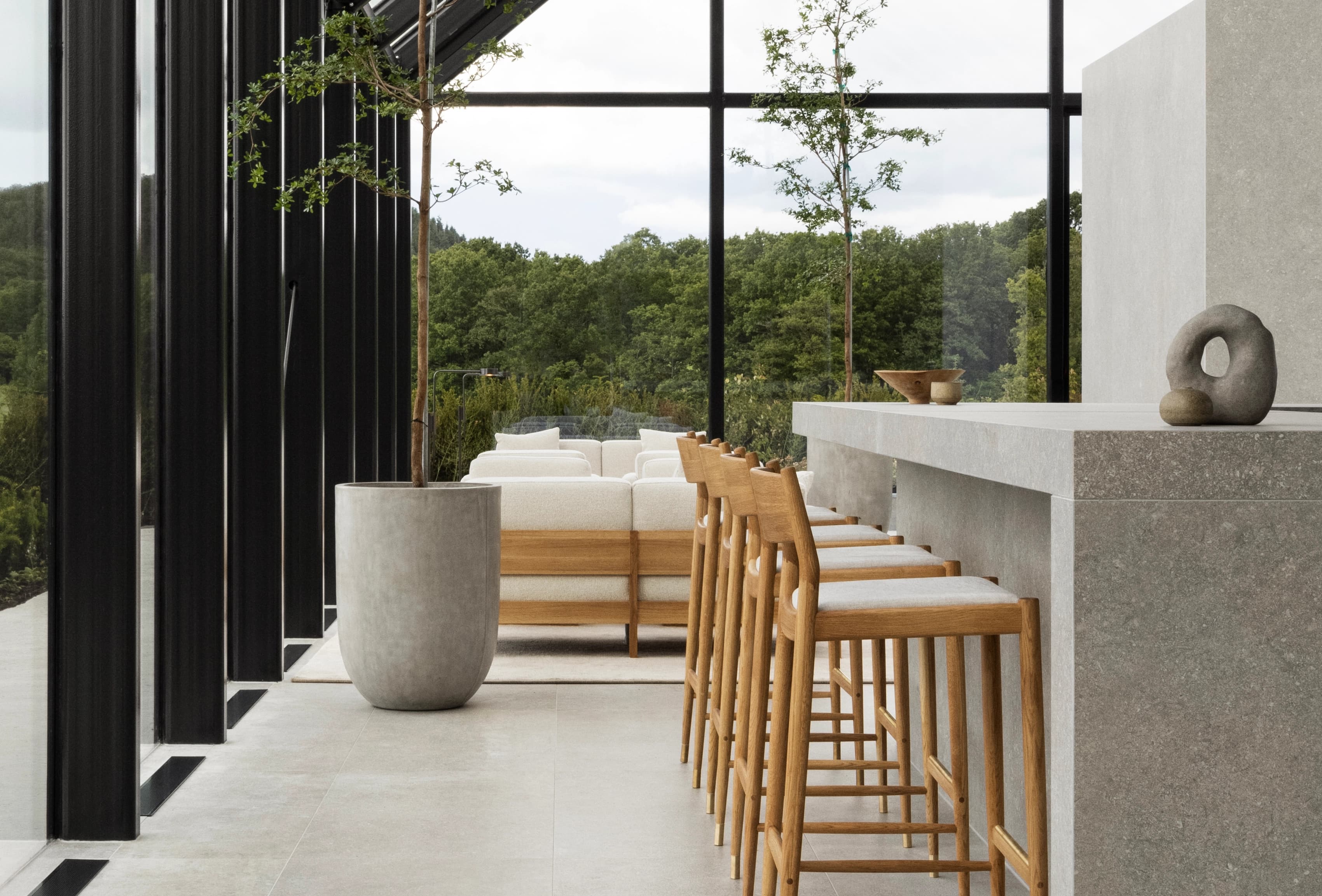
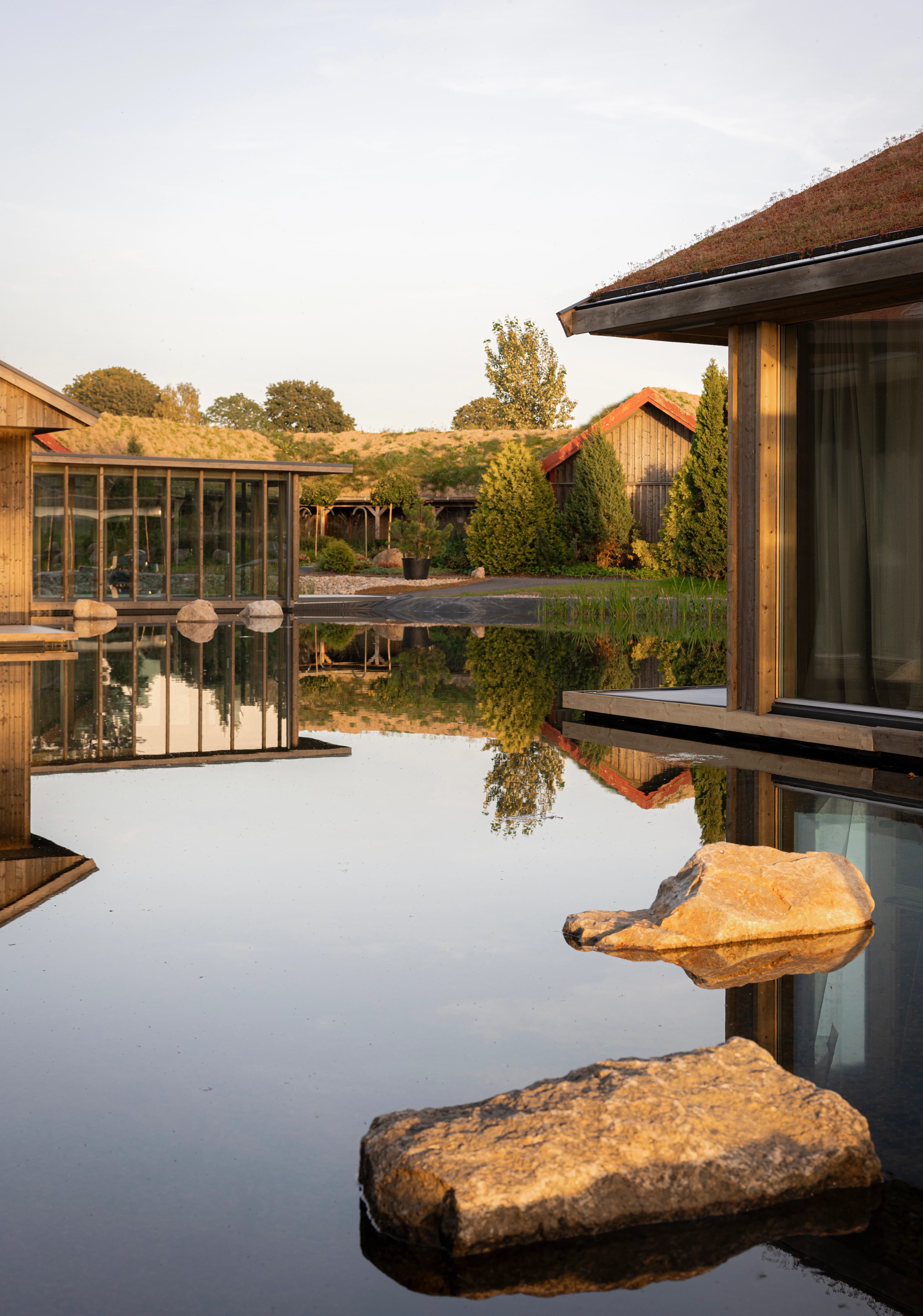
This approach has been central to the work of Danish architecture and design studio Norm Architects. One example is the ÄNG restaurant in Halland, Sweden, which Frederik Werner highlights as a meeting of Japanese and Scandinavian architectural principles.
»ÄNG takes its cues from the Swedish landscape and the changing seasons. Everything is rooted in the materials, the sensory experience, and a sense of calm that doesn’t feel staged, but emerges naturally. Sjöparken has a similar quality: a closeness to the water and its surroundings that recalls Japanese architecture’s ability to let a place speak for itself and invite nature indoors,« says Frederik Werner.
Calm Through What Is Left Out
At Norm Architects, the meeting of Japanese and Scandinavian design traditions is a natural part of the studio’s work. That is precisely why Frederik Werner is not particularly fond of the term Japandi.
»There is a risk that it can make these ideas seem superficial or dilute principles that, in my view, have genuine and legitimate relevance,« says Frederik Werner.
His fascination with the meeting of Japanese and Scandinavian design extends to his own home. Natural stone and oak feature prominently, while subtle references to Japan appear throughout, such as a ceramic tea set. There are only a few carefully selected objects.
In Japanese, there is a term for this use of empty space: “yohaku-no-bi”– the beauty of empty space. Emptiness is not something that needs to be filled, but a deliberate choice that makes room for light and natural materials. Rather than filling rooms with furniture and decoration, the focus is on a few carefully chosen, high-quality objects.
»My home is an expression of my interests in itself. I’ve designed it with great attention to detail, light, and materiality, and with a love of honest materials and understated luxury. High-quality, tactile materials are a recurring element precisely because they only become more beautiful with time and create a calm atmosphere,« says Frederik Werner.
While Danish homes often create a sense of "hygge" by adding textiles, furniture, and personal objects, the Japanese sense of calm comes more from what is deliberately left out.
»The Scandinavian tradition is more social and democratic at its core – "hygge", togetherness, and light during the dark months. While in Denmark we create warmth through layers and objects, the Japanese concept of ‘ma’ finds comfort in empty space. The two are fundamentally different, and in my view, it is precisely in that tension that the best projects emerge,« says Frederik Werner.
A More Playful World Ahead?
Although Japandi has been part of the design vocabulary for several years now, interest in Japan only seems to be growing.
»From the 2000s onward, people really began to talk about Japan as a cultural superpower. Previously, the country was primarily known as an economic superpower. Today, many people in the Western world are fascinated by Japanese fashion, culture, design, and the way Japan approaches materials and quality. This particularly resonates with a younger generation that is pushing back against throwaway culture,« says Jens Sejrup.
Moving away from throwaway culture is deeply rooted in Japanese tradition. One example is the concept of “wabi-sabi,” which, among other things, celebrates the beauty of imperfection and the marks of time. This can also be seen in the art of “kintsugi,” a repair technique in which broken ceramics are pieced back together using a special golden lacquer, making the repair visible rather than concealing it.
Mads Arlien-Søborg has also noticed that interest in Japan is gaining momentum beyond design and architecture.
»The last time I was in Japan, it almost felt as though half of Copenhagen’s creative scene had come along. When you’re in Tokyo, it’s almost like walking around northern Italy – there are Danes everywhere,« says Mads Arlien-Søborg.
He also believes the next wave of inspiration will extend beyond architecture and design. While Japandi has been characterized by natural materials and muted colors, he is already seeing growing interest in the world of Japanese pop culture.
»I think you can already see the influence of Japanese pop culture, and I believe we’ll see more of that playful, childlike approach to design here in Denmark. Play will no longer be just for children,« says Mads Arlien-Søborg.
Even if the word Japandi one day disappears from social media algorithms, it is hard to imagine that the fascination with Japanese design, craftsmanship, and approaches to materials will disappear with it.