Nazi Architecture and Propaganda: Hitler’s Germania
The Nazis’ grand building plans in 1930s Germany used architecture as an ideological tool and a form of propaganda—from monumental architecture and monumental classicism to the total staging of public space, where power was cast in stone and the individual was reduced to part of the mass.
By Dansk Arkitektur Center
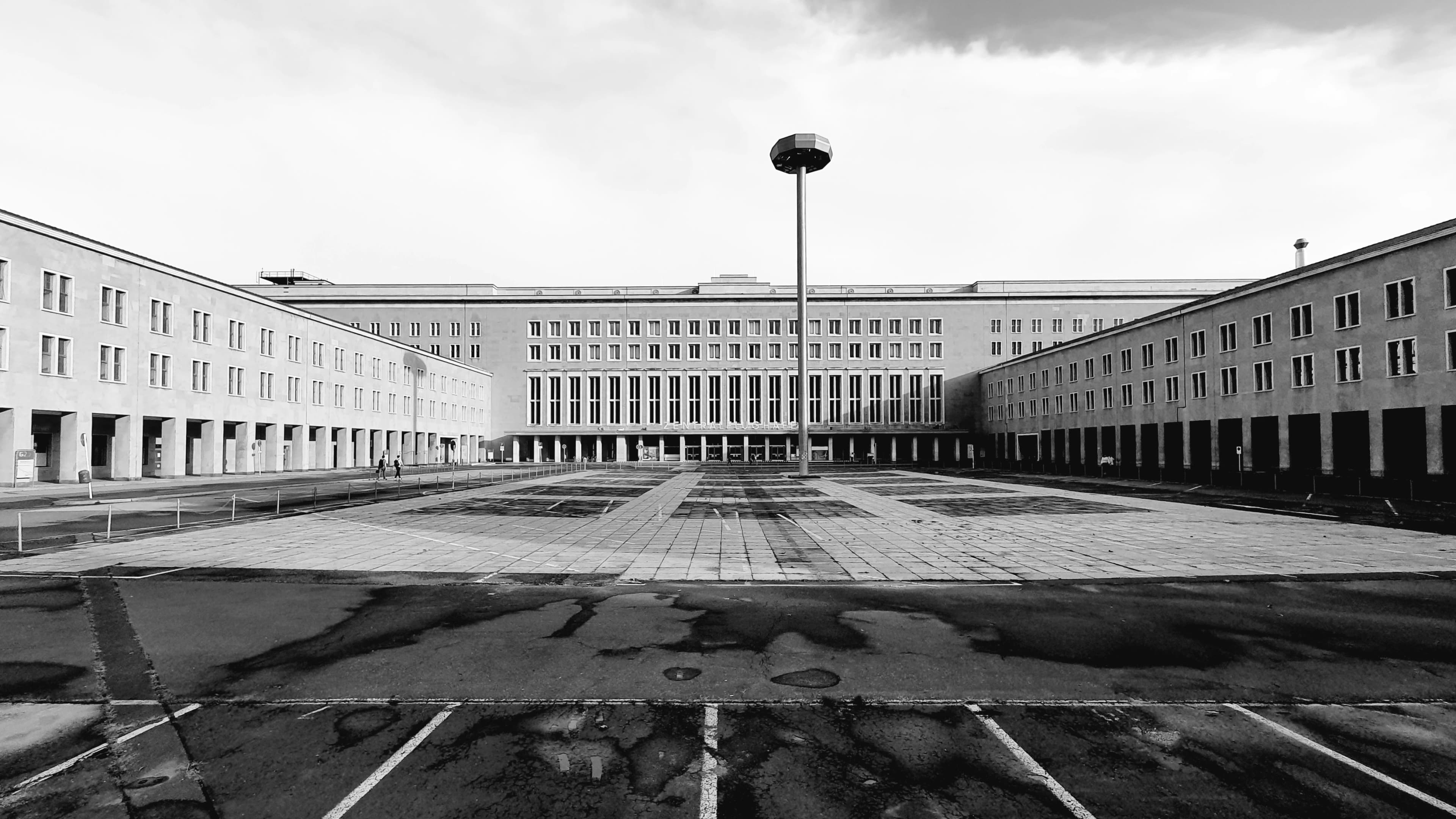
Hitler used art, and architecture in particular, as a form of political staging and as a tool for demonstrating power. He wanted visible traces of his time in office. Architecture was meant to speak to future German generations. Fortunately, most of his visions were never realized.
Manifestation
From 1933 to 1945, the most important architectural decisions were reserved for selected members of the National Socialist regime. In 1933, the last free architectural competition was announced, and it was won by the German architect Mies van der Rohe (1886–1969).
The result did not please Hitler, and he canceled the decision. Hitler’s chief architect became Albert Speer (1905–1981), whose designs are now seen as emblematic of the Nazi regime’s architectural megalomania. The cost of these plans would have been enormous and far beyond the country’s economic means.
A New Imperial Capital
Hitler called his vision for a new imperial capital in Berlin Germania. Today, the plan appears as an act of megalomania, disconnected from human scale and from the city’s existing urban fabric.
Hitler had gigantic plans for Berlin—plans that would have required entire streets and neighborhoods to be demolished.
The plans for the new Berlin were not developed out of a need to accommodate a growing city, but to create a new, representative imperial capital. The new city was to have gigantic dimensions. In this way, the individual person would be dissolved into an anonymous mass, while Berlin’s existing architecture would be overshadowed.
The plans were a staging of the Third Reich and must be understood in connection with the expansion of the German Reich into Austria, Czechoslovakia, and Poland.
A north-south axis was to run from the world’s largest train station through a triumphal arch, reportedly sketched by Hitler himself, and on to a gigantic Volkshalle, where the Nazi eagle was to stand at the top of the dome at a height of 190 meters, clutching the globe in its talons.
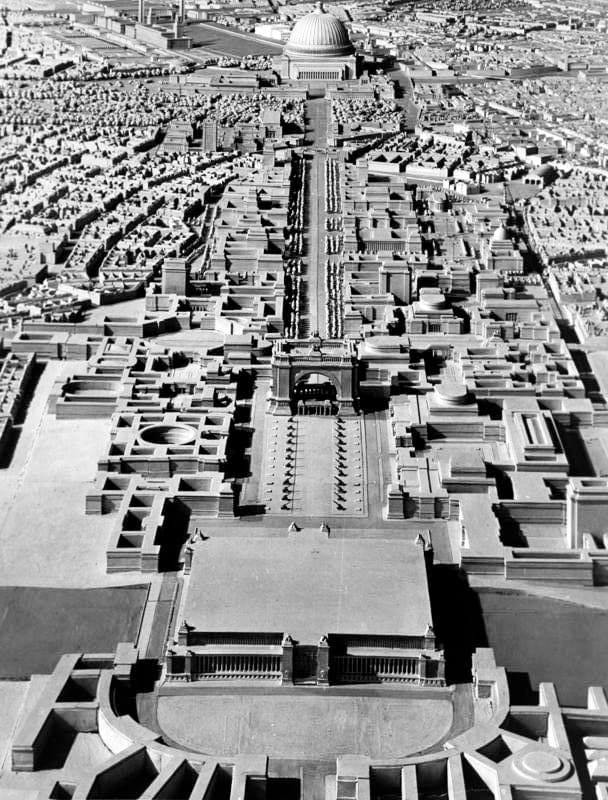
The grand axis was to be larger than the Champs-Élysées in Paris, the triumphal arch larger than Napoleon’s, and the Volkshalle was meant to dwarf both the Pantheon and St. Peter’s Basilica. Berlin, Hitler believed, should be comparable only to ancient Egypt, Babylon, and Rome.
The 5-kilometer north-south axis was to be presented in 1940 and demonstrate Hitler’s National Socialist Germany as the pinnacle of historical development and as an invincible world power. The outbreak of World War II stopped these plans.
Style
The dominant formal language of Nazi architecture was monumental classicism and monumental architecture. By giving classical elements a monumental scale, the regime created an architecture of power display.
The style drew inspiration from ancient buildings, but in an increasingly pompous form. The architecture was meant to project cold authority and subdue the viewer. Characteristically, these enormous axial buildings were often clad in limestone, granite, or marble and were rigorously symmetrical. Endless rows of columns and windows were common.
The dynamism and transience of modern architecture were rejected. The regime wanted what was static and enduring. Only in the design of airports and railroad stations was a more modern expression permitted.
Volkshalle
The Volkshalle was intended to be the most impressive building in the new capital, but it was never built. It was planned on such a scale that every other building in the capital would have seemed like a dollhouse by comparison. The hall was inspired by St. Peter’s Basilica in Rome, but its dome was to be more than 200 meters high and 300 meters in diameter. The building was meant to hold up to 180,000 people during Nazi ceremonies.
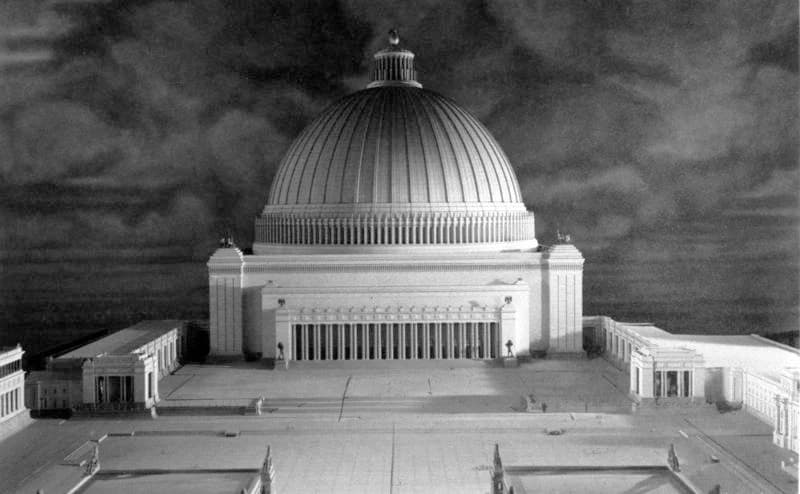
It was said to be so large that rain clouds could have formed near the top of the dome from the breath of the crowd.
The Triumphal Arch
Hitler’s triumphal arch was inspired by Napoleon’s Arc de Triomphe in Paris, but on a much larger scale.
It was to be nearly 120 meters high, with the square around it measuring 1,000 by 330 meters. The names of all German soldiers killed in World War I were to be carved into the arch. The structure was meant to have a strong propagandistic effect by presenting Germany as the victim in the aftermath of World War I.
The Autobahn
Hitler also used the construction of a vast national highway system in his propaganda.
The Autobahn was presented as a symbol of national unity, technological progress, and employment. In reality, it did not create as many jobs as the regime claimed, and penal labor was also used in the work. At the same time, the highway network was intended to present Germany as a technologically advanced nation.
Construction began in 1933, and by the time work stopped in 1942, about 3,870 kilometers had been built. The road network never acquired as much military significance as had been imagined, since the war was largely fought elsewhere.
The Olympic Stadium
One of the buildings that still remains from the National Socialist period is the Olympic Stadium. It was designed by architect Werner March for the 1936 Olympic Games in Berlin. March’s original design for the stadium was strictly functionalist, much to Hitler’s displeasure. The glass elements were subsequently replaced with stone.
In the Olympic arena, art and architecture were to serve propaganda. The goal was to restore national pride after Germany’s defeat in World War I. Heroic statues of athletes were designed in a classical style. The use of classical art was intended to present Germany as the heir to the glory of antiquity.
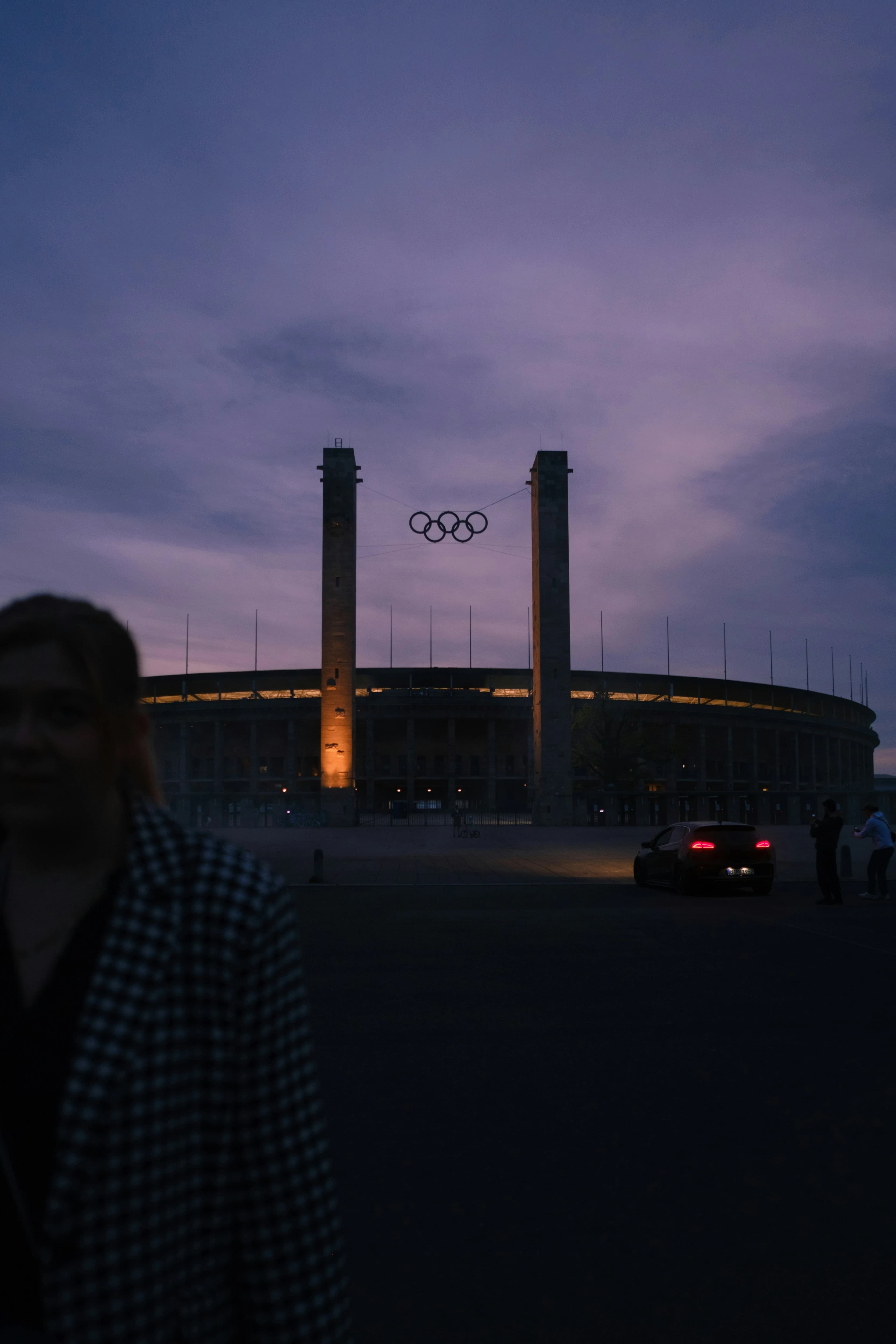
The statue The Horse Tamer, which flanks the entrance to the Olympic Stadium, symbolizes the relationship between the leader and the masses. After the war, the Olympic Stadium was used as headquarters by the British occupation authorities until 1994.
The New Reich Chancellery
Hitler also had a new Reich Chancellery built, with Albert Speer as architect. The building was completed in a single year, and 4,000 workers took part in the construction, which was finished in 1939.
In form, the new Reich Chancellery resembled a princely palace modeled on Baroque architecture, especially Versailles under Louis XIV. The interior consisted of a sequence of monumental ceremonial rooms arranged along a longitudinal axis, intended to signal the size and grandeur of the German Reich.
In his memoirs, Albert Speer described the effect of the building. Visitors were meant to be overwhelmed by its splendor and power through its grand proportions, and various strategies were used to make them feel smaller—for example, door handles were placed unusually high.
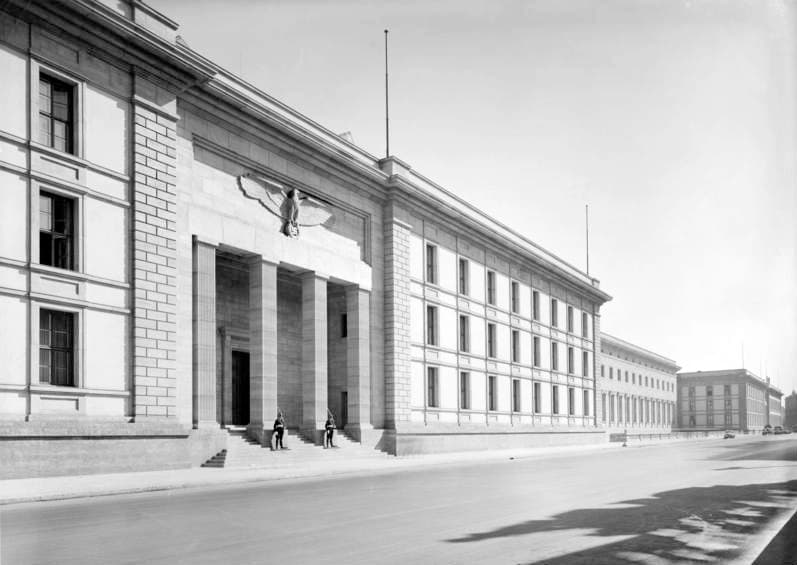
Official visitors entered through a double portal monumentalized by columns, projecting power through its severe and closed form. From there, one moved through a court of honor, a vestibule, a mosaic hall, a round hall, and the 146-meter-long Marble Gallery before reaching the reception hall that served as Hitler’s office. This office functioned as the German headquarters during World War II.
The long gallery in the Reich Chancellery was twice the size of Louis XIV’s Hall of Mirrors at Versailles.
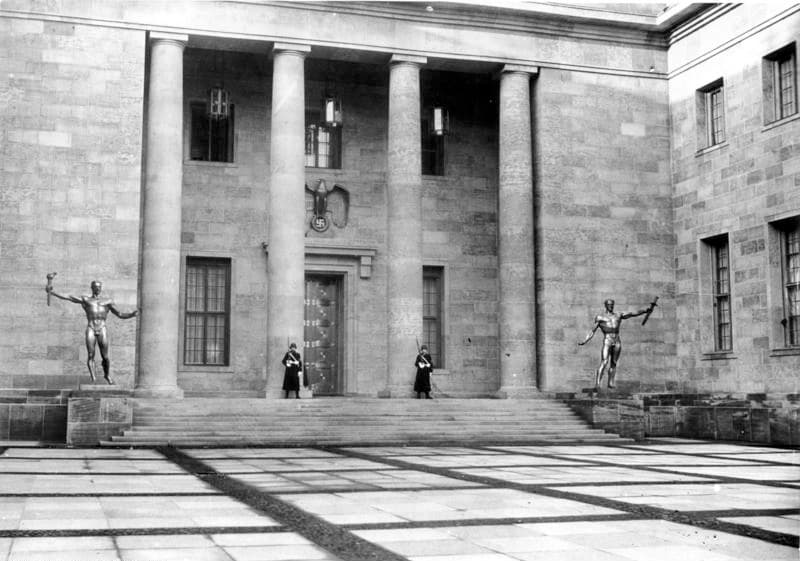
At Versailles, the idea of the king as the Sun King was expressed through paintings and sculpture. In much the same way, the eagle was the recurring symbol throughout the new Reich Chancellery. In the court of honor, two bronze statues stood by the main entrance as symbols of the two pillars of the state: the armed forces with the sword, and the party with the torch of faith. The mosaic hall was also decorated with heroic scenes from German history.
The new Reich Chancellery was destroyed during the bombing of Berlin in 1945. Near the Chancellery was the Führerbunker, where Hitler took his own life.