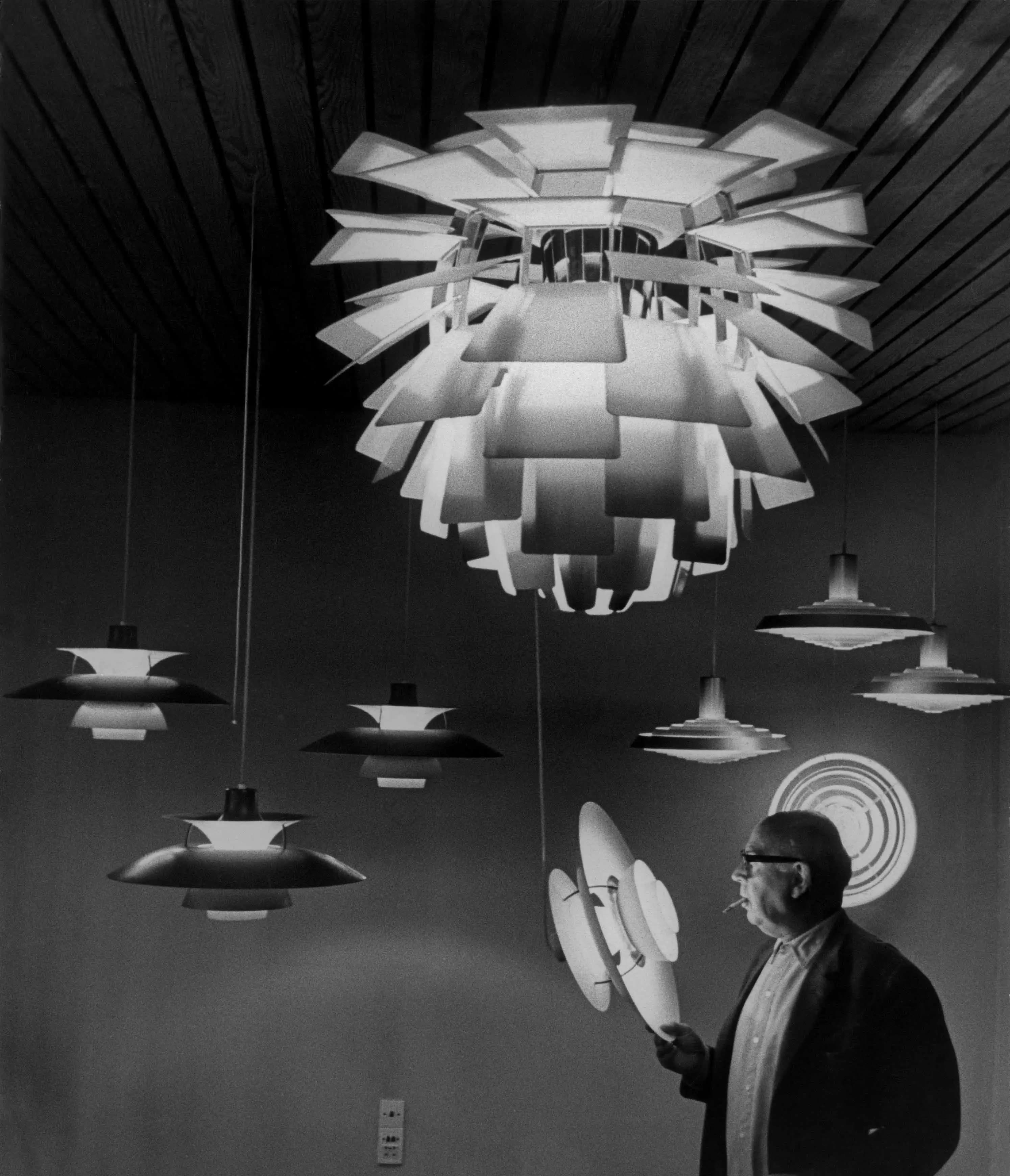
Poul Henningsen Shed Light on More Than Our Homes
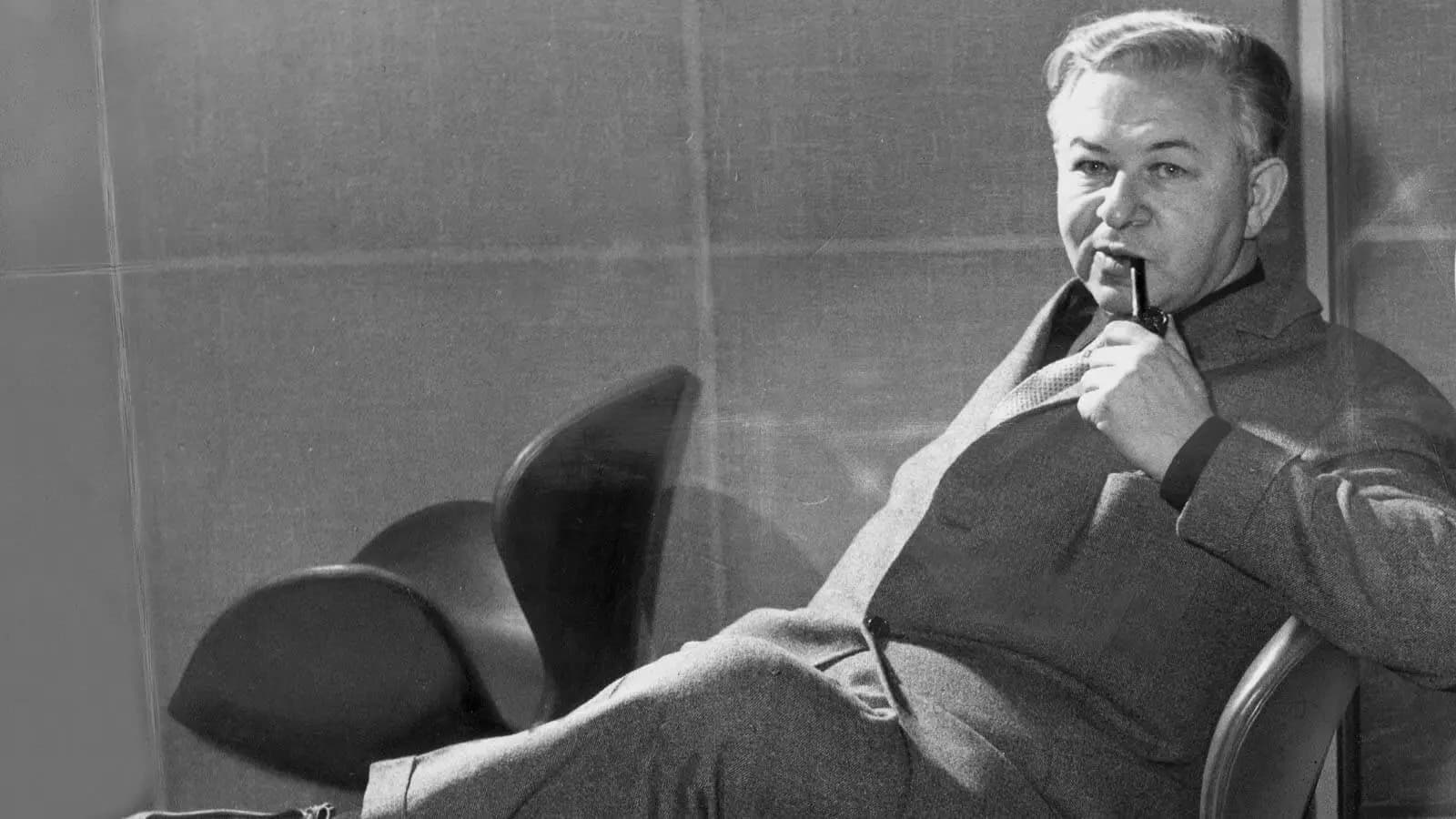
Few understood light quite like Poul Henningsen. His lamps have become icons of Danish design, finding their way into homes around the world. But PH also left his mark on the debates of his time – with opinions every bit as sharp as his eye for design.
By Ida Elva Hagen
»I’ve lost count of how many homes have a Poul Henningsen Artichoke lamp hanging from the ceiling.«
So wrote British journalist Patrick Kingsley in his 2012 book How to Be Danish.
And with good reason. Ever since Poul Henningsen began experimenting with light in the early 1900s, his lamps have found their way into everything from Danish dining rooms and workplaces to museums and landmark buildings around the world. Today, the Artichoke, the PH 5, and his signature three-shade system have become icons of Danish design history.
But for PH, lighting was never simply about creating beautiful lamps. It was about how we live – and who should have access to good design. That same democratic spirit shaped his work as a cultural critic, where his outspoken views entered debates on everything from architecture and urban planning to politics, art, religion, and sexuality.
"Art is – and must be – part of the class struggle."
The Master of Lighting
Poul Henningsen saw possibilities in light that few before him had recognized. At just 21, he was asked to renovate the Copenhagen home of a family friend. As part of the project, he designed a lamp and began experimenting with ways to make its light softer and more comfortable.
At the time, electric lighting was still relatively new in many Danish homes. It was efficient, but often harsh and glaring. PH believed that simply hiding the light source behind an arbitrary shade wasn’t enough.
To create light that was pleasant to live with, you had to understand how it traveled and was reflected throughout a room. This idea became the starting point for his many experiments with shapes, colors, and materials.
In 1924, he began collaborating with lighting manufacturer Louis Poulsen. The following year, the first PH lamps were presented at a major exhibition in Paris, where the design won a gold medal. But Poul Henningsen wasn’t finished. He continued refining his ideas, and in 1926 developed his signature three-shade system, in which three shades direct the light downward and out into the room without causing glare. It marked the beginning of an entire family of PH lamps.
The Man Behind PH
Poul Henningsen – better known as PH – was born in Ordrup in 1894 to writers Agnes Henningsen and Carl Ewald. He studied at the Technical School and the Polytechnic Institute but never completed his degree. In 1919, he married Else Strøyberg, with whom he had a son, Simon. The couple divorced in 1942, and the following year PH married physiotherapist Inger Andersen. He died in Hillerød in 1967 at the age of 72.
A Practical Radical
For PH, design and social debate were two sides of the same coin. Both could be used to challenge conventions and improve everyday life. So he hardly confined himself to the drawing board. As a journalist and cultural critic, he eagerly engaged with the society around him – and he certainly wasn’t shy about voicing his opinions in print.
That was true even when he was writing for Louis Poulsen. In the company’s own magazine, he published an article titled »Ugly Things from Louis Poulsen & Co.«, taking aim at both fellow designers and fluorescent tubes – the long white lights commonly found in offices, schools, and public institutions. According to PH, they were only suitable for »ladies who want to have unsightly hair removed«. Quite a remark, considering that the company he worked with sold fluorescent fixtures itself.
In 1921, he began writing for the Danish newspaper Politiken, becoming its first architecture critic. Among other things, he criticized shortsighted urban planning and architecture that overlooked the people who actually had to live with it.
Five years later, he founded the journal Kritisk Revy, where he joined a group of architects and intellectuals in challenging prevailing ideas about everything from architecture and art to politics and sexuality.
For PH, art and design were never neutral. As he put it:
»Art is – and must be – part of the class struggle.«
In other words, art and design shouldn’t be reserved for those with money and power. They should also be understandable, useful, and accessible to ordinary people.
A Taste of Poul Henningsen
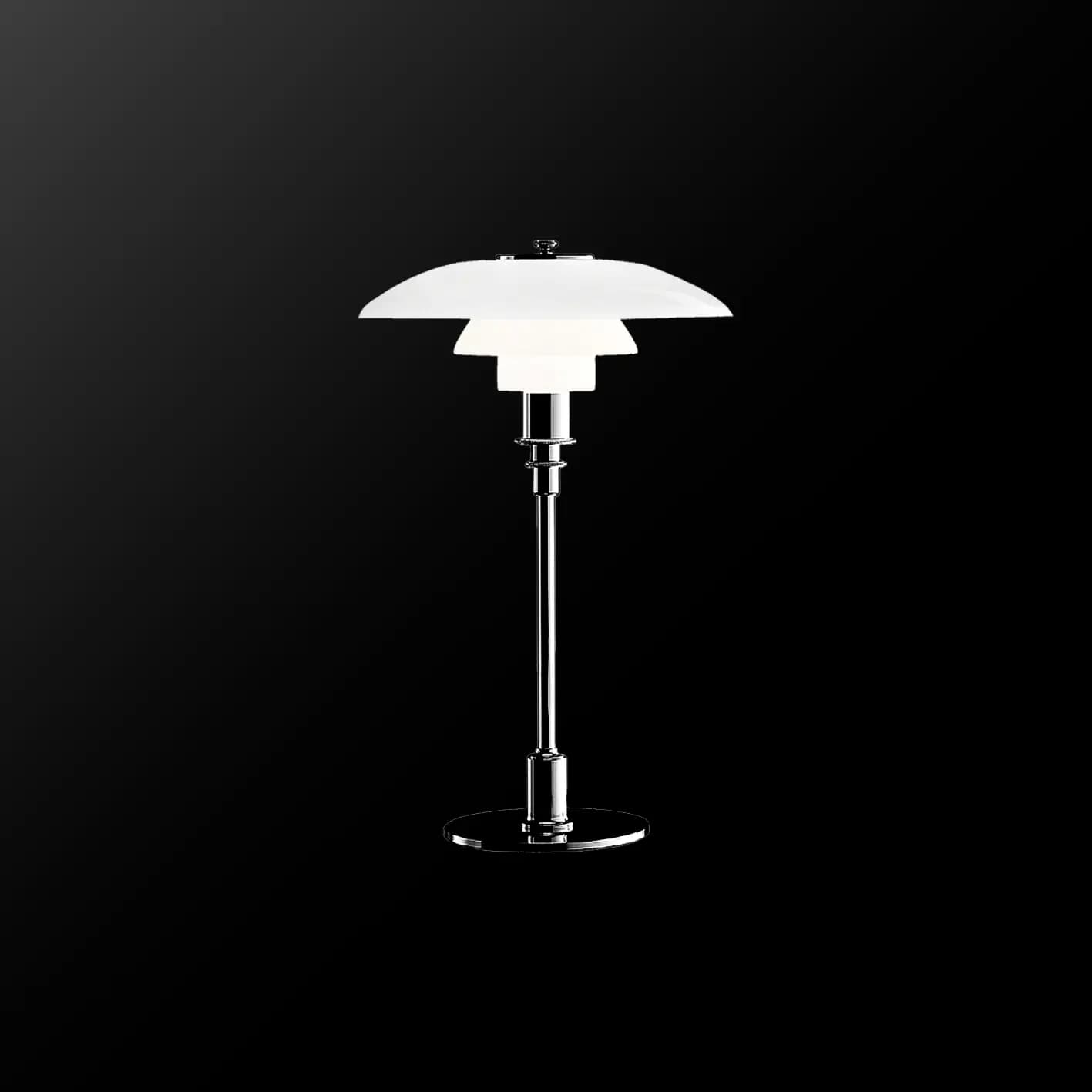
PH 3/2
In 1927, the PH 3/2 table lamp made its debut – naturally featuring the now-familiar three-shade system, this time in a table lamp. The earliest versions were made of metal, with interiors finished in white, gold, or silver to create different qualities of light. Later, the three-shade system was produced in glass, allowing the lamps to cast light both downward and out into the room.
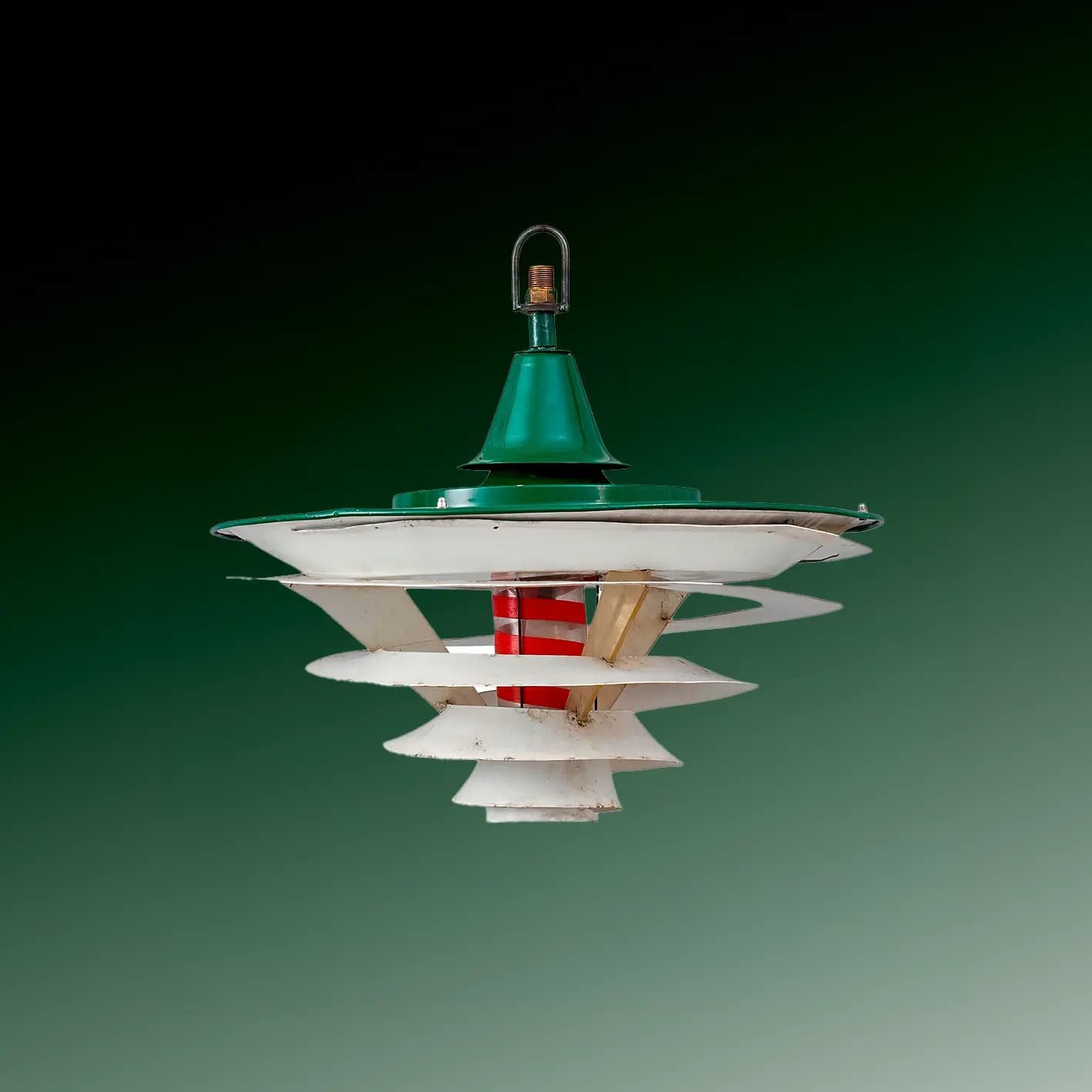
The Tivoli Lamp
In 1949, PH further developed the Spiral Lamp, which he had designed for Aarhus University in 1943. The result was the Tivoli Lamp, installed around the Tivoli Gardens lake a year later. Speaking about the project in 1949, he said: »When I was asked to create new lighting for the lake at Tivoli Gardens, it occurred to me that a slowly rotating spiral lamp would create a subtle and elegant effect. Subtlety is important, because too much rotation would make you feel drunk.«
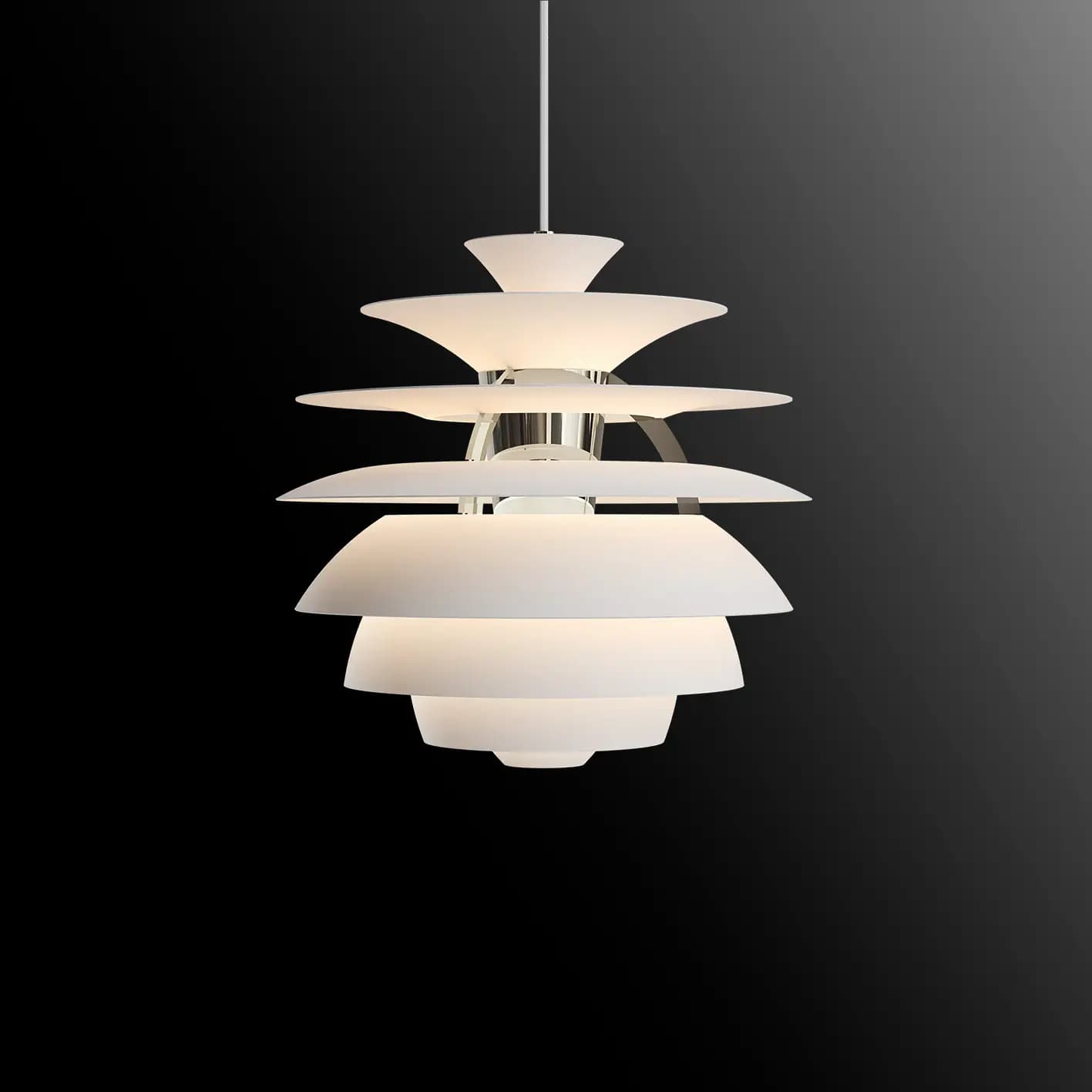
PH Snowball
Poul Henningsen designed the PH Snowball, or PH Kuglelamel, in 1958, when it was exhibited alongside the PH 5 at the Danish Museum of Decorative Art. The lamp is known for distributing and reflecting light evenly across its glass surfaces.
PH 5
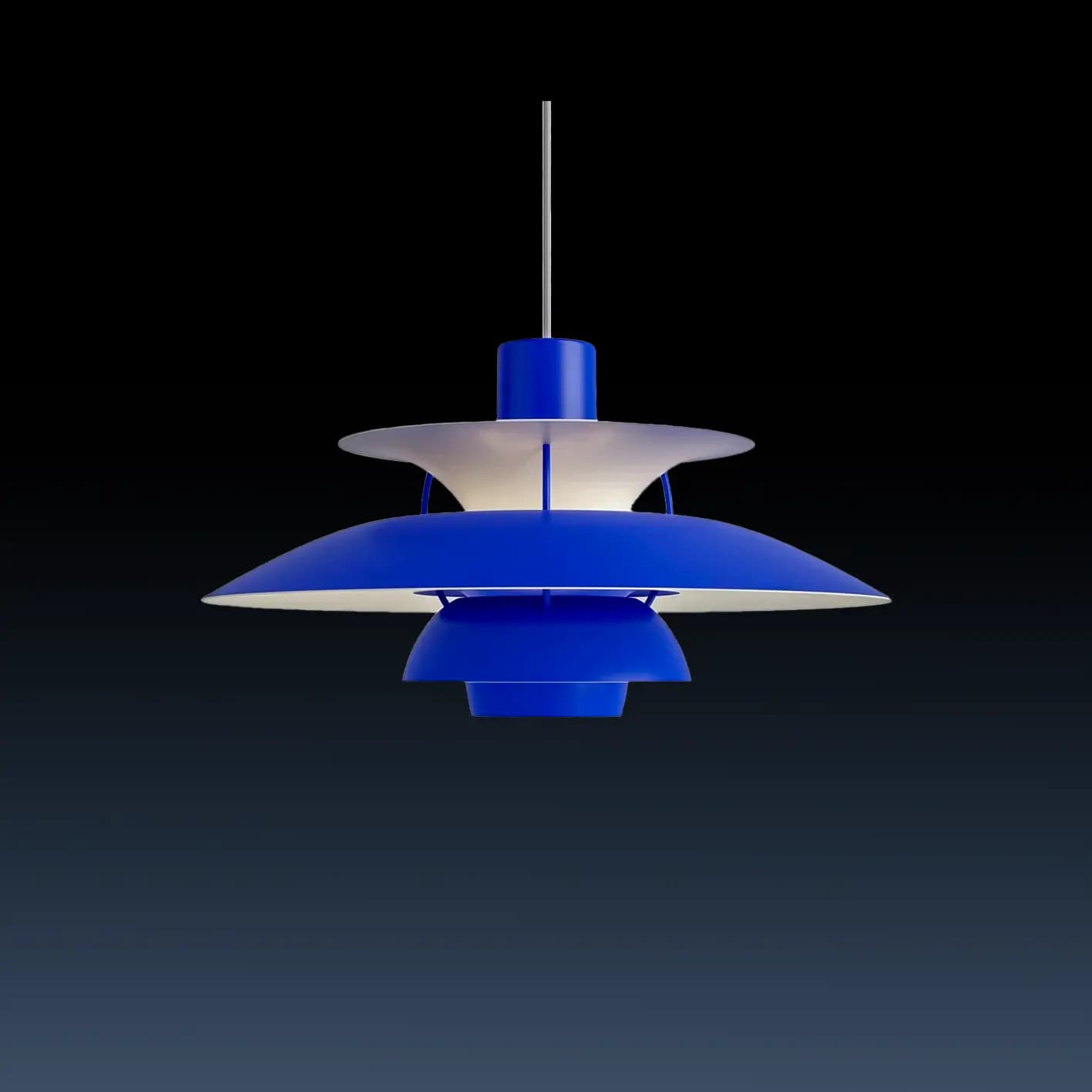
PH developed the PH 5 lamp in 1958 as a further evolution of his famous three-shade system. His original design was inspired by his mother’s wish for softer, more pleasant light. The name refers to the lamp’s five-shade system, which grew out of the standardization of the incandescent light bulb. As PH put it: »With the new PH 5, I have surrendered to the light bulb manufacturers.«
The PH Artichoke
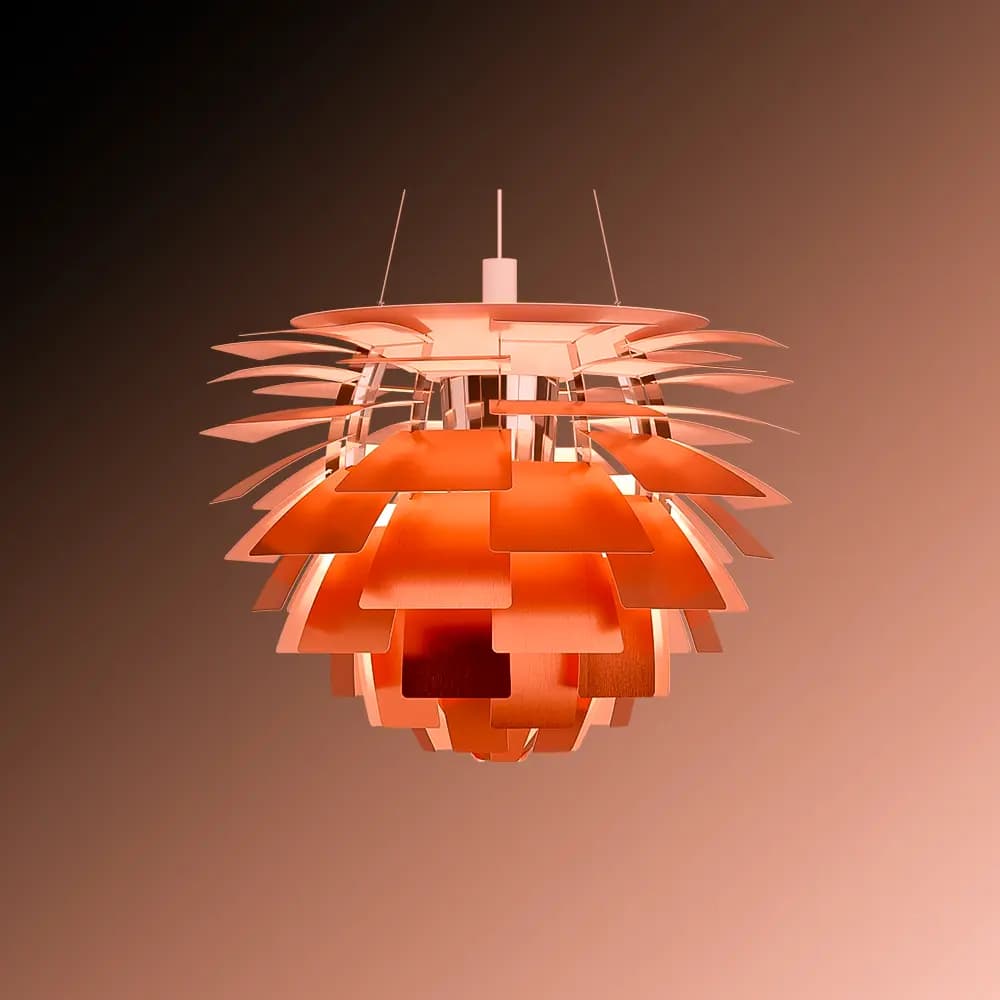
The PH Artichoke, designed in 1958, was originally created for the Langelinie Pavilion – a popular Copenhagen restaurant and event venue. The lamp is considered a milestone of modern design – a striking combination of light source and work of art.
Criticism with Consequences
PH’s outspoken nature came at a price. As early as 1933, he criticized Danish society in his book Hvad med Kulturen? and warned of the rise of Nazism.
His opposition to Nazism contributed to his dismissal from Politiken in 1938. Other newspapers subsequently shied away from giving him a platform, but PH refused to be silenced. In 1941, he became editor of Louis Poulsen’s magazine LP Nyt, where he continued writing about both design and society.
During the German occupation of Denmark, his criticism of Nazism became genuinely dangerous. In 1943, PH was forced to flee to Sweden after a group of Nazis plotted to set fire to his home. He remained there until Denmark’s liberation in 1945, when he resumed his role as editor of LP Nyt. He held the position until his death in 1967.
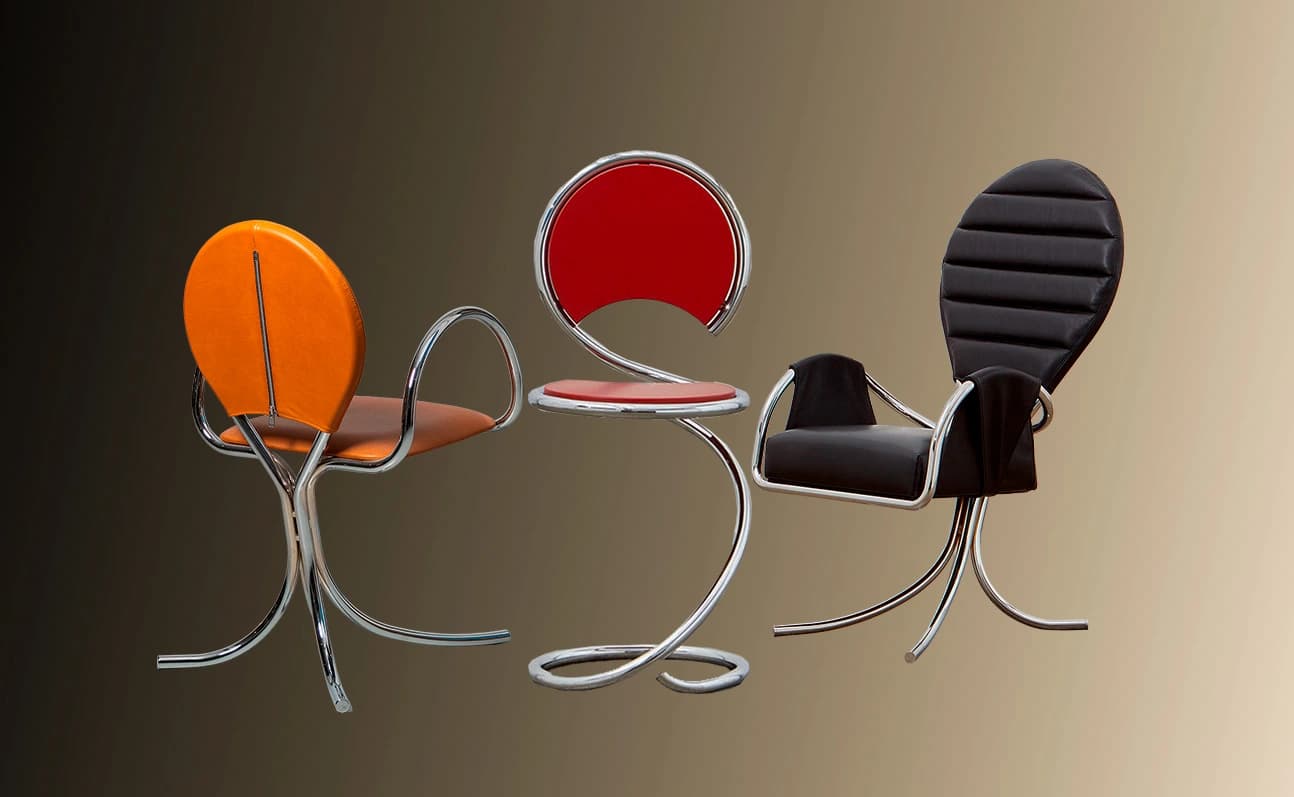
Photo: PH Pianos & PH Furniture PH’s Daring Chair Art
PH didn’t just cast new light on Danish design. In the early 1930s, he also bent steel tubing into a series of chairs that looked radically different from the traditional wooden furniture of the time. Several were later forgotten, surviving for decades only in drawings and old archival photographs.
One of the most striking was the Snake Chair. Inspired by modernism and Germany’s Bauhaus school, PH set out to go one better than the familiar cantilever chairs, which rested on two legs. His solution was a chair with just one: a single steel tube snakes beneath the seat, forming the entire structure.
From left: the PH Lounge Chair, the Snake Chair, and the Pope Chair – all designed in 1932.
Sources: Designmuseum Danmark & Bo Bedre.
One Step Ahead
From an early age, PH had a knack for finding new solutions. At just 16, he built a bicycle that could inflate its own tires. He later turned that same inventive spirit to lamps, buildings, and urban spaces.
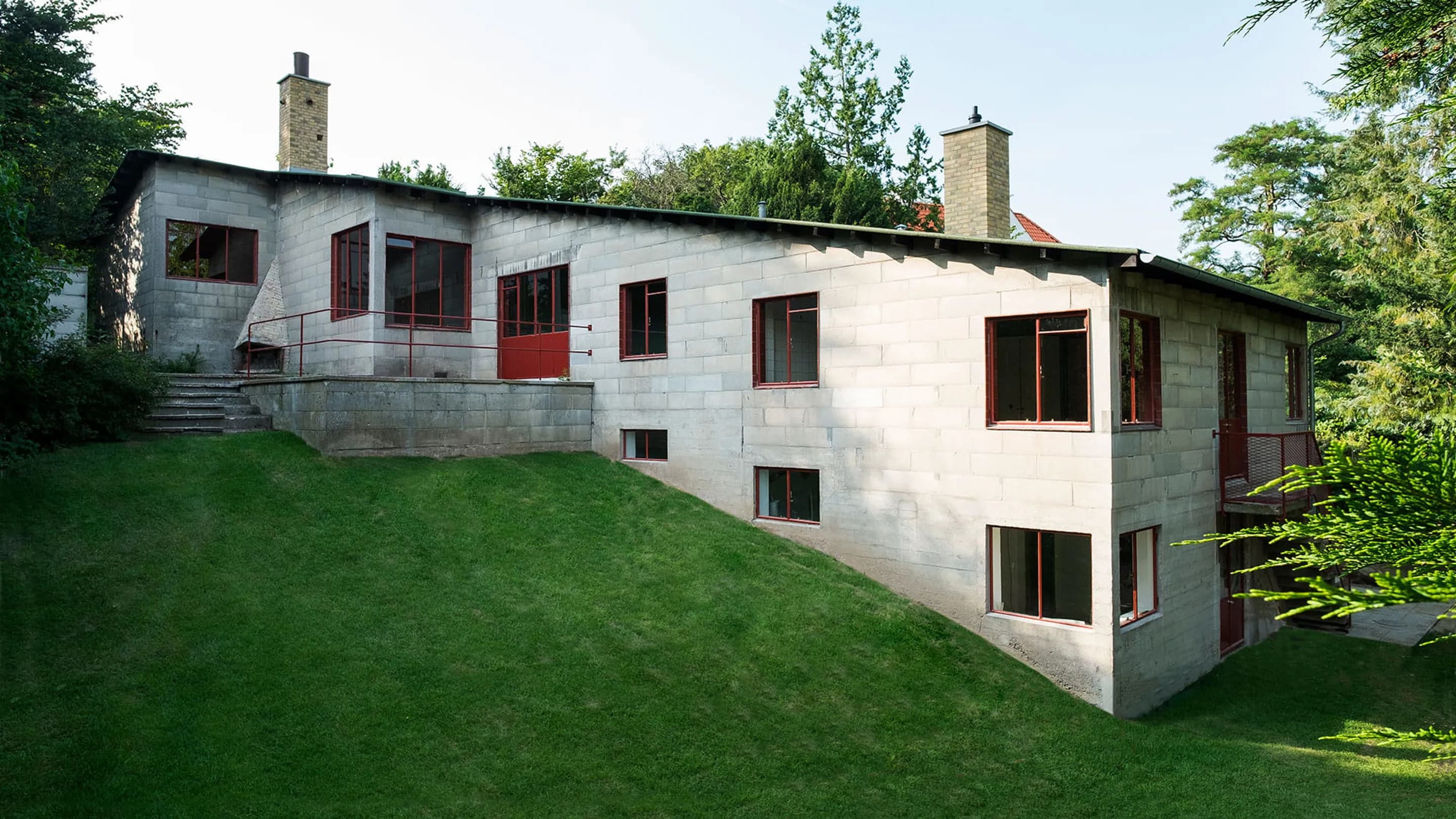
Nowhere was this more apparent than in the home he designed for his family in 1937. He himself described it as »the ugliest house in Gentofte«. Built from simple industrial materials and inexpensive off-the-shelf products, the house even featured walls and ceilings covered in wallpaper depicting nude women. It was a far cry from the conventional villas of the time.
But the house wasn’t different simply for the sake of being different. Its layout was shaped around the family’s everyday life. PH created a large communal space that brought several of the home’s functions together and divided the house into separate areas for the parents and teenagers. It was an unusual vision of family living in 1937. It wasn’t until the rise of suburban single-family homes in the 1960s that many of the same ideas became commonplace in Denmark.
PH also looked for new solutions beyond the home. Among other things, he worked on a street-lighting system designed to cast light in the same direction as traffic. The idea was tested in several locations in Denmark and Germany but never gained the widespread adoption he had hoped for.
Seen from today’s perspective, PH may not seem quite as radical as many considered him at the time. A number of his ideas have since become commonplace in our homes, cities, and cultural debates. There was method to the madness – it simply took a few decades for the rest of us to catch up.
Sources: Louis Poulsen – First House of Light (book), Det Danske Akademi & Realdania.