The Sound of the City: We Design for the Eyes – but Forget the Ears
Footsteps on cobblestones. Conversations at a café. The hum of traffic. Every city has its own soundtrack, and architecture plays a surprisingly big role in shaping it. But while some sounds bring a city to life, others can take a toll on our health and well-being. So how can we create cities that aren't just beautiful to look at, but also pleasant to listen to?
By Kristina Parkov
As we move through the city, our ears constantly take in the sounds around us – for better or worse. A pleasant soundscape can reduce stress and improve concentration, while prolonged exposure to noise is linket to an increased risk of high blood pressure, cardiovascular disease, and other health problems. That's why good acoustics need to be considered from the very beginning when planning and designing buildings and public spaces.
Yet architecture has traditionally favored the sense of sight. Canadian composer and environmental activist R. Murray Schafer even argued that modern architects design for the deaf, because architecture tends to address sound almost exclusively as a problem of noise reduction.
But how can we create public spaces where sound isn't simply something to suppress, but a quality we can actively design for?
"Sound affects us emotionally, 24/7. "
Hearing Is a Superpower
The remarkable thing about hearing is that it's always on, 24/7. Unlike sight, it's a sense that never switches off. Not even when we're asleep.
That's according to Ingeborg Okkels, a sound researcher and founder of the company Lydværk. She has spent years working with architects to explore how sound in buildings and public spaces affects us and how acoustics can be approached more deliberately in architectural design.
With a melodic voice, she welcomes us into her shared office space near Copenhagen's Lakes. The traffic noise from Gammel Kongevej fades away. We're here to talk about the sounds of the city, our ears, and our nervous systems. According to Okkels, sound affects both our mood and our health.
»We can close our eyes, but we can't close our ears unless we physically put something in them,« she says.
Her eyes light up as she talks about the importance of hearing to our well-being and our experience of the world. She calls it a human superpower. After all, hearing allows us to detect what's happening around corners, down staircases, through doors and walls, and deep in a forest.
But she believes we generally lack the vocabulary to describe sound with enough nuance. As a result, almost any unwanted sound gets labeled as "noise." And that's simply not good enough if we want to understand how different kinds of sound affect our well-being.
Sound diversity is one term that can help us describe our auditory experiences. A rich and varied soundscape makes our primal brain feel safe, she explains. It helps us make sense of our surroundings and navigate them. So where in the city can we find this kind of sound diversity?
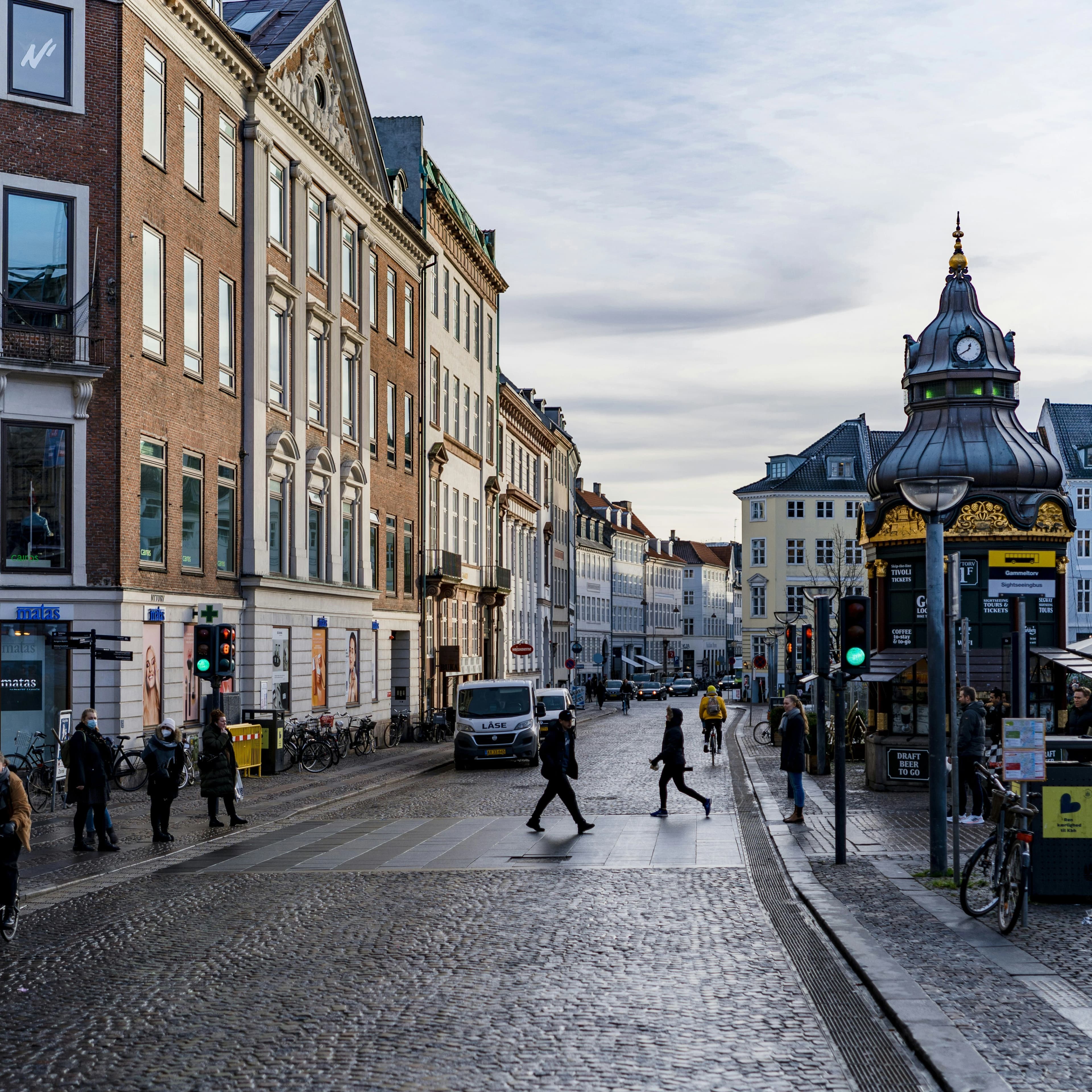
She points to Gammeltorv, Copenhagen's oldest square. Here, traffic noise is sufficiently subdued for the smaller details of the soundscape to emerge. Because the sounds are distinct and varied, we can close our eyes and relax. At the center of the square, the rushing water of the Golden Apple Fountain offers an auditory break – an experience Okkels describes as "cleansing your ears."
»And once you've done that, you can head back out into the clatter of cobblestones, seagulls, shops, and people talking,« she says.
According to Okkels, it's the architectural choices – particularly the materials and facades – that make a public space like Gammeltorv, with its pilaster-adorned buildings, work so well acoustically. The facades are full of decorative details, ornamentation, and carvings.
»They break up the sound waves and soften the sound in a pleasant way,« she explains.
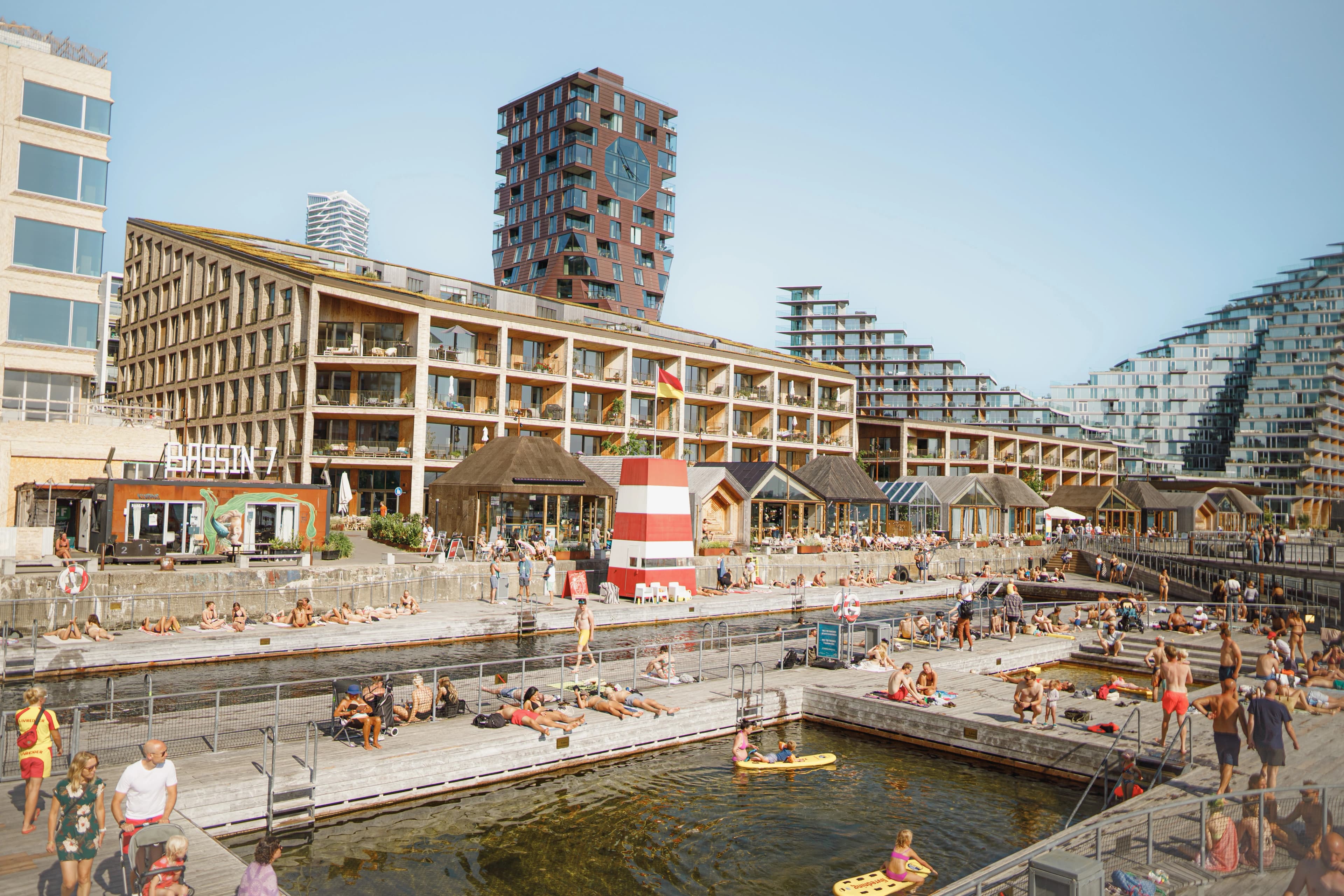
Several newer developments in Copenhagen's Ørestad district, she argues, illustrate the opposite effect. Here, visitors encounter surfaces made of glass, steel, polished marble, and stone – materials that reflect sound very strongly.
»And that can amplify sound to the point where it actually becomes unpleasant,« Okkels says.
How Materials Shape Sound
While Ingeborg Okkels focuses on how we experience the sounds of the city, Isak Worre Foged investigates how architecture and its materials can shape them.
To design desirable sounds into public spaces, he believes we first need to agree on what makes a sound desirable.
Foged is an architect and professor at the Royal Danish Academy, where he leads CEMAS, the Center for Material Studies. The research center explores how materials affect the built environment and urban spaces, including how people experience phenomena such as sound.
Generally speaking, people feel comfortable in soundscapes that are varied and harmonious, especially when the sounds themselves help tell a story about the character of a place, Foged explains.
Urban environments should therefore offer a range of acoustic experiences. What we want to hear depends on the context and our personal preferences. If we're planning to spend time in a particular place, we have different expectations of its soundscape than if we're simply passing through.
"Acoustics is wave physics, but it's also soft and subjective."
At CEMAS, researchers build, measure, and experiment with materials in urban environments to understand how they interact with the human body. These include natural fibers and crops such as grass and flax. Wood species such as grand fir, paulownia, and poplar can be used in structures that regulate how sound travels and reverberates through the built environment. Incorporating these materials into homes or institutions such as kindergartens can help improve the acoustic experience.
Traditionally, architects have focused on dampening and absorbing sound. At CEMAS, Foged also studies how materials can reflect and diffuse sound to distribute it in desirable ways throughout a space.
»That helps shape how we perceive the character of a sound, but also how effectively it reaches the people it's intended for,« he says.
What Can Sound Tell Us?
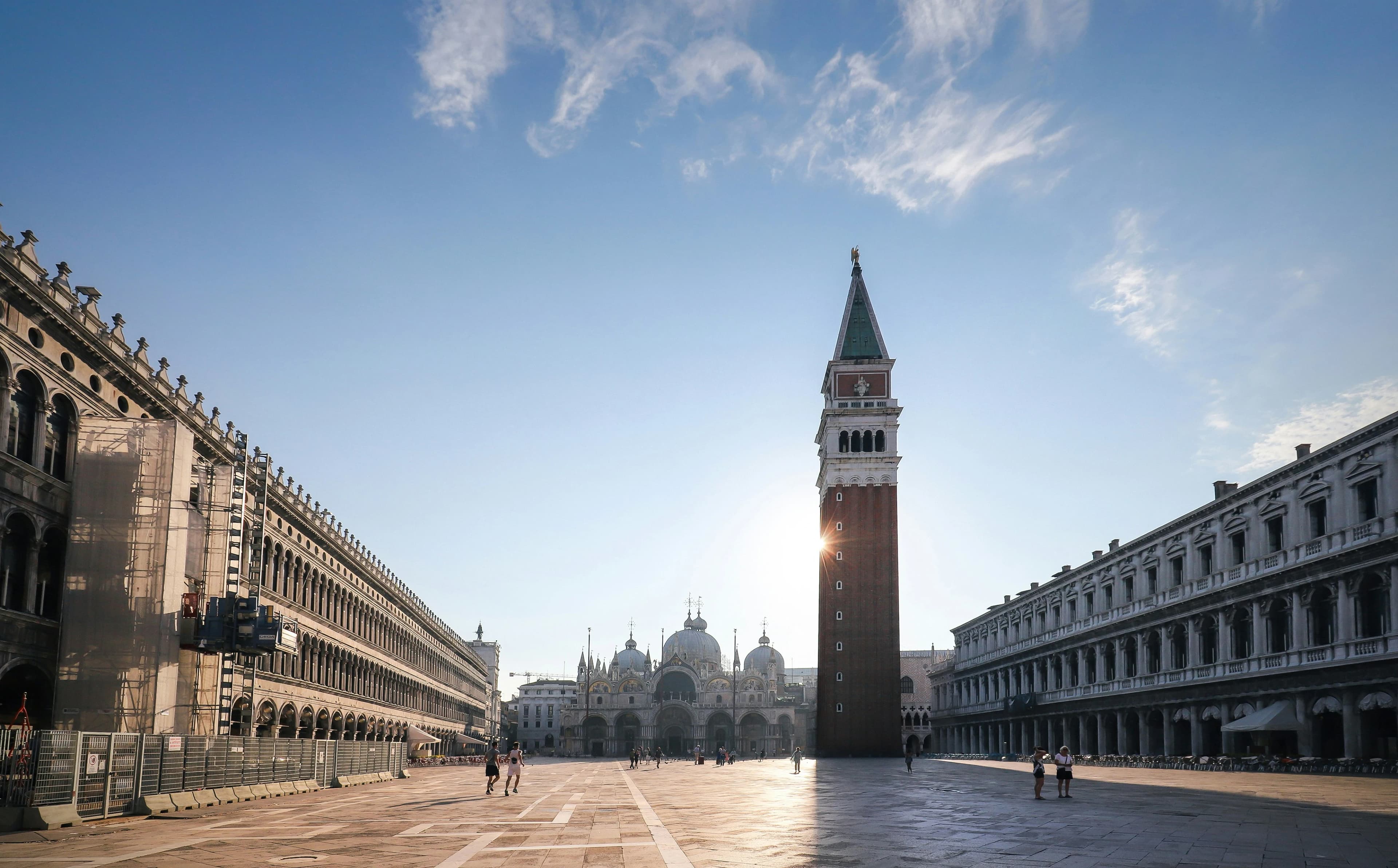
Foged points to Venice as a city with a particularly distinctive acoustic character. Its narrow, closely packed streets and canals create an intimate acoustic environment, while expansive open spaces such as St. Mark's Square produce an entirely different sense of resonance and depth. Moving between these enclosed passages and large open spaces creates a unique auditory experience.
»In acoustics, we talk about the envelope – the shape of a sound over time. Just as in a symphony orchestra, we're surrounded by different kinds of sound, ranging from something very localized to something completely enveloping,« Foged explains.
And just as Venice has its own distinctive acoustic identity, a walk along Copenhagen's waterfront can tell a story through sound alone.
»What you often hear along the quayside is the sound of boats and waves. Those sounds tell you something about the character of the place. Sound begins to tell a story. What kinds of people are active here?«
If future architects were to be trained to listen to the city as part of their professional practice, Foged would encourage what he calls critical listening. In simple terms: Keep your ears open. Walk through the city, recording and documenting the sounds you encounter along the way.
Acoustic design is about creating soundscapes that reflect how people experience and understand spaces through hearing. Our experience of sound at night, for example, differs from what we hear during the day. That's why, Foged emphasizes, it's essential to investigate how sound interacts with a place and the ways people are expected to use it.
When Sound Shapes Urban Life
Living in a big city has always meant putting up with a certain amount of noise. But according to the research project The Sound of the Capital, the soundscape of Copenhagen today is very different from what residents experienced in the 19th century. The clip-clop of horses' hooves and the cries of market vendors have given way to a more uniform soundscape across the city's neighborhoods.
But we could do much more to consciously incorporate sound into urban planning, argues Niels Bjørn, an urbanist and author. His book Det menneskelige habitat (The Human Habitat) explores how architecture shapes our lives and how design and materials influence our senses.
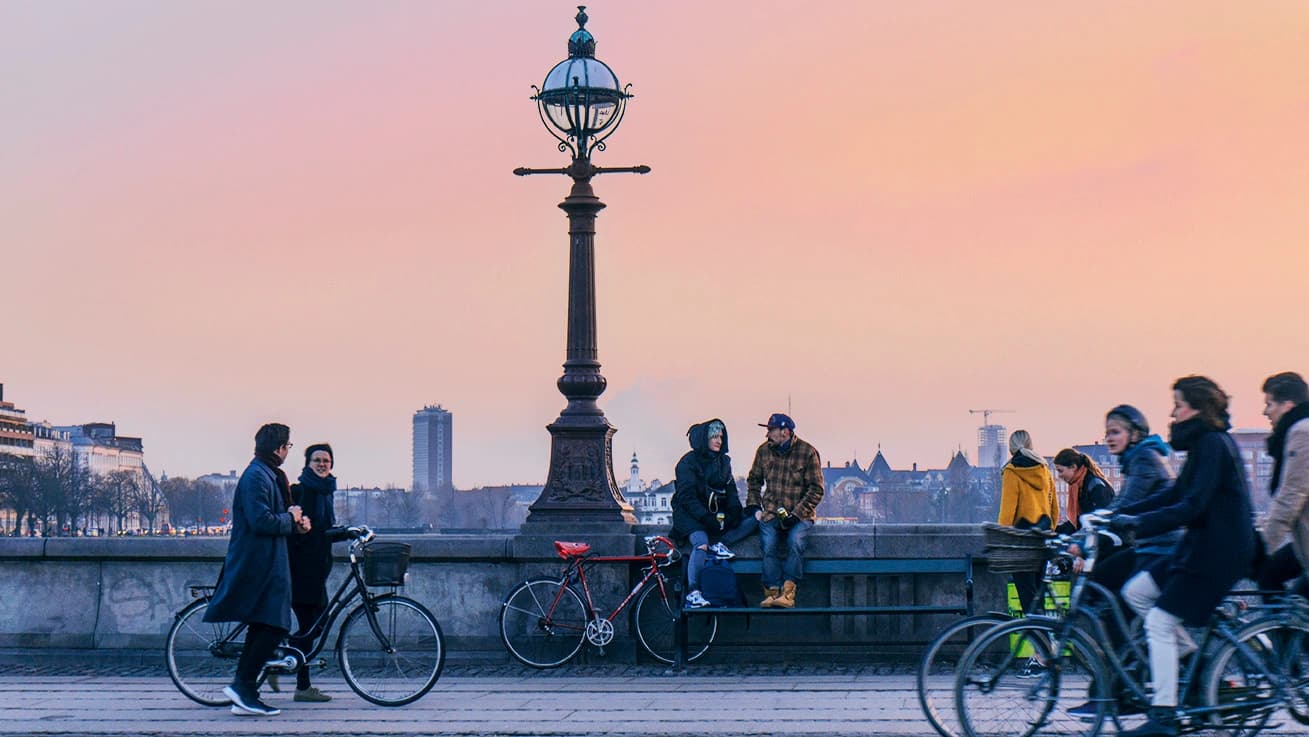
He highlights Dronning Louises Bro, a bridge connecting central Copenhagen with the Nørrebro neighborhood, as an example of a public space transformed into a popular hangout.
When the bridge was redesigned in 2011, the aim was to reduce car traffic. The wider sidewalks and bike lanes weren't specifically intended to lower noise levels. Yet according to Bjørn, the changed soundscape has played a particularly important role in transforming Dronning Louises Bro from a busy traffic artery into a popular gathering place and a symbol of Copenhagen's urban life.
"If the sound is pleasant, we slow down. We might even stop and stay awhile."
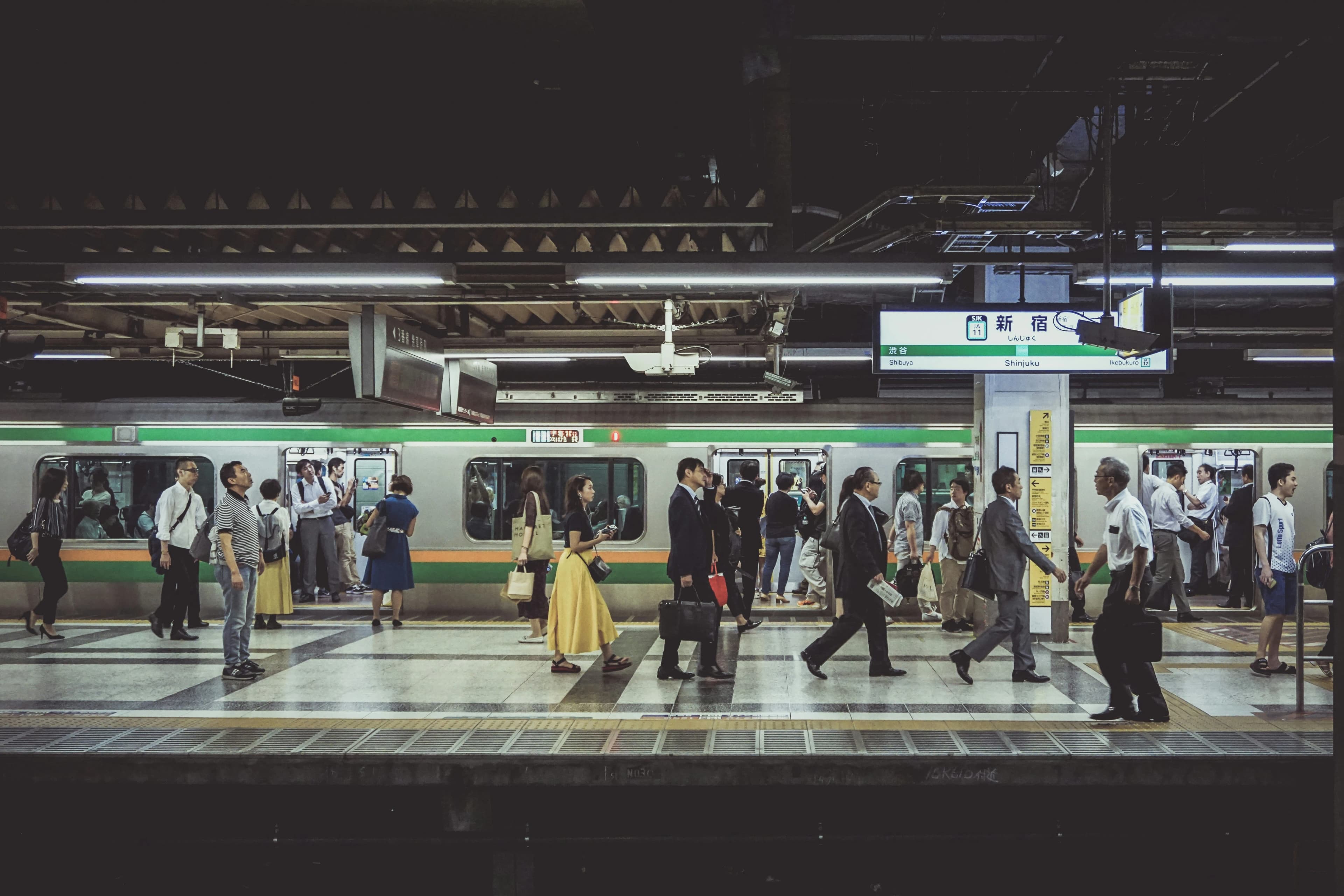
Another example of thoughtful sound design, Bjørn says, is Tokyo's extensive rail and subway network, which he describes as »brilliant« and »very human.«
Many stations have their own short melodies that play when trains are about to depart. These tunes give individual stations a distinctive acoustic identity, allowing passengers in some cases to recognize their station by sound alone.
»Why don't more places adopt this incredibly simple approach?« Bjørn asks rhetorically. It's a phenomenon he hasn't encountered anywhere else in the world.
Waterfall or Highway?
In the City of Copenhagen, 174,000 homes are exposed to traffic noise exceeding the recommended limit of 58 dB at the facade. At more than 37,000 homes, traffic noise exceeds 68 dB.
Noise pollution must be taken seriously, Bjørn stresses, because it contributes to premature deaths and a range of diseases. But focusing solely on noise maps and decibel levels isn't enough. We also need to consider the quality of sound.
»The sound of a waterfall can be just as loud in decibels as a highway. But for most people, highway traffic triggers stress responses in the body, while a waterfall produces feelings of joy,« he explains.
So if reducing noise isn't the only answer to the city's clamor, how can we improve the auditory experience for the many people who live and spend their daily lives there?
While Isak Worre Foged advocates critical listening and walking through the city with our ears wide open, Ingeborg Okkels encourages architects to talk to local residents before they begin designing and building in an area.
The goal is to understand people's experience of sound and incorporate it into the design process. That can start with practical questions: Should there be trees outside? Should the parking lot be farther away? And what about people who use hearing aids?
High-frequency sounds can be particularly unpleasant when amplified by hearing aids. To create a comfortable soundscape for people with hearing loss, designers should therefore avoid acoustics that emphasize these frequencies.
"Listening is an active process, and there are many different ways to listen."
The Sounds Beneath Paris
Like the many other impressions of city life competing for our attention, sound has an enormous influence on how present we are with other people. An oversaturated soundscape can overwhelm us, making us want to shut out our surroundings.
That's the view of anthropologist Sandra Lori Petersen, who has served as research director for the projects Hvad er nabostøj (What Is Neighbor Noise?) and Sammen om nabostøj (Addressing Neighbor Noise Together).
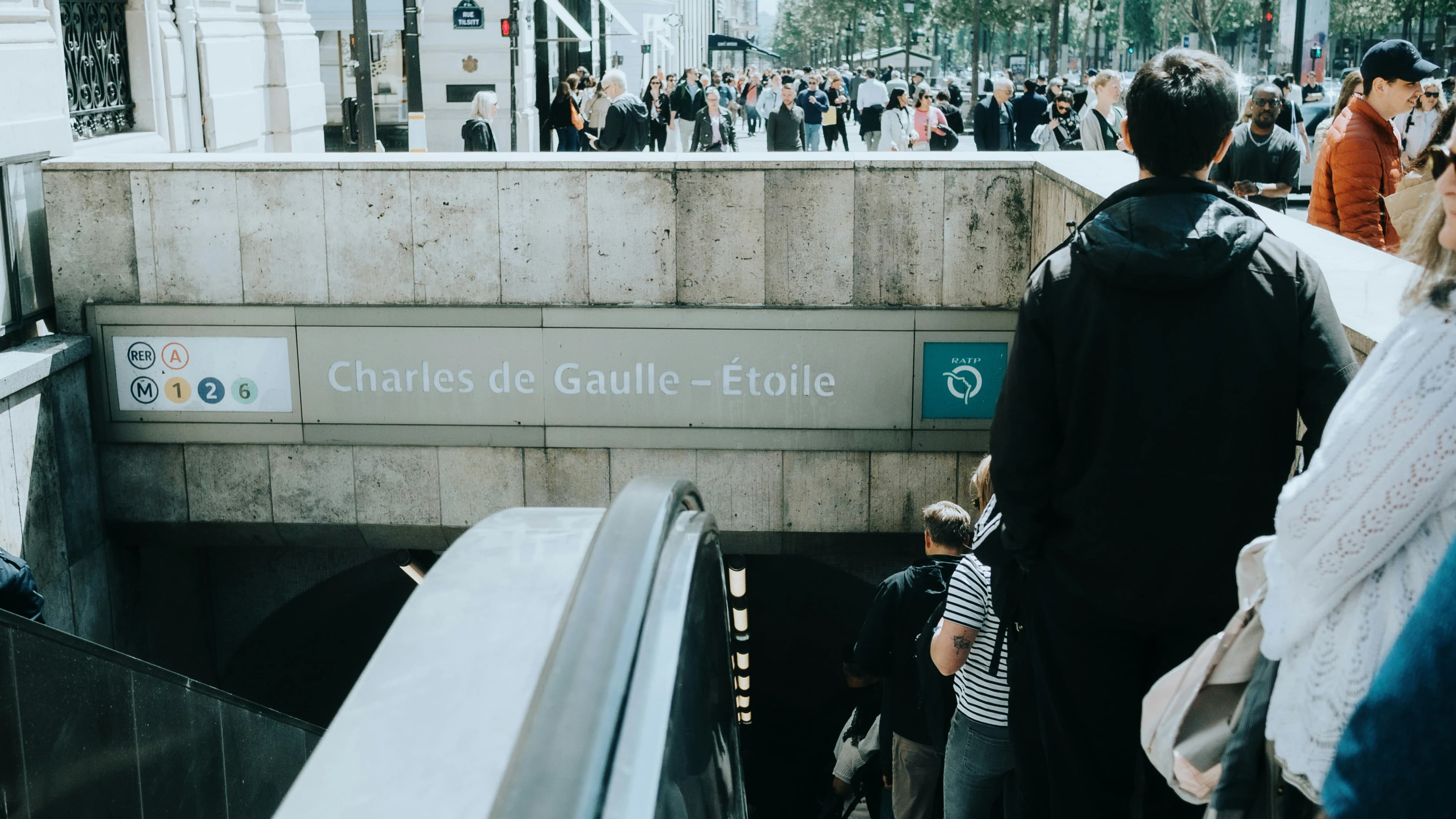
She experienced firsthand what an overload of urban sound could do to her while navigating the maze-like Paris Metro beneath the city's streets.
The Metro is known for its mix of architectural styles, but it's also a place of intense acoustic activity, Petersen explains. The constant barrage of sounds in the underground passageways made her "tune out" to protect herself.
»There was so much noise all the time that I'd walked right past an elderly woman before I realized she was actually asking for help. I hadn't heard her because I wasn't listening,« she recalls.
Her experience in the Paris Metro illustrates how the sounds of the city quite literally influence how we feel and how we relate to the world around us. And how too much sound can cause us to stop listening altogether – ultimately distancing us from one another.
Noisy Neighbors and Thin Walls
The city's soundscape doesn't stop at our front door. Architecture also shapes which sounds we hear inside our homes – and how we respond to them.
Many people might use a decibel threshold to determine when sound becomes noise. But according to Sandra Lori Petersen, it's not quite that simple.
»Noise is sound that we experience as a nuisance,« she explains, adding that when we feel positively about a relationship, we're generally much more tolerant of the sounds associated with it.
If we want to encourage good neighborly relationships and diversity in our cities, one architectural measure worth prioritizing is effective sound insulation in apartments.
Conflicts between neighbors over noise often end up focusing on people's behavior. But the real problem may not be the sounds your neighbors make. It may simply be the thin walls separating you.
Silence Isn't the Goal
At the same time, complete silence shouldn't be the ultimate goal, Petersen argues. Reducing the number of sounds can, however, make us more aware of those that remain.
She encourages architects to design pleasant auditory experiences into public spaces by choosing the right materials. Wood surfaces, for example, reflect sound more softly than stone.
Petersen compares the pursuit of complete silence to an architectural ambition to eliminate all visual stimuli. Few people would find that particularly appealing, she points out.
A city with a good soundscape isn't a silent city. It's a place where harmful noise is kept in check, but where we can still hear water, voices, movement, and the sounds of everyday life. The challenge isn't to mute the city, but to tune it.
How Architecture Shapes Sound
Materials
Wood, concrete, glass, and textiles reflect, absorb, and diffuse sound in different ways.
Sound Waves
When sound waves encounter a material, they can be reflected, absorbed, or transmitted through it.
Distance
The placement of buildings and the distances between them affect how sound travels through the city.
Surfaces
Hard, smooth surfaces often create more reverberation, while uneven and porous surfaces can absorb or scatter sound.
Activities
The way a public space is used also helps shape its soundscape. A lively square filled with people, a busy transportation hub, and a quiet courtyard each have their own distinct acoustic character.