Theater Architecture Through Time: From Amphitheaters to Modern Opera Houses
A guide to theater architecture from ancient amphitheaters to contemporary and experimental theater buildings. From Baroque court theaters to civic theaters, Historicism, and modernist design—featuring examples such as the Colosseum, the Court Theatre in Copenhagen, and the Sydney Opera House.
By Dansk Arkitektur Center
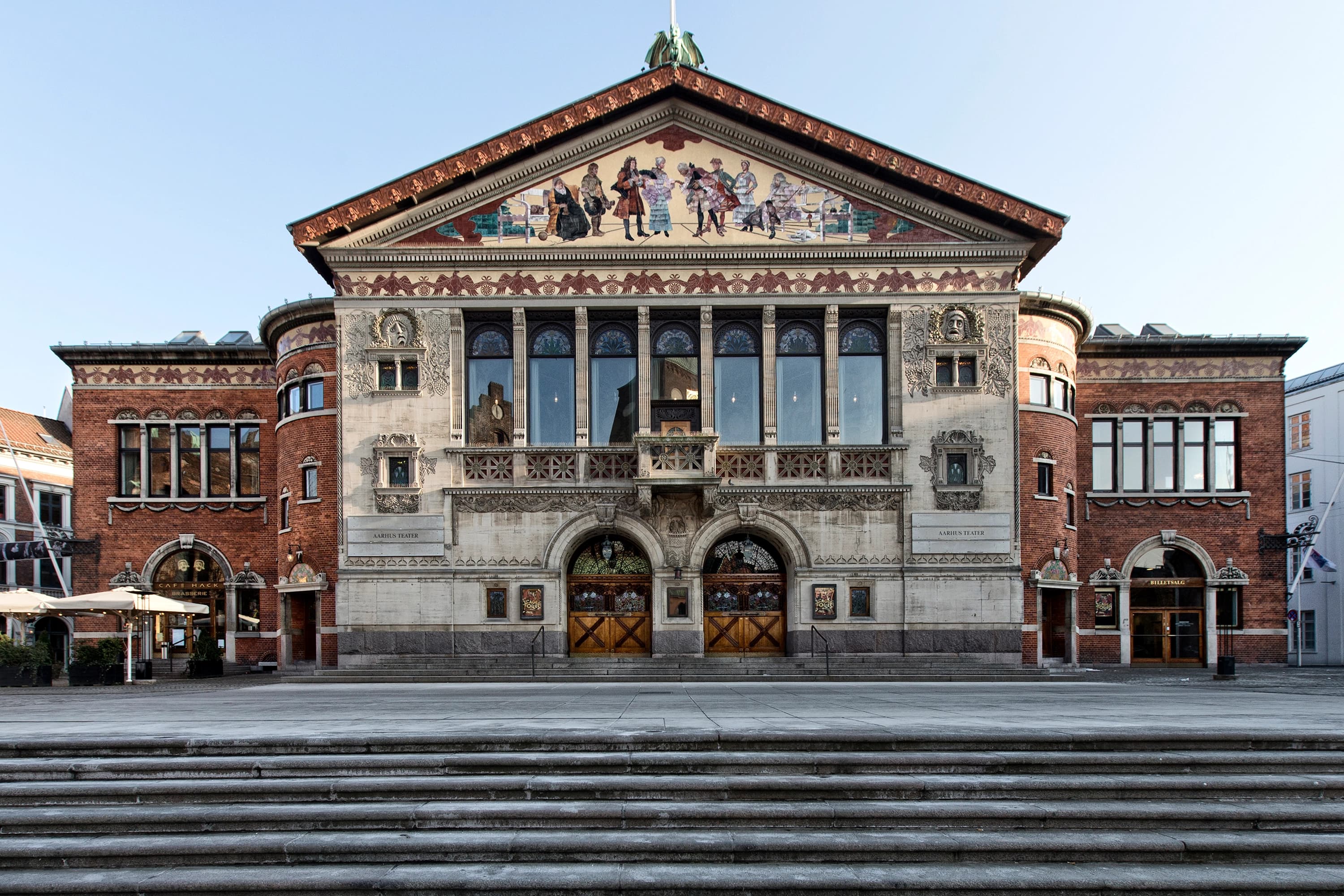
Today’s theater buildings and theater architecture encompass a wide range of architectural expressions. Some are preserved historic theaters with columns and statues, built in a time when performances relied on elaborate sets and costumes.
There are also modern theater buildings with simple, sculptural forms that suit contemporary drama. In addition, there are experimental theaters in which the stage and auditorium nearly merge into one. In some places, former warehouses and other industrial buildings have been converted into performance spaces.
Greek and Roman Theaters
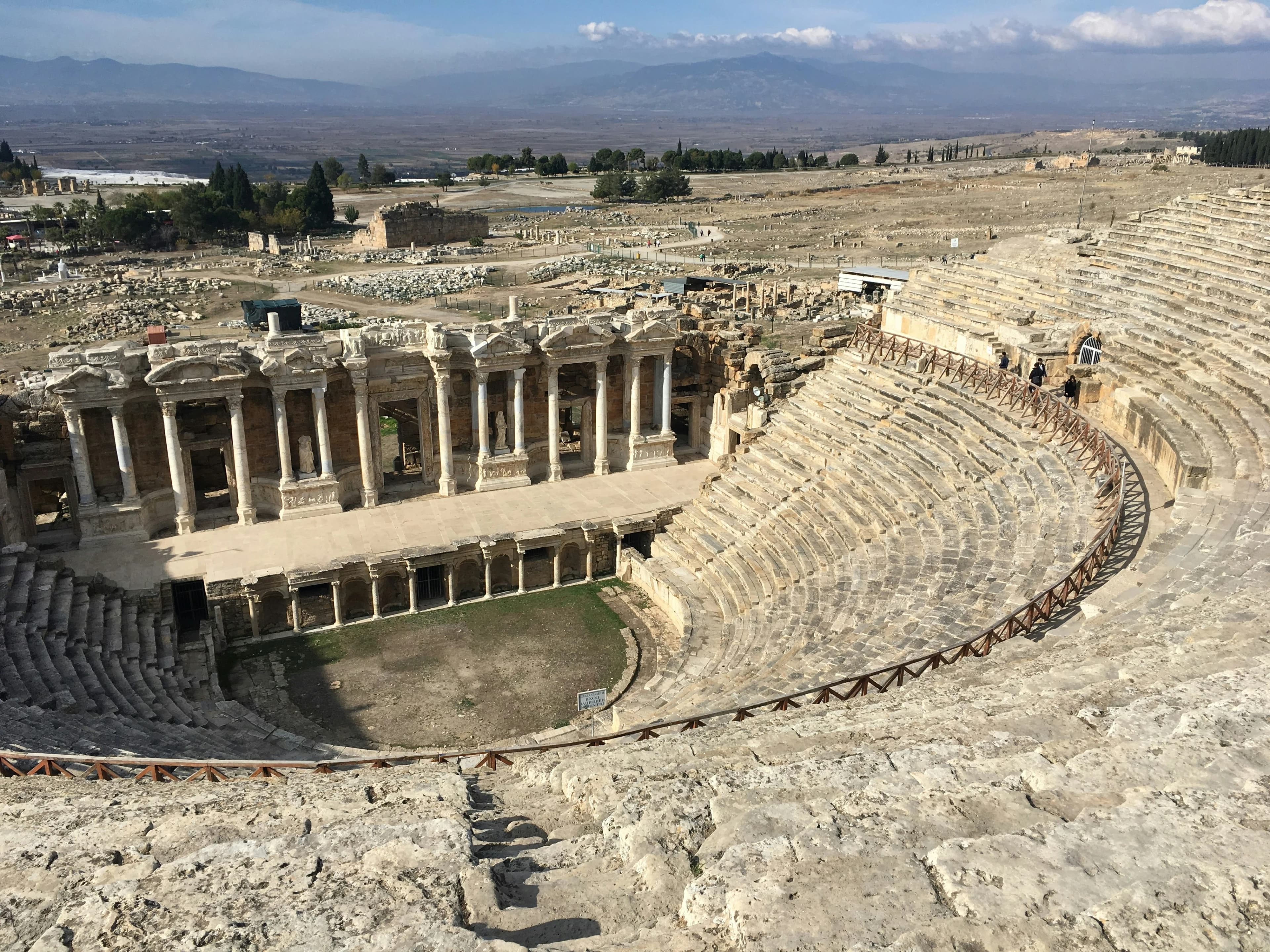
Theater buildings and amphitheaters date back to antiquity. The ancient Greeks built remarkable theaters. Their theaters were typically semicircular and built into hillsides so that all spectators could see the stage. The sloping terrain also amplified the sound from the stage, allowing the audience to hear the actors clearly.
This type of theater, where the seating rises in tiers, is known as an amphitheater.
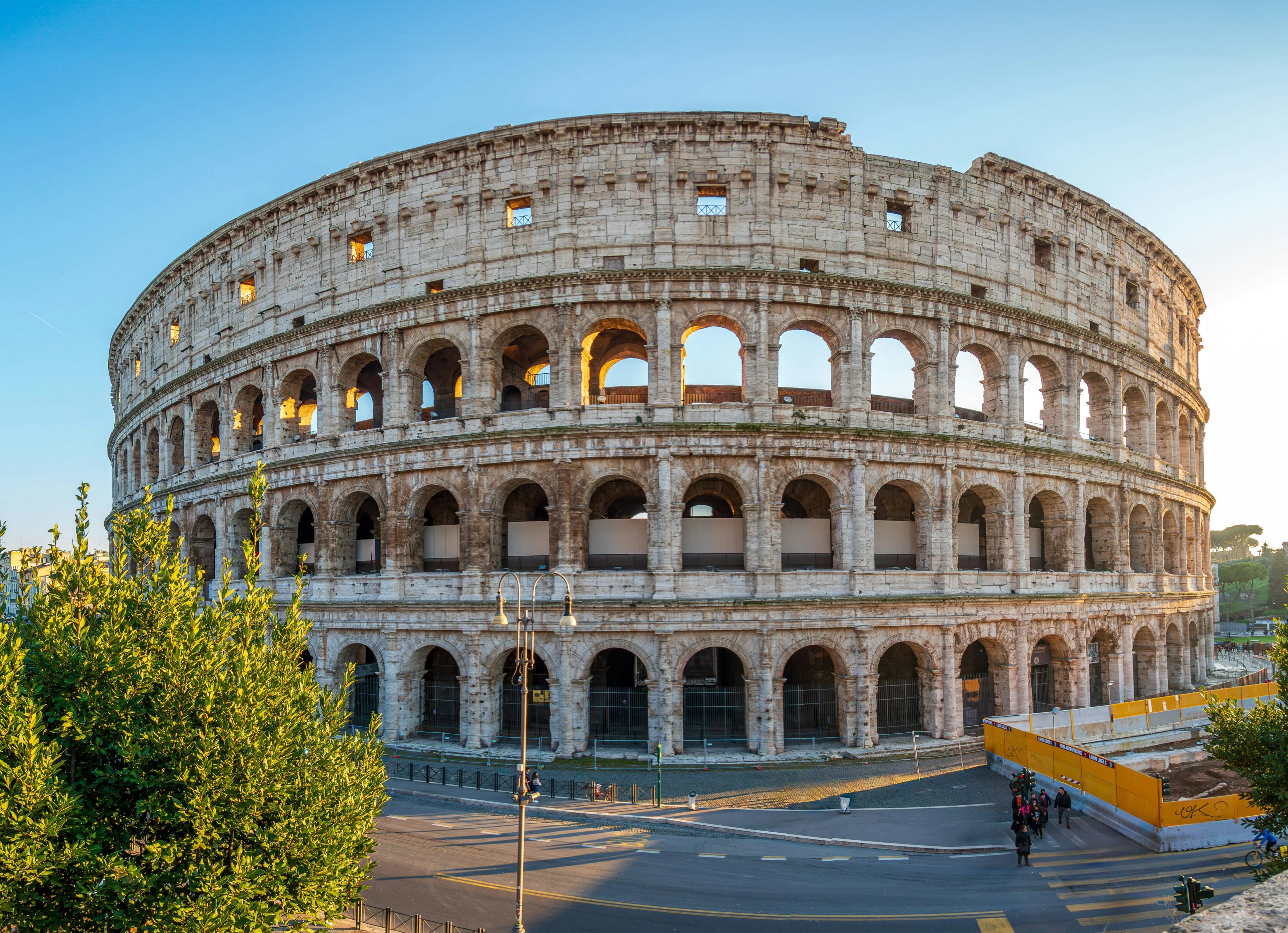
The Romans were inspired by the Greek amphitheater. One of the most famous examples of an ancient Roman theater is the Colosseum in Rome (72–80 CE). This structure could hold around 50,000 spectators, who attended events including gladiatorial contests. Using travertine and Roman concrete, the Romans were able to construct the sloped seating structure themselves. Unlike the Greeks, they were not dependent on natural hillsides and could therefore build theaters throughout the Roman Empire—even in flat landscapes and desert regions.
The Staged Life
Lavish Baroque theaters were an important part of court life, providing entertainment for kings and their courts. Opera in particular was regarded as the quintessential dramatic form of the Baroque period, because it combined singing, music, dance, drama, costumes, and scenery. In that sense, opera functioned as a total theater, bringing together several art forms. It closely reflected the Baroque world itself, where architecture, sculpture, and painting were intertwined.
The auditoriums of Baroque theaters were often decorated with marble sculptures, heavy draperies, painted and carved figures, garlands, gilding, and crystal chandeliers. On the exterior, these theater buildings were designed in the Baroque architectural language, with large columns, curved lines, movement, and dramatic contrasts. Ornamentation was lavish throughout.
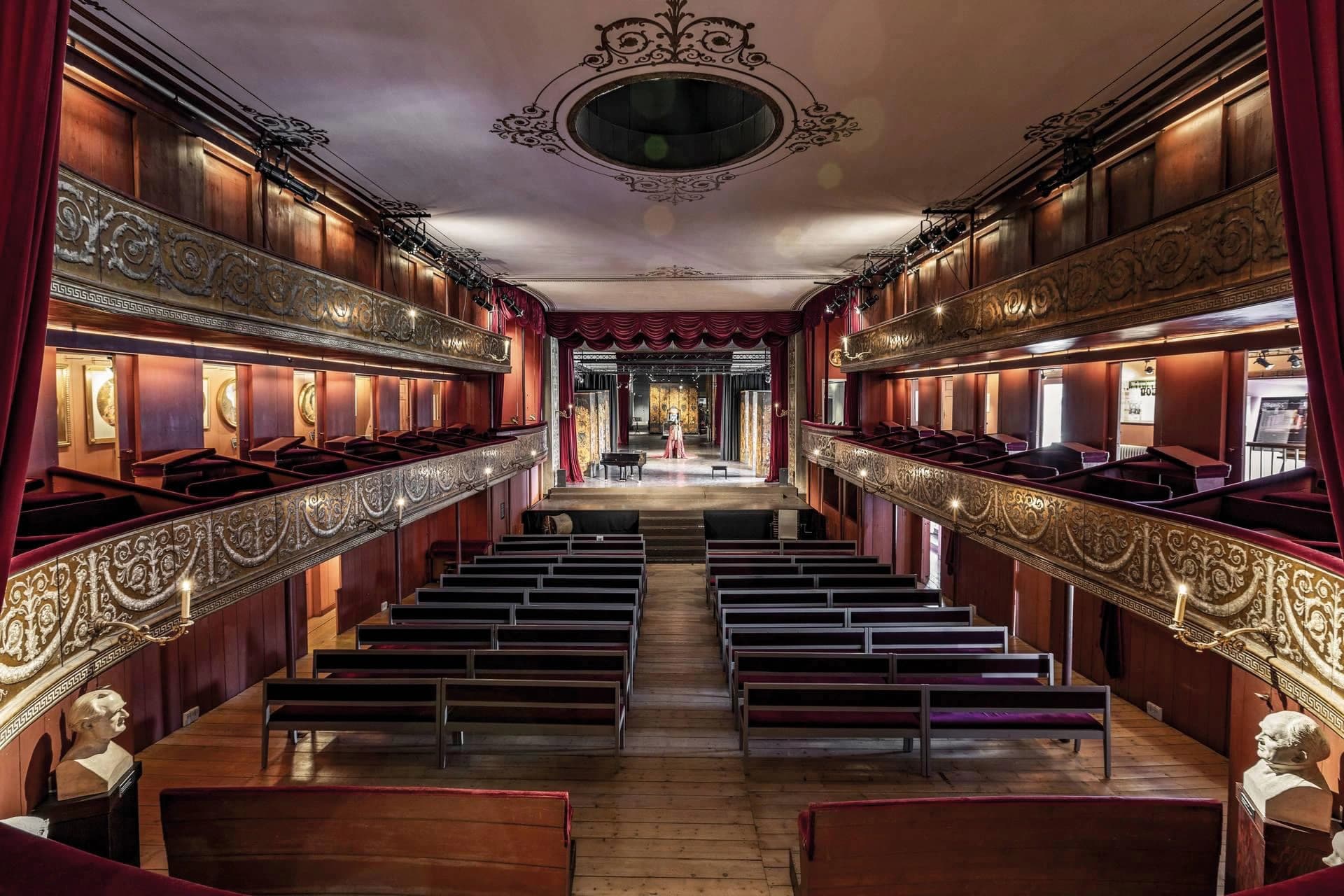
What is distinctive about Baroque theaters, however, is that they were built as much for life outside the stage as for life on it. The theater was a place where guests could see and be seen, and where they could stage themselves socially. Theaters included balconies and boxes for royalty and the nobility. From these boxes, one could look out over the audience while also being observed in return. For many theatergoers, the social life unfolding in the grand stairways and foyers mattered more than what was happening on stage. In this sense, the theater itself became another stage for court life.
Civic Theaters
During the 18th century, a new social class emerged: the bourgeoisie. These were wealthy merchants and civil servants living in the cities. They held values that differed significantly from those of the nobility and the church, who had previously dominated power and wealth. Education was highly important, and the developing middle-class society also needed places where people could gather around shared values.
As a result, new building types were needed in addition to churches and palaces. Schools and universities appeared, along with libraries, theaters, and museums. These became places where the bourgeoisie could gather around culture and education.
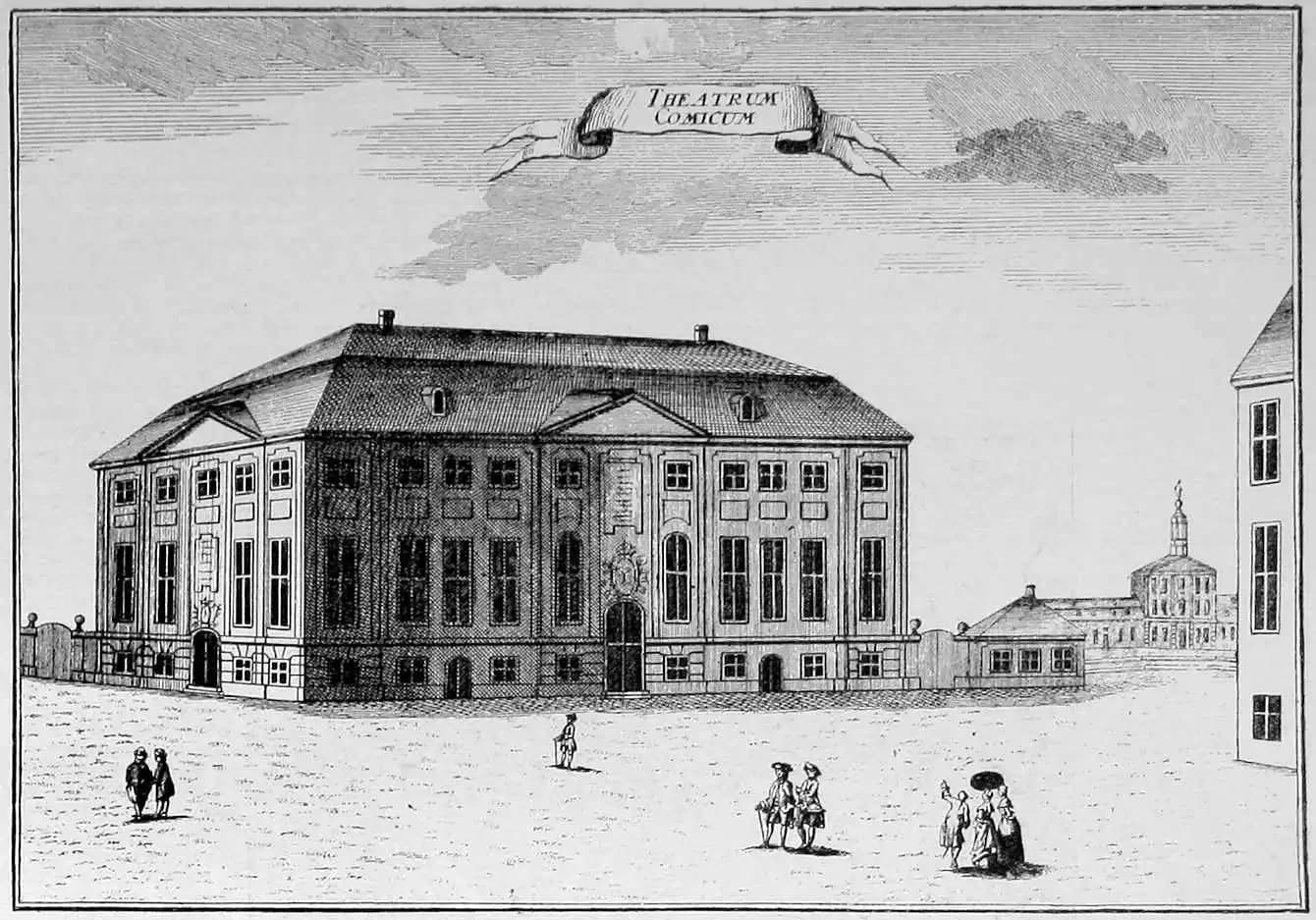
For the bourgeoisie, theaters were places where they could become wiser and more reflective. On stage, they saw moral and human dilemmas presented dramatically, and these helped them think through issues in their own lives. In Denmark, the comedies of Ludvig Holberg (1684–1754) were especially popular among middle-class audiences.
Unlike the court theaters with their private boxes, civic theaters were designed so that all spectators shared equal status. In this respect, their design drew inspiration from ancient amphitheaters. In these theaters, what took place on stage mattered most. The audience itself was no longer the primary spectacle.
On the exterior, civic theaters were often built in the Neoclassical style, like many of the bourgeoisie’s other buildings. Their forms were borrowed from ancient architecture.
Neoclassical buildings were simple and monumental. The extravagance of the Baroque disappeared, replaced by classical elements such as columns and triangular pediments, which gave the building dignity, authority, and restraint.
Historicism
From the mid-19th century onward, theater construction accelerated once again, driven by the prosperous bourgeoisie in Europe’s major cities. However, their purposes differed from those of the 18th-century middle class. Now, the social function of the theater once again took center stage: to see and be seen.
An outstanding example of a Historicist theater is the Paris Opera, built between 1854 and 1875. It incorporates Baroque-inspired elements in order to give the building the same lavish and theatrical character found in Baroque architecture.
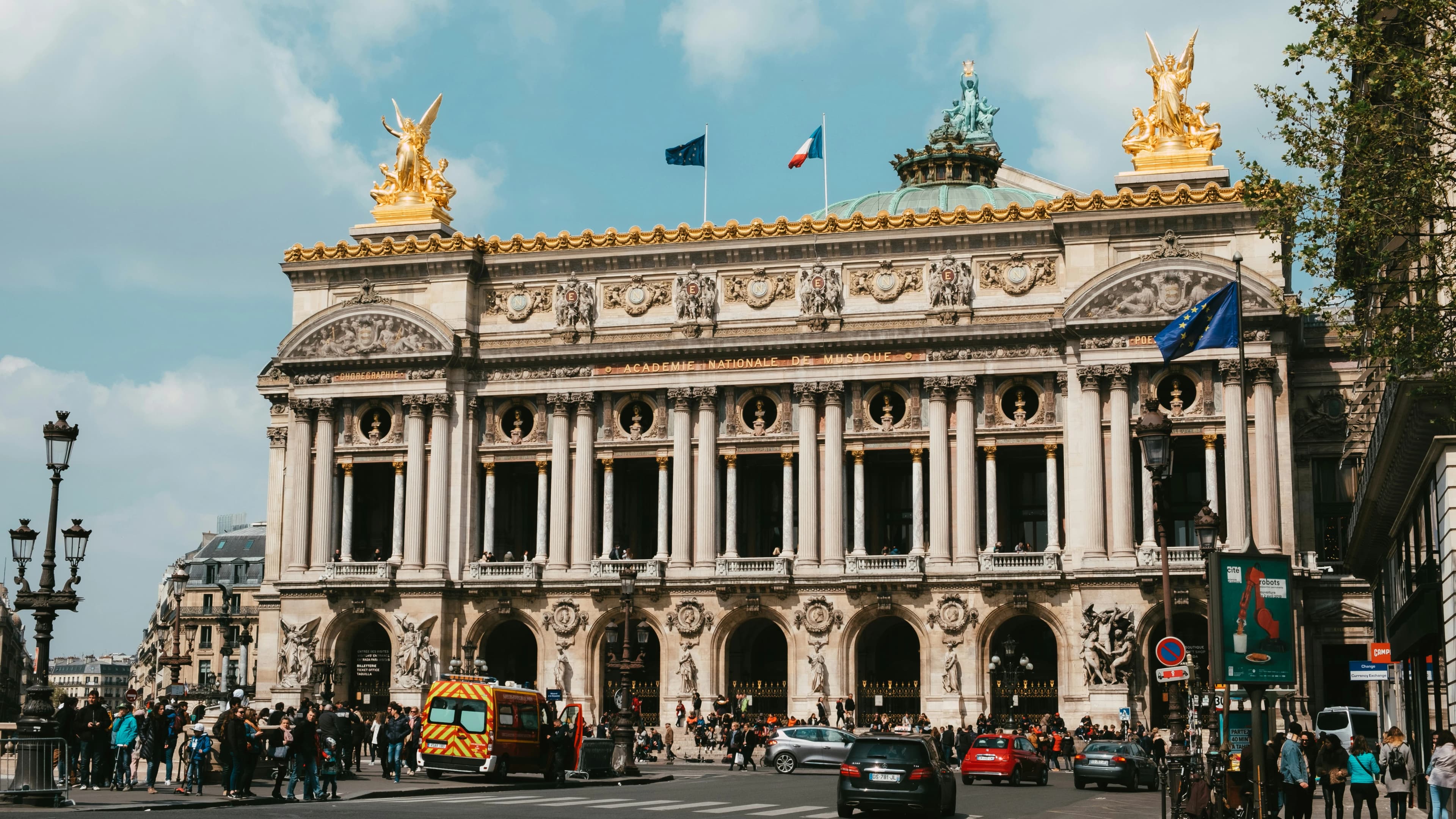
This is especially evident in the grand foyer, where a monumental staircase offers opportunities to move through the space, encounter others, and survey the crowd. In fact, more than a third of the building’s space was devoted to the social life of the audience. As in the Baroque period, the life on stage became somewhat less important. Unlike genuine Baroque interiors, however, Historicist decoration was often executed in plaster.
Many theaters across Europe were built in the Historicist style. In Denmark, both the Royal Danish Theatre in Copenhagen and Aarhus Theatre are notable examples.
New Forms and Simplicity in Theater Architecture
There is a major leap from the Historicist theaters of the 19th century to more recent theater buildings. Modern theater architecture adopted the language of modernism, with simplified forms detached from earlier symbolic meanings. Gone were the classical columns and pediments, the decorated boxes, and the carved or molded ornament.
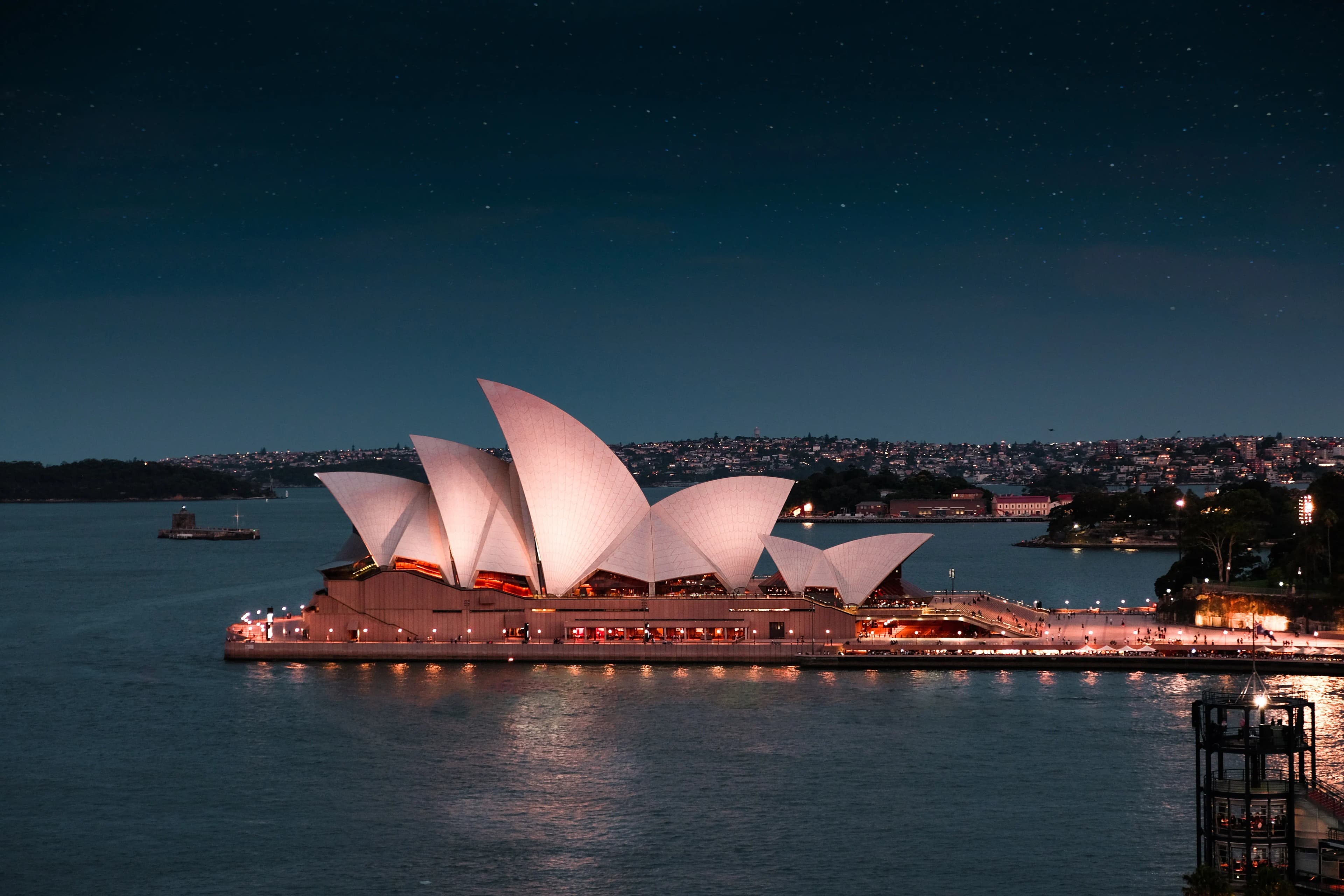
Jørn Utzon’s Sydney Opera House is one of the world’s most famous opera houses and a key example of modern theater architecture. Its soft, sculptural forms create a completely new and distinctive expression. The emphasis on a pompous facade, so typical of older theaters, is replaced here by a building whose overall form becomes a sculpture in itself through its sail-like shells.
As drama and theater continue to find new forms of expression, theater buildings, opera houses, and theater architecture will continue to evolve as well. The building must suit the action unfolding on stage, and it must suit the audience that comes to the theater to be entertained, provoked, or inspired to reflect.