World Capital of Architecture 2023: A New Cultural Turning Point for Copenhagen
When Copenhagen became the World Capital of Architecture in 2023, Municipal Architect of Copenhagen Camilla van Deurs hoped the year would spark a transformation similar to the one the city experienced as European Capital of Culture in 1996.
By Dansk Arkitektur Center
What You Could Experience During World Capital of Architecture 2023
In 2023, the Danish Architecture Center (DAC) hosted exhibitions, architecture runs, tours of buildings normally closed to the public, and a wide range of other activities.
Opening Up Architecture
“Until 1996, I think many of us saw culture as something like opera for the affluent suburbs north of Copenhagen. But during that year, our understanding of culture expanded significantly. Today, 25 years later, we have institutions like the Danish Film Institute, Arken Museum of Modern Art, Vega, and the Museum of Photography in Copenhagen—places we know and love—many of which were initiated as part of the Capital of Culture year. We also built networks and raised cultural awareness, which contributed to a much more vibrant informal cultural life.”
“Back in 1996, Copenhagen was emerging from near bankruptcy. Construction cranes were just starting to rise, and the city gained new confidence as Europe’s Capital of Culture. Since then, Copenhagen has undergone a transformation. It has repeatedly been ranked among the world’s most livable cities. Danish architecture and design attract strong international attention, and then we were named World Capital of Architecture. What could that become a springboard for? We want to open up architecture, just as culture was opened up in 1996, even though there were far greater resources and a large administrative organization back then.”
Everyday Architecture and Everyday Monuments
In 2023, Camilla van Deurs and the City of Copenhagen aimed to broaden public understanding of architecture.
“We want to challenge how people think about architecture. It’s not just about bricks and buildings. It’s not only historic architecture, the medieval city, or Kay Fisker’s modernism that we all love. It is also everyday architecture. How does school design affect my children’s learning? How does the layout of my apartment building influence whether I meet my neighbors? What does it mean that our bike lanes and bike bridges are designed, not just built as cheaply as possible?
To me, it creates real value when we highlight what matters. Bicycles matter. That’s why they should have everyday monuments designed by the best architects. This is how we can emphasize the connection between architecture and daily life,” says Camilla van Deurs.
New Ways to Explore Copenhagen
One way to do this was by focusing on local neighborhoods and nearby places. During the architecture year, the municipality worked with a wide range of partners to make it possible to explore the city’s districts in new ways.
“You could go out into your own neighborhood and experience buildings you may always have been curious about. We collaborated with DAC on Open House, opening up buildings normally closed to the public. For example, the old transformer station at Trianglen in the Østerbro district, which people are working to make accessible. Or the former banknote printing facility at Denmark’s National Bank, where the people behind Kulturhuset på Broen hoped to create a one-year cultural venue.
These kinds of everyday urban mysteries should be accessible. And we hoped people would take the opportunity to visit Copenhagen’s nine other districts as well. There is remarkable architecture in places like Husum and Tingbjerg that many Copenhageners still have not discovered. So let’s use the year to explore the city together.”
Some local groups also had access to funding for new initiatives in their neighborhoods.
“We had limited funds, for example through Sharing Copenhagen, which could provide micro-grants. One example is a mother in Hulgårds Plads in Copenhagen’s Nordvest district who is deeply committed to ensuring clean air where children play. She dreams of creating a playground that reduces air pollution through planting. Projects like these can become iconic local initiatives. Østergro, the rooftop farm, started in a similar way, and later gained support from a wide range of stakeholders.”
"We want to challenge how people think about architecture. It’s not just about bricks and buildings. It is also everyday architecture,"
Addressing Difficult Questions
While 2023 was a year of celebration and experiences, it also created space for debate and dialogue about difficult issues. Camilla van Deurs hoped to bring more nuance to some of the highly polarized discussions about the city’s development.
“We need to dare to ask difficult questions—to talk about what hurts. One major issue we’re working on is mobility. We are developing a public space plan for the medieval city center that will remove many parking spaces. This challenges the way we traditionally view shared urban space.
My personal convenience—being able to drive directly to my door—is challenged when space has to be shared more equally with others. That affects private life. Another major issue is biodiversity, for example in relation to Amager Commons. This is also a question of values. If we want more space for nature, then we need to build higher. But Copenhageners generally do not like high-rises, and every time someone proposes one, there are protests. At some point, we either have to stop growth or start building in a different way. These are the kinds of discussions that shaped 2023 as well.”
A Distinctive Copenhagen Activism
“There is always lively debate around urban development, and positions have become increasingly polarized. We have seen demonstrations when the cobblestones in Gernersgade were removed, and recently someone chained themselves to Langebro Bridge. There is a kind of activism that may be very characteristic of Copenhagen—think of Christiania, the harbor park at Islands Brygge, or Ungdomshuset on Jagtvej.
But we must be able to have these discussions on an informed basis. It is not about deciding who is right. We will probably never fully agree, but the architecture year helped make knowledge available for some of these major discussions. Hopefully, that leads to a more nuanced debate about the very difficult choices that will have to be made in the future.”
Three Places the Municipal Architect Wanted to Show the World
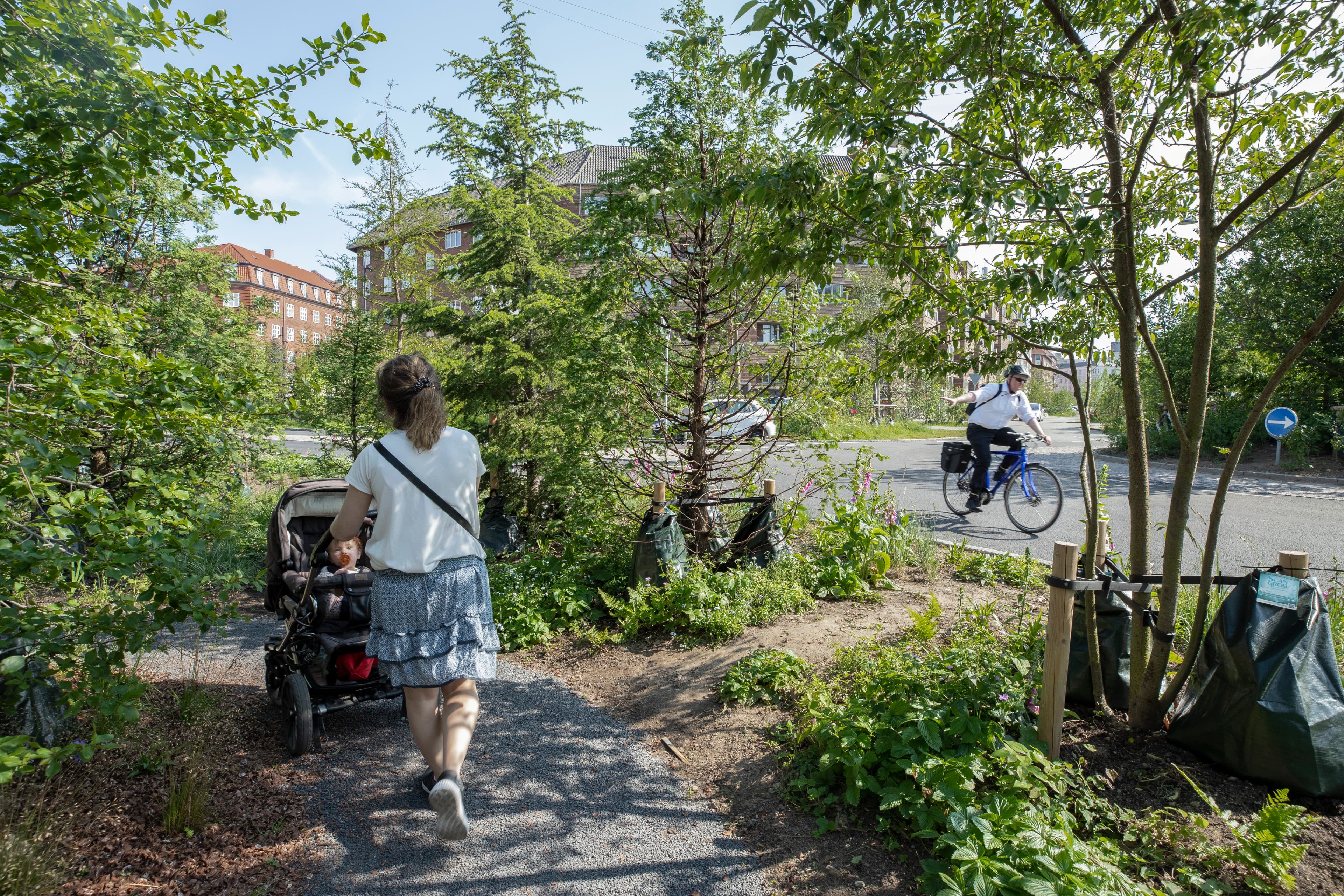
Photo: Mikkel Eye 1. The Climate Neighborhood
I would definitely highlight the Climate Neighborhood in outer Østerbro. It is Copenhagen’s own version of Bo01, the pioneering district in Malmö that has inspired urban developers for 20 years through its focus on sustainability and people-friendly environments. It is truly a prototype for how we should develop urban districts in the future, with a strong focus on climate adaptation and biodiversity.
Henning Larsen Architects are completing Klimakarreen there. It is a demonstration project for sustainable urban renewal of older buildings, sidewalks, and courtyard gardens.
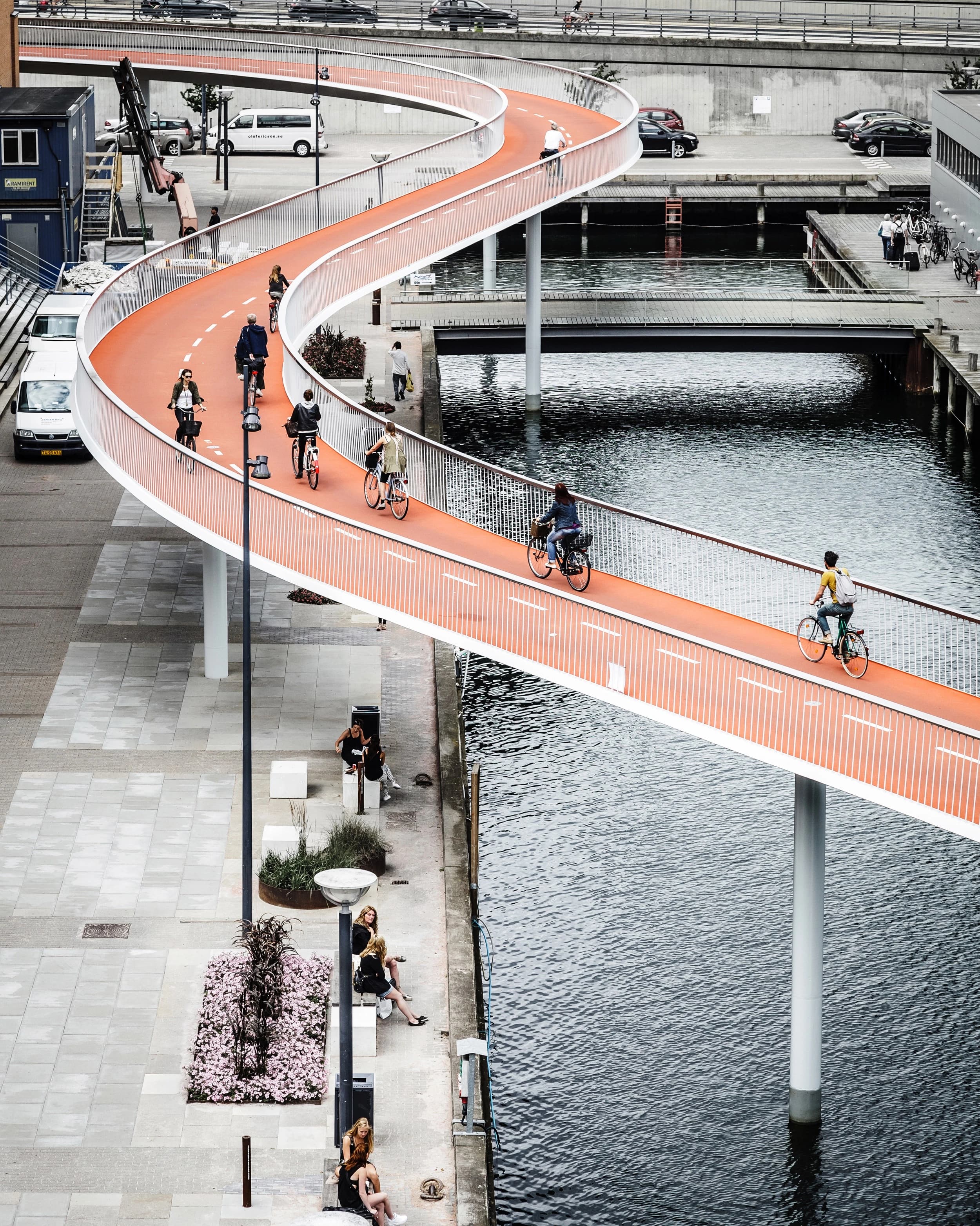
Photo: Rasmus Hjortshøj 2. The Harbor Ring
The route across the Cykelslangen bicycle bridge and around the Harbor Ring offers a strong sense of our historic city and its relationship to the waterfront—how the old industrial city moved out and made room for new housing and neighborhoods.
This is something we share with 90 percent of cities around the world, where harbor or riverfront areas are being transformed. I think we offer some strong examples of how to connect the city in a fluid and beautiful way. Especially if, as part of the route, you visit the Århusgade district at one end of the Harbor Ring and Sluseholmen at the other. These new areas each represent best practices in their own way, and that is something I would very much like to show the world.
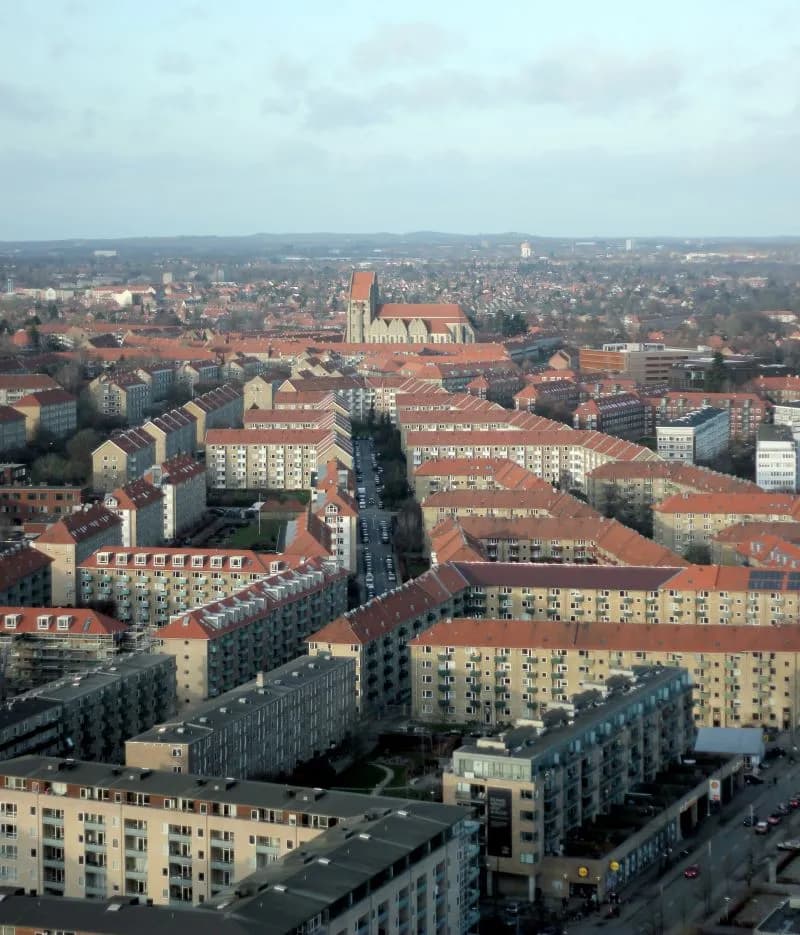
Photo: Københavns Kommune 3. Nordvest
The area around Grundtvig’s Church, Bispebjerg Bakke, and Tagensbo School is a remarkable welfare neighborhood from the 1930s and 1950s. I want to highlight it because it tells a Danish story about quality in modest surroundings. These are simply very good homes that still have strong material quality and a beautiful urban plan.
There are also many new things happening in the neighborhood. We are getting Grønningen, a new landscape project by SLA. There is a courtyard garden project on Tomsgårdsvej focused on biodiversity. A lot is happening along Rentemestervej. We also have an urban renewal initiative there because some of the area is considered socially vulnerable.
So this is classic Danish welfare architecture, but it is also a district that belongs to its own time and continues to evolve. I would like to understand it better myself, because this is where we are now: we need to work with our cultural heritage, transform it, understand the social challenges and the climate challenges, and become even better within the framework we already have. It is not just about building new.