You Might Not Know Grete Jalk, but You Should
Grete Jalk designed award-winning furniture, challenged the conventions of Danish furniture design, and helped document the history of Danish design. Chances are you’ve seen some of her iconic pieces – but do you know the woman behind them?
By Ida Elva Hagen
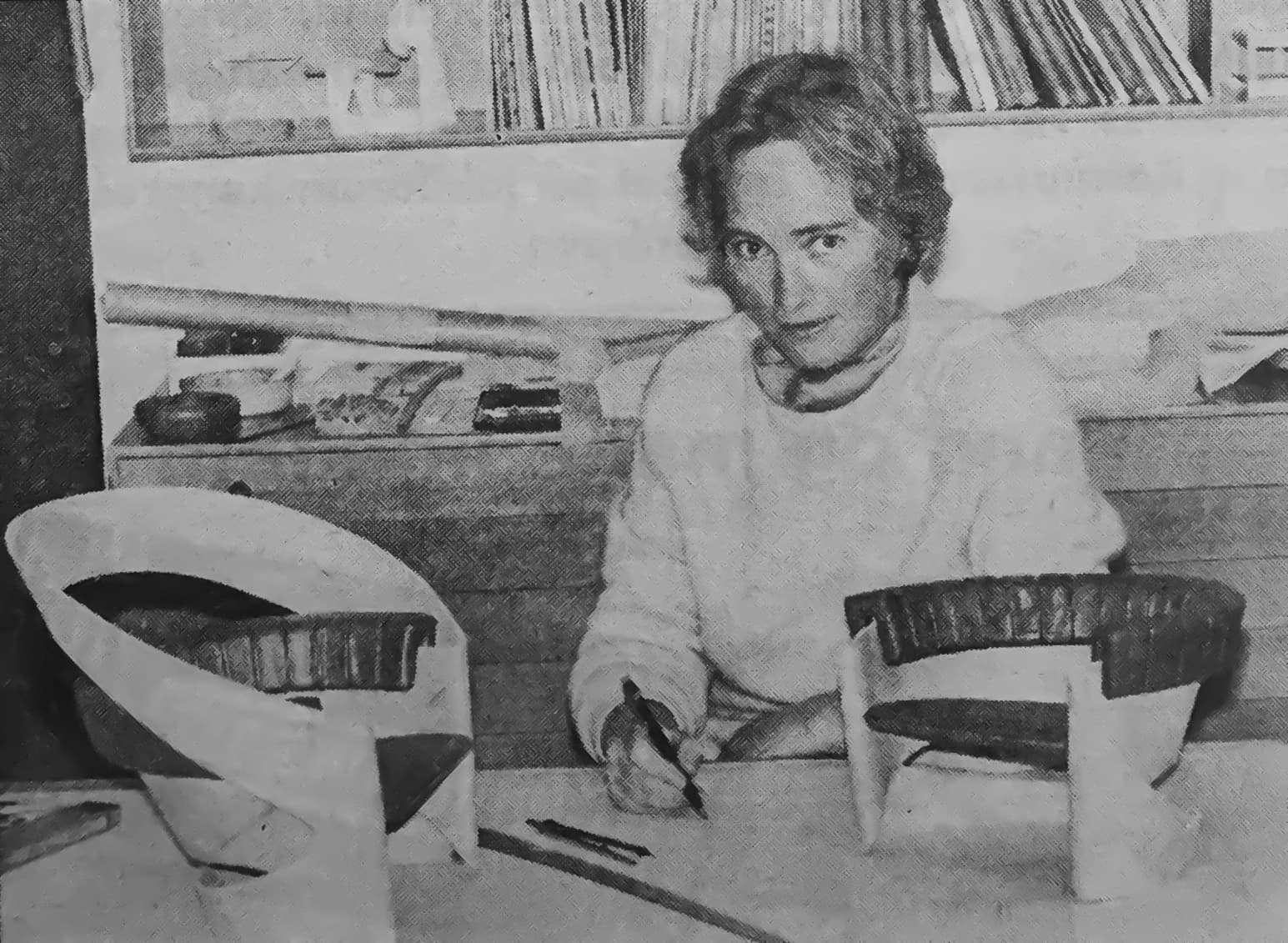
Grete Jalk is often referred to as ”The First Lady of Danish Design.” Yet her name remains far less familiar than those of Arne Jacobsen, Verner Panton, and Poul Henningsen, who have long dominated the Danish design scene.
Many Danes would probably recognize the faces of these three men – but only a handful of portraits of Grete Jalk are publicly available. Her furniture, on the other hand, is likely something you’ve seen.
With her experimental forms and innovative construction techniques, Jalk carved out a place for herself in an industry dominated by men. But her influence extended far beyond the furniture she created.

Beyond the Drawing Board
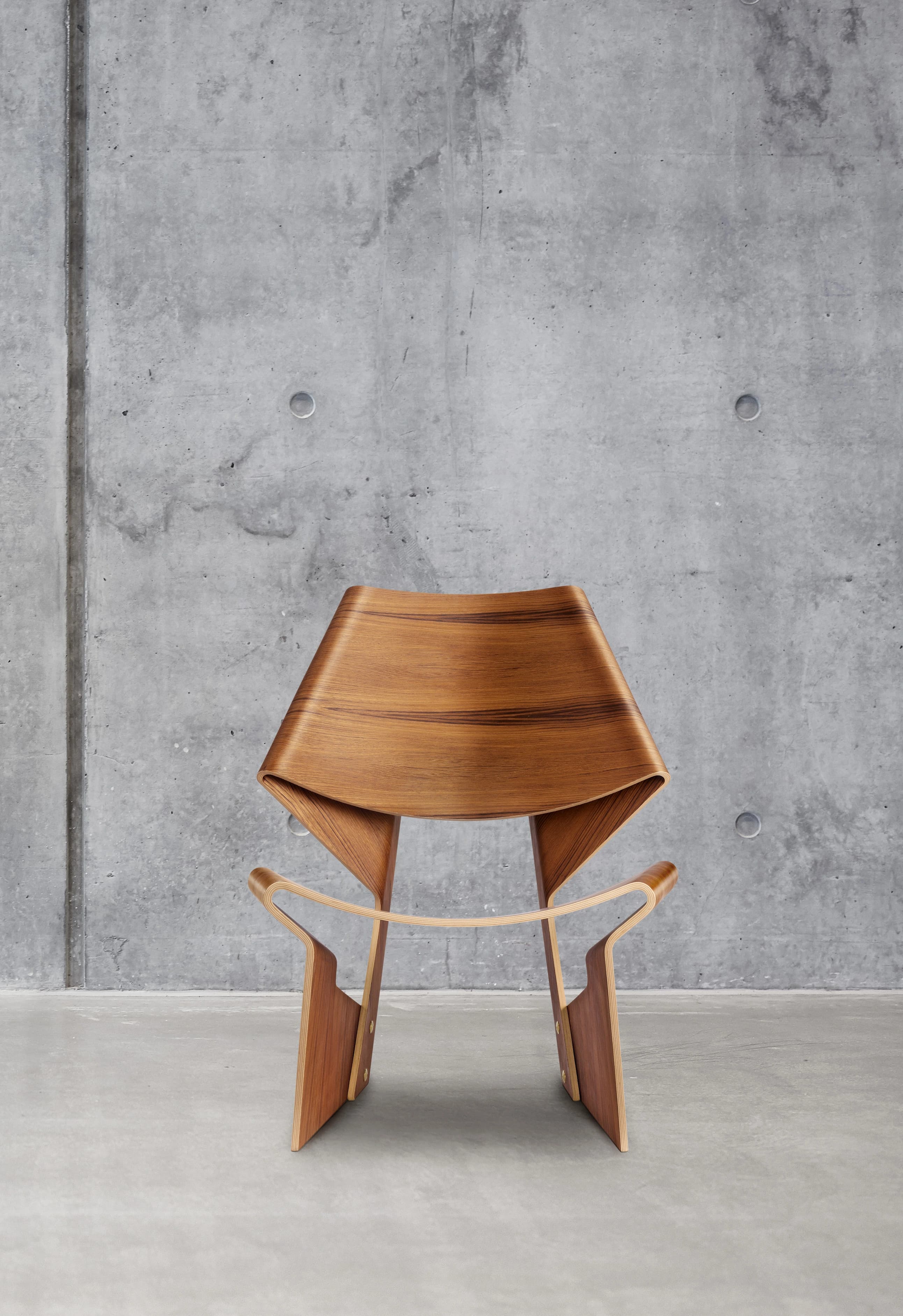
If you’ve ever visited a design museum, chances are you’ve come across her iconic GJ Bow Chair, also known as the Sløjfestol, from 1963.
Made from just two pieces of molded plywood, the chair features sweeping, graceful curves. It even won the Daily Mail’s international furniture competition in 1963 and earned a place in the collection of the Museum of Modern Art in New York.
But Grete Jalk had much more to offer than furniture. Alongside her work as a designer, she devoted much of her career to writing about, discussing, and documenting design. In 1956, she became editor of Mobilia, one of the era’s most influential magazines covering furniture, architecture, and design. Through its pages, she chronicled and explored developments in both Danish and international design.
Her fascination with the evolution of design eventually led to an even more ambitious undertaking. As editor of the four-volume Dansk møbelkunst gennem 40 år (40 Years of Danish Furniture Design), she compiled and documented four decades of Danish furniture design. The publication has since become something of a bible for anyone interested in Danish design.
Grete Jalk didn’t just help shape the history of Danish design – she helped tell its story.
You Might Know...
GJ Bow Chair
It’s almost impossible to mention Grete Jalk without mentioning her iconic GJ Bow Chair. Its complex construction made it difficult to manufacture, so only around 300 were originally produced. In 2008, Danish company Lange Production brought the chair back into production.
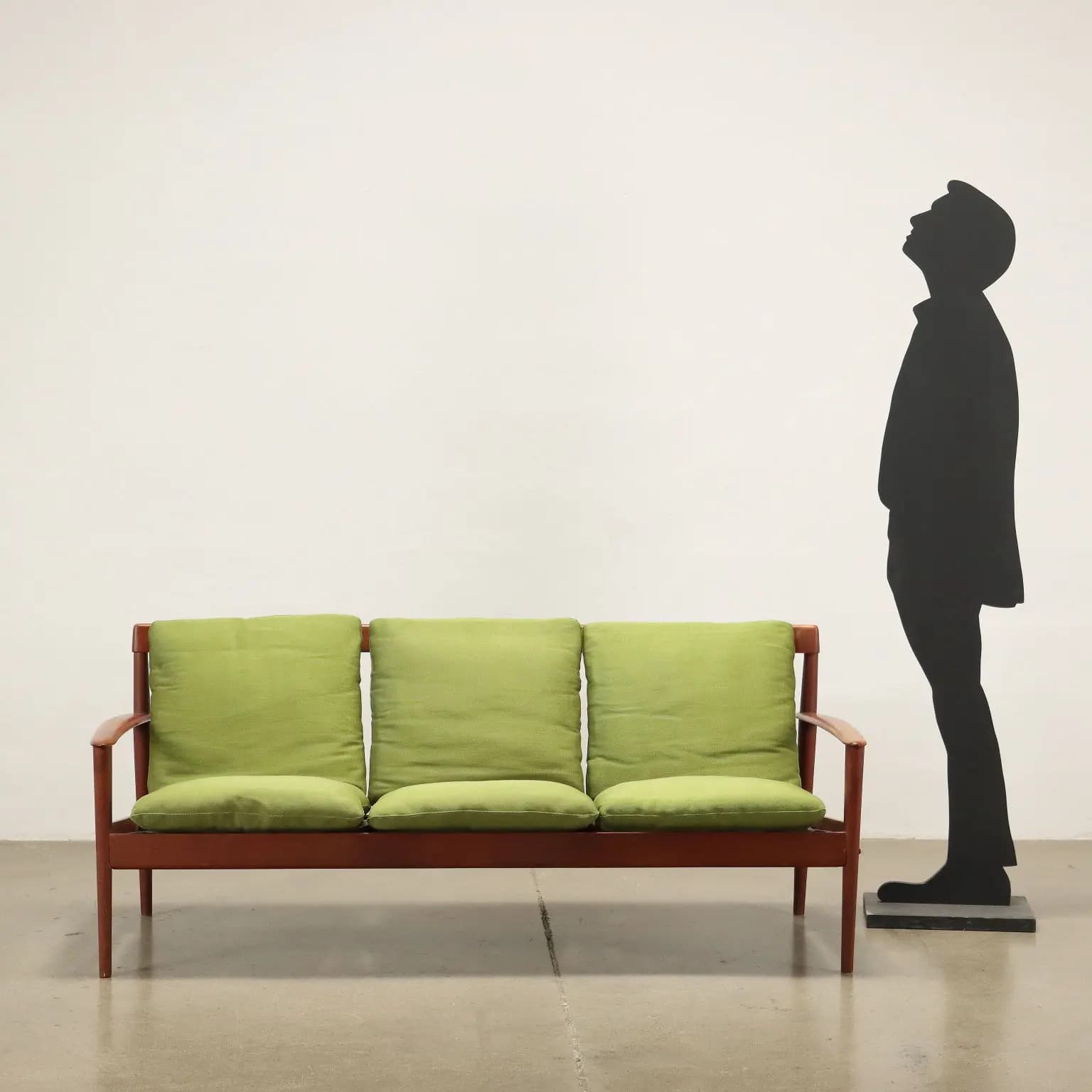
Model 118 Sofa
With its slender teak frame, gently curved armrests, and loose cushions, Grete Jalk’s Model 118 sofa is an example of her more classic furniture designs. It was originally produced by France & Daverkosen.
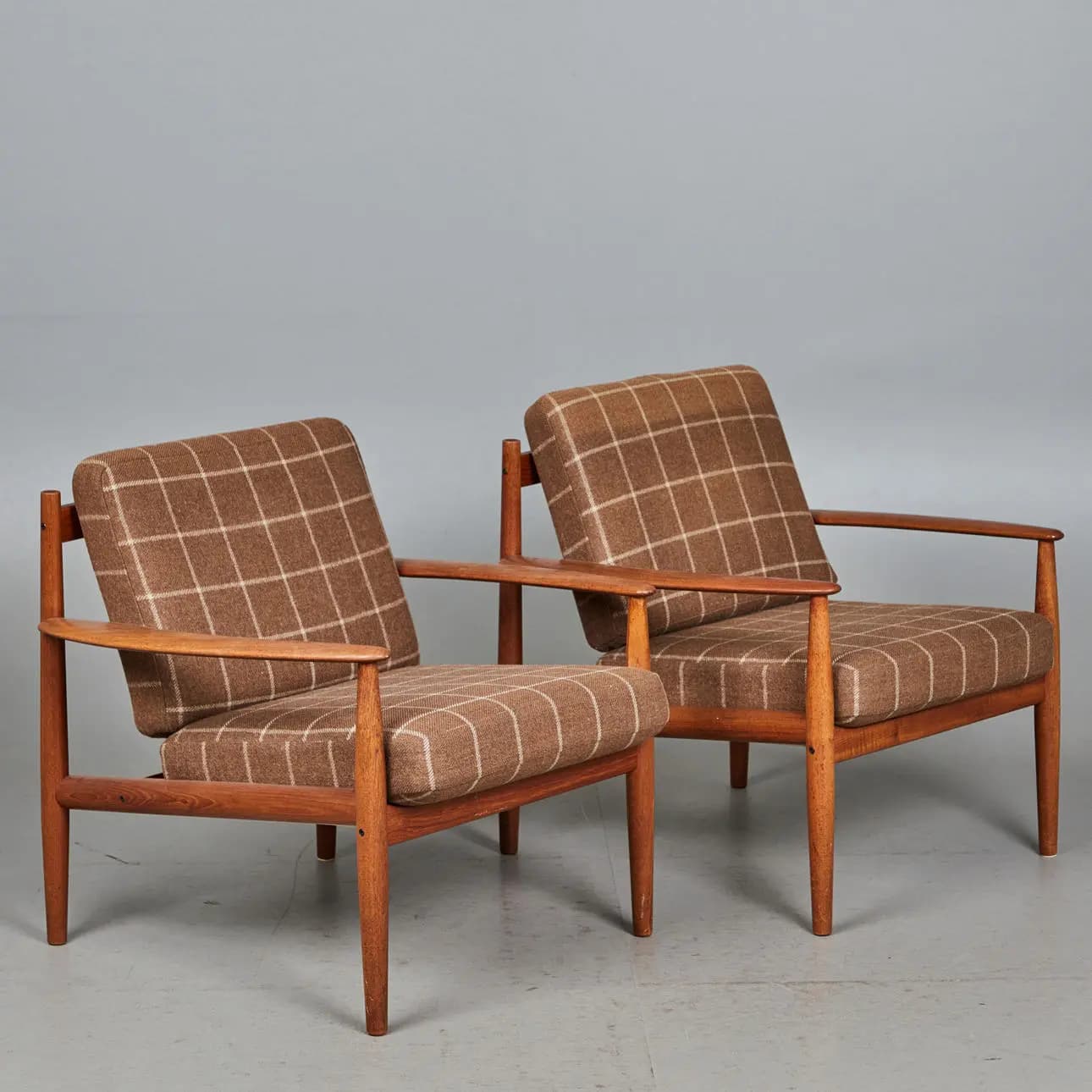
Model 118 Armchair
Grete Jalk’s Model 118 showcases the more classic side of her design work. With its slender teak frame and soft upholstery, the armchair strikes a balance between tradition and innovation in Danish furniture design.
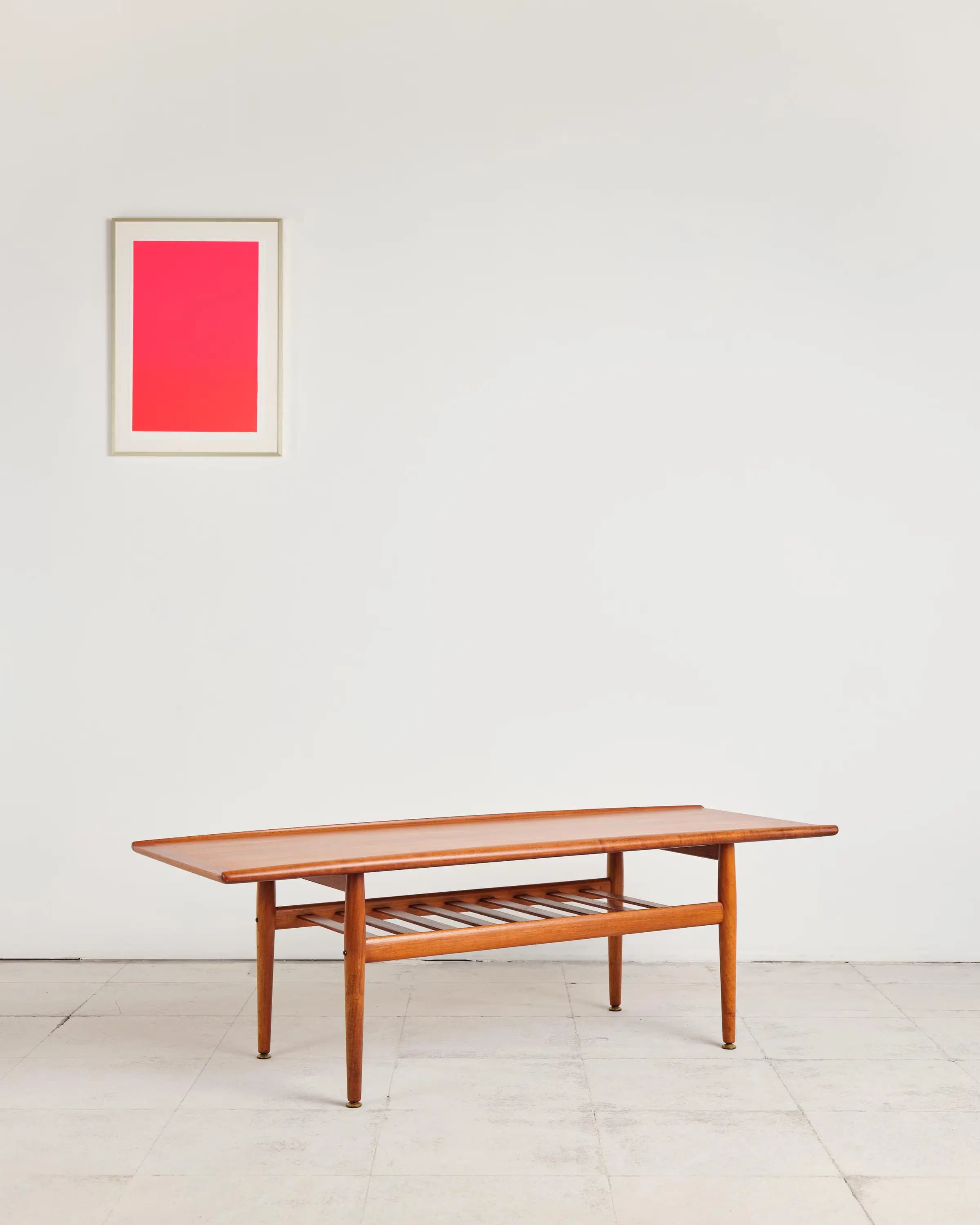
Teak Coffee Table
In the 1950s, Grete Jalk designed a teak coffee table for Glostrup Møbelfabrik, featuring gently upturned edges, slender legs, and a shelf for books and magazines. The design seamlessly combined clean, simple lines with everyday practicality.
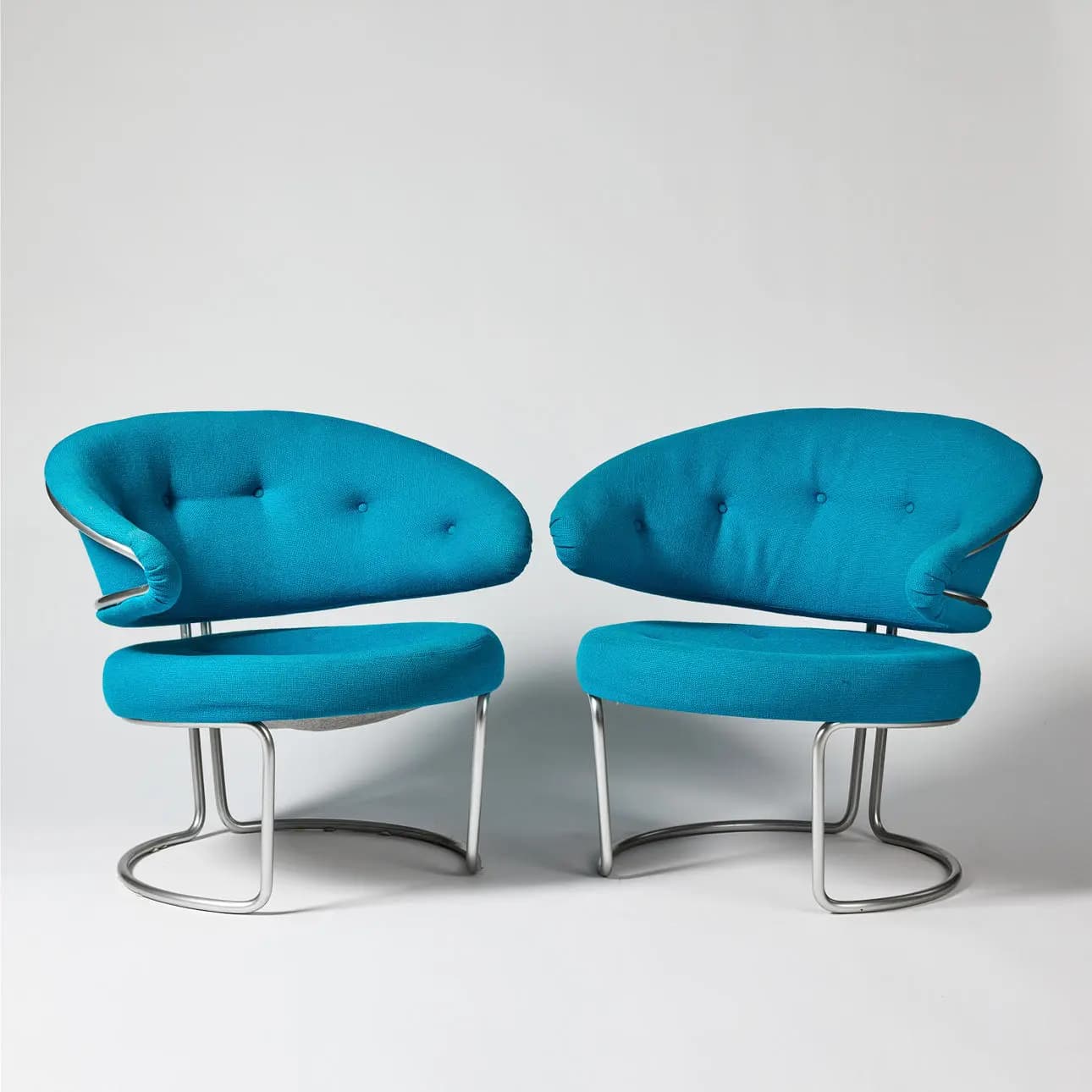
Fritz Hansen Armchair
Grete Jalk didn’t work exclusively with wood. This armchair, designed for Fritz Hansen, features an aluminum frame and fabric upholstery. Here, she moves beyond traditional wood construction, embracing metal as part of her design language.
From Philosophy to Design
Grete Jalk’s journey into furniture design actually began in a very different field. As a young woman, she studied philosophy before changing course to train as a cabinetmaker. There, she learned the craft from the ground up, gaining hands-on experience with the materials and construction techniques that would later shape her work as a designer.
She went on to study furniture design at the School of Arts and Crafts and later at the Royal Danish Academy of Fine Arts, where her teachers included Kaare Klint – one of the most influential figures in Danish design history.
For Klint, the human body was the starting point. His designs were guided by human proportions, drew inspiration from historical furniture styles, and reflected a deep respect for traditional craftsmanship.
Jalk embraced many of these principles but gradually developed a design philosophy of her own. She became increasingly interested in the possibilities offered by machinery, new materials, and modern manufacturing techniques.
About Grete Jalk
Grete Juel Jalk was born in Copenhagen in 1920.
She taught design from 1950 to 1960 and established her own design studio in 1954.
Throughout her career, she won numerous design competitions and received many awards, honors, and grants, including a lifelong stipend from the Danish Arts Foundation, awarded in 1990.
She passed away in 2006 at the age of 85.
Breaking with Tradition
Although Grete Jalk was trained in the traditions of Danish furniture design, she also looked beyond Denmark for inspiration. Among her influences were Finnish architect and designer Alvar Aalto and American designer Charles Eames, both of whom experimented with bending and shaping wood in new ways. Their work shared an interest in new materials and industrial production with the German Bauhaus school of art, design, and architecture and the broader international modernist movement.
Jalk began exploring these possibilities through her own experiments. In 1955, she presented furniture manufacturer Poul Jeppesen with a series of daring designs featuring bold, curved forms. But bringing these ideas to life proved difficult. It took seven years of collaboration on more traditional furniture before her experimental designs finally became a reality.
Her desire to push the boundaries of what wood could do is also evident in her nesting tables from the early 1960s. Rather than assembling them from separate pieces, she shaped each table from a single thin sheet of wood, bending both ends downward to form the legs and tabletop in one continuous piece. The result was a series of tables with beautifully simple, organic forms.
A Golden Year in Design
1963 was quite a year for Grete Jalk. Most notably, her iconic GJ Bow Chair won the international furniture competition organized by the British newspaper Daily Mail.
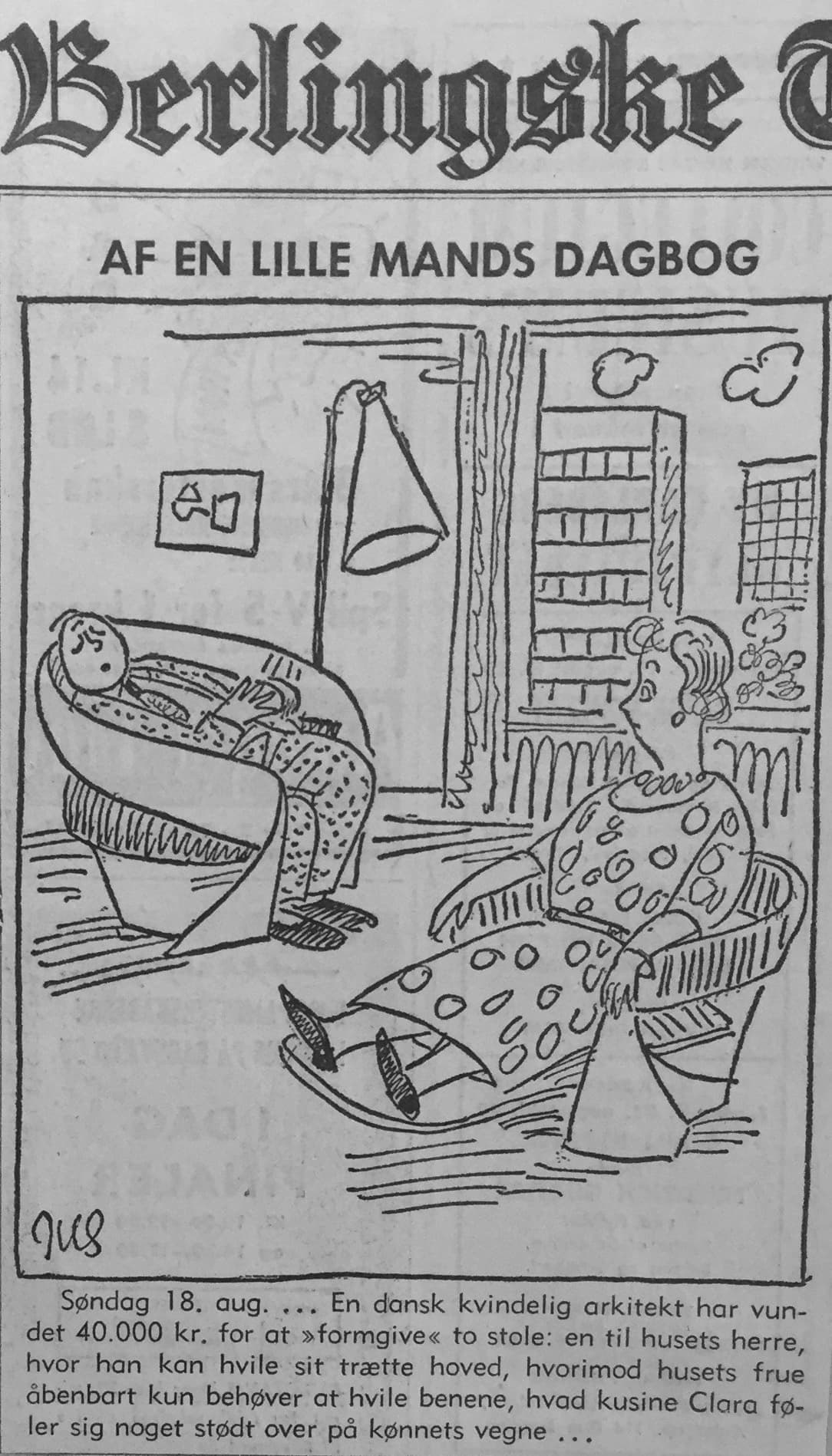
That same year, she also took first prize in a competition organized by the Daily Mirror and the British furniture manufacturers’ association. The challenge was to design a chair for a man and a woman – and Jalk’s response was the He-Chair and She-Chair.
On the right is a humorous take on Jalk’s He-Chair and She-Chair, published in the Danish newspaper Berlingske Tidende in 1963.
He, She, and the Chair
New forms and manufacturing techniques weren’t the only things that fascinated Grete Jalk. She was equally interested in the relationship between furniture and the people who used it.
1963 was a remarkable year for Jalk – and her GJ Bow Chair wasn’t her only first-prize winner. That same year, the British newspaper Daily Mirror and the British furniture manufacturers’ association issued designers an unusual challenge: Design one chair for a man and another for a woman.
Jalk rose to the challenge with the He-Chair and She-Chair. The two chairs were designed as a pair, yet each had its own distinct proportions. Their different dimensions reflected the anatomical differences between men and women that the competition sought to explore.
With the He-Chair and She-Chair, Jalk revealed another side of her approach to design. She wasn’t just concerned with the shape of a piece of furniture, but also with how it accommodated the human body.
And her approach clearly struck a chord. Jalk took home first prize, although the chairs never really made it into production.
People at the Heart of Design
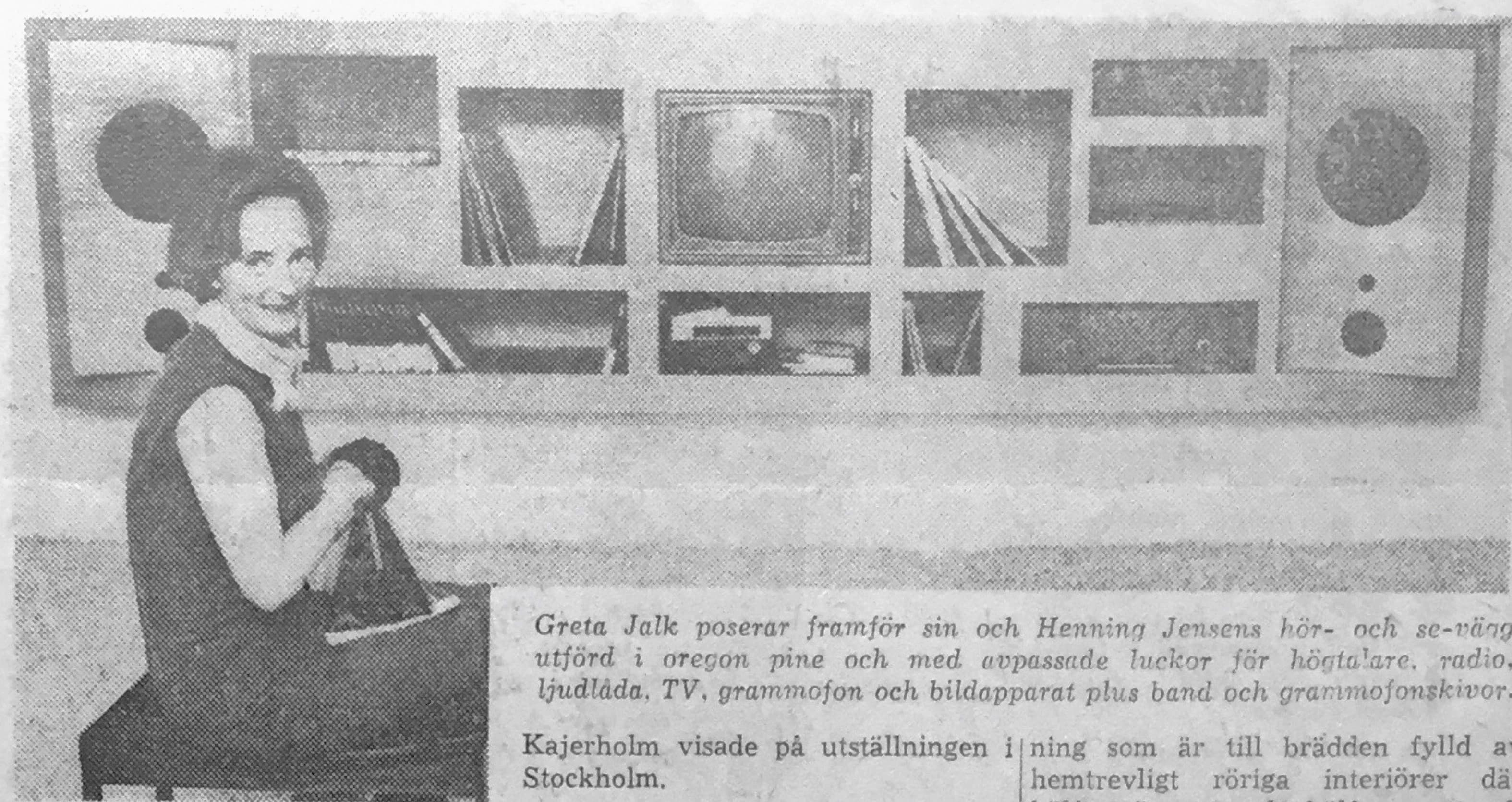
But Grete Jalk’s interest in people extended well beyond the furniture she designed. Through her work at Mobilia, she connected with some of the biggest names in Danish design. And one of those relationships began in a rather unexpected place.
During Christmas 1959, Jalk and her husband, Gunnar Bratvold, were traveling to Italy aboard a car-carrying train from Hamburg to Turin. Along the way, they met Poul Henningsen and his wife, Inger. In the dining car, two tables became one, and a chance encounter sparked a lasting collaboration. Over the next four years, Henningsen, also known as PH, contributed 40 articles to Mobilia. Later, his lamps and Jalk’s furniture were exhibited together in Zurich.
In many ways, the story captures something essential about Grete Jalk’s career. Whether she was designing furniture, writing about design, or collaborating with others, people were always at the heart of her work.
So the next time Danish design comes up in conversation over dinner, you’ll have another name to bring to the table: Grete Jalk.
More from DAC Magazine