Architectural Ornamentation: How to Describe Building Details
When describing a building’s appearance and impact, it is essential to pay attention to its ornamentation and architectural details—both decorative elements and functional features that reveal the building’s style and purpose.
By Dansk Arkitektur Center
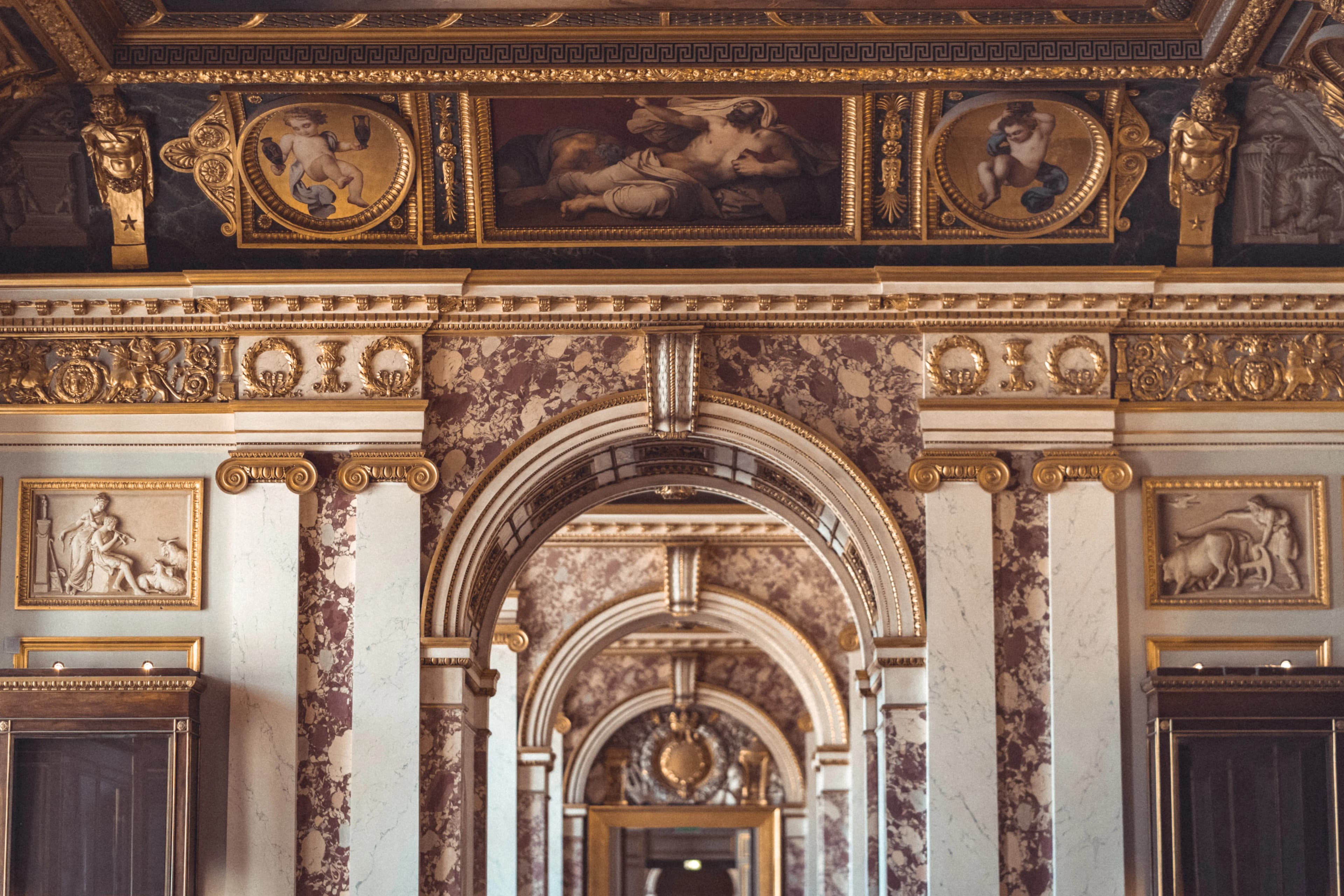
Architectural ornamentation can serve purely decorative purposes. This may include stucco patterns on walls or sculptures on façades. However, ornamentation can also be tied to a function. For example, windows and doors may have decorative frames or surrounds, and the transition between wall and roof may be embellished with a cornice. Above doors and windows, there may be triangular or arched forms.
Functional components such as doors, windows, arcades or colonnades, and bay windows also play a significant role in a building’s appearance. A building’s architectural details are closely connected to the period in which it was constructed. A Baroque church, for instance, typically features more ornamentation than a contemporary church. The building’s original purpose also matters: a residence for a wealthy citizen is likely to be more richly decorated than a courthouse.
A building’s ornamentation can also communicate its function. For example, if the decoration includes sculptures or reliefs of writers, this signals through the architecture that the building is a library.
When conducting an architectural analysis of a building’s ornamentation, you can consider the following:
- What elements make up the ornamentation?
- Does the ornamentation serve a function, or is it purely decorative?
- How are doors and windows decorated?
- What color is the building, and how does the color interact with the ornamentation?
- Is the ornamentation restrained, elaborate, or somewhere in between?
- How does the ornamentation relate to the building’s overall form?
- How does the ornamentation influence the experience of the building?
Color
A building can have several kinds of color. The color may come from the material itself—for example, a brick building will appear reddish if it is not painted. However, a building may also be painted in one or more colors. Color is an important part of a building’s façade details and architectural ornamentation.
Color can have different meanings. It may highlight the building, emphasize divisions within the structure, or help the building blend with its surroundings.
The color or combination of colors may be contrasting, harmonious, subdued, or bold. It may match neighboring buildings or stand in clear contrast to them.
Glossary of key architectural details and ornamentation:
Axis An imaginary line along which buildings or spaces are organized. An axis cannot be seen directly but can be perceived in the relationship between parts of a building—for example, a line running between two opposite corners or from the center of a building to its entrance.
Acoustics The sound conditions within a space—how sound travels and is reflected. Good acoustics enhance clarity and resonance, while poor acoustics cause sound to fade quickly.
Balcony An open projection extending from a building façade, typically aligned with one of the building’s floors.
Canopy A covering made of fabric, wood, stone, or stucco. Today, the term often refers to a fixed cover over a storefront. It may also describe a carved wooden canopy over a pulpit or throne. In the Baroque period, stucco ceilings were sometimes designed to resemble canopies.
Blind niche A recessed area in a wall, often shaped like a window or circle. It may serve as decoration or mark the location of a former window that has been filled in.
Frieze A horizontal decorative band applied to a wall, often located between the wall and the roof. Friezes are frequently ornamented with painting or stucco. A frieze with repeating rectangular indentations is called a dentil frieze.
Pediment A triangular or curved decorative element above a building’s main section or above doors and windows. Also known as a frontispiece or gable ornament.
Foundation The lowest load-bearing part of a building.
Property line The line marking the boundary between the sidewalk and private property.
Gable The end wall of a building, typically the shortest façade. The term may also refer specifically to the triangular portion of the wall.
Cornice A projecting horizontal element on a building façade, located above windows or doors. A cornice can also divide the façade horizontally. A belt course or string course is a lighter version, while the main cornice sits directly beneath the roof.
Half-column A column that projects only halfway from the wall.
Free-standing column A column that stands independently from the wall.
Horizontal A line running parallel to the ground. Horizontal elements in a building include floors, cornices, and friezes.
Vault An arched ceiling or roof structure supported by walls or piers.
Frame The structural surround of a door or window.
Bay window A projecting part of a building that extends outward from a room, typically with windows and often a small roof.
Concave Curving inward.
Convex Curving outward.
Dome A roof or ceiling shaped like a hemisphere.
Lesene (a shallow vertical wall strip) A flat vertical element that projects only slightly from the wall surface.
Pilaster A shallow, rectangular column attached to a wall, primarily decorative but sometimes structural.
Portal A monumental entrance or frame surrounding a main doorway.
Risalit A section of a façade that projects slightly from the rest of the wall and extends the full height of the building. It may be placed centrally or at the sides.
Rustication Masonry with a rough, textured surface, often used on the lower part of a building to give it a sense of strength and solidity.
Plinth (base) The lower part of a wall, often distinguished by material or color.
Stucco Decorative plasterwork, such as floral patterns or figures, used on interior or exterior surfaces.
Stepped gable A gable with a stepped outline.
Hip A sloping roof surface on the gable end of a building.
Hipped roof A roof with slopes on all sides. A full hip extends down to the cornice on all sides, while a half-hip is truncated higher up.
Vertical A line running perpendicular to the ground. Vertical elements include columns, doors, and window alignments.
Volute A spiral-shaped ornament resembling a partially rolled scroll. It connects elements at different heights and is often used at the tops of columns, on pediments, and in stair details.