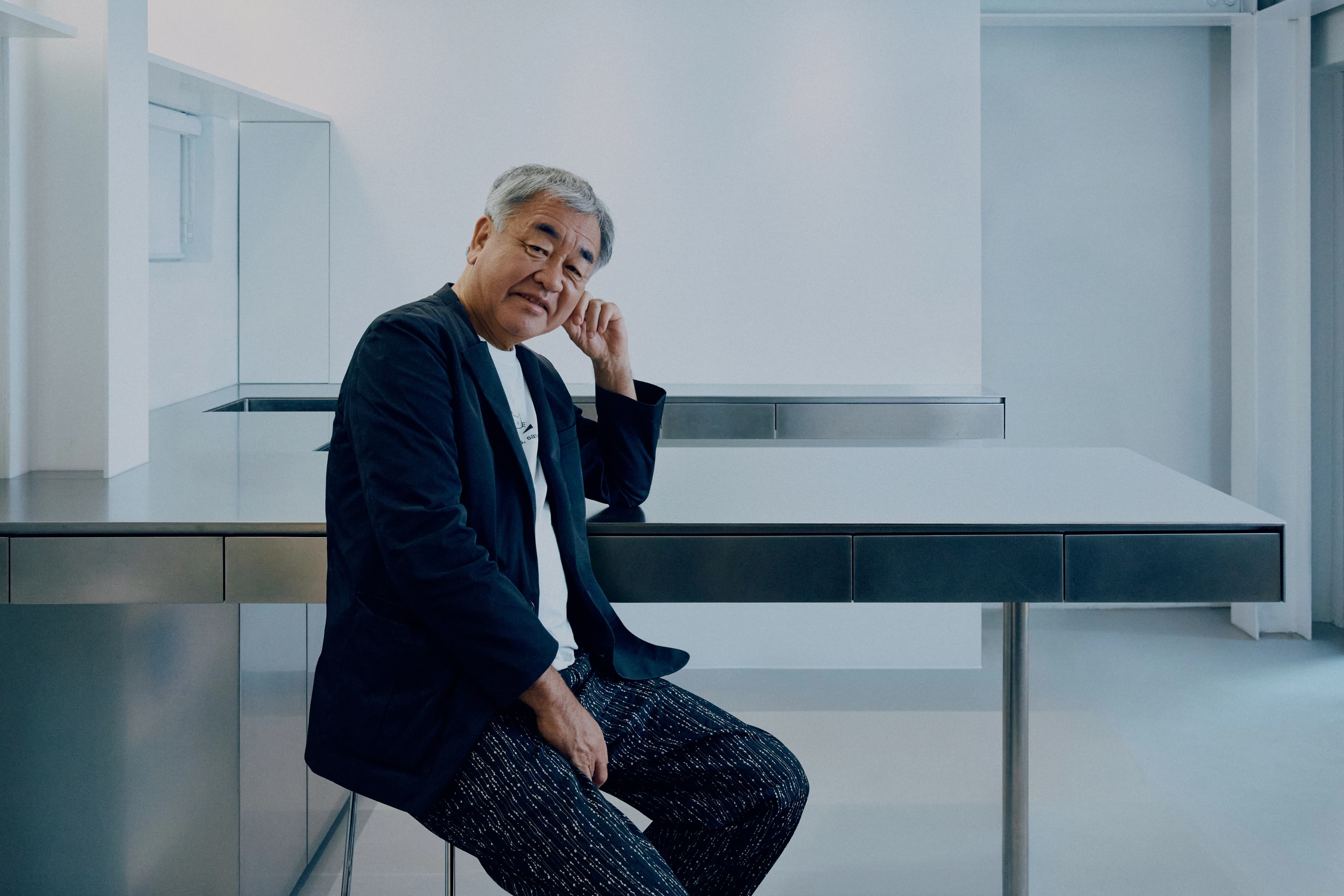
Kengo Kuma: The Poet of Architecture
Kengo Kuma advocates for an architecture that does not assert itself, but instead blends seamlessly into its surroundings. With a simplicity and lightness that only a true Japanese sensei can master, he has created an architectural language that brings together people, technology, and nature.
By Anna Skovby Hansen
Quietly, yet with remarkable influence, Kengo Kuma has left his mark on the world as one of the most significant architects of our time. His work extends beyond architecture and design. As the author of several books on materials and cultural heritage, he seeks to advance his vision of creating architecture that preserves local history for future generations.
»In the 20th century, to build something monumental was the goal for many architects. But now, the goal is to blend in. To become one with the environment« Kengo Kuma said in a 2022 interview with Tatler.
In Denmark, he is among the minds behind H.C. Andersens Hus, the museum about Hans Christian Andersen that opened in Odense in 2021.
And just as Hans Christian Andersen famously wrote that “to travel is to live” in The Fairy Tale of My Life, Kuma encourages young architects to travel to the most remote corners of the world. That, he believes, is where the purest inspiration can be found – in close connection with nature.
"Sushi is a good metaphor for my architecture. The importance in sushi is to choose the best material from the place, in season."
Cities Have More Space for Cars Than for People
Just as a well-written fairy tale opens the door to a unique experience and an entire world of imagination, Kuma’s ambition is to create places that are good for people – not only indoors, but equally outdoors.
»We cannot as before only think of what is inside. People have to get out and walk in nature. Cities hardly have places to walk; they only have places for cars. We must create places so people can walk and relax outside. This is what we have to focus on in our future design,« he said in a 2020 interview with Louisiana Channel.
Nature is often the source of his inspiration. He has previously spoken about his fascination with birds’ nests, noting how birds gather materials from their immediate surroundings and build homes from what is available, allowing them to blend naturally into the landscape.
Preserving Traditional Craftsmanship
At a time when much of modern construction is dominated by steel, glass, and concrete, Kengo Kuma brings natural materials and traditional craftsmanship back into contemporary architecture. For him, a project is rarely about the building itself – it is about the atmosphere it creates. The spaces between buildings and their relationship to the surrounding environment are central to his work.
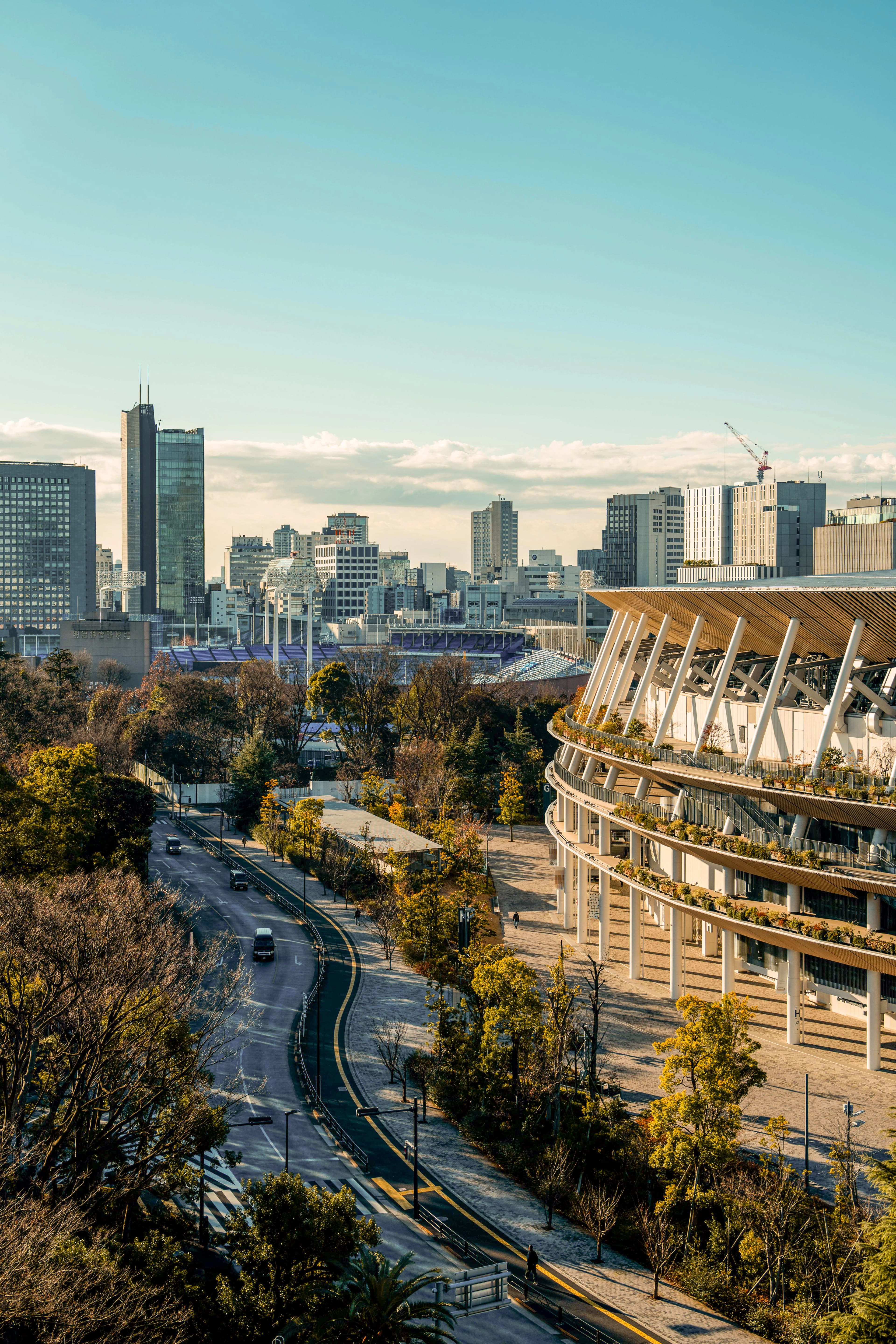
A prime example is Japan National Stadium in Tokyo, designed as an extension of Meiji Jingu Gaien Park. Trees appear to climb the stadium’s facade, and timber from all 47 Japanese prefectures was incorporated into the structure, with each region representing a distinct local culture. Even the colors of the seats were inspired by the forest floor.
»I didn't want a big concrete box in my favorite park. So I designed the stadium in a way that feels like part of the forest,« Kuma explained in his interview with Tatler.
5 Landmark Works by Kengo Kuma
Japan National Stadium, Tokyo – Japan (2019)
Built for the Tokyo Olympics, this stadium accommodates more than 65,000 spectators. Layers of timber sourced from Japan’s 47 prefectures create the distinctive roof overhangs along the facade. The exterior is covered with vegetation, while the colors of the seats were inspired by leaves on the nearby forest floor.
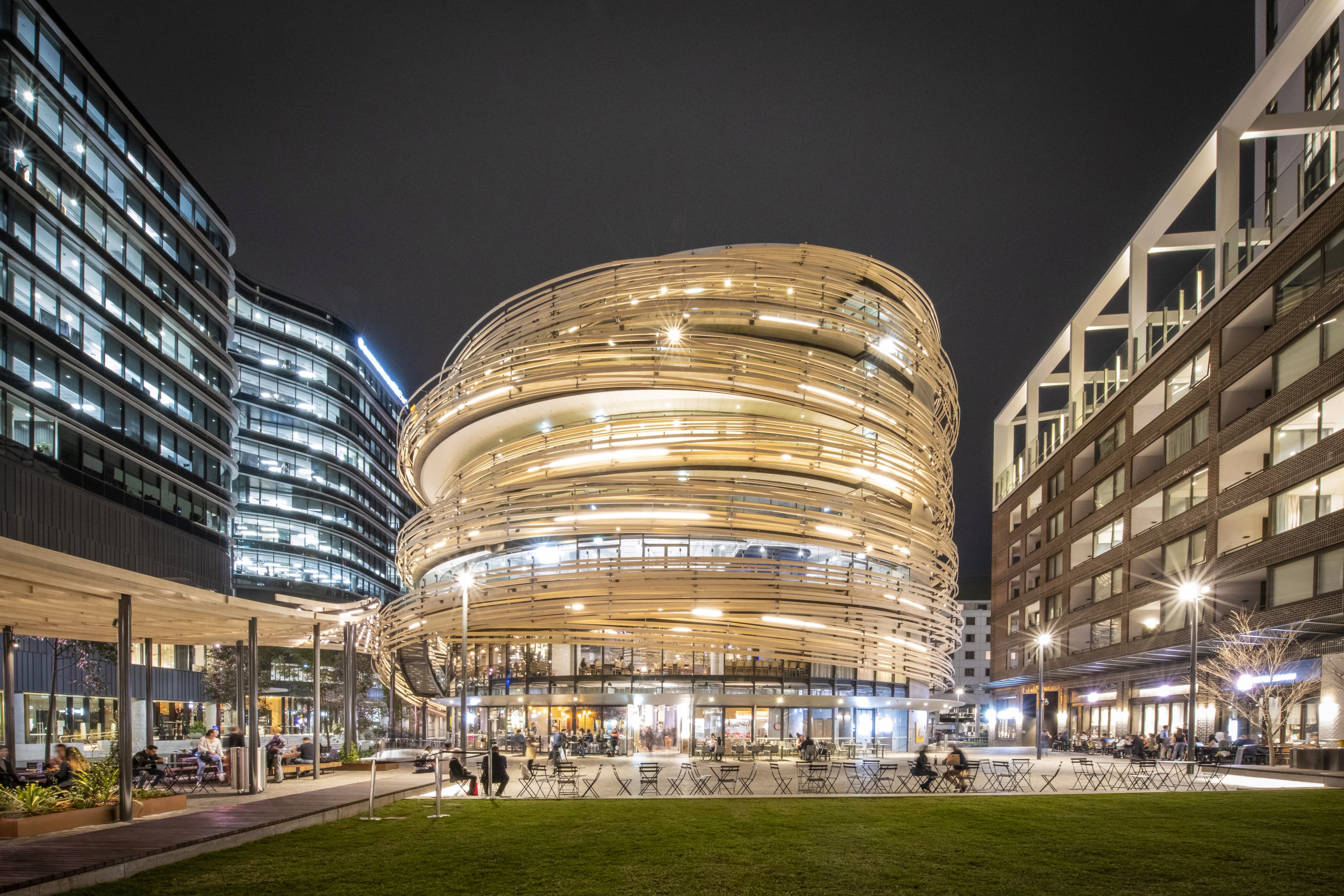
The Exchange, Sydney – Australia (2019)
A public gathering place in Darling Square. This six-story building combines a library, restaurant, childcare center, and public meeting spaces within a single open structure. Wrapped around the building is a spiral facade made from 20 kilometers of Accoya wood, giving it a warm, nest-like character amid Sydney’s dense urban environment.
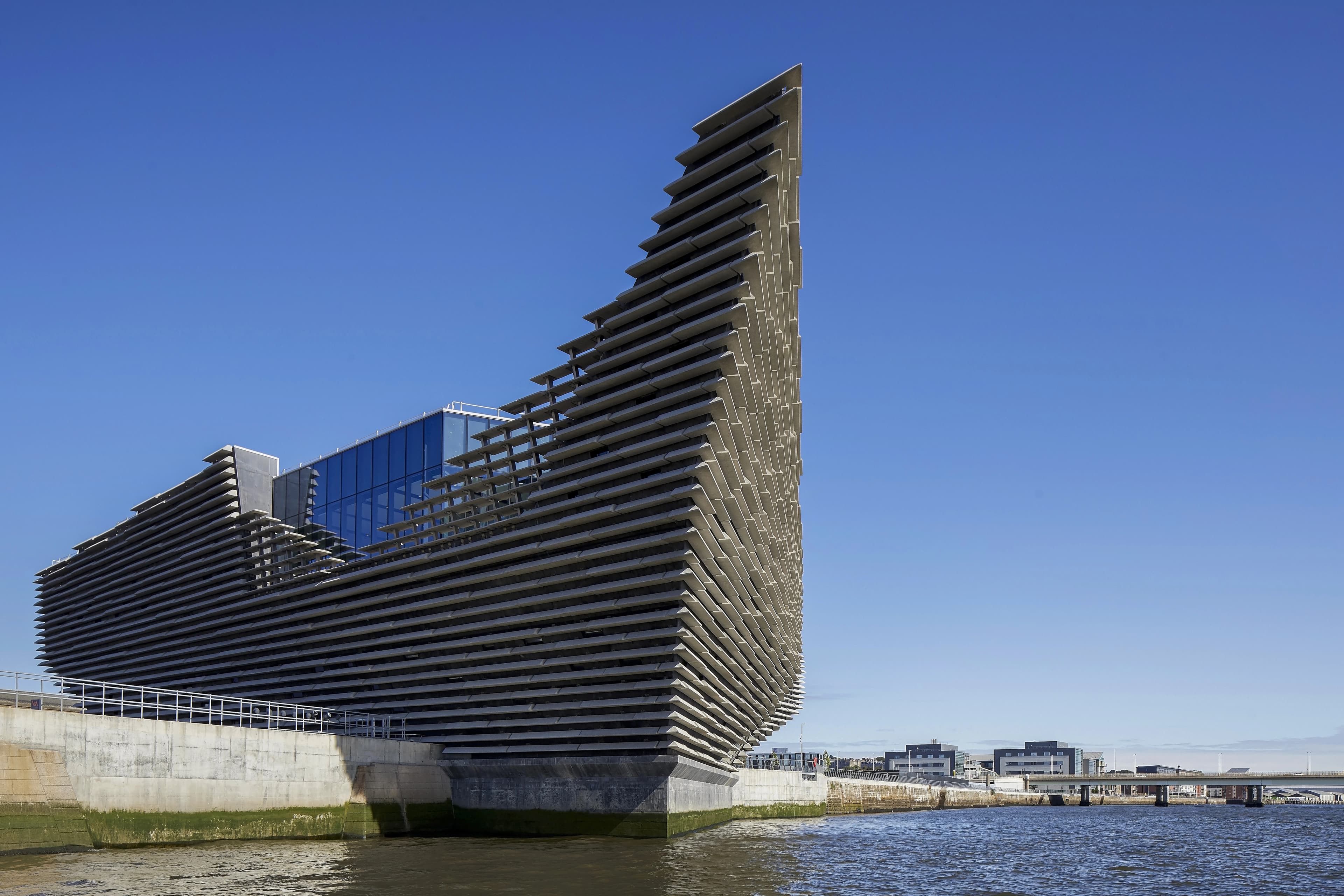
V&A Dundee, Dundee – Scotland (2018)
Scotland’s design museum on Dundee’s waterfront draws inspiration from the country’s coastal cliffs. The building appears as a layered, horizontal structure rising toward the River Tay. It is one of Kuma’s best-known international works and a clear example of his ability to create architecture rooted in a site’s landscape, materials, and atmosphere.
H.C. Andersens Hus, Odense – Denmark (2021)
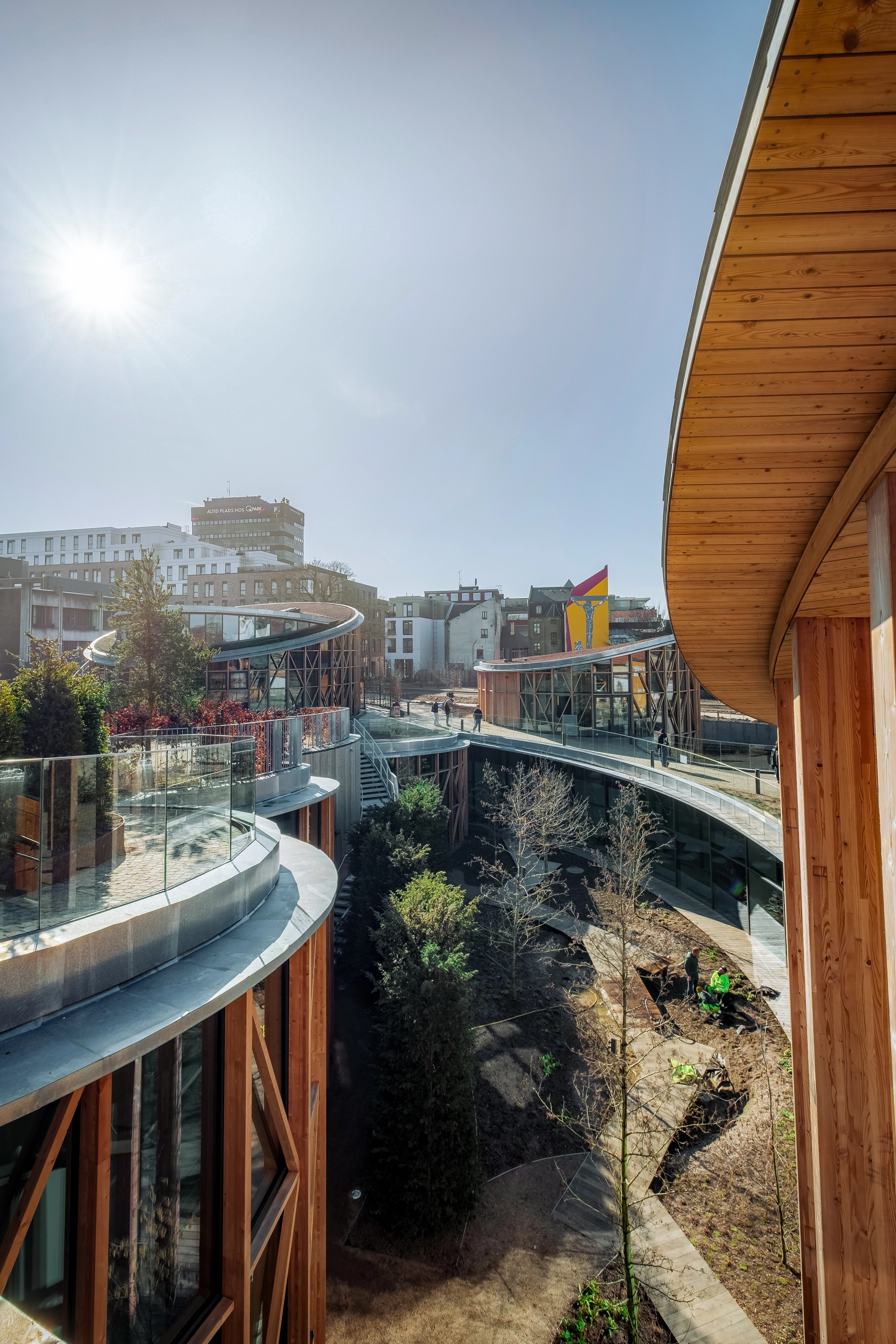
Kengo Kuma’s ambition for the museum was to create a place that brings the world-famous author’s life and work to life. The museum consists of several circular pavilions connected by winding pathways through landscaped gardens. The journey through the museum becomes a story in itself.
Water Culture House, Copenhagen – Denmark (2026)
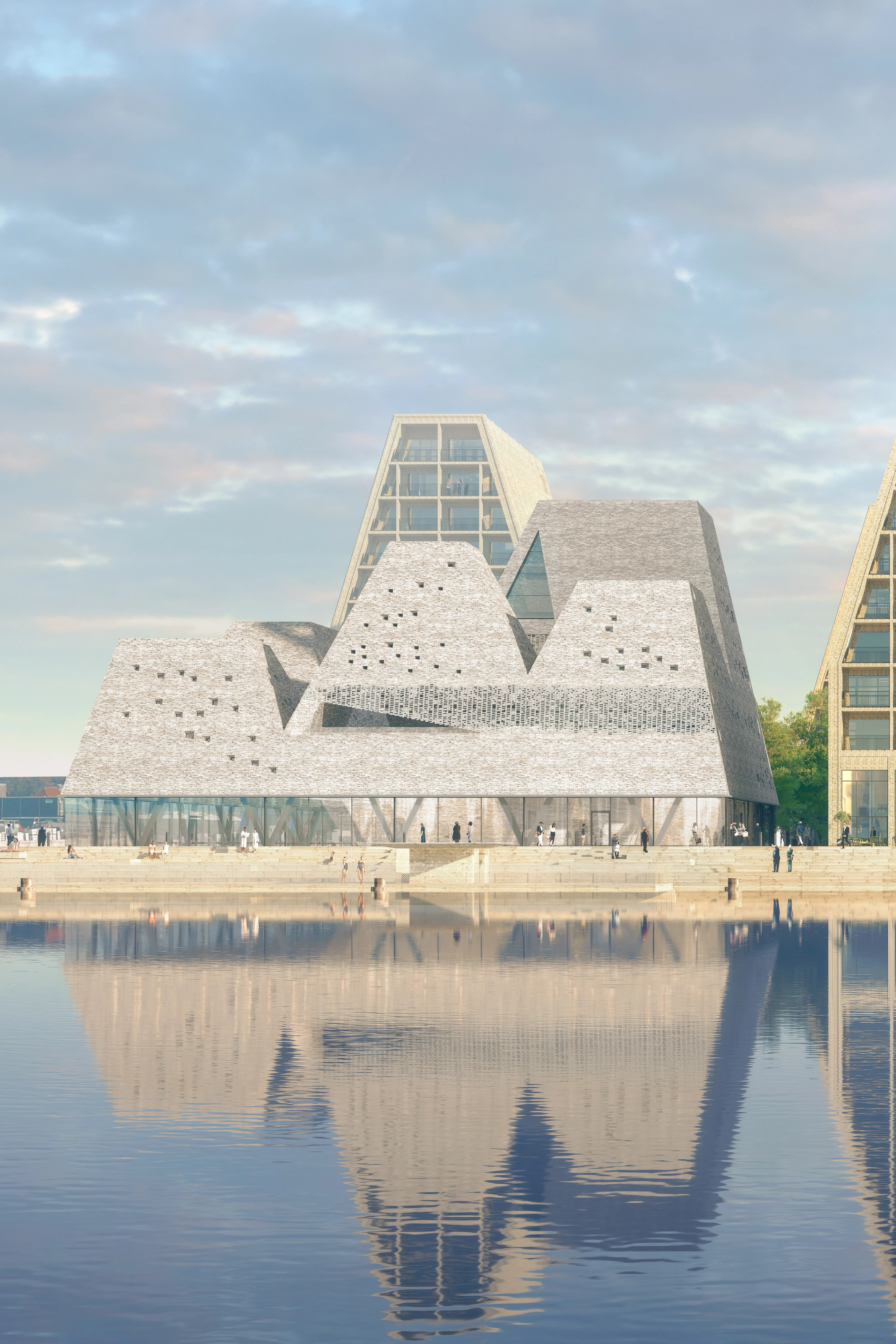
Built at varying heights in an almost cone-shaped brick structure, the building’s facades feature small openings that create a form of skylighting. At night, light shines outward through the many small windows, while during the day they provide beautiful natural illumination for the swimming pools inside. Here, city and water are woven together along Copenhagen’s waterfront.
Sushi and Sunlight: Architecture That Engages All the Senses
In Japanese, there is a word – komorebi – that describes the sunlight filtering through the leaves of trees, creating a uniquely soft and beautiful glow. It is precisely this kind of sensory experience that Kuma seeks to create: Places where people want to linger, slow down, and be present.
Anyone who has visited H.C. Andersens Hus e will understand what this means. The buildings mimic organic forms within a garden filled with multi-level pavilions, where the landscape is given at least as much importance as the architecture itself. It is the spaces between the structures that create the distinctive, almost magical atmosphere where shoulders relax, and time seems to slow down.
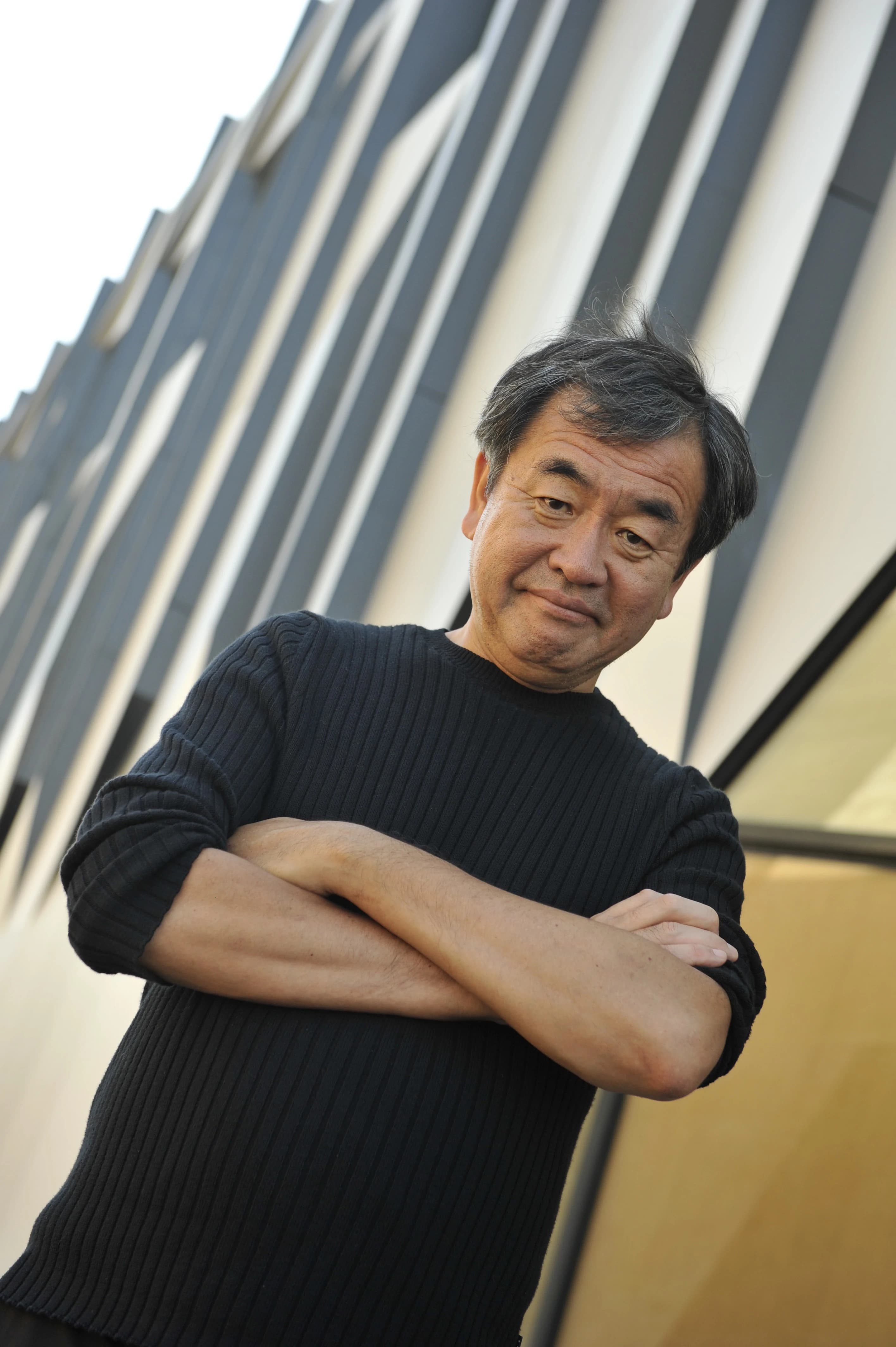
Kengo Kuma himself radiates a similar sense of calm. When he enters a room, it almost seems as though he has been shaped by the tranquility he strives to create through his architecture. He moves slowly, with his hands folded, taking time to think before he speaks. It reflects his philosophy that architecture should be gentle and should connect place, nature, and people.
He also has a gift for putting architecture into perspective. Although he has designed skyscrapers around the world, his metaphors remain grounded and accessible, as when he compares great architecture to great sushi.
»Sushi is a good metaphor for my architecture. The importance in sushi is to choose the best material from the place, in season,« Kuma said during a 2008 lecture at the Royal Academy of Arts in London.
This philosophy is reflected in his architecture, where he chooses materials that emerge from the specific character of each location.
About Kengo Kuma
- Born in 1954 in Yokohama, Japan.
- Founded Kengo Kuma and Associates (KKAA) in 1990, an internationally recognized architectural firm with projects all over the world.
- Has received numerous prestigious awards for his work.
- In addition to being an architect and educator, he has written several books on architecture and design.
Architecture in Harmony with Its Surroundings
This sensory approach has been central to his work from the beginning. In 1990, he founded Kengo Kuma and Associates, now an internationally acclaimed architectural practice. The firm focuses on bringing together light, acoustics, and even scent to create holistic experiences. Kuma is particularly known for working with materials such as stone, bamboo, and wood, all deeply rooted in Japanese building traditions.
Kuma has openly spoken about his admiration for Hans Christian Andersen’s fairy tales. He was especially moved by visiting the author’s childhood home in Odense and seeing how such a small place could contain such a vast universe of stories.
Born in Yokohama in 1954, Kuma grew up between Yokohama and Tokyo in an environment where villages existed in close harmony with forests and mountains. His childhood home was a modest wooden house built in 1942, directly connected to both nature and the local community.
»To me, every building is a house. No matter the nature of what I'm designing – when I design a museum, for example, a museum is a house, a home for art and a place for people to come, relax, enjoy,« Kuma said in his interview with Tatler.
For Kuma, neighbors are not only people but also hills, rivers, and forests. Wherever he builds, his goal is to become a friend of the place. He strives to create architecture that protects its surroundings and enters into a dialogue with them.
Wood Is the Architect’s Oldest Friend
For Kengo Kuma, wood is one of the most compelling alternatives to concrete. Looking back through history, humanity has always had a close relationship with wood – it is, as he puts it, our oldest friend. He believes architects must find alternatives to concrete.
»Concrete is the material of the industrial society of the 20th century. But from now on our environment will change and we have to create another kind of architecture,« Kuma told Louisiana Channel.
And while many of his buildings appear striking and ambitious, Kuma believes that thoughtful, humble design is ultimately better than grandiose design.
More from DAC Magazine
DAC Magazine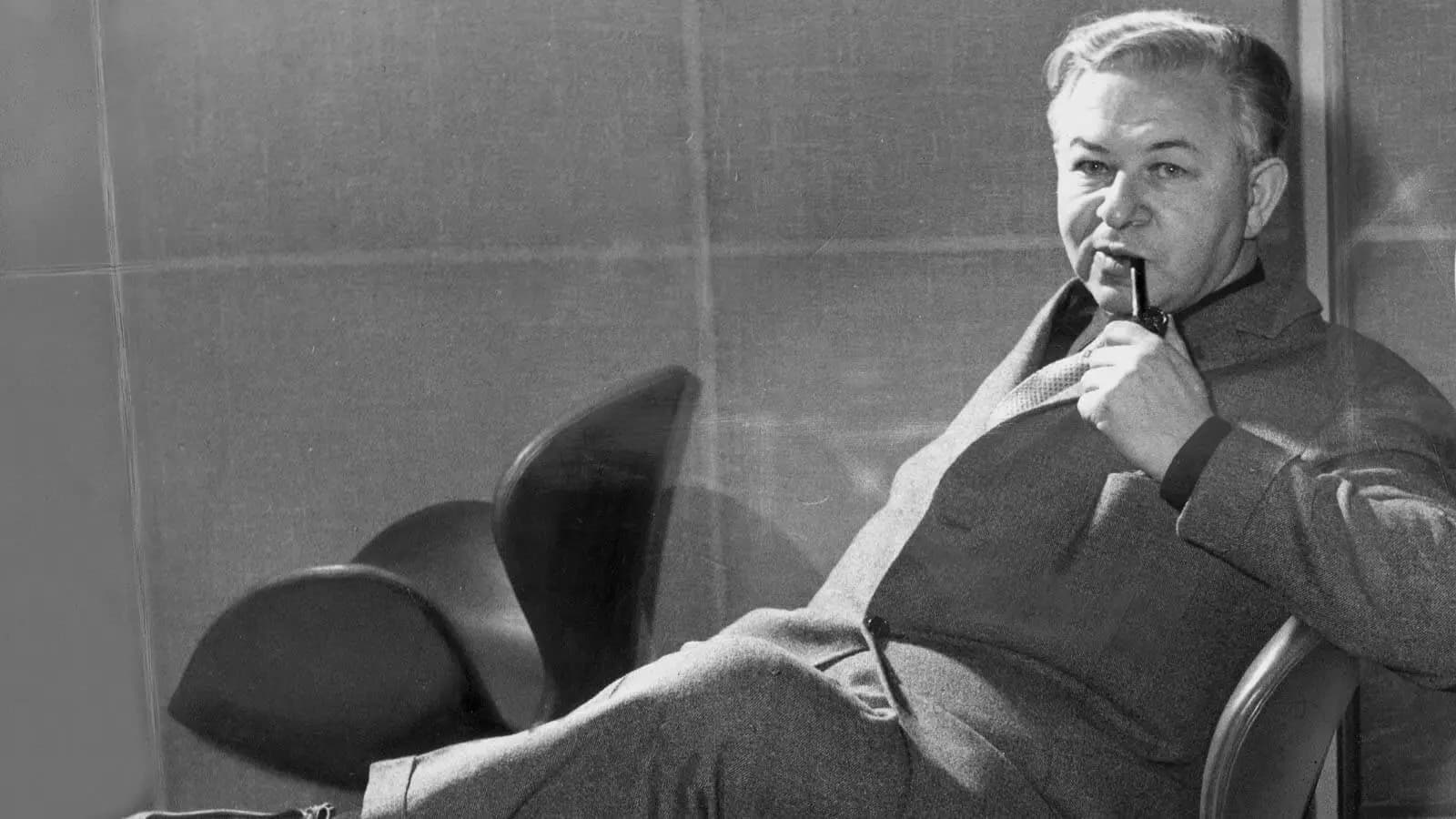
Arne Jacobsen: The Pioneer Behind Danish Modernism in Architecture and Design
Danish Playgrounds Move Into Children’s Imaginations Around the World
Kay Fisker Laid the Foundation for the Good Life in the City
Regulars, Hidden Gardens, and Funky Functionalism in the Inner City: »People often ask me to show them things they’ve never seen before.«