Deconstructivism in Architecture: Derrida and Buildings that Break the System
Deconstructivism in architecture is a movement inspired by the philosophy of Jacques Derrida, where architecture challenges systems, dissolves hierarchies, and rethinks the relationship between form and function.
By Dansk Arkitektur Center
Deconstruction in Philosophy
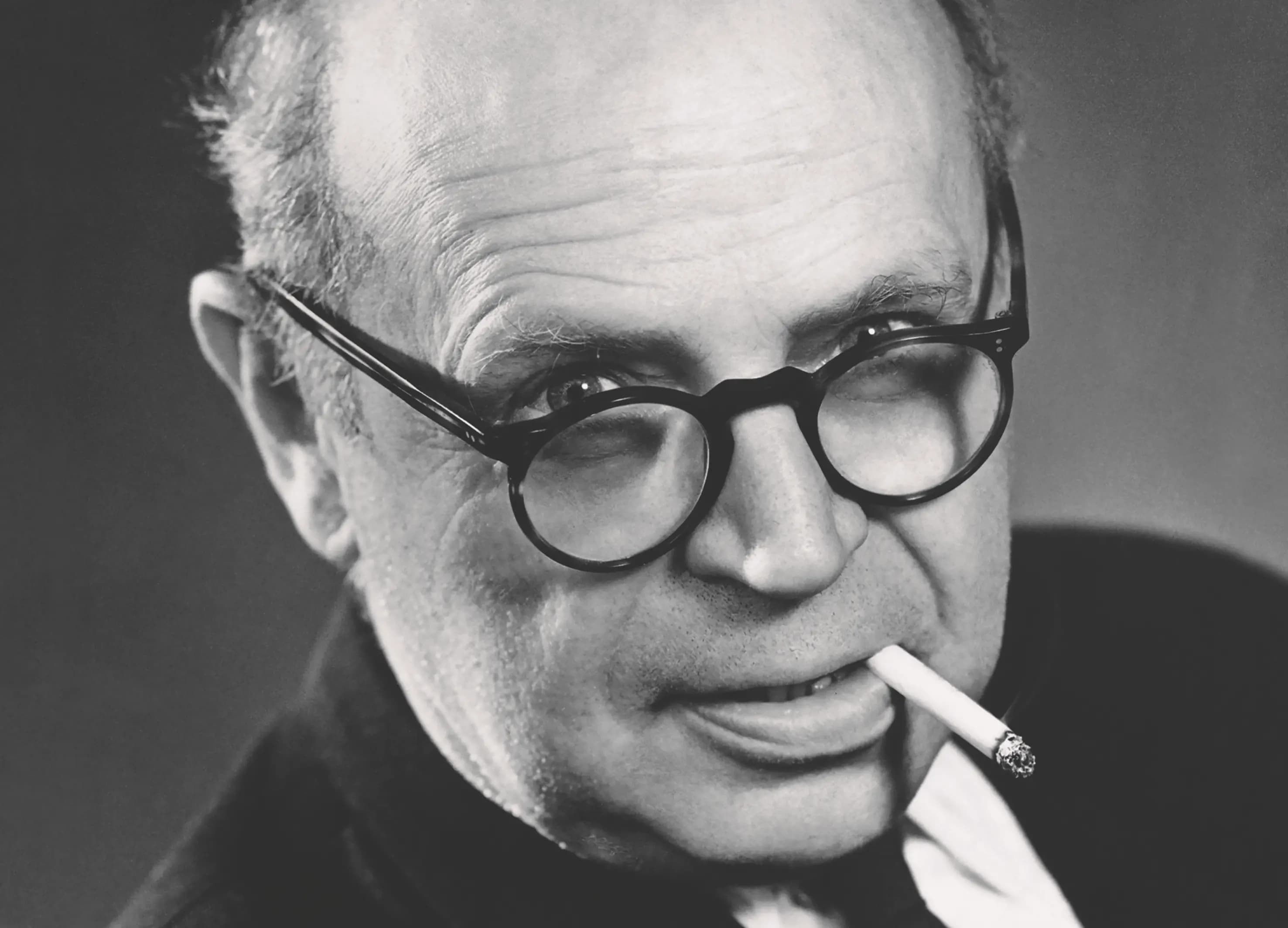
The term deconstruction was introduced by the French philosopher Jacques Derrida (1930–2004). For Derrida, deconstruction is a way of questioning the very structures of thought.
It is a critique of systems and hierarchies within Western thinking. According to Derrida, Western thought has a tendency to organise itself around stable systems and central ideas. However, such systems are inherently problematic because they depend on excluding or suppressing what contradicts them.
Deconstruction is not about destroying these systems, but about rethinking and reworking them. It is a process of constructing new meanings from the margins rather than from the centre.
The deconstructive approach focuses on what is marginalised and reveals hidden hierarchies. It encourages a critical stance toward the systems and assumptions we are part of.
Derrida did not define deconstruction as an architectural style. However, his ideas became a major source of inspiration for what later became known as deconstructivist architecture.
One of the architects influenced by Derrida is the Swiss architect Bernard Tschumi (b. 1944), who collaborated with him on the project Parc de la Villette in Paris.
Bernard Tschumi’s “Follies” at Parc de la Villette
In 1983, Bernard Tschumi won the competition to design a new urban park in the La Villette district of Paris. His project followed a three-stage process: Precision, Explosion, and Recomposition.
First, Tschumi worked within the given constraints, such as the ratio between built and open space – this was precision. He then fragmented the built elements into seemingly random pieces – explosion. Finally, he reorganised these fragments within a grid structure – recomposition.
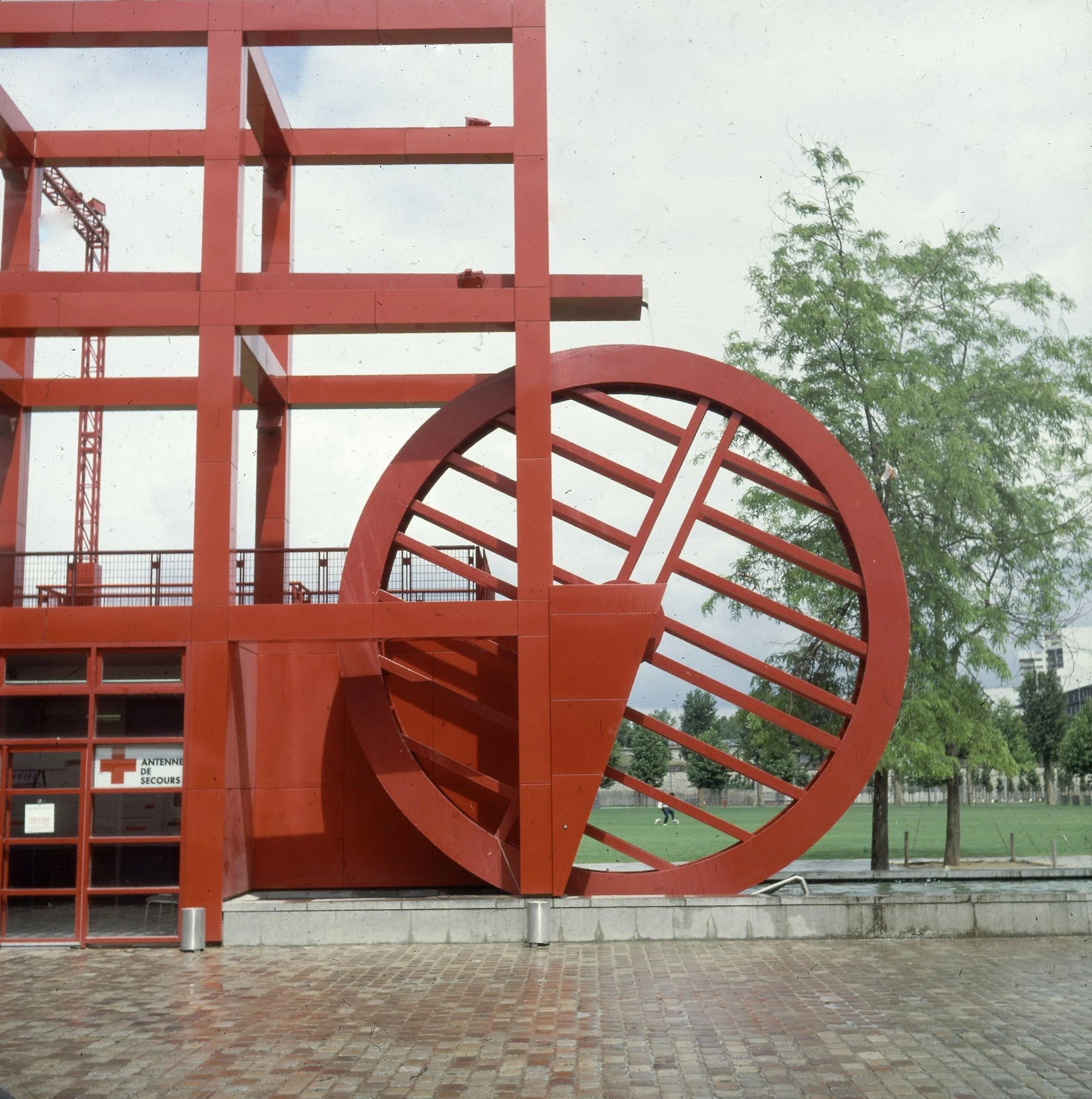
The result was a series of 35 red pavilions, known as follies (meaning “madness” in French). These structures are variations of a cube that has been distorted, cut, and transformed.
The follies can host different functions, such as galleries, cafés, or playgrounds. However, their form is not determined by function. Instead, they remain open to reinterpretation and change. The park is designed to allow for unplanned events and unexpected uses.
Tschumi even proposed extending the grid beyond the park into the surrounding city, allowing the follies to appear unpredictably in the urban landscape – suggesting that the project is never truly complete.
This project challenges several traditional architectural principles.
The follies break with the conventional link between form and function and question the idea of architecture as something fixed and finished.
Tschumi explores the idea that architecture can be open-ended and infinite, using chance and fragmentation to push architecture to its limits and create new possibilities.
Defining Deconstructivism in Architecture
Tschumi’s project for Parc de la Villette was featured in the 1988 exhibition Deconstructivist Architecture at the Museum of Modern Art (MoMA) in New York. This exhibition marked the recognition of a broader tendency in contemporary architecture that could be described as deconstructivist.
Traditionally, architecture has aimed to create harmony, unity, and stability. Deconstructivist architects challenge these values, arguing that they have suppressed alternative expressions. Instead, they seek to uncover architecture’s hidden potential.
They reveal how distorted and fragmented forms have always been latent within architecture, waiting to be released. Deconstructivist architecture disrupts our everyday perception of buildings, encouraging us to see architecture in new ways.
Where form has traditionally followed function, deconstructivism reverses this logic. It introduces elements that are not dictated solely by practical needs.
Chance, subjectivity, and experimentation become central concepts. Conventional spatial understanding is challenged, forms are distorted and displaced, and materials are combined in unexpected ways. Architecture is “contaminated” by influences from other art forms and contexts.
In deconstructivism, architecture is not a fixed object. It requires the visitor’s experience and interpretation to come into being. Architecture is created through movement, perception, and engagement. It cannot be described objectively, as its meaning shifts with each observer.
Daniel Libeskind’s Jewish Museum Berlin (1989–99)
Another key figure associated with deconstructivism is Daniel Libeskind (b. 1946). His Jewish Museum in Berlin, opened in 2001, is widely regarded as a landmark of the movement.
The building demonstrates how deconstructivist architecture incorporates influences from other art forms. Libeskind drew inspiration from sources such as Arnold Schönberg’s unfinished opera Moses und Aron and Walter Benjamin’s text Einbahnstrasse.
The building is rich in symbolism. The history of Jewish life is not only presented inside the museum but is also embedded in its form. The dramatic exterior has been described as resembling a fragmented Star of David.
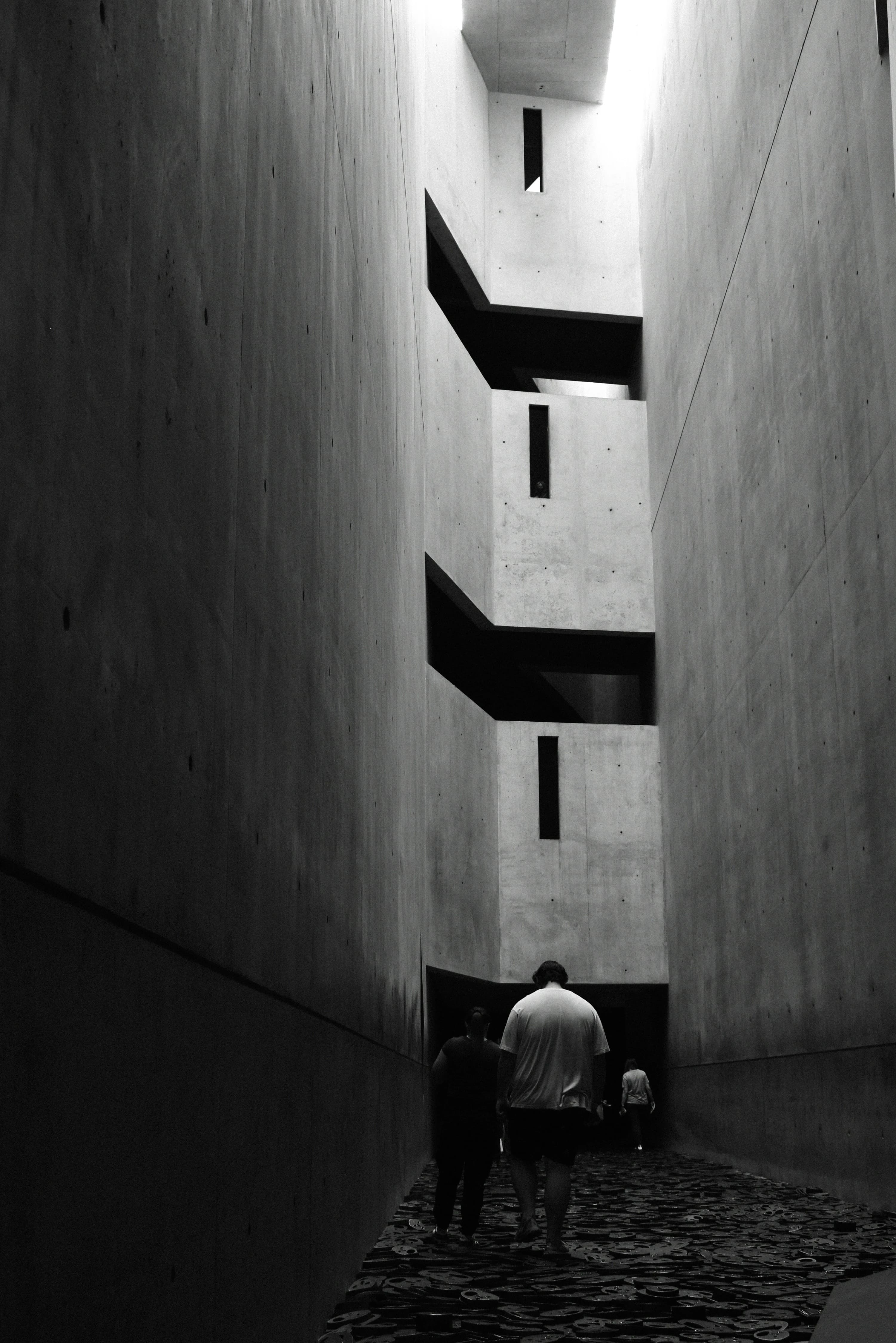
Rather than being guided by functional requirements, the building’s orientation is based on the addresses of German-Jewish artists and intellectuals.
The structure itself is sculptural. Its exterior combines steel and concrete, clad in zinc that reflects the surroundings. The windows are placed in what Libeskind describes as “apparently impossible compositions,” referencing locations tied to Jewish history.
A central void runs through the building, symbolising the absence left by the Holocaust. In certain places, visitors can glimpse into this empty space, where names and dates are inscribed. Only nearby names are legible, while others fade into endless lines.
The architecture can be experienced without prior knowledge of these references. The meaning is not only intellectual but also emotional and sensory.
Architects Associated with Deconstructivism
Other architects associated with deconstructivism include Frank O. Gehry, Rem Koolhaas, Peter Eisenman, Zaha Hadid, and the architectural group Coop Himmelb(l)au.