What Will the Architecture of the Future Look Like?
The architecture of the future will be about less new construction, more transformation, and more pragmatic solutions. Three newly graduated architects share their views on how the climate crisis, accessibility, and new ways of living will change the building industry.
By Asta Melchior Jelsing
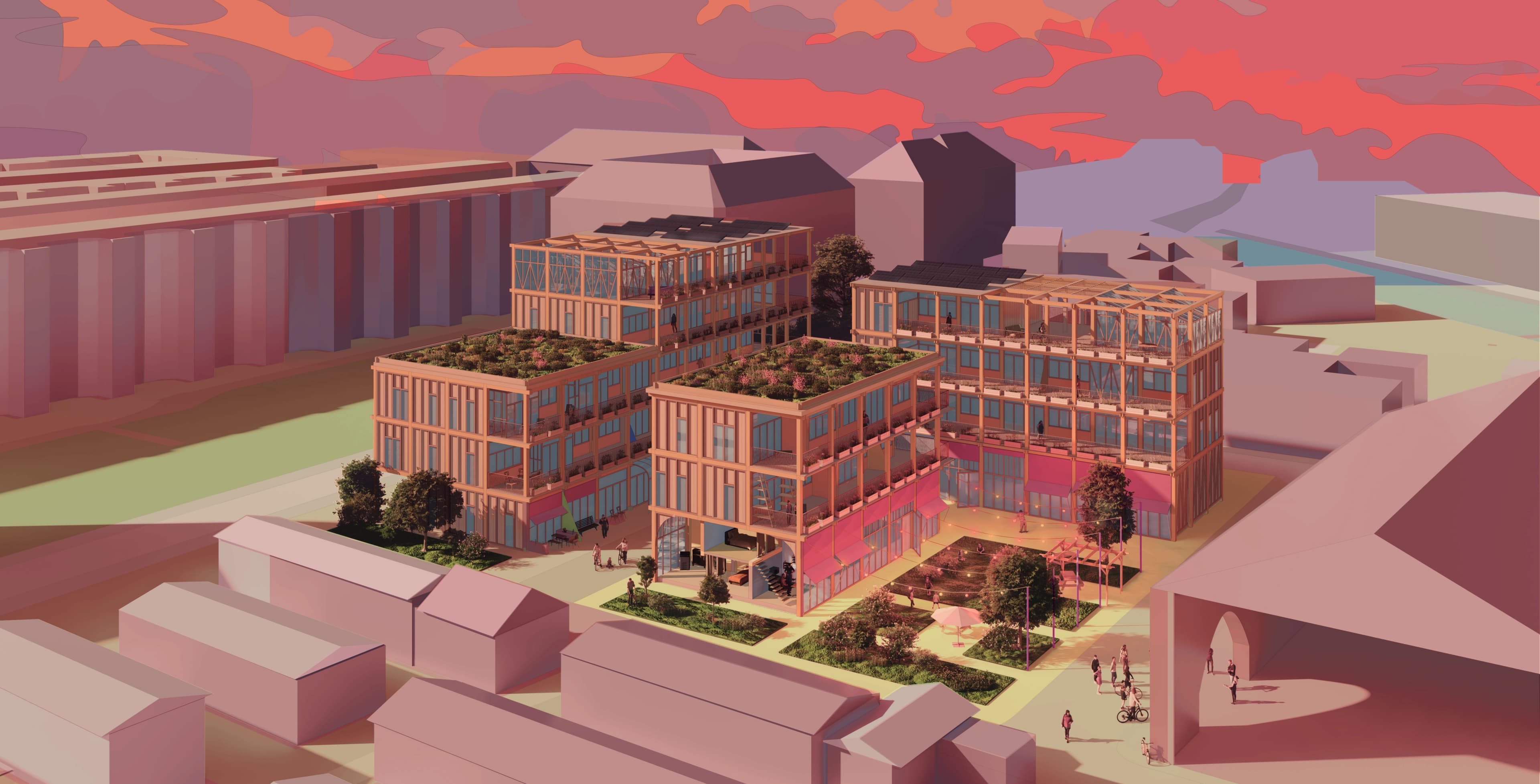
Once a year, The Royal Danish Academy hosts an exhibition featuring the final projects of newly graduated architects. Based on three projects from the summer 2023 graduation exhibition, we asked three newly graduated architects one main question: How do you think the architecture of the future will take shape?
"We are facing an overwhelming climate crisis, which will be the overarching theme in our construction"
Transformation of Tårnby Torv
“I had a friend who said that he thought it was the most boring project he had ever seen at The Royal Danish Academy. I took that as a pretty big compliment. That’s exactly what it’s about. It’s about taking on the project and the building that no one else wants. There’s value in taking every building equally seriously. I think it’s in this serious approach that these buildings become good,” says Kasper.
"In the future, we will see architecture that can accommodate a wider range of needs, and probably take a bit of a back seat"
Hjørring Technical School – Transformation with Accessibility as a Goal and Catalyst
“The interior of the house is designed as universal design, and I’ve added an elevator. The wall-mounted support rail is one of many smaller installations that can both conceal technical systems and serve as a supportive element throughout the house. The color scheme also has to do with universal design. You mark very clearly which room you are entering. That way, you can navigate the building. Right now, everything is white and gray, and it’s incredibly hard to orient oneself,” says Rikke.
"I believe that in the future, we will have to get used to living in much smaller square footage and sharing more"
New Public Housing, Røde Sols Plads, Christiania
“I moved into a researcher’s residence in Mælkebøtten in Christiania for two weeks because I wanted to hear what the Christianites actually thought about the idea of affordable housing. One thing I noticed was how much privacy is allowed in public spaces. That’s why I designed the walkways so that homes can expand into them. You can also enclose it and withdraw if you need some privacy,” says Alexandra.